
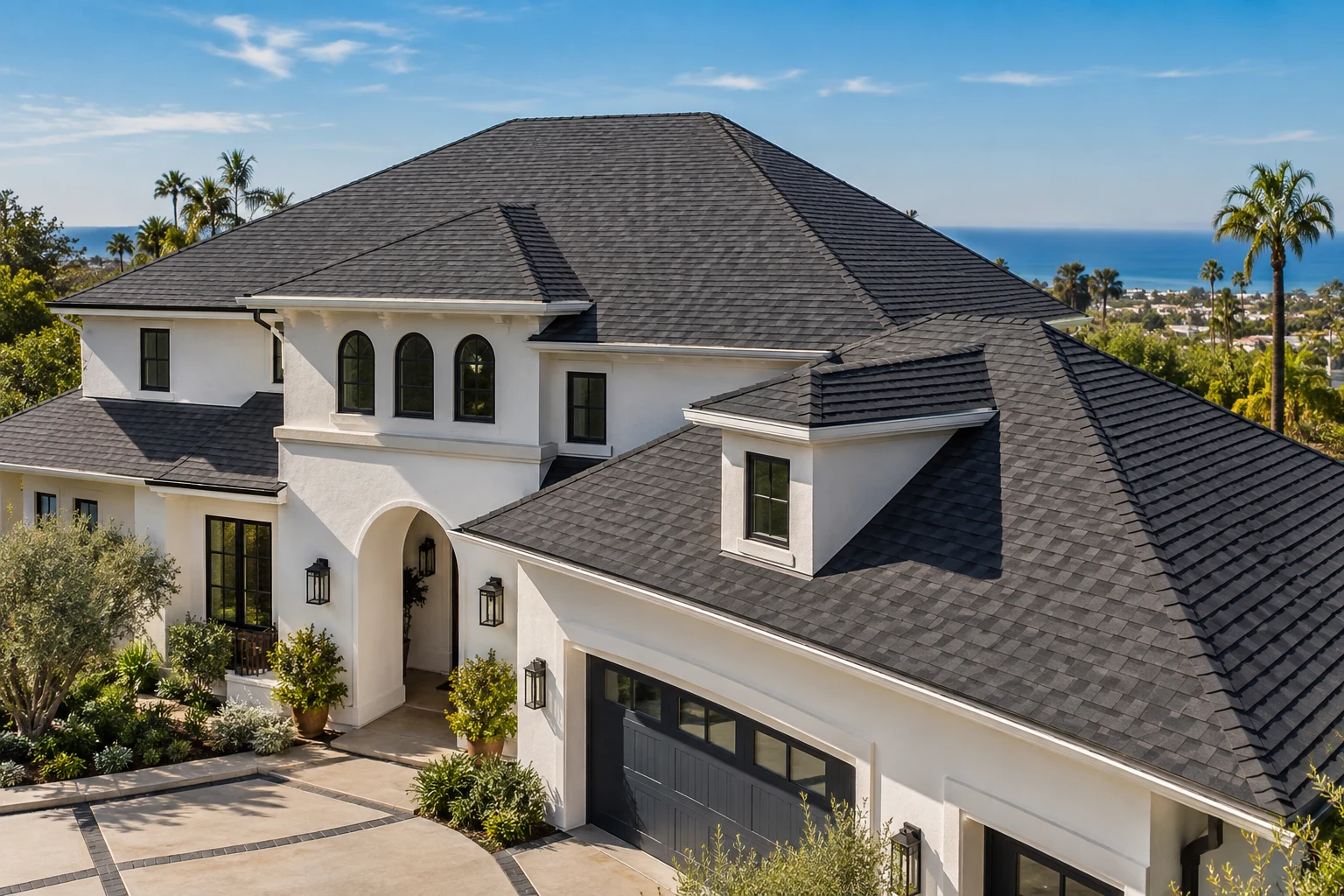
In Ontario, the best roofing material is the one that can handle inland heat, strong UV exposure, and the actual condition of the full roofing system. All Star Roof Replacement helps homeowners sort this out the right way, because the answer is usually not just tile versus shingle. It depends on how the roof is aging, how the attic is ventilated, and whether the underlayment, flashing, and decking are still sound.
If your roof is older, leaking, or making the house harder to cool, the material matters, but not by itself. In a lot of cases, what looks like a surface issue is really a system issue underneath. Homeowners comparing options in the area often start with our Ontario roof replacement service area page to understand how local conditions affect replacement decisions.
Why this question matters more in Ontario than people think
Ontario roofs deal with a very specific kind of wear. This is inland Southern California, not the coast. That means higher daytime heat, stronger UV exposure, dry conditions for long stretches, and then sudden periods of rain that test every weak point in the system.
Direct answer: In Ontario, the best roofing material is the one that performs well under heat stress and works with a properly built replacement system. A material that looks good on paper can still fail early if the roof beneath it is already compromised or the installation is done poorly.
Many homes in Ontario were built during major growth periods in the 1980s, 1990s, and early 2000s. A lot of those roofs are now at the age where replacement becomes a serious discussion. Even when the roof still looks decent from the street, the layers that actually protect the home may already be wearing out.
In homes across Ontario, we often see roofs that are not failing because of one big event. They are failing because years of heat, expansion, contraction, and UV exposure have slowly worn down the system. By the time a homeowner notices a leak or a hot upstairs room, the problem is often deeper than the visible outer layer.
What roofing materials usually make the most sense in Ontario
For most Ontario homes, the best roofing materials are concrete tile or quality architectural shingles designed for reflective performance, depending on the home’s structure, roof design, and replacement goals. There is no one material that is best for every house, because every roof has a different slope, age, ventilation setup, and level of underlying wear.
Concrete tile makes sense on many Ontario homes because it performs well in heat and is already common throughout the area. Tile systems can help reduce heat transfer when they are installed correctly, especially when the roof design creates airflow beneath the tiles. That matters in a city where summer temperatures put constant pressure on the roof and attic.
But tile is not automatically the right answer for every replacement. The tile itself may still look fine while the underlayment below it has already reached the end of its useful life. On many older tile roofs in Ontario, the real waterproofing failure is under the surface, not in the tile you can see from the ground.
Direct answer: If the home is built for tile and the system is evaluated correctly, tile is often one of the strongest long-term choices for Ontario heat. If budget, structure, or roof design point in a different direction, reflective architectural shingles can also be a solid option when installed as a full replacement system.
Architectural shingles are often the practical choice for homeowners who want a lower-profile system and a more manageable overall replacement cost. In Ontario, though, shingles need to be selected and installed with local heat in mind. Reflective “cool” shingles can make more sense than older-style darker products that absorb more heat and age faster in inland conditions.
If you are comparing these two systems more closely, our page on tile vs. shingle roofing in Ontario goes deeper into where each one fits.
Why the “best material” question can be misleading
Homeowners usually ask this when they are trying to avoid spending money on the wrong roof. That is a fair question. But the material alone does not decide whether the roof will perform well in Ontario.
Direct answer: Installation quality matters just as much as material choice. A properly built roofing system with sound decking, modern underlayment, correct flashing details, and balanced ventilation will usually outperform a better-looking material installed over hidden problems.
Many homeowners don’t realize that the visible roof covering is only one part of what keeps the house protected. The outer layer sheds weather and sunlight, but the real performance of the roof also depends on the underlayment, deck condition, flashing, penetrations, and airflow through the attic.
A common issue during inspections is a homeowner focusing on cracked tiles, missing shingles, or one leak stain, while the bigger problem is underneath. We may find brittle underlayment, failing valleys, damaged decking, poor venting, or signs that previous work was done as a short-term fix instead of a real correction.
That is why All Star Roof Replacement approaches replacement as a system decision, not a product sale. We use satellite measurements and visual inspection to understand the roof layout and current condition, then explain what the roof actually needs before recommending the right replacement direction.
Why Ontario roofs break down the way they do
Ontario’s climate puts roofing systems through repeated thermal movement. The roof heats up hard during the day, then cools at night. Over time, that constant expansion and contraction stresses fasteners, flashing points, sealants, and underlayment.
Direct answer: Most roof problems in Ontario build slowly from heat and age, not just from storms. The damage often starts inside the roofing system long before it becomes obvious from the ground.
UV exposure also plays a major role. On shingle roofs, strong sun breaks down the asphalt over time, which can lead to granule loss, drying, and brittleness. Once that protective surface starts wearing away, the roof becomes more vulnerable to leaks and faster deterioration.
On tile roofs, homeowners sometimes assume the system is still in great shape because the tiles themselves last a long time. But in many Ontario homes, the underlayment under those tiles is what fails first. That layer takes the real waterproofing role, and once it reaches the end of its service life, leaks can begin even if the tile still looks usable.
In homes across Ontario, we often see aging roofs where repeated minor repairs handled symptoms without correcting the actual cause. One leak gets patched. Then another shows up in a different spot. That pattern usually means the system is wearing out, not that the roof just needs another small repair.
How the roof affects comfort and energy use
The roof is not only about keeping water out. In Ontario, it also has a direct effect on indoor comfort and cooling demand. When the roof absorbs too much heat or the attic cannot release heat properly, the house becomes harder and more expensive to keep comfortable.
Direct answer: The best roofing material in Ontario should help manage heat as well as weather. That is one reason reflective shingles, cool-roof rated systems, and properly detailed tile assemblies are so important in this area.
Many homeowners don’t realize how much of their comfort problem starts at the roof line. Uneven room temperatures, hot second floors, and high air conditioning use are not always insulation-only issues. In a lot of houses, the roofing system itself is part of the problem.
That is especially true on older homes where ventilation was limited, underlayment has aged, or previous roofing work did not account for current energy standards. California requirements also make this more relevant, because many reroof projects in Ontario must meet cool roof standards when the replacement scope crosses certain thresholds.
Homeowners looking closely at heat reduction often also review our page on cool roof options in Ontario to understand how code compliance and real-world comfort can overlap.
What happens if you ignore the material and system question too long
Roofing problems usually do not stay the same. They spread. Heat continues breaking down exposed materials, and any water getting through the system can start affecting the decking and other hidden components.
Direct answer: Delaying the right replacement decision usually increases total cost. What starts as aging underlayment, minor leak activity, or isolated surface wear can turn into a larger project once underlying damage spreads.
This is one of the biggest misunderstandings we see. A homeowner may think waiting saves money because the roof is “still mostly there.” But if the system is already failing, time usually adds scope, not value. More decking may need to be replaced. More flashing points may need correction. More interior effects may show up.
A common issue during inspections is finding that the roof has already moved beyond the stage where a simple surface fix makes sense. The visible symptom may still look small, but the roof system underneath has lost reliability across a much wider area.
That does not mean every roof in Ontario needs the most expensive material. It means the roof needs the correct scope and the correct material for the way the house is built. Some homes should stay with tile. Some are better candidates for shingles. Some need the replacement strategy adjusted because ventilation and heat control are part of the larger issue.
What older Ontario homes need from a replacement roof
Ontario has a large number of homes now entering the real replacement window. Shingle roofs from the late 1990s and early 2000s are often showing heat-related wear. Tile roofs from that same period may have good-looking tile but aging underlayment underneath.
Direct answer: On older Ontario homes, the best roofing material is the one that matches the structure and is installed after the full system is evaluated. The goal is not just to replace what shows on top. It is to correct what has been wearing out underneath.
In homes across Ontario, we often see homeowners assume they are choosing a material first, when the real first question is whether the decking, underlayment, flashing, and ventilation are still capable of supporting a reliable roof. That is why replacement decisions should start with condition, not appearance.
Many homeowners don’t realize that older installation methods are part of the problem. A roof installed years ago may have been acceptable at the time, but today’s Ontario conditions, energy expectations, and code requirements often call for a better-performing system. That is especially true when the home has had repeat leaks, poor prior workmanship, or years of heat stress.
If you are trying to decide whether your roof has reached that point, it helps to review the common signs you need a new roof in Ontario before focusing only on material choice.
The early direction: evaluate the system first, then choose the material
If you are asking what roofing material is best in Ontario, the honest answer is that the best choice comes after the roof is evaluated as a full system. That is how you avoid replacing only the visible layer while deeper failures stay in place.
The right material decision starts with understanding the roof’s actual condition. Once the system is inspected properly, it becomes much clearer whether the home is best served by tile, reflective shingles, or a different replacement approach based on heat control, age, and structure.
At All Star Roof Replacement, that is the direction we take from the beginning. We do not guess from the driveway or make recommendations based on one visible problem area. We look at the whole roofing system, identify hidden issues where possible, and explain the findings clearly so the replacement plan fits the house, the climate, and the real source of the problem.
For homeowners who are still weighing whether they are dealing with a repair issue or a replacement issue, the next step is usually understanding when roof repair stops making sense compared to replacement in Ontario. In a city with this much heat and UV exposure, that distinction matters more than most people think.
How tile and shingles really perform on Ontario homes
Direct answer: In Ontario, concrete tile usually makes the most sense for homes designed for tile, while reflective architectural shingles are often the strongest practical option for homes where budget, structure, or roof design point that direction. The right answer depends on the house, not just the product.
Tile performs well in Ontario because it handles solar exposure better than many lighter materials and is already a natural fit for a large part of the local housing stock. Many homes in newer and mid-age neighborhoods were built with tile in mind, both structurally and architecturally. When that system is still appropriate, keeping a tile-based roof assembly often makes sense.
But homeowners need to separate the tile from the roof system under it. The tile is the visible layer. The underlayment below it is what often reaches failure first. In homes across Ontario, we often see tile roofs that still look respectable from the street while the waterproofing below has already aged out from years of trapped heat and long-term exposure.
That is one reason material decisions need to be made after inspection, not before. A homeowner may assume they need all new tile when the better approach is to address the actual failed parts of the system. In some cases, the roof may be a candidate for a full replacement approach that retains usable tile while rebuilding the waterproofing assembly underneath.
In other cases, the condition of the system, the extent of breakage, or the age of prior installation makes a more complete change the smarter path.
Shingles are different. A quality architectural shingle system can be a very good fit in Ontario when it is chosen with heat performance in mind and installed over a properly prepared roof deck with modern underlayment and ventilation. Shingles usually give homeowners a more cost-manageable replacement path, but they do not forgive poor installation. If the flashing details are weak, the attic runs too hot, or the decking has hidden damage, the material will not cover up those problems.
Homeowners looking at the bigger picture of performance and efficiency often compare these choices alongside energy-efficient roofing options in Ontario, especially when indoor comfort and cooling demand are part of the reason the roof is being replaced.
Why cool roof requirements matter when choosing material
Direct answer: In Ontario, the best roofing material often needs to meet cool-roof requirements as part of the replacement scope, especially on larger reroof projects. That matters because heat control is not just a comfort issue here. It is part of how the roof is expected to perform.
Southern California codes influence real-world material selection. On many residential replacement projects in Ontario, the roof system must meet current energy standards, which can affect color, reflectivity, and product type. That does not mean every homeowner has the same options, but it does mean material decisions should be made with code and climate in mind from the start.
Reflective shingles can make a noticeable difference compared to older, darker roofing products that absorb more solar heat. Tile also remains strong in this category when the assembly is designed correctly, especially where the roof shape and installation method support airflow and reduced heat transfer into the attic.
A common issue during inspections is a homeowner choosing material based on appearance alone, then learning later that the replacement needs to satisfy heat-reflective requirements or ventilation upgrades that change the scope. That is exactly why All Star Roof Replacement looks at the roof as a system first. Material, ventilation, underlayment, and compliance all affect each other.
If heat buildup is one of the main concerns, it helps to review how a roof replacement can reduce heat in an Ontario home instead of looking at material labels by themselves.
What homeowners miss when they focus only on lifespan
Direct answer: The longest-lasting material is not automatically the best choice if the roof structure, ventilation, or installation quality are wrong. A roof only lasts well when the full system supports the material on top.
Homeowners naturally ask how long tile or shingles should last. That is a fair question, but lifespan numbers can be misleading when they are taken out of context. Ontario roofs do not age in ideal conditions. They age under inland heat, heavy UV exposure, and repeated thermal movement. That shortens the practical life of weaker systems and exposes poor workmanship faster.
Tile can outlast shingles as a surface material, but that does not mean the full tile roof system will go untouched for decades. Underlayment aging is a major issue on Ontario tile roofs. Shingles may have a shorter overall service window, but on the right home with a good ventilation plan and proper installation, they can still perform very well.
Installation quality matters just as much as the product category. Poor flashing details around penetrations, weak valley construction, bad fastening patterns, or skipped ventilation corrections create problems that no material can solve by itself. Not all contractors are equal, and roofing failures tied to workmanship often take years to become obvious. By then, the problem is usually larger than it looked at the beginning.
For homeowners trying to understand realistic service expectations, our page on roof lifespan in Ontario gives a more practical view of how age, climate, and system condition work together.
When material choice should follow structure, not preference
Direct answer: Some homes should stay with the type of roof they were designed for, while others can reasonably transition to a different material if the structure, appearance goals, and replacement plan support it. The house decides a lot of this before preference ever does.
This is especially important in Ontario neighborhoods with a high concentration of similar tract homes. A house originally built for tile may have framing, slope, ventilation patterns, and curb appeal all tied to that system. That does not mean change is impossible. It means the replacement decision has to account for more than material price.
Weight is one factor. Roof geometry is another. HOA expectations may also affect the practical options in some communities. Then there is the issue of what the homeowner is actually trying to solve. If the main complaint is repeated leaks on an older tile roof, the real need may be a system rebuild under the tile profile. If the concern is replacement cost, structure, and simplification, a shingle system may deserve serious consideration if the house is a fit.
Many homeowners do not realize that the best-looking option is not always the best-performing one for their exact roof layout. Valleys, penetrations, slope transitions, and low-slope connections all matter. A roofing system with more complexity needs stronger detailing, regardless of whether the top layer is tile or shingles.
If you want a more side-by-side explanation of tradeoffs, the local guide on best roofing materials for Ontario homes helps frame where each category fits.
Decision clarity: when replacement makes more sense than more repairs
Direct answer: If your Ontario roof is older, has had repeated leak issues, or is showing signs of broader system wear, replacement usually makes more sense than continuing to patch isolated symptoms. Once the roof system starts failing in multiple areas, repairs tend to buy time, not solve the problem.
This is where homeowners usually need the most clarity. If the roof is still relatively young and the issue is truly isolated, repair may be reasonable. But if the roof is 15 to 30 years old, the underlayment is aging, the attic runs hot, or leaks have shown up more than once, the conversation changes. At that point, the question is less about whether one spot can be patched and more about whether the system is still reliable overall.
In homes across Ontario, we often see homeowners spend money on a few separate repairs over several seasons, only to learn later that the roof had already moved into replacement territory. That is common with older tile systems where the leak does not come from one broken tile, but from broader underlayment wear. It is also common on older shingle roofs where UV damage, brittleness, and flashing fatigue are happening at the same time.
Delaying increases cost in situations like that. Damage may already be worse than visible, especially if moisture has begun affecting decking or if heat has continued drying out the system beneath the surface. What might have been a cleaner replacement can turn into a larger project once hidden problems are exposed.
A good decision usually looks like this:
- The roof is evaluated as a full system, not judged from one stain or one missing piece.
- The homeowner understands whether the problem is isolated or systemic.
- The material choice fits the house, climate, and replacement goals.
- The plan accounts for underlayment, flashing, ventilation, and any deck concerns.
- The recommendation is clear about what is necessary now versus what is optional.
If you are stuck between doing one more repair or moving forward with replacement, our local page on the roof replacement process in Ontario can help you understand what the next step actually looks like.
FAQ: What Ontario homeowners usually ask before choosing a roofing material
Is tile always the best roofing material in Ontario?
No. Tile is often one of the best options for Ontario heat, but it is not automatically the best choice for every home. The roof structure, current system condition, slope, budget, and ventilation setup all matter.
On some homes, reflective architectural shingles are the better fit. On others, staying with a tile-based system makes more sense because the house was designed around it and the performance benefits are strong in inland Southern California heat.
How much more does tile usually cost than shingles in Ontario?
Tile replacement is usually more expensive than shingle replacement, but the exact difference depends on roof size, complexity, access, underlayment needs, and whether existing tile can be reused as part of the scope. There is no honest fixed price without seeing the roof.
If cost is one of the main decision points, it helps to understand the broader factors on our Ontario roof replacement cost page, because material is only one part of the final number.
How long does a roof replacement usually take?
Most residential roof replacements take a few working days once construction begins, but total timing depends on the roof type, complexity, wood repairs, weather conditions, permit timing, and any HOA approval requirements. Tile systems and more complex roof layouts can take longer than a straightforward shingle roof.
If you want a clearer picture of the phases involved, our page on the roof replacement timeline in Ontario explains what homeowners should expect before work starts.
How do I know if I need replacement instead of repair?
If the roof has leaked repeatedly, is approaching the end of its expected service life, or shows widespread signs of wear, replacement is usually the smarter long-term decision. Repairs make more sense when the roof is still in otherwise good condition and the issue is truly limited to one area.
Many Ontario homeowners are dealing with heat-aged systems where the visible problem is only the first symptom. That is why the roof needs to be evaluated as a system before deciding which option actually saves money.
What is the average lifespan of a roof in Ontario?
That depends on the material and the installation. In general, shingle roofs in Ontario often age faster than homeowners expect because of UV exposure and heat cycling, while tile roofs may last much longer on the surface but still need underlayment replacement underneath.
The practical lifespan of any roof here depends on ventilation, sun exposure, roof orientation, prior workmanship, and whether the roof has already had repeated repair history.
Will a better roofing material lower my cooling bills?
It can help, especially if the current roof absorbs a lot of heat or the replacement includes better ventilation and a more reflective system. But energy performance comes from the full roof assembly, not just the top layer.
In many Ontario homes, the real improvement comes from combining the right material with corrected ventilation and a properly built underlayment system. That is why material choice should be tied to the whole roof, not treated like a stand-alone upgrade.
Should I get an inspection before deciding on tile or shingles?
Yes. That is the only reliable way to know whether you are comparing materials or dealing with a broader system failure. Without inspection, homeowners often make decisions based on appearance while hidden issues go unaddressed.
For a clearer idea of what that step involves, you can review our page on roof inspection considerations in Ontario before moving forward.
Talk to All Star Roof Replacement about the right material for your Ontario home
If you are trying to decide between tile, shingles, or a more energy-conscious replacement approach, All Star Roof Replacement can help you make that decision based on the actual condition of your roof system. We look at the full assembly, identify hidden issues where possible, and explain what the roof needs before recommending replacement.
You can call (310) 729-3013, email teamallstarconstruction@gmail.com, or use the All Star Roof Replacement contact page to request an estimate or get clarity on whether your current roof should be repaired, rebuilt, or fully replaced.
Licensed • Insured • Owens Corning Preferred Contractor • CA License #1009760