
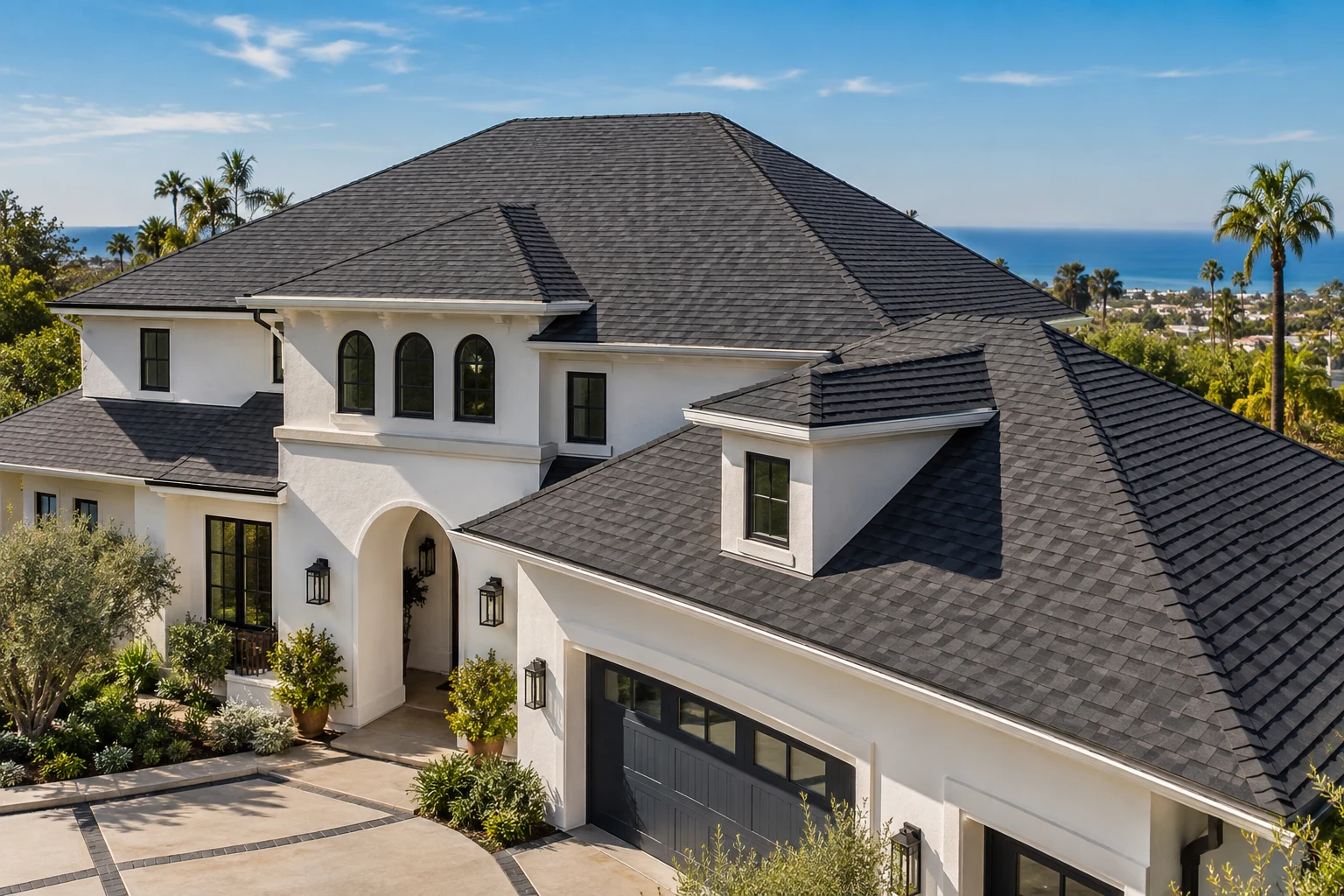
In Ontario, a cool roof is a roofing system designed to reflect more sunlight and absorb less heat than a standard roof. All Star Roof Replacement explains it as a full roof performance issue, not just a material choice, because in Inland Empire heat, cooling performance depends on the entire roofing system working correctly.
That matters because many Ontario homeowners ask about cool roofs when the bigger issue is an aging roof system. If the underlayment is worn out, ventilation is poor, or the decking has problems, a more reflective surface alone will not solve what is happening underneath.
If you are comparing roof conditions in your area, our Ontario roof replacement page explains how local heat, roof age, and full-system performance connect.
What a cool roof actually means on a home in Ontario
A cool roof is built to reduce heat gain by reflecting solar radiation and releasing absorbed heat more effectively. In practical terms, that can mean a cooler roof surface, less attic heat buildup, and reduced strain on your air conditioning system during Ontario’s long hot seasons.
The direct answer is this: a cool roof is not just the outer layer you can see from the street. It is part of a full roofing system that includes the surface material, underlayment, flashing, ventilation, and the condition of the deck below.
Many homeowners don’t realize that two roofs can look similar from the outside and perform very differently in the summer. One may reflect heat well and ventilate properly. The other may still trap heat because the system underneath is old, poorly installed, or already failing.
That is why All Star Roof Replacement looks beyond the visible surface. We evaluate the full roofing system, use satellite measurements and visual inspection, and explain what the roof is actually doing before recommending replacement.
A cool roof can help with energy efficiency, but only when the roof system under it is still structurally and functionally sound. If the system is breaking down, replacement needs to address the real failure points first.
Why cool roof questions come up so often in Ontario
Ontario is not dealing with coastal weather. It is dealing with inland heat, strong UV exposure, and repeated thermal expansion and contraction that wear roofing systems down over time.
The clear answer is that Ontario roofs age faster from heat than many homeowners expect. Summer temperatures regularly climb high enough to stress shingles, dry out sealants, fatigue underlayment, and increase attic temperatures day after day.
In homes across Ontario, we often see roofs that are not failing because of one major storm event. They are wearing out gradually from constant sun exposure, trapped heat, and years of expansion during hot days followed by contraction at night.
A common issue during inspections is a roof that looks mostly intact from the ground but has deeper performance problems. Shingles may still be in place, or tile may still look serviceable, while the waterproofing layer underneath has already reached the end of its useful life.
That is why the cool roof question in Ontario is really two questions. Will a more reflective roof help reduce heat? And is the current roof system still healthy enough for that improvement to matter?
Why this problem is especially common on older Ontario roofs
Ontario has a large number of homes built in the late 1980s, 1990s, and early 2000s. A lot of those roofs are now in the range where heat-related wear, underlayment fatigue, and installation issues start showing up together.
The direct answer is simple: older roofs in Ontario often have layered problems, not isolated ones. What starts as higher cooling bills or one leak can lead back to broader system deterioration.
Many homeowners don’t realize that a roof can lose performance before it shows obvious failure from the street. The attic gets hotter, rooms feel uneven, AC runs longer, and then leaks start appearing around penetrations, valleys, or flashing points once the system has already been weakening for years.
In homes across Ontario, we often see this pattern with both shingle and tile roofs. On shingle roofs, granules wear away and the material becomes brittle under UV exposure. On tile roofs, the tile itself may still look fine while the underlayment underneath has become the real point of failure.
That is an important distinction. A tile roof is not automatically a healthy roof. In Southern California, the underlayment is often the part that ages out first, especially after years of inland heat.
Why Ontario heat makes roof replacement a system decision
When homeowners hear “cool roof,” they sometimes think the answer is just choosing a lighter color or a reflective product. In reality, Ontario’s climate makes installation quality and system design just as important as the material itself.
The answer every homeowner should understand is this: heat problems are often system problems. If ventilation is poor, if the old roof was installed incorrectly, or if the deck and waterproofing layers are compromised, the roof will not perform the way it should no matter what the top layer looks like.
A common issue during inspections is finding repeated repair work on roofs that have already moved beyond repair territory. A homeowner may have patched a leak, replaced a few shingles, or reset a few tiles, but the system underneath is still failing from age and heat stress.
That is why All Star Roof Replacement focuses on full roof replacement rather than surface patching. Most long-term roofing problems are not surface-level in the first place. They come from failure within the roofing system.
If you are trying to compare symptom-based repairs against a long-term solution, our page on roof repair or replacement in Ontario explains when recurring issues usually point to full-system failure.
How a cool roof relates to Title 24 in Ontario
In Ontario, cool roof discussions also come up because California energy code affects many residential replacement projects. When enough of the roof is being replaced, the new system often needs to meet current cool roof requirements.
The direct answer is that cool roofing is not just a trend here. For many replacement projects, it is part of code compliance and part of how the roof is expected to perform in Climate Zone 10 conditions.
That does not mean every roof gets the same solution. Every roof is different. Roof slope, existing material type, ventilation layout, and the age of the home all matter when deciding what replacement system makes sense.
Many homeowners don’t realize that code compliance and real-world performance are related but not identical. A roof can technically meet requirements and still underperform if the installation is poor or if hidden deck, flashing, or ventilation issues were not addressed during replacement.
That is one reason All Star Roof Replacement does not guess from the surface. We inspect the roof as a complete assembly and explain what needs to be corrected before the replacement system is chosen.
What cool roof performance can help with
On the right home, a cool roof can help reduce heat absorption and improve energy efficiency. In Ontario, that can mean lower attic temperatures, more stable indoor comfort, and less strain on the home during long summer heat.
The short answer is this: a cool roof may help the house feel less heat-loaded, but it is not a fix for hidden roof failure. It works best when it is part of a properly installed replacement system.
In homes across Ontario, we often see homeowners start with an energy concern and then find out the roof is also aging out. Uneven indoor temperatures, high cooling costs, and leak history often show up together because the roof affects both protection and thermal performance.
Your roof does more than keep rain out. It also affects how much heat enters the structure, how well the attic breathes, and how efficiently the home can be cooled.
If you are comparing replacement options for heat control, our energy-efficient roofing in Ontario page goes deeper into how reflective materials, ventilation, and full-system design work together.
What happens when the issue is ignored
Roofing problems almost never improve by waiting. In Ontario’s heat, aging materials continue to dry out, expand, contract, and weaken, which usually turns a manageable replacement into a larger and more expensive project later.
The direct answer is that delays increase total cost. Once deterioration spreads past the outer surface, the scope can grow into damaged decking, worn flashing, ventilation corrections, and interior moisture-related problems.
A common issue during inspections is finding that the homeowner waited because the roof “still looked okay” from the yard. But the inspection shows failing underlayment, brittle materials, or weak areas around roof transitions that have already been allowing heat stress and moisture intrusion to build over time.
Many homeowners don’t realize that recurring leaks and rising energy bills are often connected. When the roof system breaks down, it becomes harder to keep heat out and easier for water to get in. That combination affects comfort, maintenance costs, and long-term protection.
This is especially true on roofs that have already had multiple repair attempts. Once a roof reaches the point where failures are showing up in different areas, the issue is usually no longer isolated.
Early signs that a cool roof question may really be a replacement question
Sometimes a homeowner asks about cool roofing because the upstairs is hot, the AC seems to run nonstop, or certain rooms never feel comfortable. Those concerns are valid, but they also need to be checked against roof age and system condition.
The answer is this: if the roof is older, leaking, repeatedly repaired, or showing widespread wear, the discussion should move from “Which cool roof product?” to “Does the whole roof system need replacement?”
- Roof age in the 15 to 30+ year range
- Recurring leaks or multiple repaired areas
- Granule loss, curling, or brittle shingles
- Tile roofs with slipping tiles or aging underlayment
- Hot attic conditions and uneven room temperatures
- Visible flashing wear around penetrations and transitions
- Higher cooling costs without another clear cause
If those signs sound familiar, the roof may be past the point where a surface-only answer makes sense. In that case, the real value of a cool roof comes from including it in a full replacement system that corrects the underlying issues at the same time.
For a broader breakdown of aging-roof symptoms, our page on signs you need a new roof in Ontario can help you compare what you are seeing at home.
Where homeowners should start
If you are asking what a cool roof is in Ontario, the first thing to understand is that it is both an energy-performance feature and a roof replacement consideration. It can help reduce heat gain, but only if the rest of the roofing system is still able to do its job.
The direct answer is that the right next step is not guessing based on the surface. It is understanding the actual condition of the roof system, because every roof is different and the right replacement approach depends on what is happening underneath.
All Star Roof Replacement approaches cool roof questions the same way we approach every replacement project: by checking the whole system, identifying hidden issues, and explaining the findings clearly before recommending what the roof really needs.
That matters in Ontario because the local problem is rarely just heat on the surface. More often, it is an aging system dealing with inland sun, UV exposure, older installation methods, and wear that has been building over time.
Once that is understood, the cool roof question becomes much easier to answer correctly.
How cool roof performance really works on an Ontario home
The direct answer is that a cool roof works by reducing heat gain at the roof surface, but the actual result inside the home depends on the full roof system. All Star Roof Replacement looks at cool roof performance as a combination of reflectivity, ventilation, waterproofing, and installation quality, because in Ontario heat, those pieces all affect each other.
A lot of homeowners hear “cool roof” and think only about color or coating. That is part of it, but not the whole story. A roof may reflect more sunlight and still underperform if attic airflow is poor, if the underlayment has aged out, or if flashing details were never installed correctly in the first place.
In homes across Ontario, we often see people trying to solve an upstairs comfort problem with the visible roof surface alone. Then the inspection shows the bigger issue is trapped heat, worn waterproofing layers, or an older roof system that is already past its reliable service life.
This is why a cool roof should be understood as a performance system, not a cosmetic upgrade. The outer material matters, but so do the layers underneath that control moisture, airflow, and long-term durability.
Why material choice still matters, but does not stand alone
The clear answer is that some roofing materials handle Ontario’s inland climate better than others, especially when cool roof performance is part of the goal. But no material performs well for long if it is installed over a failing system.
For many Ontario homes, the conversation usually comes down to reflective shingles, tile systems, or a tile reset with modern underlayment when the existing tile is still usable. Each option can make sense depending on the house, roof shape, ventilation layout, and the condition found during tear-off.
Reflective asphalt shingles
Reflective shingles can be a practical cool roof option for many homeowners because they can provide a more traditional roof appearance while improving solar reflectance. They are often a good fit when the home already has a shingle roof and the replacement goal is to improve both protection and energy performance.
That said, shingles in Southern California still depend heavily on proper deck preparation, underlayment, flashing, and ventilation. A better shingle does not erase poor workmanship underneath it.
Concrete or clay tile systems
Tile roofs are common in Ontario, especially in neighborhoods built from the 1990s forward. The short answer is that tile can perform very well in heat, but the tile itself is often not the first thing to fail.
A common issue during inspections is a tile roof that still looks serviceable from the street while the underlayment underneath is already worn out. In those cases, the cool roof discussion becomes less about the visible tile and more about whether the waterproofing system below it is still doing its job.
If you are weighing the differences between these systems, our page comparing tile vs shingle roofs in Ontario helps explain how each option performs in local heat.
Underlayment and ventilation
The direct answer is that underlayment and ventilation often decide whether a cool roof actually delivers the benefit homeowners expect. If those parts are weak, the roof may still trap heat, age unevenly, or remain vulnerable to leaks during winter rain.
This is where a lot of roof decisions go wrong. Homeowners are shown a top-layer product but not told whether the deck is solid, whether intake and exhaust ventilation are balanced, or whether the old system has hidden failure points that should be corrected during replacement.
Why installation quality matters as much as the cool roof product
The simple answer is that a cool roof is only as good as the way it is installed. All Star Roof Replacement puts a lot of emphasis here because poor installation creates long-term problems that no “better” material can fix.
In Ontario, roofs deal with high summer heat, seasonal winds, and periods of hard rain. That means flashing at penetrations, valleys, wall transitions, eaves, and vents has to be done correctly. If those areas are rushed or covered over without addressing old failures, the roof may still leak or deteriorate early even if the surface material meets cool roof standards.
Many homeowners do not realize that a replacement is the one time hidden roofing problems can be corrected the right way. Once the old roof is removed, it becomes possible to see deck damage, worn details, ventilation deficiencies, and past shortcuts that are impossible to evaluate fully from the ground.
That is one reason not all contractors are equal. A roof replacement is not just a material swap. It is a system rebuild, and installation quality has as much to do with long-term outcome as the product selected.
If you want a clearer picture of what happens during a replacement, our page on the roof replacement process in Ontario breaks down the sequence from tear-off through final installation.
What a cool roof can realistically help with in Ontario
The direct answer is that a cool roof can help reduce heat absorption, lower attic temperatures, and improve overall comfort, especially during long Ontario summers. It may also help reduce some cooling demand, but the improvement depends on the age and design of the home and the condition of the full roofing system.
That last part matters. Every roof is different. A newer home with decent insulation and corrected ventilation may notice one kind of performance improvement. An older home with duct issues, limited attic airflow, or uneven insulation may see a different result even with the same roof surface.
In homes across Ontario, we often see cool roof benefits show up most clearly in a few ways:
- Less heat buildup in attic spaces during peak afternoon sun
- More stable room temperatures in second-story areas
- Reduced strain on cooling systems during extended hot weather
- Better overall roof performance when replacement also corrects old system defects
What a cool roof does not do is fix structural damage, stop leaks caused by failed flashing, or reverse underlayment deterioration. If those problems already exist, replacement has to address them directly.
For homeowners focused specifically on summer comfort, our page on how to reduce heat with roofing in Ontario explains how roofing design choices affect indoor temperature.
How Ontario homeowners should think about pricing
The clear answer is that cool roof replacement pricing is always contextual. The total cost depends on roof size, slope, existing material, tear-off complexity, decking condition, ventilation changes, and the type of replacement system the home actually needs.
That is why All Star Roof Replacement does not treat cool roofing like a simple product add-on. In one Ontario home, a reflective shingle replacement may be fairly straightforward. In another, the same homeowner concern leads to a larger project because the deck has damage, the ventilation needs correction, or the tile underlayment has already failed.
Some projects stay closer to the base replacement range for standard homes. Others increase because the roof geometry is more complex, multiple layers need to be removed, heavy material disposal is involved, or the system has hidden deterioration that only becomes visible during tear-off.
The practical takeaway is this: a low number without a real system evaluation usually means something has not been accounted for. That often leads to change orders later or a roof that looks new but still carries old problems underneath.
If pricing is one of your main questions, our page on roof replacement cost in Ontario explains what drives project cost and why estimates can vary so much from one home to another.
Decision clarity: when cool roof replacement makes more sense than more repairs
The direct answer is that replacement usually makes more sense when the roof is older, has recurring leak history, or is showing signs of full-system wear. If the roof problem keeps coming back, the issue is often deeper than the visible surface.
That is especially true in Ontario because heat-related deterioration is cumulative. A repair may stop one symptom for now, but it does not reset the age of the underlayment, reverse brittle materials, or correct hidden installation issues across the rest of the roof.
A good decision usually looks like this: the homeowner understands the roof’s actual condition, knows whether the issue is isolated or systemic, and chooses replacement when the system has moved beyond dependable repair territory.
Replacement is often the better path when:
- The roof is roughly 15 to 30+ years old
- Leaks have happened in more than one area
- Previous repairs keep leading to new problems
- Shingles are brittle, curling, or losing granules
- Tile roofs have aging underlayment or slipping sections
- Attic heat and indoor comfort issues are increasing
- Flashing and transitions show broader wear
If that sounds familiar, there is a good chance the cool roof question is really part of a larger replacement decision. Our page on roof replacement installation in Ontario explains what to expect when the solution needs to be full-system replacement rather than another patch.
What happens if you delay the decision
The short answer is that delaying usually increases cost because roofing deterioration spreads. What begins as heat discomfort or a small leak can grow into deck repairs, insulation issues, flashing failures, and a wider replacement scope.
In Ontario’s climate, damage may already be worse than visible from the yard. A roof can look mostly intact while the underlayment is brittle, the deck has isolated soft areas, or recurring heat exposure has weakened key transitions around vents and walls.
A common issue during inspections is hearing that the roof “still has a few years left” because it has not failed dramatically yet. Sometimes that is true. But when a roof has multiple warning signs, waiting often means the homeowner pays later for more wood replacement, more interior repair, or more corrective work that could have been handled sooner.
This is not about pressure. It is just how roof systems age in Southern California. Once system failure starts showing up in different places, time usually works against the homeowner.
Frequently asked questions about cool roofs in Ontario
Do cool roofs actually make a difference in Ontario?
Yes, they can. In Ontario’s inland heat, a properly installed cool roof can help reduce roof surface temperatures and limit some of the heat moving into the attic and living space.
But the result depends on the whole system. If ventilation is poor or the roof is already failing underneath, the surface benefit alone will not solve the larger problem.
Is a cool roof required when replacing a roof in Ontario?
In many residential replacement situations, current California energy rules apply, especially when a large enough portion of the roof is being replaced. That often means the new system must meet cool roof requirements.
The exact requirement depends on the scope and type of project, which is another reason a proper roof evaluation matters before final recommendations are made.
How much does a cool roof replacement cost in Ontario?
There is no single fixed number because every roof is different. Cost depends on roof size, material type, tear-off complexity, ventilation changes, deck repairs, and whether the system underneath is still sound.
In general, a cool roof replacement is priced as a full roofing system, not just a reflective product upgrade. The most accurate number comes from an inspection that shows what the roof actually needs.
How long does a cool roof replacement take?
The on-site work for many residential replacements is often completed within a few days, but the full timeline can vary based on roof complexity, material type, weather, and permit or HOA requirements.
If you want a more detailed breakdown, our page on the roof replacement timeline in Ontario explains what usually happens before, during, and after installation.
How do I know if I need repair or full replacement?
The direct answer is that isolated damage on a relatively newer roof may still be repairable, but repeated leaks, age-related wear, and widespread deterioration usually point to replacement. Once problems show up in several areas, the system is often past the point of dependable patching.
For a closer look at that decision, see our page on repair or replacement for Ontario roofs.
What roofing material is best for a cool roof in Ontario?
It depends on the home. Reflective shingles can be a strong option for many houses, while tile systems can also perform well in heat when the underlayment and ventilation are right.
The best choice is the one that fits the roof design, the home’s needs, current code requirements, and the condition of the existing system. Material choice should come after the roof is properly evaluated.
Should I get the roof inspected before deciding?
Yes. A roof inspection helps determine whether the cool roof discussion is mainly about energy performance or whether the house already has broader roof system failure.
If you want to understand what inspections typically involve, our page on roof inspection cost in Ontario explains what homeowners are usually paying to get a professional assessment.
Talk to All Star Roof Replacement about your roof, not just the surface
If you are trying to figure out whether a cool roof makes sense for your Ontario home, All Star Roof Replacement can help you understand the full picture. We look at the whole roofing system, identify hidden issues, and explain clearly whether the real need is heat-performance improvement, full replacement, or both.
You can call (310) 729-3013, email teamallstarconstruction@gmail.com, or use the All Star Roof Replacement contact page to request an estimate or ask questions about your roof.
Licensed • Insured • Owens Corning Preferred Contractor • CA License #1009760