
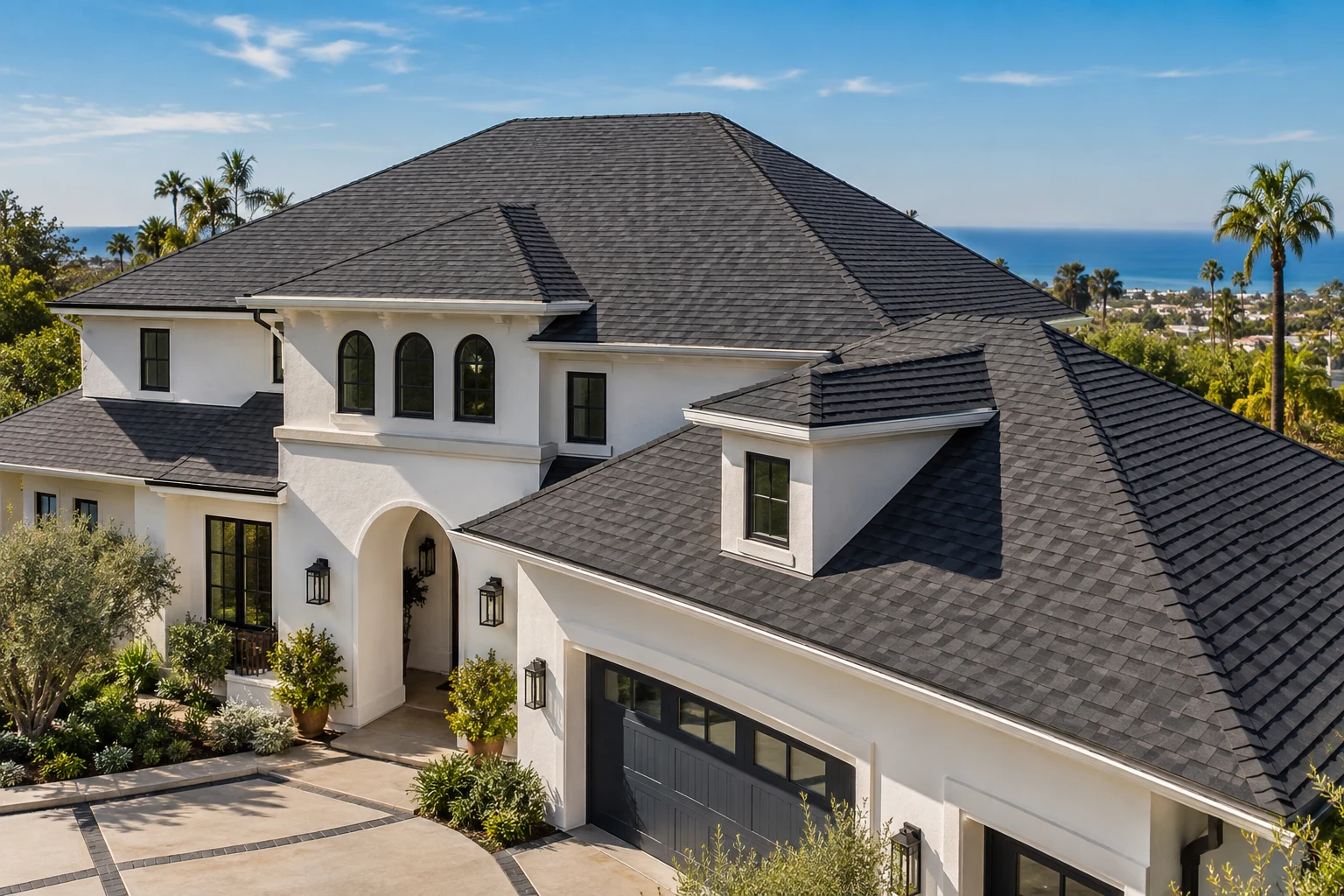
In Ontario, cost per square roof is only useful when it is tied to the actual condition of the full roofing system. All Star Roof Replacement helps homeowners understand that a square is just a measurement, while the real replacement cost depends on what is happening with the underlayment, decking, ventilation, flashing, tear-off conditions, and the way Inland Empire heat has aged the roof.
If you are comparing numbers, the direct answer is this: one roofing square equals 100 square feet, but two Ontario homes with the same roof size can still have very different replacement costs. For a broader look at local roof conditions and replacement needs, many homeowners start with our Ontario roof replacement page.
What “Cost Per Square” Means on a Roof
Roofers use the term “square” to describe 100 square feet of roof area. A 2,000 square foot roof is commonly discussed as 20 squares before waste, slope, valleys, ridges, hips, and layout complexity are added into the scope.
That part is simple. What is not simple is treating cost per square like a flat price tag. Roof replacement is not a product sitting on a shelf. It is a system-based construction project, and the final price depends on what must be removed, corrected, and rebuilt so the new roof performs properly.
The short answer is that cost per square is a measuring tool, not a final answer. If a quote only gives you a number per square without explaining the roof system, it is leaving out the part that actually matters.
Why This Question Matters So Much in Ontario
Ontario roofs deal with a harder environment than many homeowners realize. This is inland Southern California, not a mild coastal climate. Prolonged summer heat, strong UV exposure, and repeated daily expansion and contraction wear down roofing systems year after year.
That climate changes how roofs age. Shingles lose granules and dry out faster. Tile roofs may still look respectable from the street while the underlayment below has already reached the end of its service life. Flashings and sealants also take constant thermal stress, especially around penetrations and roof transitions.
In homes across Ontario, we often see roofs that look manageable from the ground but tell a very different story during inspection. A common issue during inspections is finding that the visible material is not the main failure point. The real issue is often deeper in the system.
The direct answer is this: Ontario’s heat and UV exposure make hidden roof deterioration more common, and that hidden deterioration is often what changes cost per square.
Why Roof Cost in Ontario Is About More Than Material
Many homeowners start by asking what shingles cost per square or what tile costs per square. That is understandable, but it misses the bigger issue. The roof is not just the top layer you can see. It is the complete assembly that keeps water out, manages heat, and protects the framing underneath.
When All Star Roof Replacement evaluates a replacement, we are not just looking at whether the roof has shingles or tile. We are looking at whether the underlayment is brittle, whether the deck is still solid, whether attic ventilation is doing its job, and whether previous installation shortcuts are now creating ongoing problems.
Many homeowners don’t realize that the material they see may not be the part that has actually failed first. On tile roofs in Ontario, for example, the tiles themselves often outlast the waterproofing layer below them. On shingle roofs, the loss of granules may be the visible warning, but the bigger cost issue may come from system age and heat damage underneath.
The answer here is simple: material affects price, but system condition drives replacement scope.
Typical Cost Per Square Ranges in Ontario
Installed roof cost per square in Ontario usually falls within a range rather than a fixed price. That is because roof design, access, slope, removal requirements, code upgrades, and hidden repairs can change the actual project scope.
For many homes in Ontario, architectural shingle roof replacement often falls in roughly the mid-hundreds to low-thousands per square installed, while tile systems usually come in higher because of additional labor, weight considerations, and more involved installation details. Flat or low-slope sections can also price differently because they require a different roof system altogether.
The direct answer is that there is no responsible flat price for every home. A cost per square range can help with planning, but it should always be tied to a real inspection and a clear scope of work. If you want to compare broader local replacement factors, our page on roof replacement cost in Ontario explains how total project pricing is shaped.
Why Older Ontario Homes Change the Price Per Square
Ontario has a large mix of aging homes, especially neighborhoods built from the late 1980s through the 2000s that are now moving into a major replacement window. That matters because a 20-year-old roof in this climate is very different from a newer roof with isolated damage.
Older roofs often come with repeated repairs, worn flashing, outdated ventilation, and signs of long-term thermal fatigue. In some cases, we also find uneven decking, dry rot, or wood deterioration that cannot be seen until the old roof is removed.
In homes across Ontario, we often see roofs where the original installation was never fully corrected after earlier problems. That can mean shortcuts around valleys, penetrations, wall tie-ins, or ventilation. When the roof is being replaced, those details have to be addressed if the new system is going to last.
The short answer is this: older roofs usually cost more per square when the replacement has to correct aging system failures, not just remove and replace the top surface.
What Usually Drives Cost Per Square Up or Down
Roof size matters, but it is only one factor. The bigger cost drivers are usually labor intensity, tear-off conditions, hidden repairs, and the level of detail needed to install the new system correctly.
- Roof complexity: Multiple planes, hips, valleys, steep sections, skylights, and chimney areas increase labor and waste.
- Tear-off scope: Removing old material, especially heavy tile or multiple layers, affects labor and disposal cost.
- Decking condition: Damaged or weakened wood has to be replaced before the new roof goes on.
- Underlayment type: In Ontario heat, the waterproofing layer matters as much as the finish material.
- Ventilation corrections: Poor attic airflow can shorten roof life and raise cooling demand.
- Flashing replacement: Problem areas around walls, vents, and transitions often need more than surface work.
- Access and layout: Tight lot lines, solar coordination, patio covers, or attached sections can affect labor planning.
The answer every homeowner should know is this: lower cost per square does not automatically mean better value. If key system work is left out, the lower number can become the more expensive outcome later.
Why Heat and UV Exposure Matter So Much in Ontario
Ontario’s roof problems are often driven by heat first and water second. That may sound backwards, but it is common in inland Southern California. Constant sun exposure bakes roofing materials, and then cooler nights cause contraction. Over time, that movement weakens the full roof assembly.
Shingle roofs can become brittle, lose protective granules, and start breaking down faster than homeowners expect. Tile roofs may still appear solid on top, but the underlayment below can suffer from long-term heat fatigue. Once that waterproof layer is worn out, recurring leaks start showing up in different spots.
A common issue during inspections is seeing a leak stain indoors while the larger problem is actually widespread deterioration below the visible roof covering. That is why patching one area often does not solve the issue for long.
The direct answer is this: Ontario heat speeds up system aging, and that makes full replacement more common than repeated repair on older roofs. Homeowners dealing with high attic temperatures often also look into how roofing can help reduce heat in Ontario homes.
Why Surface Damage Often Means Deeper System Failure
A slipped tile, ceiling stain, missing shingle, or exposed flashing may look like a small isolated problem. Sometimes it is. But on roofs that are already 15 to 30 years old, those signs often point to broader failure in the roofing system.
Water rarely enters exactly where it shows up inside. Heat damage is also cumulative. A weak section may be the first area you notice, but not the only area that is failing. That is why a roof with recurring leaks is often not dealing with one bad spot. It is dealing with aging throughout the system.
Many homeowners don’t realize that repeated repair history can actually be a clue that replacement is the more practical path. If the roof keeps needing attention, the issue is usually not just one shingle, one tile, or one flashing point.
The answer is straightforward: surface symptoms often mean deeper roof failure, and cost per square has to reflect what the full roof system needs, not just the visible problem. If you are weighing those two paths, our page on roof repair or replacement in Ontario breaks down when each one makes sense.
What Happens When Homeowners Wait Too Long
Most people do not delay roof replacement because they are ignoring the issue. They delay because they are trying to be careful. They want to know whether the roof still has time left and whether a repair could buy them another season.
That is reasonable. But roofing problems usually do not stay contained. Heat continues aging the system. Moisture intrusion continues affecting the wood below. Ventilation issues continue trapping hot air in the attic. What could have been a more straightforward replacement can turn into a larger project once more of the roof assembly is compromised.
In homes across Ontario, we often see situations where earlier action would have meant a simpler replacement scope. Instead, by the time the roof is addressed, there are added decking repairs, more flashing replacement, or more widespread underlayment failure than there would have been before.
The direct answer is this: delays usually increase total cost because the roof system keeps deteriorating, even when the visible signs do not look dramatic yet.
How the Roof Affects Energy Use and Indoor Comfort
Your roof does more than keep rain out. In Ontario, it also plays a major role in how much heat enters the home and how hard your cooling system has to work. When the roofing system is aging, poorly ventilated, or no longer performing as intended, homeowners often feel it inside as uneven temperatures and higher summer energy bills.
Many homeowners don’t realize how often roofing and energy concerns overlap. An older roof can trap more heat in the attic, which increases strain on insulation and HVAC performance. That is one reason replacement decisions in Ontario are not just about stopping leaks. They are also about restoring the roof as a working part of the home’s thermal protection.
The answer is simple: the roof affects both protection and energy efficiency, which is why All Star Roof Replacement evaluates the whole system instead of just pricing the visible surface. For more on that side of the decision, homeowners often compare options for energy-efficient roofing in Ontario.
Why All Star Roof Replacement Evaluates the Full Roofing System
All Star Roof Replacement does not guess based on rough square footage alone. We use satellite measurements and visual inspection to understand both roof size and roof condition before recommending replacement. That allows us to identify what the roof actually needs instead of assuming every home fits the same pricing formula.
That matters in Ontario because every roof is different. One home may need straightforward replacement. Another may need ventilation correction, decking replacement, flashing updates, or a tile lift-and-relay approach because the visible tile still has useful life while the underlayment does not.
The short answer is this: accurate cost per square starts with accurate evaluation. If the roof is priced without understanding the condition of the full system, the number is incomplete by definition.
How Roof Type Changes Cost Per Square in Ontario
The direct answer is this: different roof systems in Ontario price differently because they are built, removed, and replaced differently. The material matters, but the labor, underlying components, and condition of the system matter just as much.
On many Ontario homes, architectural shingle systems are usually the more budget-conscious replacement path, while tile systems often cost more per square because the work is more involved. That does not automatically mean tile is the better or worse choice. It means the scope is different, especially when the project involves lifting tile, replacing worn underlayment, correcting battens or flashings, and resetting the roof correctly.
For smaller homes, replacement projects may sometimes fall in the roughly $8,000 to $15,000+ range when the roof is relatively straightforward and the system conditions are favorable. For many full residential replacements in Ontario, costs more commonly land in the $15,000 to $30,000+ range, with larger, steeper, more complex, or tile-heavy roofs going higher. Those ranges are planning references only. Final pricing always depends on the actual roof condition.
In homes across Ontario, we often see tile roofs where the top layer still looks decent from the yard, but the underlayment below is already at the end of its service life. That is a good example of why cost per square cannot be judged by appearance alone. If you are comparing system options, our page on tile vs shingle roofing in Ontario helps explain the practical differences.
What a Low Price Per Square May Be Leaving Out
The short answer is this: a lower number is not always a lower real cost if important system work has been left out. Roofing quotes can look similar at a glance while covering very different scopes of work.
When homeowners compare estimates, one of the biggest mistakes is assuming each quote includes the same level of tear-off, wood inspection, flashing replacement, ventilation correction, and waterproofing detail. Sometimes a low per-square number simply means the quote is lighter on the parts of the job that are hardest to see from the ground.
A complete replacement scope may include:
- Full tear-off down to the deck: so the roof can actually be inspected rather than covered over
- Decking evaluation: to identify soft, damaged, or deteriorated wood before new materials are installed
- Underlayment replacement: because the waterproofing layer is often where the real failure is
- Flashing replacement: around walls, penetrations, chimneys, and transitions where leaks commonly begin
- Ventilation review: to reduce trapped attic heat and improve long-term roof performance
- Code-related updates: where the replacement scope triggers current compliance requirements
A common issue during inspections is finding that prior work was done as a visible fix instead of a full correction. New surface material installed over an aging or poorly detailed system often leads to repeat problems. That is why not all contractors are equal, and why installation quality matters as much as the material itself.
Why Ontario Homeowners Often Need More Than a Basic Tear-Off and Replace
The direct answer is this: many Ontario roofs need corrective work because age, heat, and earlier installation shortcuts have affected more than just the outer surface. A basic replacement is only enough when the system below is still in good shape.
Roofs in Ontario have spent years dealing with inland heat, strong UV exposure, and seasonal weather swings. Over time, that affects fasteners, flashings, sealants, ventilation performance, and the waterproof layers beneath the visible roof covering. If those areas are failing, replacing only the exposed material is not really solving the problem.
In homes across Ontario, we often see signs of previous patching around pipe penetrations, valleys, and wall lines. Those are often the areas where recurring leaks start showing up because the original details were not done well, or because the roof system has aged beyond what another repair can realistically solve.
That is also why many homeowners researching price eventually need more than a rough square count. They need to understand whether the project is a straightforward replacement or whether the roof is also due for ventilation corrections, flashing rebuilds, or localized decking replacement. Homeowners who are trying to understand the condition side of the equation often review the common signs you need a new roof in Ontario before deciding how urgent the project is.
How Title 24 and Energy Performance Can Affect Cost
The short answer is this: energy code requirements can influence roof cost, but they can also improve how the home handles heat. In Ontario, that matters because the roof is one of the biggest heat-control surfaces on the house.
When a replacement reaches the threshold that requires current California energy compliance, material selection can be affected. Reflective roofing options, ventilation planning, and the way the system is rebuilt may all influence price. That does not mean the roof is being made more complicated for no reason. It means the replacement is being brought into line with how homes in inland Southern California are expected to perform.
For many homeowners, this becomes part of the larger value question. A roof that better reflects heat and manages attic temperatures more effectively may help reduce strain on the cooling system during Ontario summers. It is not only about leak prevention. It is also about restoring the roof as part of the home’s overall thermal protection.
If that part of the project matters to you, our pages on cool roof options in Ontario and roof lifespan in Ontario explain why the right system design can affect both durability and comfort.
Why Cost Per Square Changes Once the Roof Is Measured Correctly
The direct answer is this: roof pricing starts with square footage, but real roof measurement is more detailed than house size. Valleys, hips, ridges, pitch, waste, and layout all affect how many squares are actually involved.
Homeowners sometimes estimate roof size from the home’s floor plan or online property information. That can help with rough budgeting, but it is not enough to price a replacement accurately. A 2,000 square foot house does not always have a 2,000 square foot roof. Garages, overhangs, multi-level layouts, and slope complexity can increase the actual roofing area substantially.
All Star Roof Replacement uses satellite measurements along with visual inspection because size alone is not enough. The measurement tells part of the story. The inspection tells whether the roof has one layer or multiple layers, whether there are low-slope transitions, whether access is simple or tight, and whether the roof design will require more labor at key details.
The simple answer is that accurate cost per square depends on accurate measuring and accurate evaluation. If either one is missing, the number is incomplete.
How the Replacement Process Affects Price
The direct answer is this: the more work involved in safely removing, correcting, and rebuilding the roof system, the more the installed cost per square will reflect labor and project complexity. Roofing is not just material delivery. It is a staged construction process.
Most Ontario replacements involve several pricing stages inside one project: tear-off, deck inspection, dry-in, installation of underlayment and flashings, installation of the finish roof material, and final cleanup. If tile must be handled carefully for relay, or if steep slopes slow production and increase safety requirements, those factors affect labor cost even when the roof area itself is unchanged.
Homeowners often feel more comfortable with pricing once they understand the sequence of the work. It helps explain why one roof takes a straightforward path while another requires more coordination. If you want the step-by-step side explained more clearly, our page on the roof replacement process in Ontario breaks down what typically happens from inspection through completion.
Decision Clarity: When Replacement Makes More Sense Than Repair
The short answer is this: replacement usually makes more sense when the roof is old, leaking in multiple areas, showing widespread wear, or has a history of repeat repairs. If the problem is in the system, not just one spot, patching usually delays the larger decision rather than solving it.
Repairs still have a place on younger roofs with isolated damage. But on many Ontario homes, the issue is not one broken component. It is cumulative failure from heat, underlayment age, flashing wear, and installation fatigue. That is why repeated repairs can become the more expensive path over time.
- Replacement is often the better decision when: the roof is 15 to 30+ years old, leaks have shown up more than once, indoor temperatures are uneven, or visible wear is widespread.
- Repair may still make sense when: the roof is relatively newer and the damage is truly isolated, such as a single impact area or one clearly defined problem point.
- Waiting usually costs more when: moisture reaches wood components, attic heat continues accelerating aging, or the next storm exposes already-weakened details.
What a good decision looks like is simple: you understand the current condition of the roof, the likely remaining life of the system, and whether the proposed work is actually addressing the root cause. If you are still deciding between short-term repair and full replacement, our page on whether reroofing is worth it in Ontario can help clarify why covering over old issues is usually not the right answer in this climate.
FAQ: Cost Per Square Roof in Ontario
How much does a new roof cost in Ontario, California?
The direct answer is that smaller replacement projects may sometimes fall around $8,000 to $15,000+, while many full roof replacements in Ontario are more often in the $15,000 to $30,000+ range. Larger roofs, tile systems, steep layouts, or roofs needing hidden repairs can go above that.
The reason for the spread is simple: roof cost depends on more than size. The final number is shaped by roof type, tear-off conditions, decking repairs, ventilation corrections, flashing details, and how much of the system has actually failed.
What is the average cost per square for roofing in Ontario?
A practical answer is that architectural shingle roof replacement often falls in the hundreds to low-thousands per square installed, while tile roof replacement is typically higher because it is more labor-intensive and system-heavy. The exact price depends on the house and the roof condition.
Cost per square is best used as a budgeting tool, not a final quote. Two roofs with the same square count can price very differently if one has hidden wood damage, expired underlayment, or poor prior installation.
How long does roof replacement usually take?
Most on-site residential roof replacement work in Ontario is completed in a matter of days, but the exact timeline depends on roof size, complexity, weather, material choice, and whether hidden repairs are found after tear-off.
Permits, scheduling, and HOA coordination can also affect the overall timeline before work starts. If you want a clearer view of scheduling expectations, our page on roof replacement timeline in Ontario explains what homeowners should expect.
How do I know if I need replacement instead of repair?
If your roof is older, has had recurring leaks, shows widespread wear, or has already been repaired multiple times, replacement is often the more practical option. Repairs make the most sense when the roof is still relatively young and the damage is limited to one area.
A common issue during inspections is discovering that a ceiling stain or visible leak is only the symptom. The actual failure may be underlayment breakdown, flashing problems, or broad system aging that patchwork will not fix for long.
How long should a roof last in Ontario’s climate?
Ontario roofs generally do not age the same way roofs do in milder climates. Inland heat and UV exposure can shorten the life of shingle systems, while tile roofs often outlast the underlayment beneath them.
That means lifespan depends on both the visible material and the hidden waterproofing system. Installation quality, ventilation, and heat exposure all play a role in how long the roof performs well.
Does the inspection affect the estimate that much?
Yes. The direct answer is that inspection quality has a major effect on estimate accuracy because many of the most important cost drivers are not visible from the ground. Measuring the roof is necessary, but evaluating condition is what makes the number useful.
All Star Roof Replacement uses satellite measurements and visual inspection to understand both roof area and system condition. If you want more context on the evaluation side, our page on roof inspection cost in Ontario explains what inspections are meant to uncover.
Can I finance a roof replacement in Ontario?
Yes, many homeowners explore financing when the roof has reached replacement age but the timing is difficult. Financing options depend on the homeowner, the project, and the type of program or loan being considered.
The important part is making a decision based on roof condition rather than continuing costly short-term repairs on a failing system. If financing is part of your planning, our page on financing roof replacement in Ontario gives a clearer overview.
Get Clear Roof Pricing From an Actual System Evaluation
The most useful number is not just cost per square. It is the number that comes from understanding what your roof actually needs. All Star Roof Replacement helps Ontario homeowners make that decision by evaluating the full roofing system, identifying hidden issues, and explaining the findings clearly before recommending replacement.
If you want to discuss your roof, request an estimate, or ask questions about replacement cost, contact All Star Roof Replacement at (310) 729-3013, email teamallstarconstruction@gmail.com, or reach out through the contact page.
Licensed • Insured • Owens Corning Preferred Contractor • CA License #1009760