
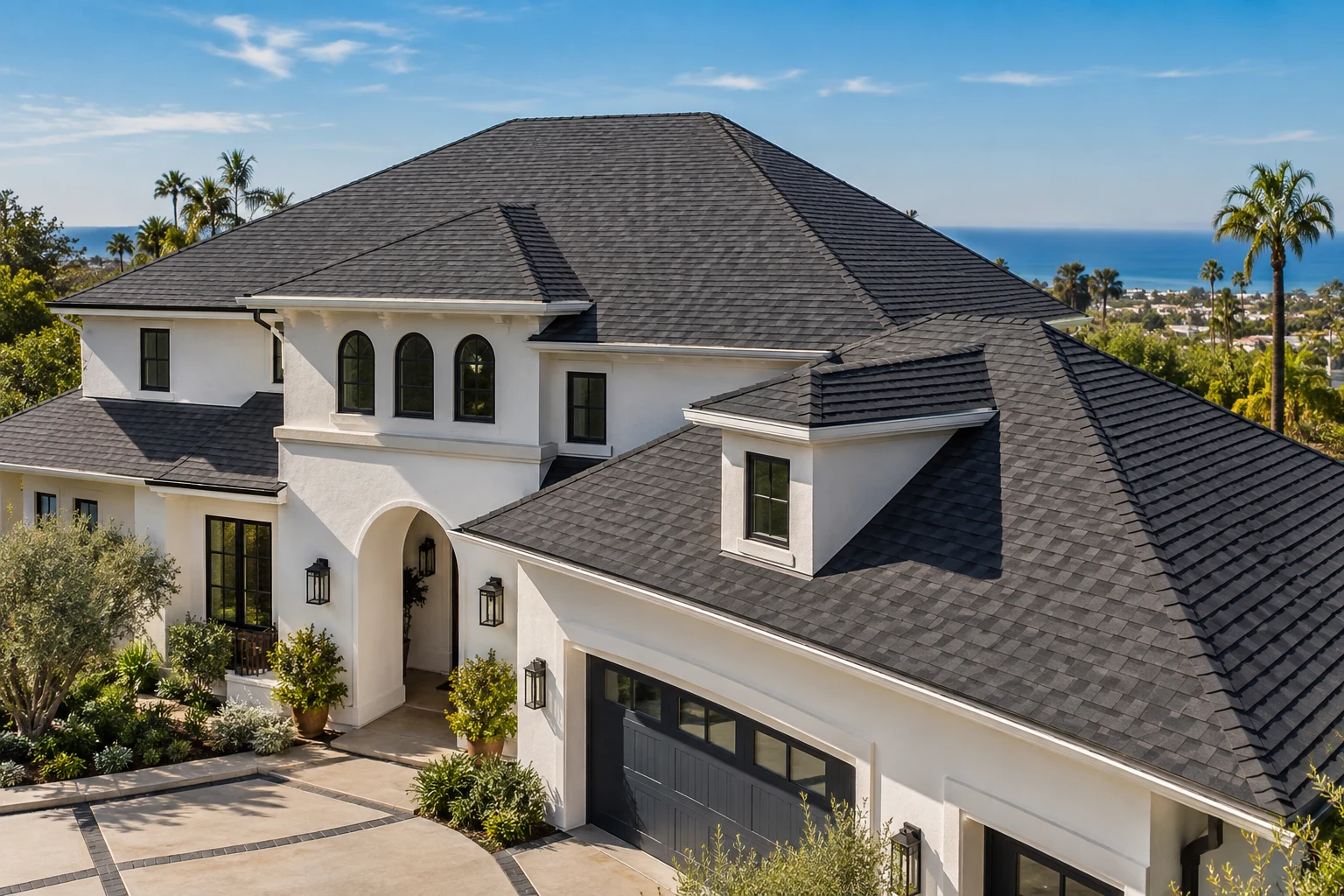
In Ontario, a roof usually does not last as long as homeowners expect because inland heat, intense UV exposure, and day-to-night temperature swings wear down the full roofing system over time. All Star Roof Replacement evaluates roof lifespan based on the condition of the whole system, because what matters most is not just the surface material, but the underlayment, flashing, decking, and ventilation that keep the home protected.
If you are trying to figure out whether your roof still has useful life left, the answer depends on the roof type, its age, how it was installed, and how it has handled Ontario’s climate. For a broader view of local replacement needs, you can review our Ontario roof replacement service area page to see how roofing systems commonly age in this part of Southern California.
Roof Lifespan in Ontario Depends on More Than the Material
A direct answer: in Ontario, many asphalt shingle roofs start reaching the later part of their service life around 18 to 25 years, while tile roofs can last much longer on the surface but often need replacement work when the underlayment underneath wears out. A roof can still look decent from the street and still be close to system failure.
That matters because Ontario is not a mild coastal climate. This is inland Southern California, where roofs sit under heavy summer sun, absorb heat for long stretches, and then expand and contract through repeated temperature changes.
Many homeowners don’t realize that a roof does not fail only when shingles curl badly or tiles break. In a lot of cases, the real problem starts underneath, where the waterproofing layers and ventilation details have been slowly breaking down for years.
The short version is simple: roof lifespan in Ontario is really a system question. If the layers below the surface are worn out, the roof is near the end of its useful life even if parts of the exterior still look acceptable.
Why Roofs in Ontario Wear Out Faster
The biggest reason is heat. Ontario regularly sees long periods of high temperatures, and that constant thermal load puts stress on every part of the roof assembly.
As roofing materials heat up during the day and cool off at night, they expand and contract. That repeated movement affects sealants, flashings, fasteners, and underlayment. Over time, materials dry out, become brittle, and lose their ability to perform the way they did when the roof was new.
A clear answer here: most roofs in Ontario wear out from cumulative heat stress and UV exposure, not from one dramatic event. The aging happens gradually, and by the time leaks show up inside the house, the system may already be well into failure.
UV exposure is another major factor. Direct sunlight breaks down asphalt surfaces, contributes to granule loss, and shortens the life of components that are supposed to stay flexible. On tile roofs, the tiles themselves may still look solid, but the underlayment below can reach the end of its life much sooner because of trapped heat and age.
In homes across Ontario, we often see roofs that appear serviceable from the ground but are actually dealing with brittle underlayment, weakened flashing areas, and ventilation issues that shorten life across the whole system.
Ontario’s Housing Age Is a Big Part of the Lifespan Question
Ontario has a wide mix of housing, from older neighborhoods near the historic core to large sections of track homes built from the 1990s forward. That matters because many of those homes are now entering the window where original roofs are aging out.
Homes built in the late 1990s and early 2000s are especially important in this conversation. A lot of those roofs are now old enough that even if they have not had major visible failure yet, the system may already be declining beneath the surface.
A direct answer: if your Ontario home still has its original roof and that roof is in the 15 to 30 year range, lifespan is no longer a theoretical question. It is something that needs to be evaluated based on actual system condition.
A common issue during inspections is finding roofs that have had a few repairs over the years, but the underlying assembly was never fully addressed. That can make the roof seem manageable for a while, but it usually means the owner is spending money on symptoms instead of solving the root problem.
Older homes can also bring another issue into the picture: outdated ventilation design. If the attic is not venting properly, excessive heat builds up under the roof deck. That can shorten material life, affect comfort indoors, and increase cooling demand during Ontario summers.
Tile Roofs Often Last Longer on the Surface Than They Do as a System
Ontario has many homes with concrete tile roofs, especially in newer tract developments. Homeowners often assume tile means the roof itself should last for decades without major work. That is only partly true.
The visible tile can stay in place for a very long time. But the tile is not the main waterproofing layer. The underlayment beneath the tile is what actually keeps water out, and in Ontario’s climate that underlayment often ages out long before the tile does.
The answer homeowners need is this: a tile roof may still look fine while the system underneath is already near failure. That is why tile roof lifespan has to be judged by underlayment condition, not tile appearance alone.
Many homeowners don’t realize that under tile systems, the roof can start having recurring leak patterns even though the tiles themselves are not the real issue. Once the underlayment loses integrity, replacement becomes a system decision, not just a matter of swapping a few visible pieces.
If you are comparing how different systems perform in this climate, our page on tile vs shingle roofing in Ontario explains how lifespan, heat performance, and replacement needs differ between the two.
Shingle Roofs in Ontario Usually Age Faster Than Homeowners Expect
Asphalt shingle roofs are common because they are practical and cost-effective, but Ontario’s sun and heat can be hard on them. High UV exposure speeds up the breakdown of the asphalt layer, and once protective granules begin wearing off, the shingles become more vulnerable to cracking and drying.
Shingle roofs here often do not fail all at once. They lose performance gradually. Granule loss, curling edges, brittle tabs, and weak seal strips can all show up before a major interior leak happens.
A clear answer: if an asphalt roof in Ontario is showing visible wear and is already in the later teens or older, it may be nearing the end of practical service life even if only part of the surface looks damaged.
In homes across Ontario, we often see shingle roofs where the visible issue looks limited, but a closer inspection shows broader wear across the slopes, penetrations, and transition points. That is usually a sign the system is aging as a whole, not just in one isolated spot.
Installation Quality Affects Roof Life as Much as Climate
Two roofs can be the same age, use the same material, and still perform very differently. The reason is usually installation quality.
If flashing was not detailed correctly, ventilation was insufficient, or the underlayment and edge components were not installed properly, the roof often ages early. Ontario’s climate exposes those weaknesses faster because heat and thermal movement put constant pressure on weak points.
The direct answer is this: a well-installed roof system will usually outlast a poorly installed one, even if both use similar products. In Ontario, workmanship matters just as much as the material on top.
A common issue during inspections is uncovering signs of poor previous installation that homeowners were never shown. We may find exposed transitions, patched penetrations, failing flashings, or sections where past work solved a symptom without correcting the system beneath it.
That is one reason All Star Roof Replacement uses satellite measurements together with visual inspection. We do not guess based on curb view alone. We look at how the whole roof is laid out, where the stress points are, and whether the system is still functioning the way it should.
How Roof Lifespan Affects Energy Costs in Ontario
Roof age is not only about leak risk. It also affects how the house handles heat.
In Ontario, high summer temperatures put a lot of pressure on the roof and attic. If the roofing system is worn out, poorly ventilated, or holding excess heat, your HVAC system has to work harder to keep indoor temperatures stable.
Many homeowners don’t realize that roof deterioration can show up as comfort problems before it shows up as a major leak. Rooms may feel hotter in the afternoon, indoor temperatures may be uneven, and cooling costs may keep climbing year after year.
The answer is straightforward: an aging roof can reduce energy efficiency long before it fully fails. That is why roof lifespan is tied to both home protection and monthly operating cost.
Ontario homeowners looking at replacement often end up asking whether newer systems can help with heat control. They often can, especially when the replacement includes proper ventilation and code-compliant reflective products. You can read more on our cool roof options in Ontario if heat reduction is part of the concern.
Signs a Roof in Ontario May Be Near the End of Its Life
You do not need to wait for a major leak to know the roof is aging out. In most cases, there are warning signs that the system is moving toward replacement.
- The roof is roughly 15 to 30 years old
- There have been multiple leak events or repeated repairs
- Shingles are losing granules, curling, or becoming brittle
- Tiles are slipping, cracking, or showing movement patterns
- Flashing areas are rusted, loose, or previously patched
- Indoor temperatures feel uneven, especially during hot months
- Cooling bills have increased without another obvious cause
- There are attic moisture signs, stains, or evidence of past water entry
A direct answer: when age, repeated repair history, and heat-related performance issues start showing up together, the roof is often nearing the end of its practical lifespan. At that point, the right question is usually not how to patch it again, but whether the full system is still worth investing in.
If you are seeing several of these signs together, our page on signs you may need a new roof in Ontario goes deeper into what those patterns usually mean.
Why Delaying the Decision Usually Increases Total Cost
Roofing problems tend to get more expensive with time because they rarely stay limited to the original symptom. A small leak can turn into damaged underlayment, deteriorated decking, insulation issues, interior staining, and more labor during replacement.
That does not mean every older roof needs immediate replacement. But it does mean delays should be based on actual roof condition, not just on the hope that the problem stays small.
The clear answer: if the roof is failing as a system, postponing replacement usually increases the eventual cost. The longer the hidden layers continue to deteriorate, the more work may be needed when the roof is finally opened up.
In homes across Ontario, we often see homeowners spend money on isolated fixes for a roof that is already in overall decline. That approach can make sense on a younger roof with limited damage. On an older roof with recurring issues, it often just extends the problem without solving it.
The Right Early Direction Is to Determine Whether the Roof Still Has System Life Left
Not every roof in Ontario ages the same way. Material type, installation quality, ventilation, prior repairs, and exposure all matter. That is why the first step is not guessing from the ground. It is determining whether the roof still has reliable system life left or whether the underlying components are already wearing out.
A direct answer: the real lifespan question is not just “How old is the roof?” It is “Is the full roofing system still doing its job in Ontario’s climate?”
That is especially important when the roof looks only moderately worn from the outside. Surface appearance can hide underlayment fatigue, flashing failure, trapped heat, and wood issues that do not show up until a proper inspection happens.
If you are trying to sort out whether your situation points more toward another repair or toward full replacement, our local page on roof repair or replacement in Ontario can help frame that decision based on age, leak history, and system condition.
All Star Roof Replacement approaches roof lifespan the way an experienced contractor should: by evaluating the full roof system, identifying hidden issues, and explaining clearly what the roof actually needs before recommending replacement.
What Usually Determines Whether an Ontario Roof Has 2 Years Left or Needs Replacement Now
The direct answer is that remaining roof life is usually determined by system condition, not by age alone. In Ontario, two roofs built in the same year can be in very different shape depending on heat exposure, attic ventilation, installation quality, and whether past repairs actually solved anything.
That is why All Star Roof Replacement does not treat roof lifespan like a simple chart. A 20-year-old roof may still have some service life if the full assembly is intact, while another roof of the same age may already be at replacement stage because the underlayment is worn, the flashing details are failing, or the decking has started taking on damage.
In homes across Ontario, we often see roofs that homeowners were told were “fine for a few more years” based only on surface appearance. Then the closer evaluation shows brittle waterproofing layers, patched transition points, or ventilation issues that have been shortening the life of the whole roof for a long time.
That is the important point: roof lifespan is not just about what you can see from the driveway. It is about whether the system beneath the visible roof covering is still protecting the home the way it should.
Why the Underlayment Often Decides the Real Lifespan
A clear answer here: on many Ontario homes, especially tile-roof homes, the underlayment is what determines when replacement becomes necessary. The surface may still look acceptable, but if the waterproofing layer underneath has reached the end of its life, the roof system has too.
Homeowners often think tile itself is the roof. It is not. The tile is the exposed surface layer, but the real water barrier is the underlayment below it. In Ontario’s heat, that layer takes a lot of stress. Trapped heat under tile, repeated thermal movement, and years of age can dry it out until it becomes brittle and unreliable.
The same basic issue can happen with shingle roofs too. Once the shingle system and the components beneath it start losing integrity, leaks may show up around penetrations, valleys, and edge details first. By then, the visible problem is often only part of the story.
A common issue during inspections is finding roofs with a few broken or slipped tiles that look like isolated maintenance items, but the actual problem is aged underlayment across large sections of the roof. In that situation, replacing a handful of visible pieces does not restore the system.
If you are trying to compare which systems tend to hold up better in local conditions, our page on best roofing materials for Ontario homes explains how different roof types perform in this climate and where lifespan differences really come from.
How Attic Heat and Ventilation Affect Roof Life in Ontario
The direct answer is that poor ventilation can shorten roof life noticeably in Ontario. When attic heat builds up and cannot escape properly, it puts more stress on the roof deck, underlayment, and roofing material above it.
This matters more in inland Southern California than many homeowners realize. Ontario summers are long and hot, and the roof absorbs solar load day after day. If that heat gets trapped in the attic, it can accelerate the aging of roofing components and make indoor comfort harder to manage.
That is one reason a roof can be part of an energy problem as well as a water problem. Excessive attic heat often shows up as hotter upstairs rooms, uneven temperatures across the home, or air conditioning that seems to run constantly during peak summer months.
In homes across Ontario, we often see older roofs where ventilation was never updated or was poorly designed from the start. Even when the outer roofing material still has some visual life left, the full system may already be wearing out faster because it has been operating under higher heat stress for years.
A good replacement plan looks at more than surface material. It also looks at whether the roof is venting correctly and whether the new system should include code-compliant upgrades that improve long-term performance. If heat control is part of your concern, our page on energy-efficient roofing in Ontario explains how replacement can improve both roof performance and home comfort.
Why Some Ontario Roofs Fail Early Even Before They Reach Expected Age
The answer is simple: poor installation can take years off a roof’s life. Even quality roofing products will not perform the way they should if the flashing, underlayment, transitions, fastening, or ventilation details were not done correctly.
Homeowners are often told a material should last a certain number of years, but those estimates assume the roof was installed as a complete working system. If the previous work cut corners at valleys, penetrations, edges, or attic ventilation, Ontario’s heat tends to expose those weaknesses faster.
A common issue during inspections is uncovering signs of earlier work that solved a symptom instead of the cause. That may include patched flashing, mismatched repairs, exposed sealants doing too much of the work, or evidence that moisture has been entering around vulnerable roof details for longer than the owner realized.
This is also why not all contractors are equal. Roof lifespan depends as much on workmanship as on product selection, especially in a climate like Ontario where the roof is under constant heat stress for much of the year.
If you want a better sense of what a full replacement should involve, our page on the roof replacement process in Ontario walks through how a proper system replacement is approached from tear-off to final installation.
When an Older Roof Still Might Be Serviceable
The direct answer is that an older roof may still be serviceable if the issue is truly limited, the system is otherwise intact, and there is no pattern of broader failure. Age matters, but condition matters more.
There are cases where a roof in the later part of its life is not yet in immediate replacement territory. If the roof has not had recurring leaks, the wear is localized, the underlayment still appears reliable, and the installation details are holding up, there may still be some useful life left.
But that decision has to be based on actual findings. It should not be based on hope, or on the assumption that because the roof is not leaking heavily today it must still be fine. Ontario roofs often decline gradually. The early stage of failure may show up as isolated symptoms even though the larger system is already aging out.
That is why the goal is clarity. All Star Roof Replacement uses satellite measurements and visual inspection to understand roof layout, problem areas, and overall condition before recommending replacement. We do not guess from the ground and we do not reduce the decision to one visible spot.
What Delaying the Decision Really Does
A clear answer: delaying replacement on a failing roof usually increases total cost, because damage often spreads beyond the original visible problem. What looks like a manageable leak today may involve underlayment failure, decking damage, insulation issues, or interior repairs by the time the roof is finally opened up.
This does not mean every older roof should be replaced immediately. It means delay should be based on inspection findings, not on repeated short-term patching of a roof that is already declining as a system.
In homes across Ontario, we often see homeowners spend money more than once on the same roof because each repair addressed the latest symptom but not the broader wear underneath. That can feel like saving money in the moment, but on an older roof it often leads to higher total spending with no real long-term solution.
Damage may already be worse than visible, especially around flashings, valleys, penetrations, and under tile sections where the failure is hidden from normal view. That is why waiting too long can change a straightforward replacement into a more involved project.
If your main question is whether another repair still makes sense, our page on roof repair or replacement in Ontario can help you think through where patching stops being practical.
What a Good Replacement Decision Looks Like
The direct answer is that a good roofing decision is based on patterns, not on one symptom. If age, repeated leaks, rising cooling costs, and visible wear are happening together, replacement often makes more sense than continuing to repair around the edges.
A solid decision usually comes down to a few practical questions:
- Is the roof old enough that major system components may be nearing the end of service life?
- Have there been multiple repairs, repeated leaks, or recurring trouble spots?
- Is the problem limited to one area, or are there signs of wear across multiple slopes and details?
- Is attic heat, uneven indoor temperature, or higher cooling demand becoming part of the problem?
- Would more repair money be going into a roof system that is already generally worn out?
If the answers point toward full-system decline, replacement is usually the cleaner long-term move. If the roof is still fundamentally sound and the issue is truly isolated, that is a different conversation. The key is knowing which situation you are actually in.
Homeowners who want to understand the warning pattern in more detail can review our page on roof lifespan in Ontario for a broader explanation of how roofing systems age in local conditions.
How Ontario Homeowners Should Think About Cost in the Lifespan Conversation
The direct answer is that roof replacement cost has to be judged in context. There is no honest fixed number that applies to every Ontario home, because price depends on roof size, slope, material type, tear-off complexity, ventilation needs, decking condition, and whether hidden issues show up once the old roof is removed.
For some homeowners, the bigger financial question is not just what replacement costs today. It is what repeated repairs, interior damage, and a delayed replacement could cost over the next few years if the roof is already nearing failure.
Tile homes and shingle homes also differ here. A tile roof may need a lift-and-relay style replacement approach if the tiles are reusable but the underlayment is worn out, while a shingle roof may need a complete tear-off and full new system. Geometry matters too. Valleys, dormers, penetrations, and steep sections all affect labor and complexity.
If cost is one of the main concerns, our page on roof replacement cost in Ontario explains the factors that usually move pricing up or down and why contextual estimates matter.
FAQ: How Long Does a Roof Last in Ontario?
How long does an asphalt shingle roof usually last in Ontario?
Many asphalt shingle roofs in Ontario start reaching the later stage of useful life around 18 to 25 years. Heat, UV exposure, ventilation, and installation quality can push that range shorter or longer.
If the roof has recurring repairs, visible granule loss, curling, or brittle shingles, lifespan may be running out even if the roof is not leaking heavily yet.
How long does a tile roof last in Ontario?
The tile surface can last for decades, but that does not mean the full roof system will. In many Ontario homes, the underlayment beneath the tile is what reaches the end of service life first, often well before the tile itself is done.
That is why tile roofs have to be evaluated as systems. A tile roof may still look good from the street and still need replacement work underneath.
How do I know if I need replacement instead of another repair?
If your roof is older, has had repeated leak issues, or is showing wear in multiple areas, replacement often makes more sense than continued patching. Repairs are usually more reasonable when the roof is younger and the damage is truly isolated.
If you are seeing recurring symptoms, our page on signs you may need a new roof in Ontario can help you recognize when the issue is likely larger than a small repair.
Does Ontario heat really shorten roof life that much?
Yes. Inland Southern California heat puts constant stress on roofing materials and on the waterproofing layers beneath them. Repeated daily expansion and contraction can wear out sealants, flashings, and underlayment over time.
That is one reason roofs in Ontario often age differently from roofs in cooler or coastal climates.
How long does roof replacement usually take?
The on-site construction time for many residential roof replacements is often a few days, but the full timeline depends on roof size, complexity, material type, weather, and permitting. Homes with tile systems or more complex layouts may take longer.
If you want a clearer picture of scheduling and what to expect, our page on roof replacement timeline in Ontario explains the process in practical terms.
Can a new roof help with indoor heat and cooling costs?
It often can, especially when the replacement corrects ventilation problems and uses code-appropriate reflective roofing products. An aging roof system can contribute to excessive attic heat and uneven indoor temperatures.
For homeowners focused on comfort as much as leak protection, our page on how to reduce heat with roofing in Ontario explains what parts of a replacement actually make the difference.
Is an inspection worth it if the roof is not leaking badly yet?
Yes. Many roof systems show signs of age before they produce a major interior leak. An inspection helps determine whether the roof still has dependable system life left or whether hidden issues are already developing.
That is especially important on older Ontario homes where surface appearance may not reflect the condition of the underlayment, decking, or flashing.
Get Clear Answers on Your Roof’s Remaining Life
If you are trying to figure out whether your Ontario roof still has useful life left or whether replacement is the smarter next step, All Star Roof Replacement can help you make that decision based on actual system condition. We evaluate the full roof, identify hidden issues, and explain clearly what we see before recommending anything.
To talk with All Star Roof Replacement, call (310) 729-3013, email teamallstarconstruction@gmail.com, or request an estimate through our contact page.
Licensed • Insured • Owens Corning Preferred Contractor • CA License #1009760