
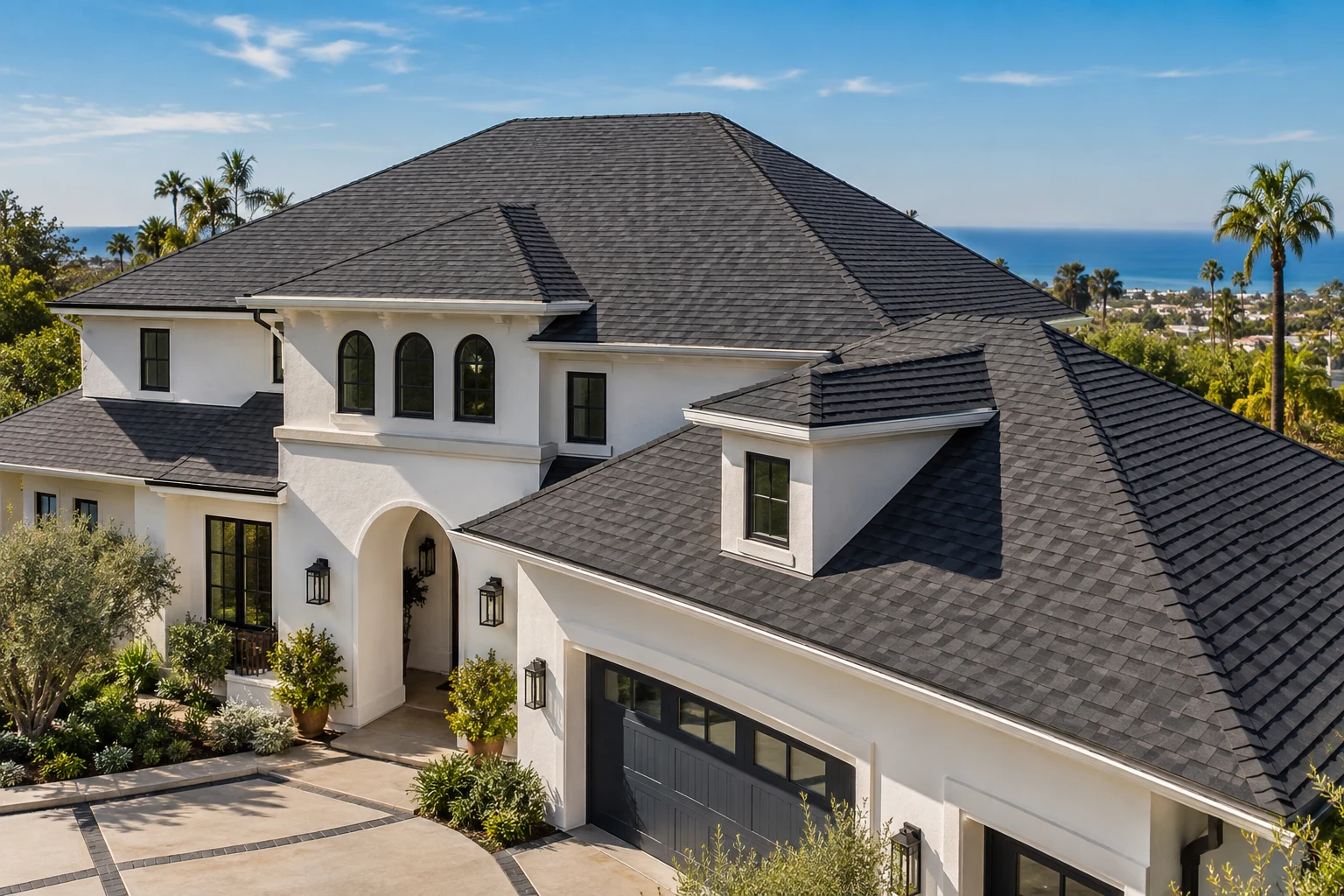
If your roof in Ontario is older, leaking more than once, or making your home harder to keep cool, the issue is often bigger than a simple patch. All Star Roof Replacement evaluates the full roofing system to determine whether the problem is truly isolated or whether replacement is the more practical solution for the home long term.
In many Ontario homes, what looks minor from the ground is really a sign that the roofing system has started failing underneath. You can learn more about local conditions on our Ontario roof replacement service area page, but the short answer is this: inland heat, strong UV exposure, aging roof systems, and poor previous installation often push roofs past the point where repeated repair still makes sense.
How to Know Whether Repair or Replacement Makes More Sense
A repair makes sense when the damage is limited, the roof is still within a reasonable service life, and the surrounding system is still performing well. A replacement makes more sense when the roof is aging out, leaking in multiple areas, or showing signs that the failure goes beyond what is visible on the surface.
That distinction matters in Ontario because this is not a mild coastal roofing environment. Roofs here deal with long periods of inland heat, high UV exposure, dry conditions, and then sudden seasonal rain that tests every weak point at once. Those conditions wear down not just shingles or tiles, but underlayment, flashings, sealants, ventilation, and decking over time.
Direct answer: if the issue is isolated and the rest of the roof still has solid life left, repair may be enough. If the roof is older and the same problems keep returning, replacement is usually the better investment.
Why This Problem Happens So Often in Ontario
Ontario roofs age differently than roofs in cooler parts of Southern California. Heat is a major factor here. Summer temperatures and year-round sun exposure put constant stress on roofing materials, and that stress adds up over time.
Asphalt-based materials dry out and become brittle. Sealants around flashing points and penetrations break down. Underlayment under tile systems can reach the point of thermal fatigue long before the tile itself looks worn out. That is why roofs in Ontario often fail from within the system, not just from obvious surface damage.
Many homeowners don’t realize that the roof is not just the outer layer they can see. It is a system made up of the visible material, underlayment, flashings, edge metal, ventilation, and the wood deck below. If one part weakens, the rest of the roof starts losing reliability with it.
Clear answer: in Ontario, roof problems happen so often because inland heat and UV exposure speed up system-wide aging, even when the surface still looks acceptable from the street.
Older Ontario Homes Are Reaching the Replacement Window
A lot of Ontario neighborhoods saw major residential growth in the 1990s and early 2000s. That matters now because many of those original roofs are in or near the age range where replacement becomes more common than repair.
In homes across Ontario, we often see shingle roofs in the 15 to 22 year range showing granule loss, curling, brittleness, and recurring leak history. We also see tile roofs where the tile still appears usable, but the underlayment below has dried out and stopped doing its job.
A common issue during inspections is finding a roof that has already had several repairs over the years, but none of those repairs addressed the actual condition of the system underneath. One area gets patched, then another area starts leaking. The homeowner ends up paying again without solving the root problem.
If you are trying to judge based on age, our page about roof lifespan in Ontario explains why the real lifespan depends on climate, ventilation, material type, and installation quality, not just the calendar.
Short answer: if your Ontario roof is in the 15 to 30+ year range, age alone does not guarantee replacement, but it does mean recurring issues need to be taken seriously.
Surface Damage Often Means the Failure Is Deeper
One broken tile does not automatically mean you need a new roof. One missing shingle does not automatically mean replacement either. But when visible damage starts happening in more than one area, the odds go up that the problem is deeper than the surface material.
For example, a ceiling stain may look like one simple leak point. In reality, the water may be entering higher up through aged underlayment, failed flashing, or shifted materials, then traveling before it becomes visible inside. By the time you see the stain, the roof system may have been weakening for quite a while.
Many homeowners don’t realize that under tile roofs, the tile is not the main waterproof layer. The underlayment is. So when that underlayment has aged out from Ontario heat, the tiles may still look fine from the street while the roof is already at replacement stage as a system.
Simple answer: visible damage is often just the symptom. The real question is whether the roof system underneath is still dependable.
What All Star Roof Replacement Looks At Before Recommending Replacement
All Star Roof Replacement does not make repair-or-replace recommendations based on guesswork. The roof has to be evaluated as a full system.
That means looking at the roof’s age, leak history, visible wear, drainage, flashing condition, likely underlayment performance, attic heat buildup, ventilation, and any signs that the decking may be compromised. We use satellite measurements along with visual inspection so the recommendation is based on actual conditions, not assumptions.
Every roof is different. Two Ontario homes in the same neighborhood can need completely different solutions depending on roof design, exposure to sun, prior workmanship, material type, and whether earlier repairs were done correctly.
A common issue during inspections is that homeowners have been told they only need a surface-level fix, when the real issue is failed underlayment, worn flashings, poor ventilation, or isolated deck damage that was never identified. If that deeper condition is missed, the decision is incomplete from the start.
Direct answer: the right solution comes from inspecting the whole roofing system, not just the obvious damage you can see from the ground.
Why Delaying the Decision Usually Increases the Cost
Roofing problems rarely stay contained. In Ontario, the same heat that caused the damage in the first place keeps working on the roof every day. Then when rain or wind hits, the weak areas tend to show up all at once.
What begins as worn underlayment or a small leak path can turn into damaged decking, insulation issues, interior staining, mold-prone moisture conditions, and more tear-off work once the project starts. That is one reason delays often increase the total cost of the job.
Many homeowners don’t realize they can spend a lot by trying to save money with repeated repairs on a roof that is already near the end. The patch may stop one leak today, but it does not restore the rest of the roof around it. If the system is failing, repair becomes temporary by definition.
Clear answer: if the roof is already breaking down at the system level, waiting usually makes the final project larger and more expensive.
Your Roof Affects Energy Use, Not Just Leak Protection
In Ontario, your roof does more than keep water out. It also affects attic temperatures, indoor comfort, and how hard your cooling system has to work through long hot seasons.
When the roofing system is aging, poorly ventilated, or holding too much heat, the attic gets hotter and the living space below becomes harder to regulate. Homeowners often notice rising cooling costs, uneven temperatures from room to room, or areas of the house that stay warm well into the evening.
In homes across Ontario, we often see roofing systems that are still shedding most water but are no longer performing well from an energy standpoint. That usually happens when ventilation was never balanced properly, when older materials are absorbing excessive heat, or when an aging system has simply lost efficiency over time.
If that sounds familiar, it helps to understand how energy-efficient roofing in Ontario and heat-reducing roofing options can improve comfort as part of a replacement decision, not just as an upgrade.
Short answer: an old roof can cost you in more ways than leaks. It can also make the home hotter and less efficient.
Signs Repair May Still Be the Right Move
Repair is still reasonable in some situations. If the roof is relatively newer, the issue is confined to one area, and the rest of the roofing system is in solid condition, a targeted repair may be enough.
Examples include isolated wind damage, one specific flashing issue, a localized impact point, or a limited problem found early before water spread into adjacent areas. The key is that the surrounding roof still has dependable service life left.
Repair also makes more sense when inspection shows that the underlayment, deck, and ventilation are still performing as they should. If the issue is truly isolated, there is no reason to recommend full replacement just because there is visible damage in one spot.
Direct answer: repair is usually appropriate when the damage is limited and the rest of the roof system is still healthy.
Signs Replacement Is Becoming the Smarter Option
Replacement usually becomes the better path when the roof has repeated leaks, widespread wear, multiple past repairs, advanced age, or signs that the system underneath is no longer reliable. That includes failing underlayment, deteriorated flashings in several areas, deck concerns, and ventilation problems that keep shortening the roof’s life.
On shingle roofs in Ontario, this often shows up as granule loss, brittle shingles, exposed aging around penetrations, and recurring leak points after hot summers and storm seasons. On tile roofs, it often shows up as slipped tiles, broken fastening points, and underlayment that has reached the end of its life even though many of the tiles themselves can still be reused.
That is why replacement should be understood as a system correction, not just a material swap. A proper roof replacement addresses tear-off, deck inspection, underlayment, flashing details, ventilation, and the correct installation method for the roof type. Installation quality matters just as much as the material chosen.
If you are comparing options, it may also help to review how different systems perform in this climate on our page about tile vs. shingle roofing in Ontario.
Simple answer: replacement makes more sense when the roof is no longer dependable as a complete system, even if some of the visible material still looks usable.
Why Ontario Homeowners Need a System-Based Answer
Ontario is in an inland Southern California climate where roofs take a steady beating from sun, heat, and thermal movement. That means repair-versus-replacement decisions need to be made based on how the whole roof is functioning, not on what one section happens to look like at the moment.
Many homeowners don’t realize that a roof can look decent from the curb and still be nearing failure underneath. Others assume that because a leak is only showing in one room, the problem must be small. In practice, those assumptions are often wrong.
The better approach is to determine whether the problem is isolated or whether it reflects broader system decline. That is the point where a clear inspection matters. If the roof still has solid life left, repair is reasonable. If the signs point to overall failure, replacement is usually the more efficient and less costly direction over time.
That is the real question for an Ontario homeowner: not just whether a roof can be patched, but whether it still makes sense to keep patching it.
How Ontario Roofs Commonly Reach the Point Where Repair Stops Making Sense
Direct answer: in Ontario, roof replacement usually becomes the better option when the visible problem is only one part of a larger system issue. If the roof has age, repeated leaks, heat-related wear, or signs of failure in multiple areas, repairs often stop being a practical long-term fix.
That pattern is common in inland Southern California. A roof here does not just deal with rain. It deals with long stretches of heat, strong UV exposure, daily thermal movement, and then sudden weather that exposes whatever has already weakened. By the time a homeowner is asking whether repair or replacement is needed, the decision often comes down to whether the roof still has dependable structure and waterproofing underneath the surface.
In homes across Ontario, we often see two situations. The first is a roof with one truly isolated problem that can reasonably be corrected. The second is a roof that has several smaller symptoms at once: a ceiling stain in one room, brittle or aging materials outside, old patchwork near penetrations, and attic heat issues that have been building for years. That second situation is where replacement usually starts making more sense.
A common issue during inspections is finding that the surface material gets most of the attention while the real problem is below it. On tile roofs, the underlayment may be at the end of its life even though the tile still looks serviceable. On shingle roofs, the shingles may show wear, but the bigger concern may be degraded flashing details, poor ventilation, or sections of decking that have already taken on moisture.
Why Repair Can Fail Even When It Looks Like the Cheaper Choice
Direct answer: a repair can fail when it treats the symptom but not the roofing system that caused it. If the surrounding roof has already aged out, patching one area does not restore the rest of the system.
This is where many homeowners in Ontario get stuck. A repair quote can look simpler because it focuses on one visible area. But if the roof is already 15 to 30+ years old, or if it has leaked more than once, the repair may only buy a short amount of time. That does not make repair wrong in every case. It just means the roof has to be judged honestly.
For example, a leak around a vent pipe might be repairable on a newer roof where the underlayment and surrounding shingles still have years left. That same leak on an older Ontario roof may be part of a larger decline in sealants, flashing, and underlayment that has been accelerated by heat. In that case, fixing the vent area alone may simply move the next failure point somewhere else.
This is also why overlays and shortcut reroof approaches tend to create problems in this climate. If you want more detail on that, our page on whether reroofing is worth it in Ontario explains why covering over existing issues usually does not solve heat-related system failure.
Not all contractors are equal here. Installation quality matters just as much as material selection, and poor installation is one of the biggest reasons a roof ends up needing replacement earlier than expected. If flashing details, ventilation, fastening, or underlayment were not done correctly the first time, the roof may fail long before the visible material fully wears out.
What Full Roof Replacement Actually Solves
Direct answer: a proper roof replacement solves more than the outer layer. It gives the home a new roofing system by addressing tear-off, deck condition, underlayment, flashing, ventilation, and the correct installation method for the roof design.
This matters because most Ontario homeowners are not deciding between “small problem” and “big problem.” They are deciding whether the roof still works as a complete system. If it does not, replacement is not just about appearance. It is about restoring reliability.
All Star Roof Replacement evaluates the roof as a whole before recommending replacement. That means using satellite measurements to establish accurate scope and visual inspection to identify where the roof may be failing beyond the surface. The goal is not to guess. The goal is to determine what the home actually needs.
On many Ontario tile roofs, replacement may mean lifting and resetting usable tile over new underlayment if the tile itself is still in acceptable condition. On shingle roofs, it may mean full tear-off and installation of a properly matched system designed for the local climate. In either case, the real value is in correcting the roof assembly underneath.
If you want a clearer picture of what that involves, our page on the roof replacement process in Ontario walks through how the work is evaluated, removed, rebuilt, and inspected.
How Ontario Heat Changes the Repair vs. Replacement Decision
Direct answer: Ontario heat pushes roofs toward replacement sooner because it wears down the system from inside and out. That is why a roof can look acceptable from the ground while still being close to failure underneath.
In cooler climates, some roofs can limp along longer with minor repairs. Ontario is different. Summer heat and UV exposure steadily dry out asphalt components, age sealants, and increase thermal stress around penetrations, valleys, edges, and transitions. Tile roofs can be especially misleading because the tile itself may still look fine long after the waterproofing beneath has become unreliable.
Many homeowners notice this indirectly before they notice a major leak. The house becomes harder to cool. Certain rooms stay warmer. Utility bills rise. The attic feels excessively hot. Those are not always separate issues. They can be signs that the roofing system is no longer performing well under Ontario conditions.
That is one reason replacement can be a practical correction for both leak risk and heat performance. If that side of the decision matters in your home, it helps to understand how a cool roof in Ontario and better roofing materials for Ontario homes can affect long-term comfort as part of the replacement plan.
What Delaying the Decision Usually Leads To
Direct answer: if the roof is already failing at the system level, waiting usually increases the scope and cost of the project. Damage may already be worse than what is visible inside the house.
This is not about pushing homeowners into a quick decision. It is just how roofs behave. A small leak path can lead to damaged wood, compromised insulation, stained drywall, and more difficult tear-off once work begins. Even without dramatic interior signs, moisture can travel before it becomes visible.
In homes across Ontario, we often see homeowners spend money on repeated repairs because each issue looks manageable by itself. Then once the roof is opened up, it becomes clear that the underlayment has reached the end of its life, multiple flashing areas are tired, and there are isolated deck sections that should have been addressed earlier.
Delaying increases cost when the delay allows hidden issues to spread. That is especially true when the roof has already crossed from isolated damage into broader system decline. If you are already noticing multiple warning signs, our page on signs you need a new roof in Ontario can help you compare what you are seeing.
Decision Clarity: When Replacement Makes More Sense Than Repair
Direct answer: replacement usually makes more sense when the roof is older, has repeated leak history, shows widespread wear, or has underlying issues that a repair will not correct. A good decision is the one that matches the actual condition of the whole roof, not just the most obvious symptom.
Here is the simple way to think about it. If the problem is isolated and the surrounding roof still has solid service life left, repair may be the smart move. If the issue keeps returning, appears in more than one area, or involves an aging roof system that is breaking down from heat and time, replacement is usually the more efficient path.
- Repair is more likely to make sense when: the roof is relatively newer, the damage is limited to one area, there is no pattern of recurring leaks, and inspection does not point to failing underlayment, widespread flashing wear, or deck concerns.
- Replacement is more likely to make sense when: the roof is in the 15 to 30+ year range, there have been multiple repairs already, leaks have shown up more than once, the roof runs hot, or the system underneath is no longer dependable.
- Waiting is usually the wrong move when: stains are spreading, materials are brittle, tiles are slipping, granules are showing up, cooling costs are rising, or the roof has clearly moved beyond one isolated issue.
A good decision is not always the cheapest number on paper today. It is the option that fits the actual life left in the roof. If a repair is only delaying an inevitable replacement by a short time, it may not be saving money at all.
If budgeting is part of the decision, it may help to review realistic variables on our page about roof replacement cost in Ontario and the options discussed under financing roof replacement in Ontario. Every roof is different, so final cost depends on size, design, material choice, tear-off conditions, and whether hidden repairs are found after removal.
FAQ: Roof Repair or Replacement in Ontario
How do I know if my Ontario roof needs repair or full replacement?
If the problem is limited to one area and the rest of the roof is still in solid condition, repair may be enough. If the roof is older, has leaked more than once, or shows wear in several areas, replacement usually makes more sense.
The key is whether the roof is still dependable as a system. All Star Roof Replacement looks at age, leak history, underlayment condition, ventilation, flashing details, and likely deck issues before recommending one path or the other.
How much does roof replacement cost in Ontario?
Roof replacement cost in Ontario depends on the size of the roof, slope, material type, tear-off complexity, and whether decking or ventilation upgrades are needed. There is no single price that fits every home.
In general, costs can vary significantly because some roofs need more than material replacement. Once a roof has hidden wood damage, failed underlayment, or poor previous installation, the scope changes. That is why the right estimate has to be based on the actual roof, not just square footage alone.
Can I keep repairing an old roof instead of replacing it?
Sometimes, but only if the old roof still has good system life left. If the roof is already near the end of its lifespan, repeated repairs usually become temporary and cost more over time.
In Ontario, heat speeds up deterioration, so an old roof may be more worn underneath than it appears from outside. If repairs keep stacking up, that usually means replacement should be seriously considered.
How long does a roof typically last in Ontario?
It depends on the material, the installation quality, the amount of heat exposure, and how well the roof ventilates. Inland Southern California conditions tend to shorten roof life compared with milder climates.
Shingle roofs often age faster under Ontario heat, while tile roofs may last longer on the surface but still need underlayment replacement underneath. For a closer breakdown, homeowners often compare age and material against local wear patterns before deciding.
How long does a roof replacement take?
Most residential roof replacements take a few days of on-site work once the job begins, but the total timeline can vary depending on roof complexity, material type, weather, permit timing, and any wood repairs found during tear-off.
If you want a better idea of scheduling and what to expect day by day, our page on the roof replacement timeline in Ontario explains the usual sequence.
What roofing material works best in Ontario?
The best material depends on the home, budget, roof design, and performance goals. In Ontario, heat resistance, ventilation compatibility, and installation quality matter just as much as appearance.
Many homeowners compare tile and shingle systems based on lifespan, cooling performance, and replacement strategy. If you are weighing options, our guide to tile vs. shingle roofing in Ontario can help clarify the tradeoffs.
Should I get an inspection before deciding?
Yes. A proper inspection helps determine whether the problem is truly isolated or whether there are hidden issues in the underlayment, flashing, ventilation, or decking that make replacement the smarter option.
That is especially important in Ontario because many roofs fail from system fatigue, not just obvious surface damage. If you want more context on what homeowners usually consider before scheduling, our page on roof inspection cost in Ontario may be helpful.
Talk to All Star Roof Replacement About What Your Roof Actually Needs
If you are trying to decide between another repair and a full replacement, All Star Roof Replacement can help you make that decision based on the condition of the full roofing system. We look beyond surface materials to identify hidden issues, explain what we find clearly, and recommend the option that makes sense for your Ontario home.
To speak with All Star Roof Replacement, call (310) 729-3013, email teamallstarconstruction@gmail.com, or use our contact page to request an estimate.
Licensed • Insured • Owens Corning Preferred Contractor • CA License #1009760