
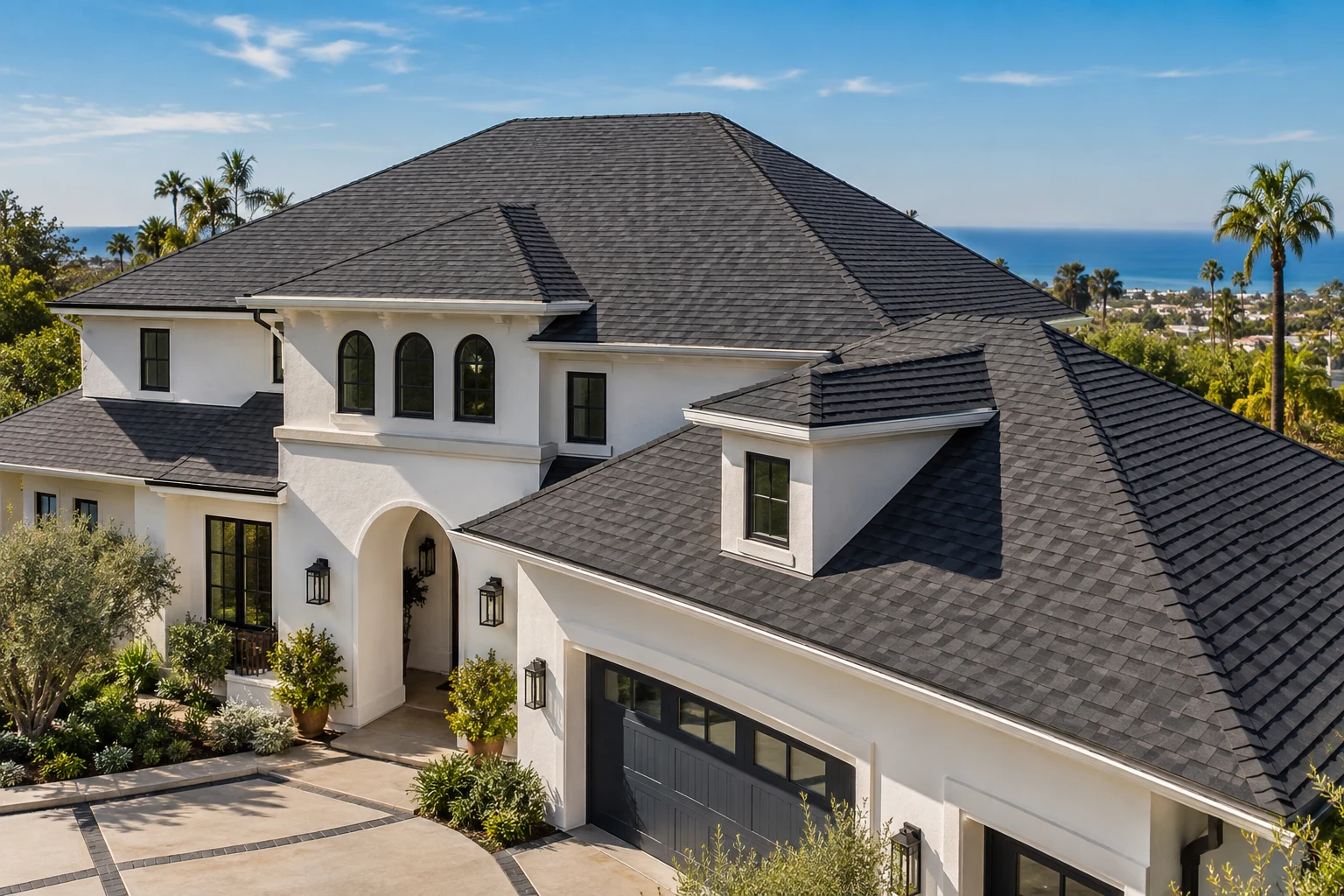
In Ontario, the cost of a new roof depends on much more than the material you see from the street. All Star Roof Replacement evaluates the full roofing system because in this part of Southern California, heat, UV exposure, aging underlayment, ventilation issues, and hidden wood damage often have more impact on price than the visible surface alone.
If you are trying to understand what roof replacement usually costs here, the honest answer is that there is a wide range based on roof size, roof shape, material type, tear-off scope, code requirements, and the condition of the system underneath. Homeowners comparing local options can start with our Ontario roof replacement service area page to see how roof problems tend to show up in this city.
Why Roof Replacement Cost Varies So Much in Ontario
The main reason cost varies is simple: every roof is different, and most roofing problems are not surface-level. A roof may look like it just needs new shingles or a few tile repairs, but the actual replacement cost changes when the underlayment has worn out, the decking has soft spots, or the ventilation has been trapping heat for years.
That is especially true in Ontario because this is an inland market, not a coastal one. Roofs here deal with hotter summer conditions, stronger UV exposure, and bigger daily temperature swings. Those conditions wear roofing systems out faster, especially on homes that are now 15 to 30 years old.
A direct answer here is this: new roof cost in Ontario is driven by system condition, not just roof size or visible material. Two homes can look similar from the curb and still need very different levels of work once the old roof is opened up.
Many homeowners don’t realize that the visible roof covering is only one part of the system. The layers below it, including underlayment, flashings, decking, and ventilation, are what determine whether the roof is still protecting the house properly.
Why This Problem Happens in Ontario
Ontario roofs age differently than roofs in cooler climates. Long periods of inland heat dry out roofing components. UV exposure breaks down asphalt surfaces over time. Daily expansion and contraction put stress on sealants, fasteners, and transition points around vents, valleys, and flashing details.
On shingle roofs, that often shows up as curling, brittleness, granule loss, and shortened service life. On tile roofs, the tiles themselves may still look fine while the real waterproofing layer underneath has already reached the end of its useful life.
The short answer is this: Ontario’s heat and sun often damage the full roofing system before homeowners realize how far the wear has gone. By the time leaks start showing inside, the failure is often deeper than the top layer alone.
In homes across Ontario, we often see roof systems where the outside still looks fairly intact from the driveway, but the underlayment below has already dried out, become brittle, or stopped performing the way it should. That is one reason cost discussions in this city need to start with system evaluation, not guesswork.
Ontario also has a large number of homes built during the big growth years from the 1990s into the 2000s. Many of those roofs are now entering the range where replacement becomes more common. Some have gone through several repairs already, which can make the final replacement more involved.
What Ontario Homeowners Are Usually Paying For
When people ask how much a new roof costs, they usually think in terms of shingles, tile, or square footage. But a proper roof replacement includes removal, disposal, inspection of the deck, new waterproofing layers, flashing work, ventilation review, installation labor, and permit-related compliance.
In Ontario, a standard architectural shingle replacement on an average-size home often falls into a broad mid-range, while tile systems or more complex homes can cost significantly more. But fixed pricing is not the honest way to explain roofing, because the final number depends on what your specific roof actually needs.
The clear answer is this: you are not just paying for roofing material—you are paying for a complete replacement of the system that protects the home from heat, weather, and long-term deterioration.
A common issue during inspections is finding that a homeowner received a low quote based mostly on surface material, while major cost items like wood replacement, ventilation corrections, flashing work, or code-related upgrades were not clearly addressed upfront. That is where confusion usually starts.
- Roof size and layout: More surface area means more labor, more material, and more disposal.
- Roof complexity: Valleys, multiple slopes, penetrations, steep areas, and second-story sections add detail work.
- Material choice: Shingle, tile, and low-slope systems all install differently and carry different cost ranges.
- Tear-off requirements: Heavy tile or multiple old layers can increase labor and dump fees.
- Decking condition: If damaged wood is found after tear-off, it needs to be corrected before the new system goes on.
- Underlayment and flashing: These hidden parts are essential to roof performance and often affect total cost more than expected.
- Ventilation upgrades: Poor attic airflow can shorten roof life and increase attic heat.
- Permits and code requirements: Local compliance, including energy-related requirements, can affect scope and cost.
Older Roofs in Ontario Usually Have More Than One Problem
Once a roof gets into the 15- to 30-year range, the issue is rarely just one isolated section. Heat exposure, past repairs, aging materials, and installation shortcuts tend to overlap. That is why homeowners dealing with repeated leaks are often frustrated. They fix one area, then another area starts showing symptoms.
The reason is usually not bad luck. It is system aging.
A direct answer here: if your roof has had repeated repairs, visible wear, or more than one leak area, replacement cost has to be evaluated as a full-system issue, not as a simple patch job.
Many homeowners don’t realize that recurring leaks often point to widespread failure underneath. The visible leak location inside the home is not always the same place where the roof system first failed. Water can travel. A stain on a ceiling may come from flashing, underlayment, or deck problems several feet away.
In homes across Ontario, we often see older shingle roofs where granule loss and surface drying are obvious, but the deeper concern is that the roof has already lost much of its protective capacity. On older tile roofs, we often find that cracked or slipped tiles are only part of the story, and the bigger issue is that the underlayment has reached the end of its life.
If you are still trying to sort out whether patching makes sense or whether the roof is already beyond that stage, our page on roof repair or replacement in Ontario explains how to think about that decision clearly.
Why Delaying Replacement Usually Raises the Real Cost
Not every aging roof needs immediate replacement, but once the roof system starts failing, delay usually makes the project more expensive. Heat keeps working on the materials. Weak spots continue expanding. When rain does come through, moisture gets into places the roof was supposed to protect.
That is how a roofing issue can turn into wood damage, insulation problems, drywall staining, or attic ventilation concerns. The roof is the outer protection layer, but it also affects the condition of everything directly below it.
The simple answer is this: delays often increase total roof replacement cost because hidden damage spreads over time once the system is no longer doing its job.
A common issue during inspections is finding that a homeowner has already spent money on several repairs over the last few seasons, but the roof still needs full replacement. By then, they are not just paying for the new roof. They may also be paying for avoidable deck repairs or interior damage that could have been limited earlier.
This matters in Ontario because our climate can hide failure for a while. During long dry periods, a roof may appear to be holding up. Then a storm comes through, wind shifts exposed sections, and the first visible leak shows up after months of unnoticed deterioration.
The Roof Also Affects Cooling Costs and Indoor Comfort
Roof replacement is not only about stopping leaks. In Ontario, it is also tied to heat control. An older roof that absorbs and holds too much heat can make attic temperatures climb, put more strain on the HVAC system, and contribute to uneven indoor temperatures.
That does not mean every high electric bill is caused by the roof. But many homeowners don’t realize how much the roof contributes to the way the home performs, especially in inland Southern California where summer heat is more intense than in coastal areas.
The direct answer is this: an aging roof can raise energy costs by trapping heat, reducing ventilation effectiveness, and making the house harder to keep comfortable.
That is one reason replacement has to be looked at as a building-system decision, not just a roofing-material decision. Material matters, but so do ventilation, reflectivity, underlayment quality, and installation details. If you want to understand that side of the project better, our page on energy-efficient roofing in Ontario goes deeper into how roof design affects cooling performance.
Tile Roofs and Shingle Roofs Fail Differently
Ontario has a mix of architectural shingle roofs and concrete tile roofs, and that matters when talking about cost. These systems age differently, fail differently, and are replaced differently.
On a shingle roof, homeowners usually notice the signs more directly. The shingles start losing granules, edges curl, the roof looks patchy, and brittle sections become more common. On a tile roof, the exterior can stay presentable longer, which sometimes gives the impression that the roof still has many years left.
But the answer homeowners need is this: on tile roofs, the tile is not the whole waterproofing system. The underlayment underneath is often the real issue when the roof begins leaking in older Ontario neighborhoods.
Many homeowners don’t realize that a tile roof may not need all new tile to need full replacement work. In some cases, the tiles can be lifted and reset over a new underlayment system if they are still in usable condition. In other cases, breakage, fastening issues, or broader system problems make a more complete replacement necessary.
If you are comparing options, our page on tile vs. shingle roof systems in Ontario helps explain the tradeoffs in cost, performance, and service life.
Why Installation Quality Matters as Much as Material
Homeowners naturally ask which material costs more or lasts longer. That matters, but the larger issue is whether the roof is being installed as a complete system. Good material installed poorly still leads to early problems.
That is especially important in Ontario’s climate. Intense heat, direct sun, and daily expansion and contraction tend to expose weak workmanship faster. Problems with flashing, ventilation, transitions, and underlayment details may not show up right away, but they usually show up sooner in inland conditions.
The short answer is this: installation quality has a major effect on what your roof costs over time because it affects performance, lifespan, repair frequency, and energy efficiency.
All Star Roof Replacement approaches replacement by checking the entire system first. We use satellite measurements and visual inspection to evaluate what the roof actually needs, and we explain the findings clearly before recommending replacement. The goal is not to guess at a number. The goal is to identify the real condition of the roof so the project scope makes sense.
Where the Cost Conversation Should Start
The right place to start is not with a generic online price range. It starts with the condition of your current roof, the age of the system, the type of material, the layout of the home, and whether the visible issue is part of a larger failure below the surface.
That is why roof replacement in Ontario needs to be looked at in context. A newer roof with isolated damage is one thing. A 20-year-old roof with repeated leaks, poor ventilation, and signs of underlayment failure is something else entirely.
The direct answer is this: the most accurate way to understand new roof cost in Ontario is to inspect the full system first and price the replacement based on real conditions, not assumptions.
When that process is done correctly, homeowners get a clearer picture of what is driving the cost, what can be expected during replacement, and why solving the full problem is usually more cost-effective than continuing to chase surface symptoms.
What Real Roof Cost Ranges Look Like in Ontario
The straightforward answer is this: in Ontario, smaller and simpler roof replacements may start around $8,000 to $15,000+, while many full residential roof replacement projects fall more realistically in the $15,000 to $30,000+ range, with larger, steeper, tile, or more complex systems going higher.
That range is broad for a reason. All Star Roof Replacement does not treat roof replacement like a flat-rate product because the final cost depends on roof size, slope, material type, tear-off demands, code-related upgrades, and what the full roofing system reveals during inspection.
In Ontario, those differences show up fast. A single-story shingle roof with straightforward access is one thing. A two-story home with multiple valleys, older tile, heat-damaged underlayment, and decking repairs is another. Both are roof replacements, but they are not the same project.
A common issue during inspections is that homeowners have seen an online number or a low quote and assume that should apply to their house exactly. In practice, those numbers often leave out parts of the work that matter most, including flashing replacement, ventilation corrections, or damaged wood found after tear-off.
If you want a closer look at how pricing is usually broken down, our page on roof cost per square in Ontario explains why square-based pricing still has to be tied to actual roof conditions.
Why Low Quotes and Final Costs Often Do Not Match
The short answer is this: low roof quotes are often low because they are built around the visible roof covering, not the full roofing system.
That is where homeowners get frustrated. One estimate may look cheaper at first, but it may not clearly include tear-off depth, underlayment quality, flashing details, ventilation work, permit scope, or the likelihood of replacing deteriorated decking. When those items are not discussed upfront, the price can change once the job is open.
In homes across Ontario, we often see older roofs where the visible problem looks limited from the ground, but once the system is examined more closely, there are signs of dried underlayment, weak transition points, previous patchwork, or heat-related wear in multiple areas. Those are not cosmetic details. They directly affect replacement scope.
This is also why comparing roof estimates line by line matters more than comparing bottom-line numbers alone. A quote that includes full system evaluation, proper tear-off, waterproofing layers, ventilation review, and clear explanation is not the same as a quote based mostly on surface material replacement.
- Visible material: Shingles or tile are only one part of the cost.
- Waterproofing layers: Underlayment condition often determines how much work is really needed.
- Deck repairs: Damaged or soft wood cannot be covered over and ignored.
- Flashing and transitions: Roof edges, walls, valleys, vents, and penetrations are common failure points.
- Ventilation: Poor attic airflow can shorten roof life and increase heat buildup.
- Disposal and access: Heavy materials, steep sections, and limited access affect labor and haul-away costs.
Not all contractors are equal, and roofing quotes are not always built to solve the same problem. A lower number can sound attractive until the homeowner realizes it was never priced as a full-system replacement to begin with.
How Roof Type Changes the Cost in Ontario
The direct answer is this: shingle and tile roofs can both be replaced properly, but they fail differently and are priced differently because the labor, tear-off, and system work are not the same.
Architectural shingle roofs are often the lower-cost entry point for full replacement, especially on simpler homes. They are generally faster to install than tile systems and may be a practical choice when homeowners want a full replacement that balances performance and budget.
Tile roofs usually involve higher replacement costs because the system is heavier, the handling is more labor-intensive, and the real waterproofing layer sits below the tile. On many Ontario homes, the tile may still look decent from the street while the underlayment underneath has already aged out. That can create confusion because the homeowner sees “good-looking tile” but is being told the roof system needs replacement.
The important point is that tile appearance does not equal tile system life. In many cases, the roof needs to be opened up because the underlayment, flashing, and fastening details are where failure is actually happening.
For homeowners trying to compare system choices more clearly, our page on best roofing materials for Ontario homes explains how climate, home design, and long-term goals affect the right decision.
How Southern California Heat Impacts What You Pay
The answer here is simple: Ontario heat affects roof cost because it ages roofing systems faster and exposes hidden failure that may not be obvious from the ground.
Inland Southern California roofs take a lot of thermal stress. High summer temperatures, strong UV exposure, and regular expansion and contraction wear out sealants, underlayment, and transition details over time. That means the work required to replace the roof is often more involved than homeowners expect, especially once the roof reaches the 15- to 25-year range.
In homes across Ontario, we often see roof systems that made it through long dry periods without obvious interior leaks, but the underlying components are already brittle and near failure. Then a storm or wind event exposes the problem all at once. At that point, the cost discussion is no longer about replacing a few visible sections. It is about replacing a roof system that has already lost much of its protective capacity.
Heat also affects the kind of replacement that makes sense. Reflective shingles, cool-roof compliant products, ventilation improvements, and better system design can all affect both the upfront project scope and the long-term performance of the home. If reducing attic heat is part of the concern, our page on how roofing can reduce heat in Ontario homes explains where those upgrades fit into a replacement project.
What Ontario Homeowners Are Really Paying For
The clear answer is this: you are paying for the removal of an aging system and the installation of a complete new roofing system designed to protect the home, not just for shingles or tiles.
That includes more than many homeowners realize. A proper roof replacement usually involves tear-off and disposal of old material, inspection of the deck, replacement of compromised wood where needed, installation of underlayment and waterproofing layers, flashing details, ventilation review, field installation of the roof covering, and final cleanup and permit compliance.
That full-system view matters because most recurring roof problems come from failure within the system. If previous work only addressed the visible symptom, the homeowner may have already spent money without actually solving the cause.
Poor installation leads to long-term issues, and that is one reason pricing should never be separated from workmanship. A roof installed without proper attention to drainage, flashing, fastening, or ventilation can become expensive long after the initial quote looked appealing.
What Can Increase the Cost Beyond the Typical Range
The direct answer is this: replacement costs usually rise when the roof is more complex, the existing system is in worse condition, or the project requires more corrective work than expected.
Some of the most common cost drivers in Ontario include multiple roof facets, steep sections, second-story access, heavy tile removal, deteriorated decking, and poor previous workmanship that now has to be corrected. Title 24 and cool-roof related requirements may also affect product selection depending on the scope of the replacement.
A common issue during inspections is finding ventilation setups that are not helping the roof perform in inland heat. That does not always mean major reconstruction, but it can mean adjustments are needed so the new roof is not being installed over the same heat-trapping conditions that shortened the old roof’s life.
Another factor is whether the home has had repeated repairs. Once a roof has been patched several times, the replacement can involve sorting through mismatched materials, layered details, and hidden trouble areas that were never addressed at the system level.
If you are trying to understand how long the investment should reasonably last in this climate, our page on roof lifespan in Ontario explains why local heat and installation quality both matter.
Decision Clarity: When Replacement Makes More Sense Than Repair
The short answer is this: replacement usually makes more sense when the roof is older, leaking in more than one area, showing widespread wear, or costing you money in repeated repairs without solving the root problem.
Repairs still have a place on younger roofs with isolated damage. But if your roof is already in the later part of its service life, or if the same problems keep coming back, patching usually becomes a temporary expense rather than a real solution. Most roofing problems are not surface-level, and recurring leaks are often a sign that the system underneath is breaking down.
A good decision usually looks like this:
- Choose repair when the roof is relatively newer, the issue is isolated, and the rest of the system is still in good condition.
- Choose replacement when the roof is aging, repairs are becoming frequent, or inspection shows broader failure in underlayment, flashing, decking, or ventilation.
- Do not decide from the driveway because appearance alone rarely tells the full story.
Delaying increases cost once system failure has started. That does not mean panic or rush. It means that if the roof is already beyond spot repair, waiting often leads to more wood damage, more interior impact, and a larger project later.
For homeowners who are still not sure where their roof falls, our page on signs you need a new roof in Ontario can help you sort through what the roof is actually telling you.
FAQ: How Much Does a New Roof Cost in Ontario?
How much does a new roof usually cost in Ontario, California?
For many homeowners in Ontario, a new roof may fall somewhere from about $8,000 to $15,000+ on smaller, simpler homes, while many full replacement projects land in the $15,000 to $30,000+ range. Larger homes, tile systems, steep roofs, and roofs with hidden damage can go beyond that.
The real number depends on the full roof system. Size matters, but so do underlayment condition, decking repairs, ventilation, tear-off scope, and material choice.
Is it cheaper to repair my roof instead of replacing it?
Sometimes, yes, but only if the problem is truly isolated and the rest of the roof system still has life left. On a newer roof with a limited issue, repair can make sense.
On an older Ontario roof with repeated leaks, widespread wear, or underlayment failure, replacement is often the more cost-effective decision because repairs keep treating symptoms instead of the underlying problem.
How long does a roof replacement take in Ontario?
The on-site construction portion of a roof replacement is often completed in a few days, but the exact timing depends on roof size, complexity, material type, weather, and permit scheduling. Tile and more complex systems usually take longer than straightforward shingle jobs.
If you want a fuller breakdown of what happens before, during, and after installation, our page on roof replacement timeline in Ontario explains the process clearly.
What roofing material is best for Ontario homes?
There is no single answer for every house. In Ontario’s inland heat, reflective shingle systems and properly built tile systems are both common choices, but the right option depends on budget, roof structure, slope, and long-term goals.
What matters most is not just the material itself, but whether the full system is designed and installed correctly for Southern California heat.
Will a roof inspection tell me the exact final replacement cost?
An inspection gives the best starting point for an accurate estimate because it shows roof size, layout, visible wear, and likely system issues. It is the right way to move beyond guessing.
Even so, final scope can still depend on what is found once the old roofing is removed, especially if damaged decking or hidden installation problems are uncovered. If you want to understand how inspections fit into the process, see our page on roof inspection cost in Ontario.
Does a new roof help with heat and cooling costs?
It can, especially when the old roof is trapping heat, ventilation is poor, or the replacement includes more reflective and energy-conscious roofing products. In Ontario, that matters because inland heat puts a lot of stress on attics and HVAC systems.
A roof replacement is not a cure-all for every energy issue, but it can improve how the home handles heat when the system is designed properly. You can learn more on our cool roof options in Ontario page.
Get Clear Roof Pricing From a Real System Evaluation
If you are trying to figure out whether your Ontario home needs another repair or a full replacement, All Star Roof Replacement can help you make that decision based on the actual condition of the roof system. We look beyond the surface to identify hidden issues with underlayment, decking, ventilation, and prior installation so you understand what is driving the cost and what the roof really needs.
To talk through your roof replacement questions, call (310) 729-3013, email teamallstarconstruction@gmail.com, or reach out through the All Star Roof Replacement contact page.
Licensed • Insured • Owens Corning Preferred Contractor • CA License #1009760