
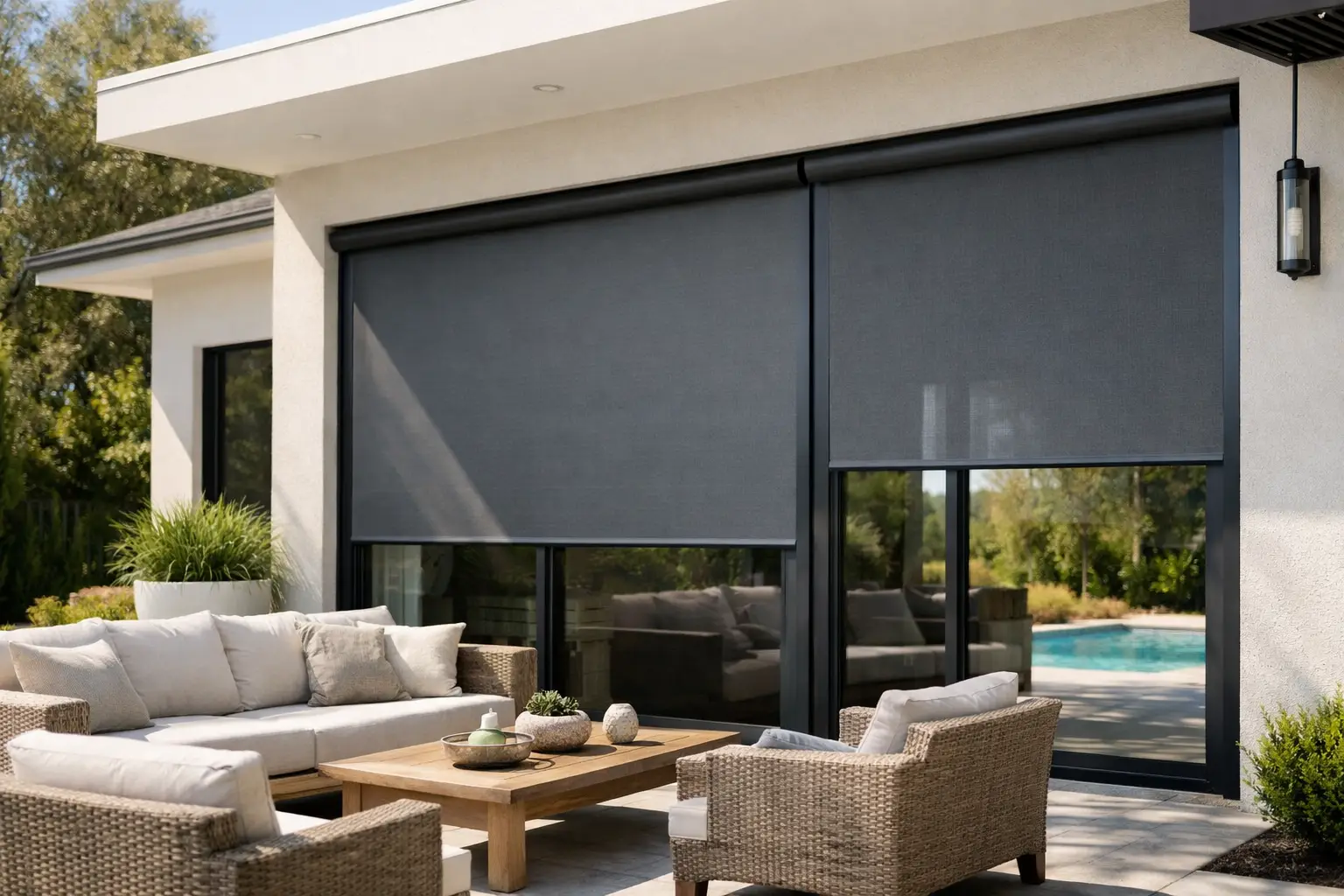
A west-facing backyard in Southern California can look perfect at 10 a.m. and feel unusable by 3 p.m. That is why homeowners searching for the best exterior solar shade are usually trying to solve more than one problem at once. They want cooler outdoor space, less glare inside the house, better backyard comfort, and in many cases, a smarter alternative to rooftop solar.
The short answer is this: the best exterior solar shade is the one that matches how you use your space, how much sun your property gets, and whether you want shade only or shade plus energy production. For some homes, that means an exterior solar screen or retractable shade. For others, the better long-term solution is a solar patio cover, pergola, or other permanent shade structure that creates outdoor living space while generating electricity.
What makes the best exterior solar shade?
Homeowners often start with the word shade, but the real decision is about performance. A good exterior shade solution should reduce heat before it reaches your windows or patio surface. That matters because exterior shading is generally more effective than interior blinds or curtains at blocking solar heat gain.
Still, not all exterior shade options do the same job. A mesh solar screen can cut glare and help with indoor comfort, but it does not create a defined outdoor room. A basic patio cover provides strong shade, but if it is not designed for solar integration, it may miss an opportunity to offset utility costs. The best choice depends on whether your priority is window protection, patio usability, home appearance, or long-term energy value.
Best exterior solar shade options compared
Exterior solar screens
Exterior solar screens are mounted outside windows or outdoor openings and are designed to block a portion of the sun before it enters the home. They are a practical choice when the main goal is reducing indoor heat and glare. They can also help protect furnishings from sun exposure.
The trade-off is that they are a more targeted solution than a whole outdoor living upgrade. They do not add a roof structure, they do not create a covered entertaining area, and they do not generate power. For homeowners focused mainly on hot windows, they can make sense. For homeowners already planning a patio improvement, they are often too limited.
Retractable awnings
Retractable awnings work well for flexibility. You can extend them when the sun is intense and retract them when you want open sky. They are popular for patios and decks where homeowners want seasonal control.
Their downside is durability and permanence. Fabric systems can wear over time, and not every awning is ideal for windy conditions or long-term structural value. They can improve comfort, but they usually do not add the same architectural presence or resale appeal as a well-designed patio cover or pergola.
Traditional patio covers and pergolas
A solid patio cover or pergola is one of the strongest options for backyard comfort. It creates reliable shade, defines the space, and supports outdoor living features like seating areas, dining zones, and outdoor kitchens. For many homeowners, this is where exterior shade starts to become part of the home rather than just an accessory.
The key distinction is design. An open lattice pergola offers filtered light, which some homeowners love, but it may not provide enough protection in the hottest parts of the day. A solid patio cover offers more complete shade and weather protection. If your goal is maximum usability, especially in areas with intense afternoon sun, a more substantial structure often performs better.
Solar patio covers and solar pergolas
For many Southern California homeowners, this is where the best exterior solar shade category gets truly interesting. A solar patio cover or solar pergola combines shade and power generation in one project. Instead of placing solar panels on your roof, the panels become part of the shade structure itself.
This approach solves multiple problems at once. You get a more comfortable backyard, a dedicated outdoor living area, and a way to generate electricity without using roof space. It is especially appealing for homeowners who do not want rooftop panels, have roofs that are shaded or poorly oriented, or simply want a cleaner design strategy.
This is the idea behind The Patio Cover That Pays You Back™. Rather than treating shade and solar as separate projects, the structure is designed to do both.
Why solar shade structures stand out
The biggest advantage of a solar shade structure is efficiency in planning. Instead of hiring one contractor for a patio cover and another for solar, homeowners can approach the project as one coordinated improvement. That usually means a more cohesive design, a simpler decision-making process, and fewer compromises.
There is also a strong value argument. A standard patio cover improves comfort and appearance. A solar patio cover can do that while also helping reduce utility bills and supporting future energy goals like battery backup readiness or EV charging readiness. That does not mean it is the lowest upfront-cost option, because it usually is not. It means the project can deliver more value over time.
For homeowners thinking long term, that distinction matters.
How to choose the best exterior solar shade for your property
Start with how the sun affects your home. If specific windows are overheating rooms, exterior solar screens may be enough. If your patio is too hot to use, you likely need an overhead structure. If you also want solar and would prefer not to mount panels on your roof, a solar patio cover or pergola deserves serious consideration.
Next, think about how you want the space to function. A casual sitting area has different shade needs than an outdoor kitchen, dining patio, or poolside lounge. Permanent structures usually make more sense when the area is going to be used often and should feel like an extension of the home.
Then consider aesthetics. Some shade products look added on. Others feel integrated with the architecture. In higher-value neighborhoods across Los Angeles County, Orange County, San Diego County, and surrounding areas, design matters. The best solution should improve comfort without making the backyard look temporary or pieced together.
Finally, look at the energy side honestly. If you are already thinking about solar, combining it with a patio cover can be a smarter path than doing two unrelated projects years apart. It depends on your budget, your lot layout, and your electrical goals, but for many households it is a very practical alternative to rooftop solar.
Southern California considerations
In this region, exterior shade is not a luxury feature. It is often a usability feature. Strong sun, warm afternoons, and a year-round outdoor lifestyle make shade one of the most valuable upgrades a homeowner can make.
Local permitting and HOA rules can also affect the right choice. A retractable awning may be easier in some situations, while a permanent patio cover or solar pergola may involve more review but deliver much greater long-term value. That is one reason homeowners often benefit from working with a company that understands both structural design and solar integration rather than treating them as separate scopes of work.
Roof limitations are another common factor here. Some homes have rooflines that are not ideal for solar due to orientation, age, complexity, or appearance concerns. In those cases, a solar shade structure can create a new solar-ready surface while also improving the backyard.
Cost versus value
The least expensive exterior shade option is not always the best investment. Screens and awnings usually cost less upfront, but they also do less. They may improve comfort without significantly changing how the property functions or what it contributes to long-term value.
A permanent patio cover costs more, and a solar patio cover typically costs more than that, but the return can show up in several ways: more usable outdoor space, lower sun exposure, a more attractive backyard, potential utility savings, and broader home appeal. If you are already planning a patio cover, adding solar at the design stage is often more efficient than trying to retrofit the idea later.
That is where companies like Solar Patios By Design™ stand apart. The real advantage is not just building shade or installing panels. It is understanding how to combine both into one finished project that feels intentional.
So what is the best exterior solar shade?
If your goal is simply to reduce glare on a few windows, exterior solar screens may be the best fit. If you want flexible patio coverage at a lower entry cost, a retractable awning may work. If you want a more comfortable and attractive backyard, a solid patio cover or pergola is usually the stronger choice.
But if you want shade, outdoor living space, and solar power in one project, the best exterior solar shade is often a solar patio cover or solar pergola. It gives you a place to live outdoors more comfortably while turning that structure into an energy-producing asset.
The smartest shade solution is not always the simplest one. It is the one that fits your home, your climate, and the way you want your property to work for you for years to come.