
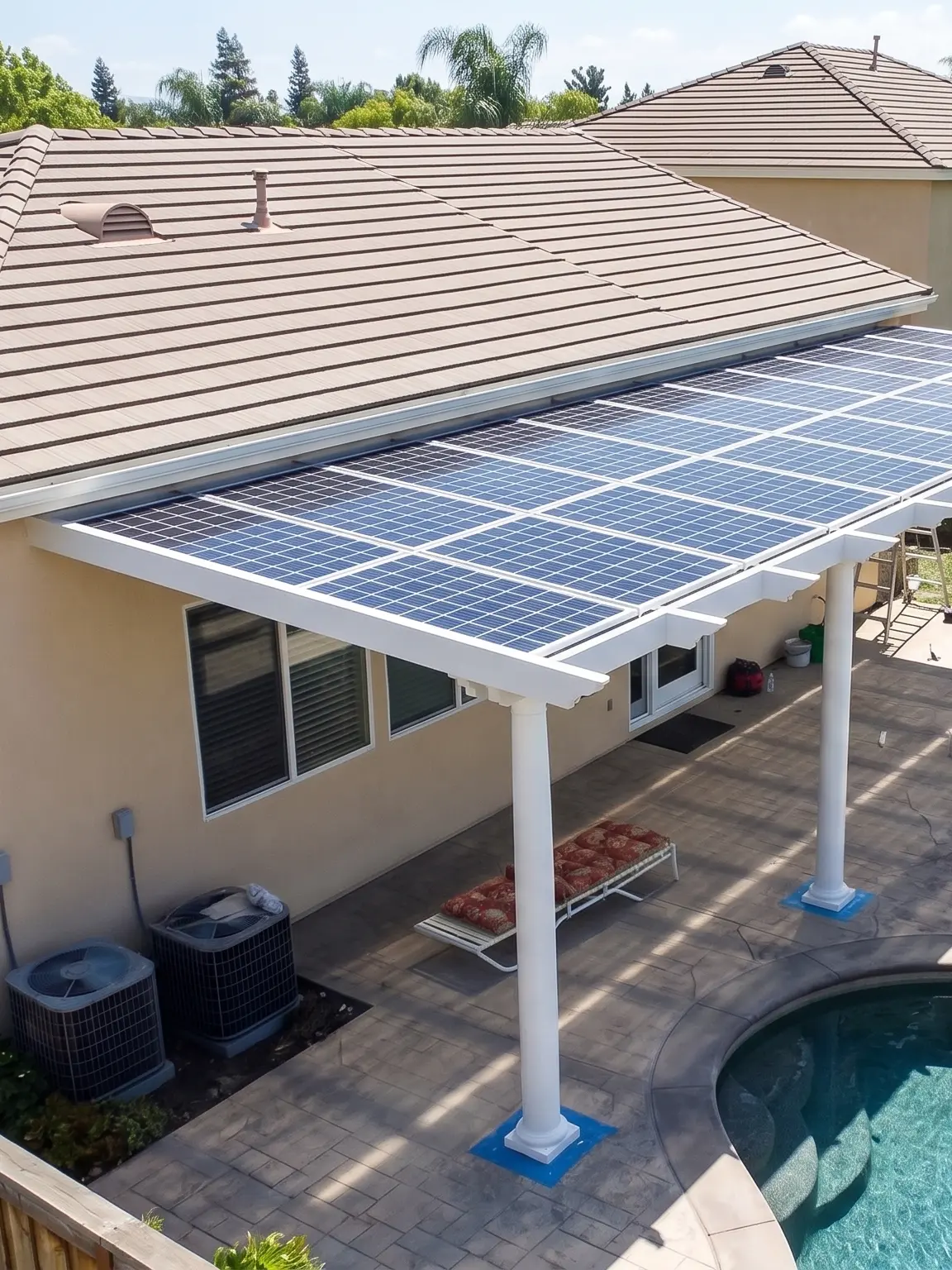
Need a patio cover? Want solar, but prefer not to place every panel on your roof? A solar patio cover brings shade, energy planning, and outdoor living together in one premium home upgrade.
A solar patio cover is a patio structure designed to create comfortable shade while supporting solar panels above. Instead of treating your backyard cover and solar system as separate projects, Solar Patios By Design™ helps homeowners review the structure, solar layout, permit path, electrical coordination, and finished outdoor living space together from the beginning.
Get My Solar Patio Cover Estimate Call (310) 729-3013 Solar Patios By Design™ is operated by Team All Star Construction, CSLB #1009760. Serving homeowners across Ventura County, Los Angeles County, Orange County, Riverside County, San Bernardino County, and nearby Southern California communities. Direct AnswerWhat Is A Solar Patio Cover?
A solar patio cover is a patio cover structure designed to support solar panels while creating shaded outdoor living space underneath.
Instead of placing all solar panels directly on the home’s roof, the patio cover becomes a functional solar-supporting structure. It can provide shade for a backyard, outdoor kitchen, pool area, dining space, lounge area, or side yard while also helping support a solar energy system.
A solar patio cover may include:
- Patio cover structure
- Posts, beams, roof panels, or structural framing
- Solar panel layout planning
- Electrical integration
- Permit planning
- Engineering coordination when required
- Inspection coordination when required
- Optional battery backup planning
- Optional EV charging readiness
The final design depends on the home, patio layout, sun exposure, structure type, utility usage, local requirements, solar equipment, and homeowner goals.
Get My Solar Patio Cover EstimateNeed Shade And Want Solar? Your Roof Is Not The Only Option.
Many homeowners begin with one of two concerns. The backyard is too hot, so they need a patio cover. Or they want solar, but the roof is not ideal.
Sometimes the roof is older. Sometimes usable roof space is limited. In other cases, the layout is crowded with vents, skylights, angles, or shaded sections. Some homeowners simply prefer not to place panels on the most visible parts of the home.
A solar patio cover gives them another path.
It can create the shade structure they already need while using that same structure as part of the solar planning conversation. The result is a more complete upgrade: a cooler patio, a more usable backyard, and a solar option that is not limited to the roof.
The Core Problem Compare Solar Patio vs Roof Solar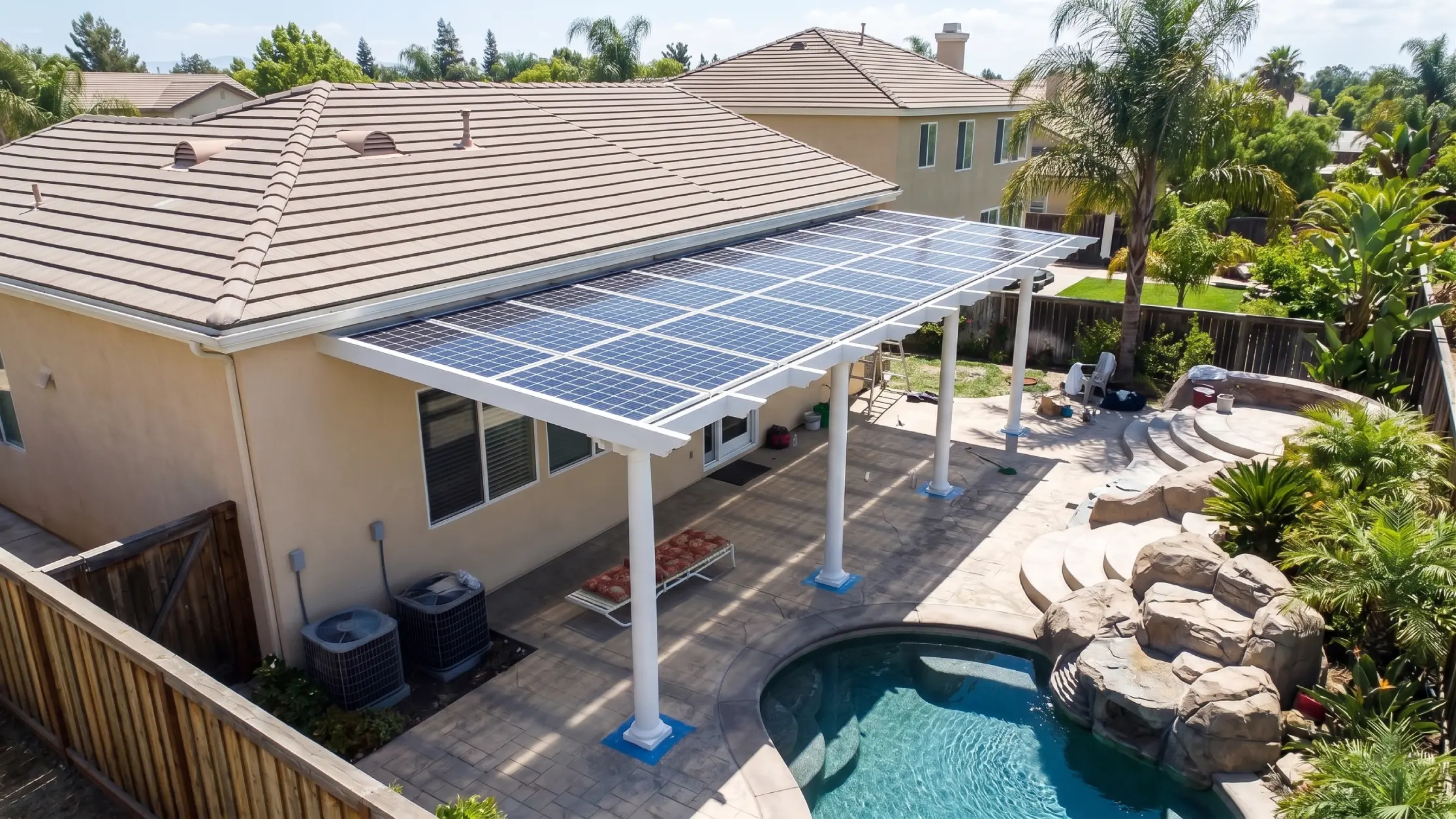
A Patio Cover And A Solar Plan Need To Work Together
Why Solar Patio Covers Are DifferentA standard patio cover is usually planned around shade, comfort, and appearance. A standard solar project is usually planned around panel placement, electrical output, and roof or ground-mounted system design.
A solar patio cover has to consider both.
That is why this type of project requires more coordination. The structure needs to look right, function as outdoor living space, and support the solar plan. The solar layout needs to work with the size, orientation, attachment, post placement, and structural requirements of the patio cover.
When these two parts are planned separately, homeowners can run into problems.
The patio cover may not be designed for solar.
The solar layout may not fit the structure.
The electrical route may become an afterthought.
The permit path may be unclear.
The finished project may feel forced instead of designed.
Solar Patios By Design™ exists to address that gap.
One Contractor. One Design. Coordinated Permitting. One Finished Project.
Most Patio Cover Companies Do Not Install Solar. Most Solar Companies Do Not Build Patio Structures.
Why These Projects Are Hard To FindPatio cover companies usually understand structure, shade, material options, posts, beams, footings, colors, and backyard design. But many do not handle solar layout, electrical planning, utility coordination, battery backup options, or solar permitting.
Solar companies usually understand panels, inverters, production estimates, utility bills, and system design. But many do not build the patio cover structure itself.
A solar patio cover sits directly between those two industries.
It may involve:
- Patio cover design
- Structural planning
- Footings
- Attachment details
- Engineering coordination
- Local permit planning
- Solar panel layout
- Electrical integration
- Solar equipment selection
- Inspections
- Battery backup options
- EV charging readiness
- Outdoor living design
That is why homeowners often struggle to find a company that can look at the whole project instead of only one piece of it.
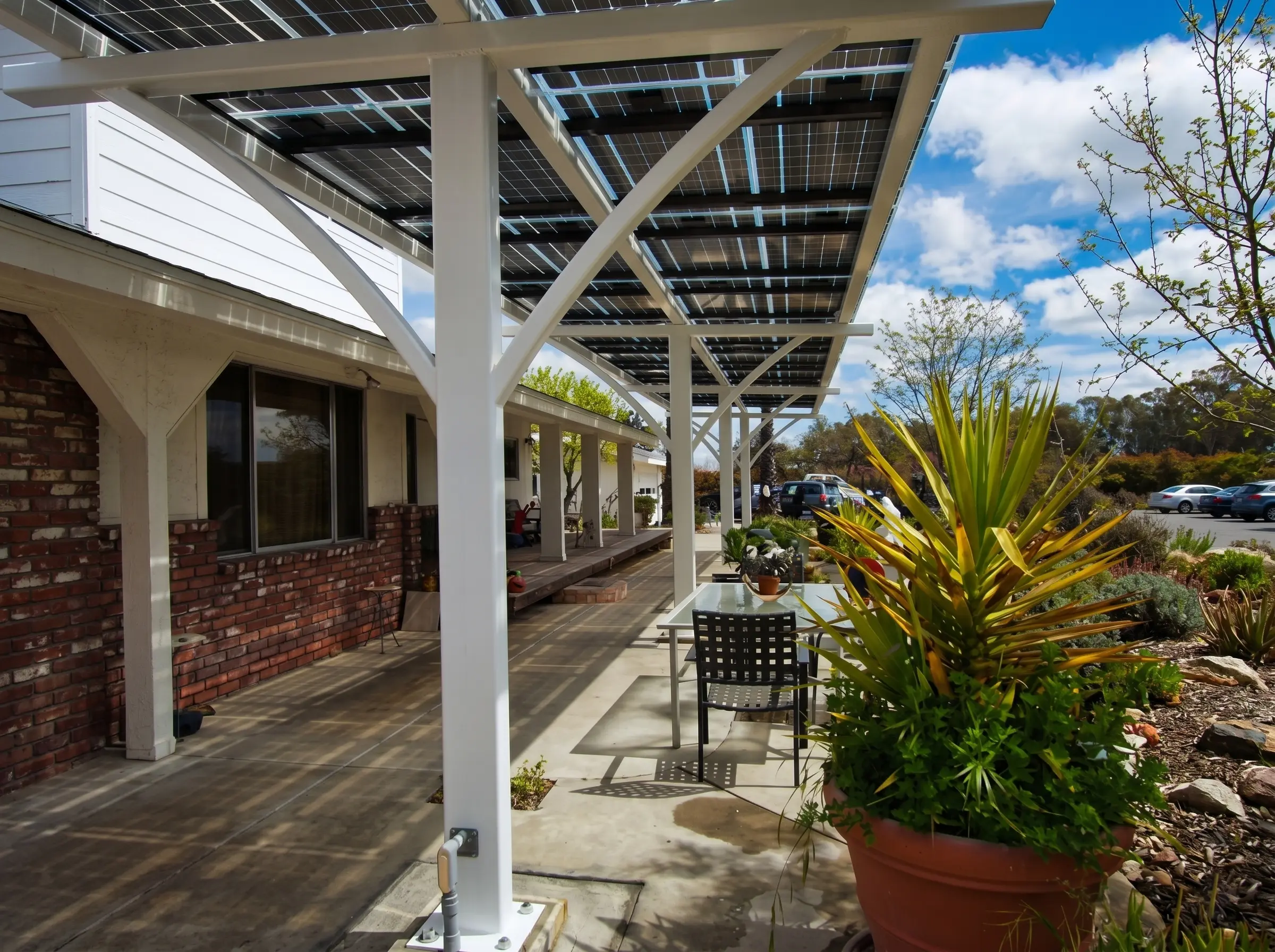
A Patio Cover That Works Harder For Your Home
The Big BenefitA traditional patio cover gives you shade.
A solar patio cover gives you shade and the potential to support solar energy.
That added purpose is what makes the project different. The patio cover becomes part of your home’s comfort, energy planning, and long-term outdoor living strategy.
- Create a cooler, more usable patio
- Add shade over dining, lounge, pool, or outdoor kitchen areas
- Reduce the need to place every panel on the roof
- Support solar energy planning
- Preserve roof appearance in some situations
- Make use of strong backyard sun exposure
- Plan for battery backup when appropriate
- Plan for EV charging readiness when appropriate
- Improve the function of a backyard or side yard
- Combine two upgrades into one coordinated project
Energy savings and solar value can vary. They depend on system size, sun exposure, utility rates, household usage, equipment, solar layout, local rules, and project design.
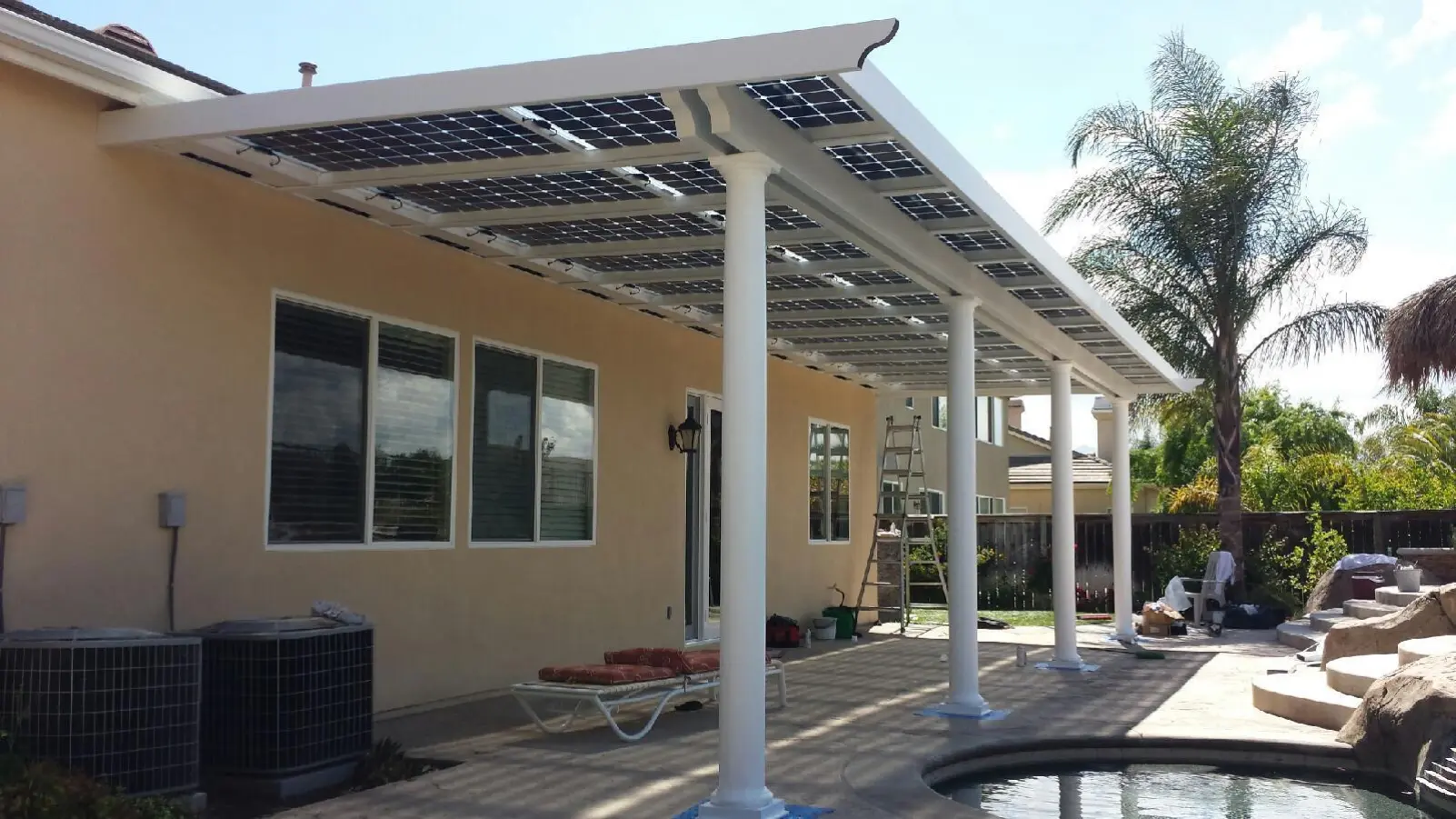
Solar Patio Cover Or Roof Solar?
Solar Patio Cover vs Roof SolarRoof solar is often a strong option when the roof is in good condition, has enough usable space, and receives strong sun exposure.
But roof solar is not always the best or only option.
Some homeowners have roof limitations. Others are already planning a patio cover. Some want to preserve the roofline, avoid placing panels on certain roof sections, or create a shaded outdoor area while exploring solar.
A solar patio cover can make sense when the patio structure itself adds value to the home.
Swipe sideways to see every column.
| Feature | Roof Solar | Solar Patio Cover |
|---|---|---|
| Uses Existing Roof Space | Yes | No, uses a new or planned patio structure |
| Creates Outdoor Shade | No | Yes |
| Adds Usable Covered Patio Space | No | Yes |
| May Reduce Need for Roof-Mounted Panels | Not applicable | Yes, depending on system design |
| Requires Roof Condition Review | Yes | Roof may still matter, but panels are placed on the patio cover |
| Requires Structure Planning | Roof structure is reviewed | Patio cover structure must be planned |
| Can Support Outdoor Living Goals | Limited | Strong |
| Can Be Planned with Battery Backup | Often possible | May be possible depending on system design |
| Can Support EV Charging Planning | Often possible | May be possible depending on electrical scope |
A solar patio cover is not automatically better than roof solar. It is a different path. See comparison: solar patio cover vs roof solar.
The right choice depends on the roof, patio space, solar exposure, energy goals, budget, design preferences, utility usage, and local requirements.
For some homes, roof solar may be the most efficient route. For others, a solar patio cover may create a better overall home improvement because it addresses shade, outdoor living, and solar planning in one project. See why put solar on your patio instead of your roof.
Should You Choose A Traditional Patio Cover Or A Solar Patio Cover?
Solar Patio Cover vs Traditional Patio CoverSome homeowners only need shade.
Others want shade now and solar planning later.
Some want the full solar patio cover from the beginning.
A traditional patio cover may be the right fit when the main goal is comfort, outdoor dining, poolside shade, or backyard design. An Alumawood patio cover can be a strong choice for homeowners who want a low-maintenance shade structure without solar.
A solar patio cover may be the better path when the homeowner also wants solar energy potential, roof-solar alternatives, battery backup planning, EV charging readiness, or a more complete combined upgrade.
Swipe sideways to see every column.
| Feature | Traditional Patio Cover | Solar Patio Cover |
|---|---|---|
| Creates Shade | Yes | Yes |
| Improves Outdoor Living | Yes | Yes |
| Can Use Alumawood Design Options | Yes | Often part of the planning conversation |
| Supports Solar Panels | Not automatically | Yes, when designed for the solar scope |
| Requires Solar Layout Planning | No | Yes |
| May Involve Electrical Integration | Usually no | Yes |
| May Support Battery Backup Planning | No | Potentially |
| May Support EV Charging Readiness | No | Potentially |
| Designed as an Energy Upgrade | No | Yes |
If solar may be part of your future, it is better to discuss that early. Not every traditional patio cover is automatically suitable for solar later. Structure, span, footings, materials, engineering, panel layout, and local requirements all matter.
Solar Patio Cover Options For Different Homes
Solar Patio Cover TypesThe right solar patio cover depends on the property.
Some homes need an attached structure connected to the house. Others work better with a detached patio cover near a pool, outdoor kitchen, garden area, side yard, or backyard lounge space.
The structure should be planned around daily use and solar potential.
Attached Solar Patio Covers
An attached solar patio cover connects to the home and creates covered outdoor living space directly off the house.
This can work well for:
- Sliding glass door areas
- Outdoor dining spaces
- Backyard lounges
- Covered seating near the kitchen or living room
- Homes where the patio naturally extends from the main structure
Attached designs need careful review because the connection to the home, roofline, wall conditions, post placement, drainage, electrical routing, and local requirements can all affect the project.
Learn MoreDetached Solar Patio Covers
A detached solar patio cover stands separate from the home.
This can be a strong option for:
- Poolside shade
- Outdoor kitchens
- Backyard seating areas
- Garden structures
- Large yards
- Properties where the best sun exposure is away from the house
- Homes where attachment is not ideal
Detached solar patio covers may offer more design flexibility, but they still need proper planning for structure, footings, solar layout, electrical routing, setbacks, and inspections.
Learn More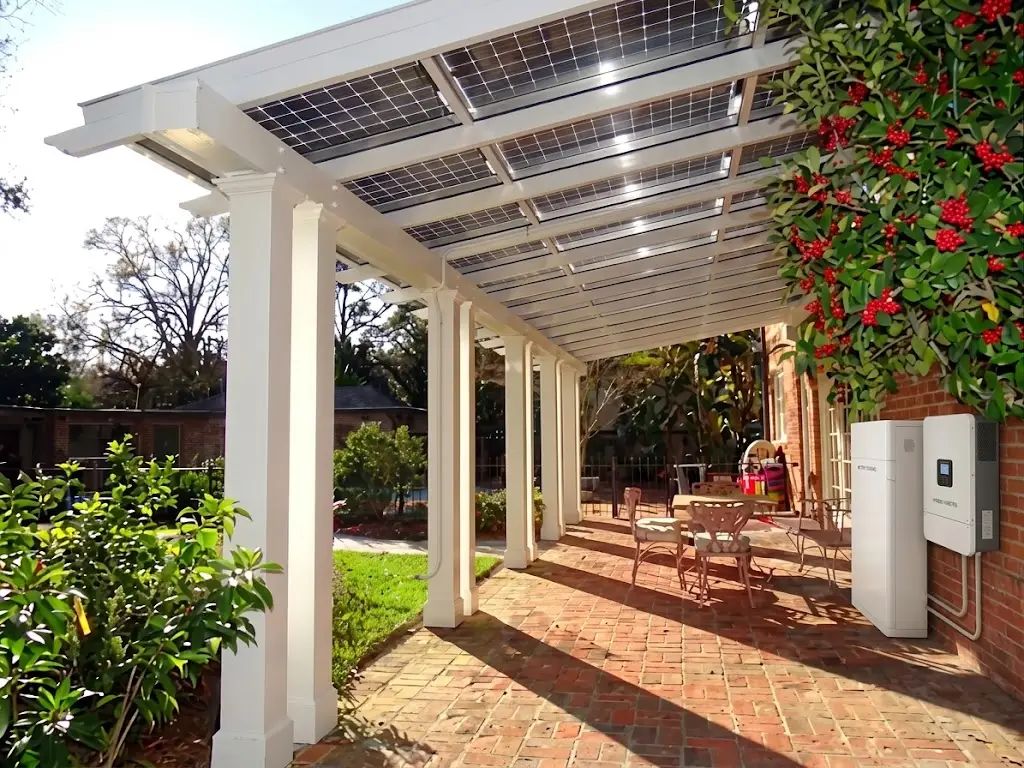
Solar Patio Covers With Battery Backup
Some homeowners want the patio cover to be part of a larger energy plan.
Depending on project design, system size, electrical requirements, and equipment selection, a solar patio cover may be planned with battery backup options. Battery backup can help store solar energy for later use, but suitability depends on the home, utility usage, equipment, budget, and project scope.
Battery backup should be reviewed early because it can affect system design, electrical planning, space requirements, and cost.
Learn More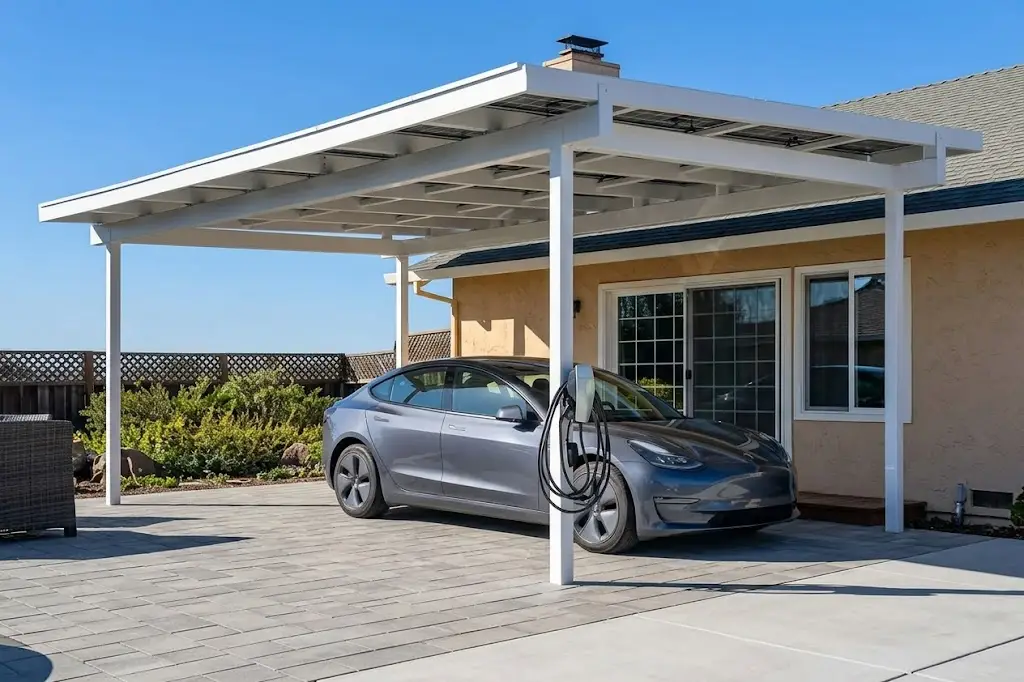
Solar Patio Covers For EV Charging Readiness
For homeowners with an electric vehicle, or plans to buy one, a solar patio cover may be part of a future-ready home energy conversation.
EV charging readiness can depend on electrical panel capacity, utility requirements, charger location, solar design, wiring route, permitting, and the home’s overall energy use.
A solar patio cover does not automatically mean EV charging is included. But if EV charging matters, it should be discussed early so the design can be reviewed with that goal in mind.
Learn MoreCan Alumawood Be Part Of A Solar Patio Cover Project?
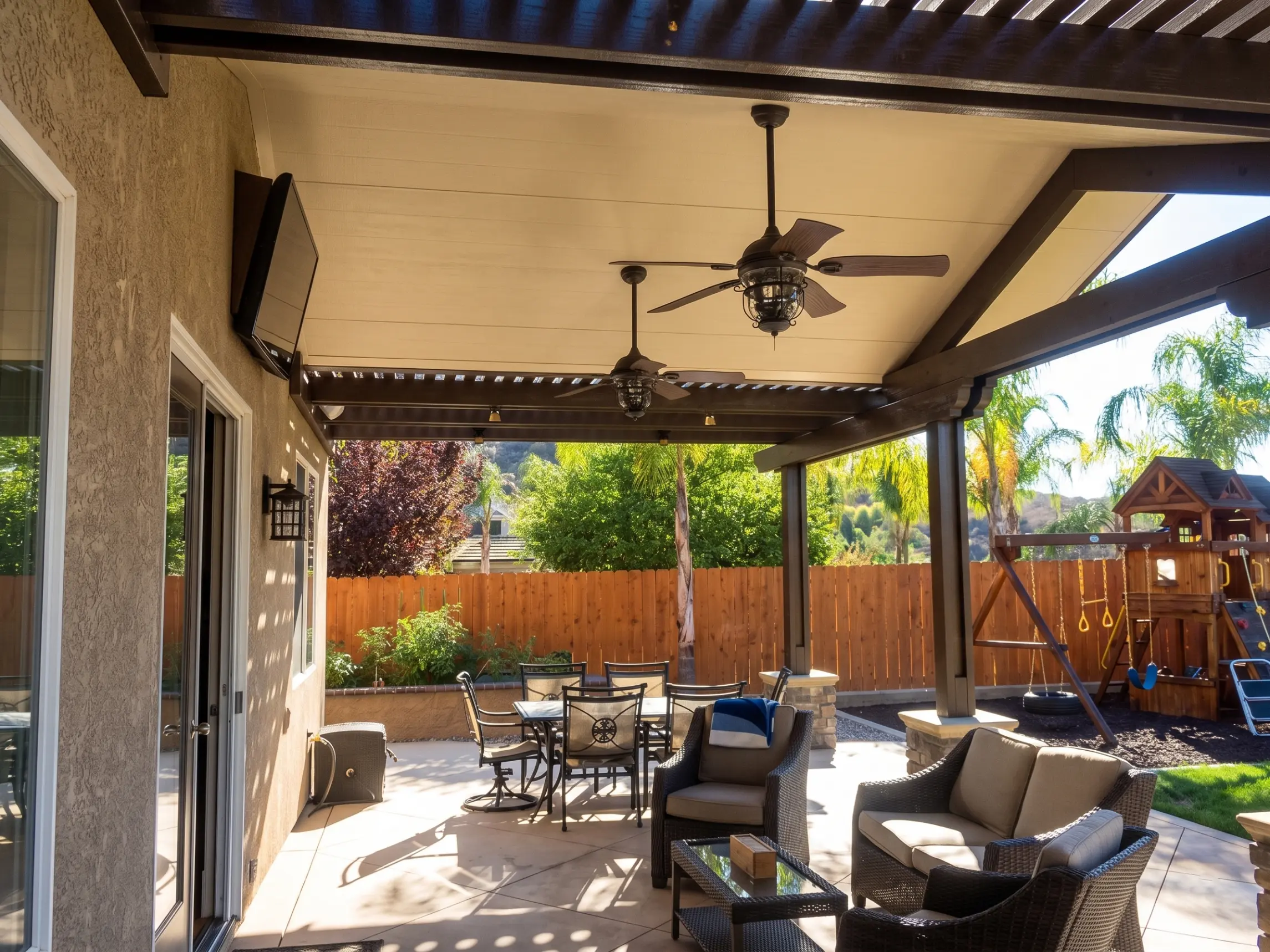
Alumawood And Solar Patio CoversAlumawood patio covers are popular throughout Southern California because they offer a clean finished look with lower maintenance than traditional wood.
They can be used for attached patio covers, detached patio covers, insulated covers, lattice covers, outdoor kitchen covers, and backyard shade structures.
For solar patio cover planning, Alumawood may be part of the conversation depending on the project design, structure, engineering, solar scope, local requirements, and selected system.
The important point is this:
Not every Alumawood patio cover is automatically solar-ready.
If solar may be included now or later, the project should be reviewed with solar in mind from the beginning. That includes structure, panel layout, footings, attachment, span, permit requirements, and electrical integration.
Discover more about alumawood here:
- Alumawood Solar Patio Cover Cost
- Attached Alumawood Patio Covers
- Detached Alumawood Patio Covers
- Insulated Alumawood Patio Covers
The Solar Layout Should Not Ruin The Patio Design
Design MattersA solar patio cover is visible.
It changes the backyard, the architecture, the shade pattern, the views from inside the home, and the way people use the outdoor space.
That is why the design should never be reduced to panel placement alone.
A well-planned solar patio cover should consider:
- How the structure fits the home
- Whether attached or detached makes more sense
- Patio size and proportion
- Height, projection, and post placement
- Shade coverage
- Furniture layout
- Outdoor kitchen layout
- Poolside use
- Door and window locations
- Solar panel orientation
- Electrical routing
- Roofline and architecture
- Color and material selection
- Local permit requirements
- Future maintenance access
The goal is not to bolt solar panels onto a random shade structure. The goal is to design the patio cover and solar plan as one finished improvement.
Understand more about Patio Cover design ideasHow Much Does A Solar Patio Cover Cost?
Solar Patio Cover CostSolar patio cover cost depends on the project.
There is no responsible one-size-fits-all price because a solar patio cover combines structure, design, solar planning, electrical integration, permits, and site-specific conditions.
Major cost factors may include:
- Patio cover size
- Attached or detached design
- Material selection
- Alumawood or other patio cover system
- Insulated or non-insulated structure
- Post placement and span
- Footing requirements
- Engineering requirements
- Permit requirements
- Solar panel layout
- Number of solar panels
- Electrical scope
- Inverter and equipment selection
- Battery backup options
- EV charging readiness
- Site access
- HOA requirements
- Utility requirements
- Local inspection requirements
- Project complexity
Use the Cost Guide for Initial Planning
Solar Patio Cover Cost GuideOur cost guide explains how size, structure type, solar scope, and project features affect the estimate.
Our cost guide provides illustrative planning information. Your written project estimate will be based on the proposed scope and site conditions.
A real estimate should consider the property, structure, sun exposure, local requirements, electrical scope, selected equipment, and design goals. Start by considering:
- Approximate patio size
- Attached vs detached design
- Solar panel planning
- Battery backup interest
- EV charging readiness
- Financing needs
- General project direction
Solar Patio Cover Financing Options
FinancingA solar patio cover can be a larger home improvement investment because it may combine patio cover construction, solar equipment, electrical planning, permits, and optional energy features.
Financing may help homeowners move forward with a project while spreading payments over time.
Financing availability, terms, rates, approval, payment amounts, and eligibility can vary. Homeowners should review all financing details carefully before making a decision.
For many homeowners, financing is part of the larger project conversation:
- Do you want shade only?
- Do you want solar now?
- Do you want battery backup planning?
- Do you want EV charging readiness?
- Are you comparing roof solar with a solar patio cover?
- Are you planning this as part of a larger backyard upgrade?
A clear estimate and a clear financing discussion should happen together.
View Solar Patio Cover Financing Get My Solar Patio Cover EstimateDo Solar Patio Covers Need Permits In California?
Permits And EngineeringPermit requirements vary by city, county, project type, structure, electrical scope, property conditions, and local authority.
A solar patio cover may involve more planning than a standard patio cover because it can include both structural and electrical elements.
Depending on the project, permit planning may involve:
- Patio cover structure
- Attachment details
- Footing requirements
- Engineering coordination
- Setback review
- Property line considerations
- HOA requirements
- Solar layout
- Electrical routing
- Solar equipment
- Battery equipment, if included
- EV charging equipment, if included
- Inspections
Not every project follows the same path. Requirements can differ between Los Angeles County, Orange County, Riverside County, San Bernardino County, Ventura County, and individual cities within those counties.
This is why permit planning should be part of the conversation early.
Learn About Solar Patio Cover PermitsWhat About Energy Savings, ROI, Tax Credits, And Rebates?
Energy Savings, ROI, Tax Credits, And RebatesA solar patio cover may help support energy savings and long-term value, but no responsible company should promise a guaranteed result without reviewing the project.
Solar performance can depend on:
- System size
- Sun exposure
- Solar panel orientation
- Shade conditions
- Utility rates
- Household energy usage
- Equipment selection
- Battery backup configuration
- EV charging usage
- Net billing or utility rules
- Local requirements
- Project cost
- Financing terms
Tax credits and rebates may also depend on the project, equipment, ownership structure, timing, tax situation, utility program, and current rules.
Homeowners should confirm eligibility with a qualified tax professional, solar provider, utility, local authority, or program administrator before relying on any incentive.
The right way to think about ROI is practical: the patio cover should first make sense as a structure and outdoor living upgrade. The solar component should then be reviewed based on real energy goals, exposure, cost, and system design.
Solar Patio Covers With Battery Backup Planning
Battery BackupBattery backup can be part of the conversation for homeowners who want more control over how their solar energy is used.
Depending on the system design, a battery may help store solar energy for later use. But battery backup is not automatically included in every solar patio cover project, and it is not the right fit for every home.
Battery planning may depend on:
- Solar system size
- Household usage
- Electrical panel capacity
- Backup goals
- Equipment compatibility
- Space for equipment
- Utility rules
- Permit requirements
- Budget
- Existing or future solar equipment
If battery backup matters to you, it should be discussed before the solar patio cover design is finalized.
Solar Patio Covers For EV Charging Readiness
EV Charging ReadinessAs more homeowners consider electric vehicles, solar patio covers can become part of a larger home energy planning conversation.
A solar patio cover may help support EV charging readiness when the electrical design, system size, equipment, and project scope allow.
EV readiness may involve:
- Charger location
- Electrical panel capacity
- Wiring route
- Solar production goals
- Utility usage
- Permit requirements
- Future vehicle plans
- Battery backup interest
- Equipment compatibility
A solar patio cover does not automatically include EV charging. But if EV charging is part of your goal, it is better to review that early so the project can be planned with future use in mind.
When A Solar Patio Cover May Make Sense
Is A Solar Patio Cover Right For Your Home?A solar patio cover may be worth exploring if you want shade and solar planning in one project.
It may be a strong fit when:
- Your backyard gets strong sun
- You already need a patio cover
- Your roof is crowded, older, shaded, or visually sensitive
- You want to avoid placing all solar panels on the roof
- You want a shaded outdoor dining or lounge area
- You are planning an outdoor kitchen or poolside cover
- You want a premium outdoor living upgrade
- You are considering battery backup
- You are considering EV charging readiness
- You want one coordinated design and planning process
It may not be the right fit if:
- Your patio area has poor solar exposure
- You only need a small shade structure
- Your budget does not support the solar scope
- Local rules or site conditions limit the design
- Roof solar is clearly more practical for your home
- You are not ready for the added planning involved
The best way to know is to review the property, the patio, and the solar opportunity together.
Find Out If My Home Is A FitShade That Changes How You Use Your Backyard
Solar Patio Covers For Outdoor LivingIn Southern California, outdoor space can feel like part of the home.
But without shade, many patios become uncomfortable for long parts of the day. The concrete gets hot. Seating areas go unused. Outdoor kitchens are harder to enjoy. Poolside spaces need protection. West-facing backyards can become too intense in the afternoon.
A solar patio cover helps solve the comfort problem first.
It can create a more useful space for:
- Outdoor dining
- Lounge seating
- Poolside shade
- Outdoor kitchens
- Grilling areas
- Bar seating
- Family gatherings
- Covered walkways
- Side yards
- Backyard offices or flexible living zones
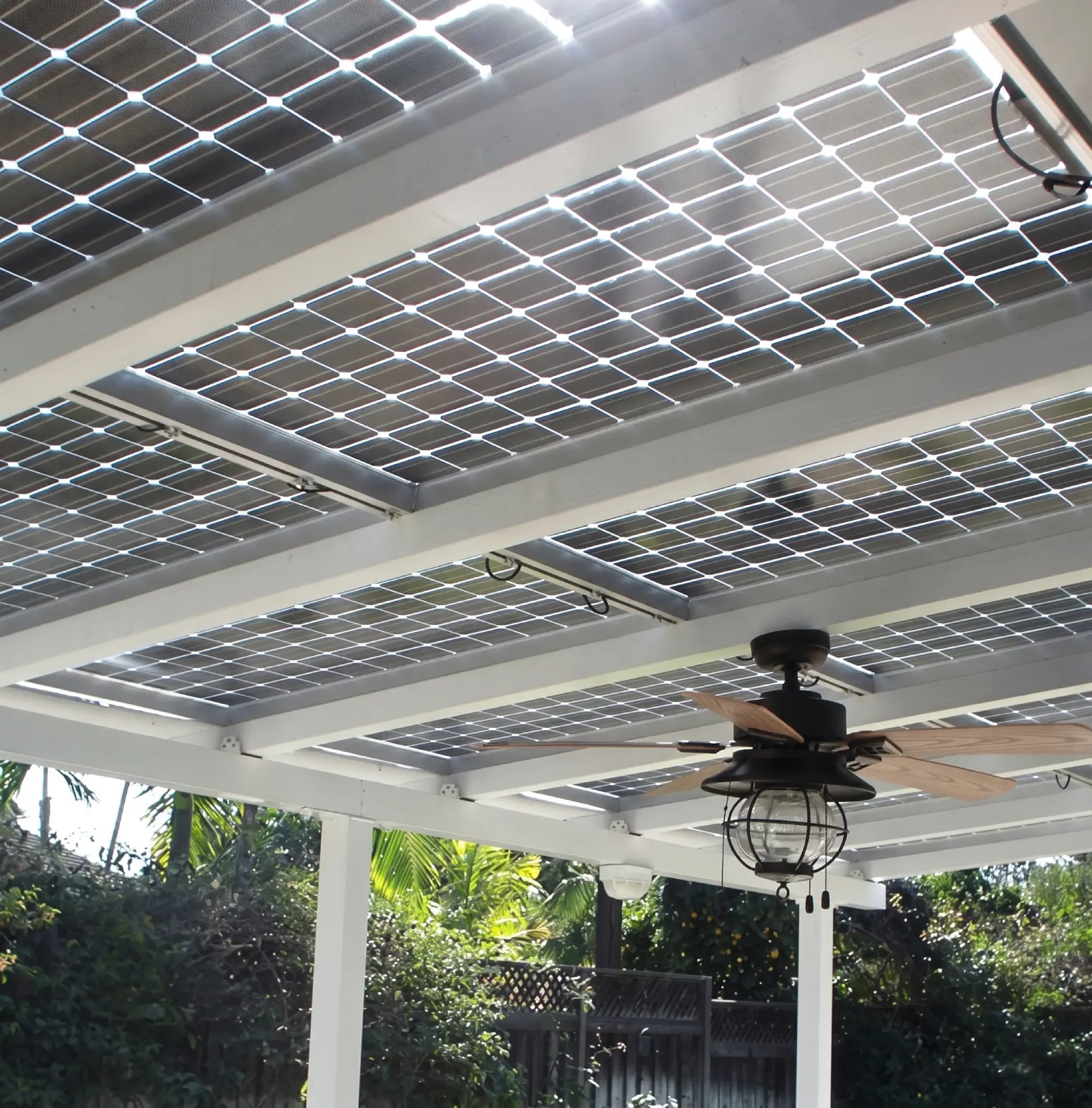
Then the solar component gives the structure another purpose.
The result is an outdoor room with energy potential.
Solar Patio Concepts Beyond The Backyard
Solar Carports And Commercial Solar Patio CoversSolar patio cover planning can also extend into carports, parking shade, and commercial outdoor structures.
For some properties, the best solar-supporting structure may not be in the backyard. It may be over a driveway, parking area, commercial seating area, outdoor workspace, or shared-use structure.
Solar carports and commercial solar patio covers may help create shaded space while supporting solar energy goals.
These projects can involve additional planning, including commercial code requirements, parking layout, access, engineering, electrical design, utility coordination, and inspections.
How The Solar Patio Cover Process Works
Our ProcessStep 1: Tell Us About Your Patio
Step 01
Share your address, photos, patio goals, shade needs, and whether you are interested in solar, Alumawood, or both.
Step 2: We Review The Design Opportunity
Step 02
We look at your home, backyard layout, solar exposure, structure type, patio size, possible attachment points, and project goals.
Step 3: We Discuss The Right Direction
Step 03
The project may be a solar patio cover, attached patio cover, detached patio cover, Alumawood patio cover, solar carport, or phased project.
Step 4: Design, Structure, And Permit Planning
Step 04
Solar patio covers may require structure planning, engineering coordination, local permit review, electrical planning, and inspection coordination.
Step 5: Patio Cover Construction
Step 05
Once the design, scope, and approvals are ready, the patio cover is built as a real outdoor living structure.
Step 6: Solar Integration
Step 06
For solar patio cover projects, the solar layout, equipment, electrical routing, and related system elements are coordinated according to the approved scope.
Step 7: Final Review
Step 07
The completed project is reviewed so the homeowner understands the finished structure, solar-related scope, warranty categories, and any next steps.
See Our Full ProcessBuilt For The Space Between Patio Covers And Solar
Solar Patios By Design™ was created for a specific reason: homeowners need a better way to plan solar patio covers.
Most patio cover companies stop at shade. Most solar companies stop at panel placement. A solar patio cover needs both sides planned together.
That is why our approach is built around the full project.
Solar-First Patio Cover Planning
We focus on solar patio covers as the main category, not as an afterthought.
Patio Cover And Alumawood Design
We understand the importance of shade, proportion, material selection, post placement, and outdoor living design.
Permit And Structure Awareness
Solar patio covers may involve structural and electrical requirements, so planning should happen early.
Battery And EV Readiness
When appropriate, the project can be reviewed with battery backup or EV charging readiness in mind.
Southern California Relevance
Homes across Ventura, Los Angeles, Orange, Riverside, and San Bernardino counties face different sun exposure, city rules, home styles, and outdoor living needs.
Licensed Operating Entity
Solar Patios By Design™ is operated by Team All Star Construction, CSLB #1009760.
Why Choose UsWarranty Clarity Matters On A Combined Project
Warranty And Long-Term PlanningA solar patio cover may include several warranty categories.
There may be workmanship coverage, patio cover material warranties, Alumawood manufacturer coverage when applicable, solar panel warranties, inverter warranties, battery equipment warranties, EV charging equipment warranties, and electrical component warranties.
These warranties may come from different sources.
That is why homeowners should review written project documents, manufacturer warranty documents, exclusions, service procedures, and maintenance responsibilities before moving forward.
Website language should never replace the signed agreement or manufacturer warranty documentation.
See What A Solar Patio Cover Can Become
Gallery And Design InspirationEvery home is different.
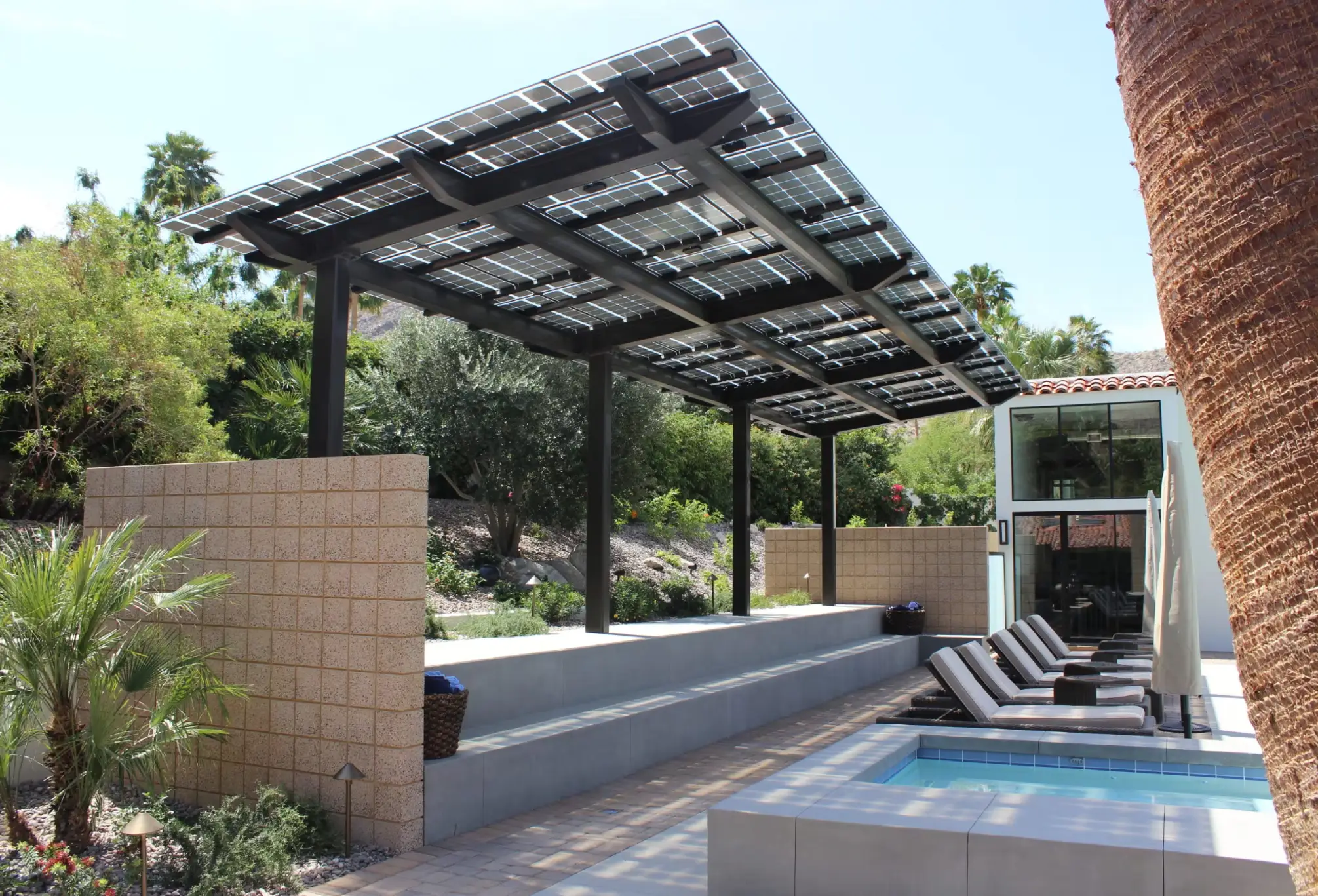
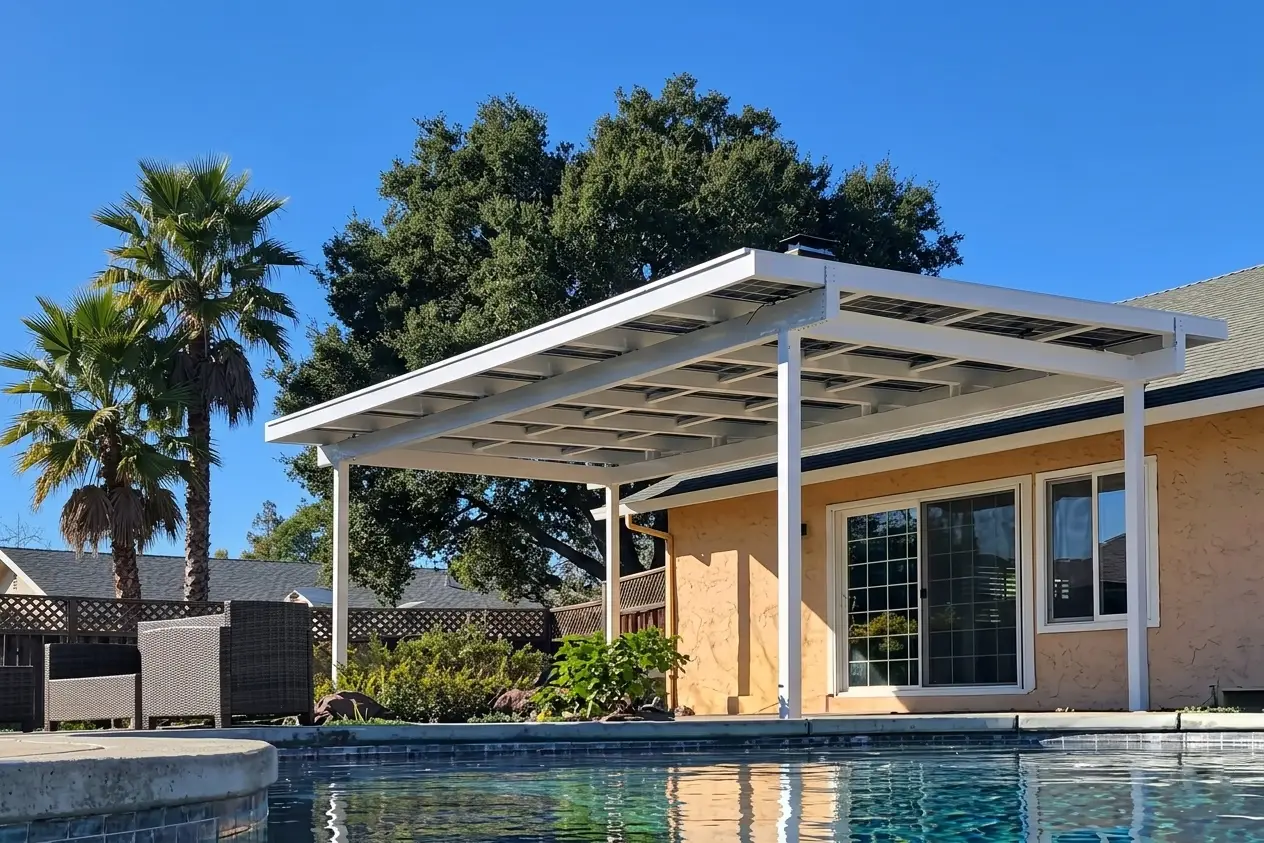
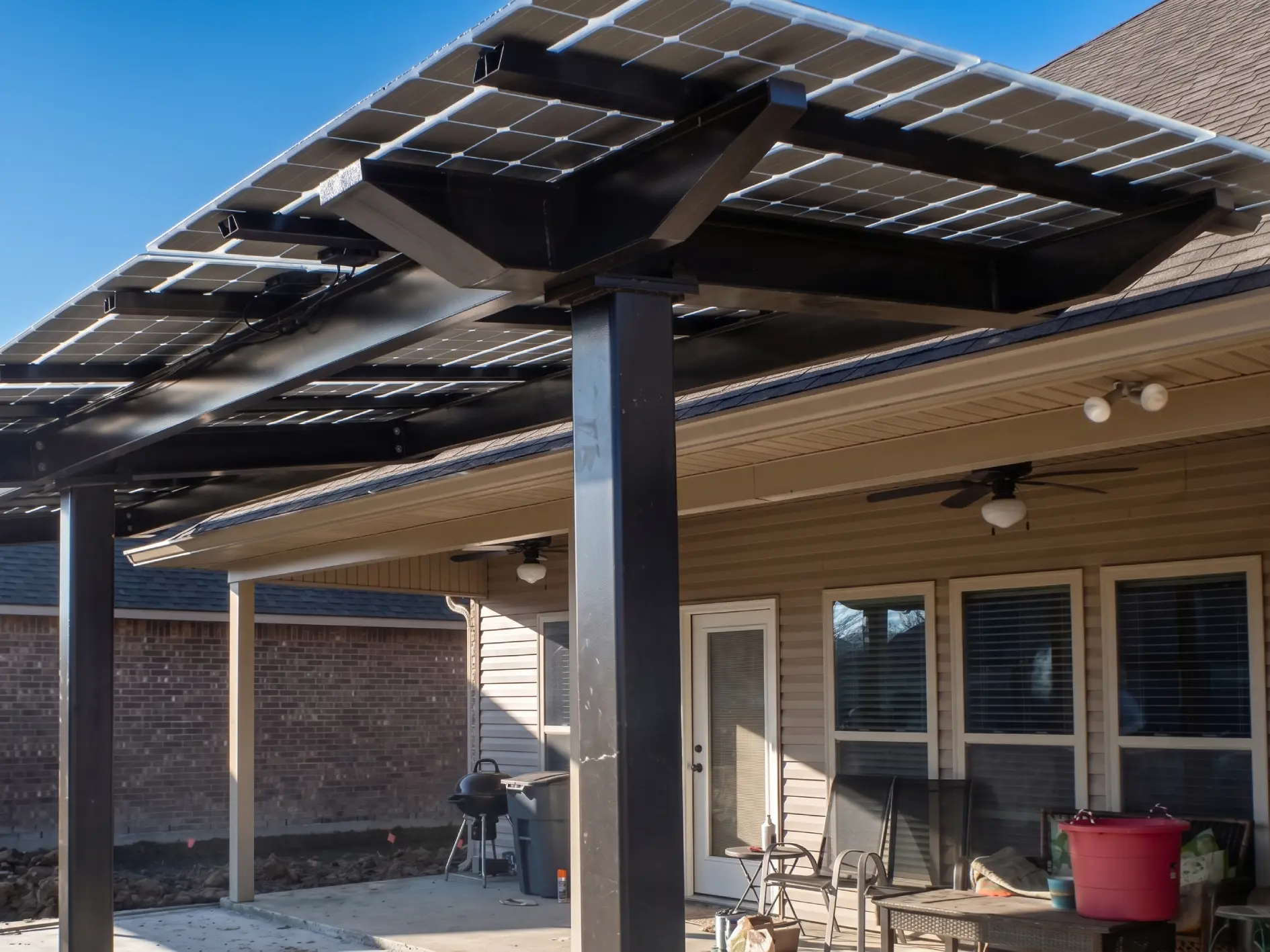
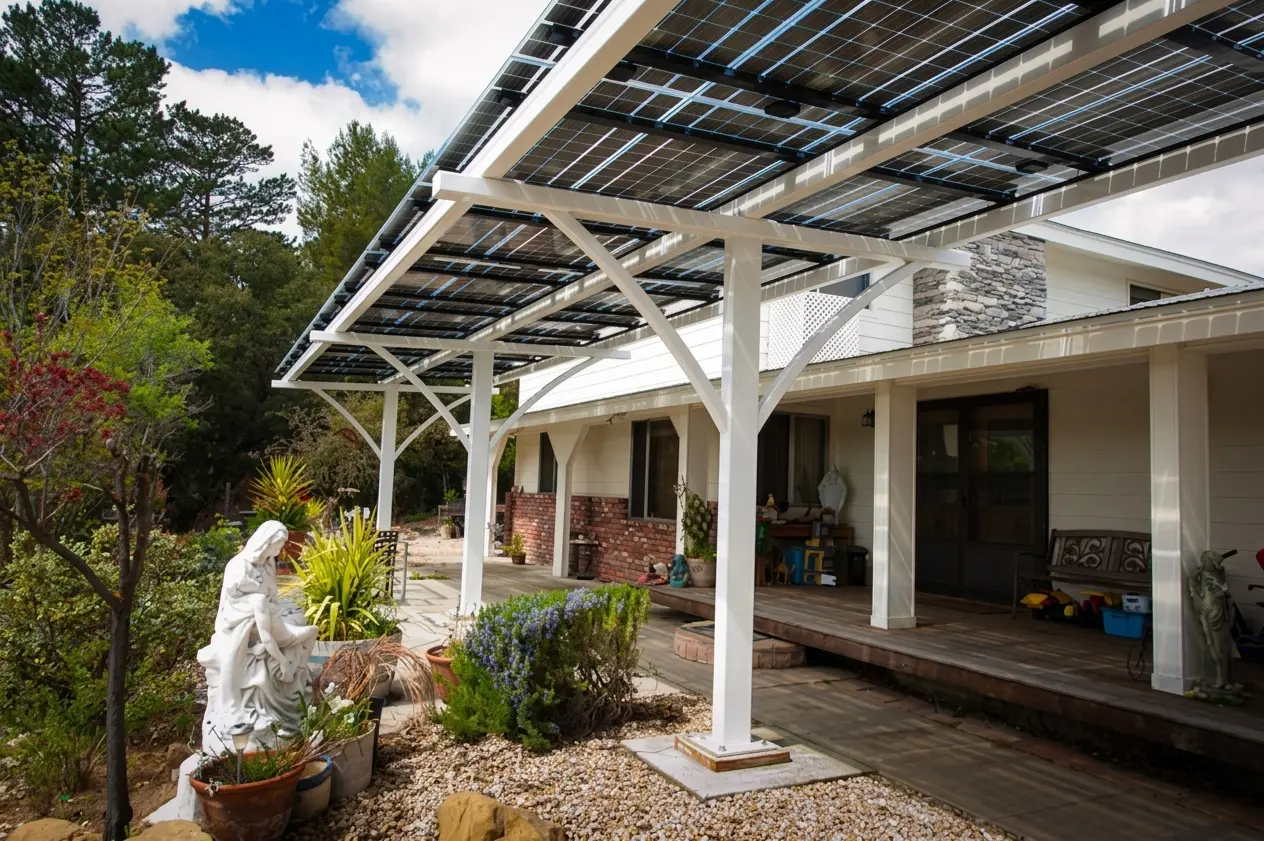
Some homeowners want a clean flat-roof patio cover directly attached to the home. Others want a detached structure near a pool or outdoor kitchen. Some prefer a modern Alumawood look. Others want a large solar-ready shade structure that feels like an architectural extension of the house.
The gallery should help homeowners visualize possibilities before requesting an estimate.
Use project images, design examples, and inspiration photos to show:
- Attached patio covers
- Detached patio covers
- Alumawood patio covers
- Solar patio cover layouts
- Outdoor kitchen covers
- Poolside shade structures
- Modern flat-roof designs
- Backyard living spaces
- Solar-ready patio structures
Solar Patio Covers Across Southern California
Areas We ServeSolar Patios By Design™ serves homeowners across Southern California, including Ventura County, Los Angeles County, Orange County, Riverside County, San Bernardino County, and nearby communities.
Local conditions matter.
A patio cover in coastal Orange County may have different exposure and design considerations than a backyard in Riverside County. A Los Angeles hillside home may require different planning than a flat-lot home in the Inland Empire. A Ventura County property may have different wind, permitting, or access considerations than a home in San Bernardino County.
That is why the project should be reviewed based on the actual home, city, and property conditions.
Orange County Solar Patio Covers
For homeowners planning solar patio covers, Alumawood patio covers, outdoor kitchens, and backyard shade upgrades in Orange County.
Learn MoreRiverside County Solar Patio Covers
For inland homes with strong sun exposure, hot patios, large yards, and high outdoor shade demand.
Learn MoreVentura County Solar Patio Covers
For coastal, suburban, and inland Ventura County homes where outdoor comfort and solar planning can work together.
Learn MoreSan Bernardino County Solar Patio Covers
For homeowners planning shaded outdoor space, solar-ready structures, and energy-focused backyard improvements.
Learn MoreLos Angeles County Solar Patio Covers
For homes with complex rooflines, hillside lots, older structures, dense neighborhoods, and high-value outdoor living spaces.
Learn More View Areas We ServeSolar Patio Covers by City
Solar Patios By Design™ is building city-specific solar patio cover resources across Southern California. These local pages help homeowners explore solar patio cover planning based on their city, property layout, sun exposure, patio design goals, HOA considerations, permit requirements, solar panel layout, and attached or detached structure options.
Each city page is designed to help homeowners understand how a solar patio cover may fit their home, backyard, outdoor living space, and long-term energy goals. Topics may include patio shade planning, Alumawood patio cover options, solar panel placement, electrical routing, battery backup readiness, EV charging readiness, permit coordination, and local design considerations.
Browse the city pages below to explore solar patio cover planning in your area.
City Pages for Solar Patio CoversSolar Patio Covers in Aliso Viejo
Solar Patio Covers in Anaheim
Solar Patio Covers in Brea
Solar Patio Covers in Costa Mesa
Solar Patio Covers in Fountain Valley
Solar Patio Covers in Fullerton
Solar Patio Covers in Huntington Beach
Solar Patio Covers in Irvine
Solar Patio Covers in La Habra
Solar Patio Covers in Laguna Beach
Solar Patio Covers in Laguna Hills
Solar Patio Covers in Laguna Niguel
Solar Patio Covers in Newport Beach
Solar Patio Covers in Orange
Solar Patio Covers in Placentia
Solar Patio Covers in San Juan Capistrano
Solar Patio Covers in Tustin
Solar Patio Covers in Villa Park
Solar Patio Covers in Yorba Linda
Operated By Team All Star Construction, CSLB #1009760
Solar Patios By Design™ is operated by Team All Star Construction, CSLB #1009760.
Solar Patios By Design™ is the consumer-facing brand focused on solar patio covers, patio cover planning, Alumawood patio covers, and outdoor living solar solutions. Team All Star Construction is the licensed operating entity.
This distinction is important for homeowners reviewing licensing, project responsibility, warranties, written agreements, and company information.
Trust And LicenseReady To Plan A Solar Patio Cover For Your Home?
If you need shade and want solar, start with a project review.
Tell us about your patio, your home, your roof concerns, your energy goals, and how you want to use the outdoor space. We will help you review whether a solar patio cover, Alumawood patio cover, solar carport, or another patio cover option may be the right direction.
A solar patio cover should not feel improvised. It should feel designed.
Solar Patios By Design™ is operated by Team All Star Construction, CSLB #1009760.
Solar Patio Cover FAQs
FAQsWhat is a solar patio cover?
A solar patio cover is a patio structure designed to provide shade while supporting solar panels above. It creates covered outdoor living space and can also serve as a solar-supporting structure for the home. The design may involve patio cover construction, solar layout, electrical integration, permit planning, and inspections.
Are solar patio covers worth it?
A solar patio cover may be worth it when the homeowner needs shade and also wants solar energy potential. The value depends on patio size, sun exposure, solar system design, utility usage, project cost, roof condition, local requirements, and how much the homeowner will use the outdoor space.
Can I put solar panels on any patio cover?
Not every patio cover is suitable for solar panels. The structure, span, posts, footings, attachment, material, engineering, and local permit requirements all matter. If solar may be part of your plan, it should be discussed before the patio cover is designed.
Is a solar patio cover better than roof solar?
A solar patio cover is not automatically better than roof solar. It is a different option. Roof solar may be a strong fit when the roof is in good condition and has good exposure. A solar patio cover may make sense when the homeowner also wants shade, outdoor living space, or an alternative solar location.
How much does a solar patio cover cost?
Solar patio cover cost depends on size, attached or detached design, materials, solar panel layout, electrical scope, permit requirements, engineering needs, battery backup options, EV charging readiness, and site conditions. A project-specific review is needed for accurate pricing.
Do solar patio covers need permits in California?
Permit requirements vary by city, county, project type, structure, electrical scope, property conditions, and local authority. Solar patio covers may involve structural and electrical review, so permit planning should be discussed early.
Can a solar patio cover work with battery backup?
Battery backup may be possible depending on the solar system design, equipment, electrical requirements, utility rules, budget, and project scope. Battery backup should be reviewed during the planning stage, not after the patio cover design is finalized.
Can a solar patio cover support EV charging?
A solar patio cover may be planned with EV charging readiness when the electrical design, system size, equipment, and project scope allow. EV charging is not automatically included, so it should be discussed early if it is part of your long-term goal.
Can an Alumawood patio cover be used for solar?
Alumawood may be part of a solar patio cover planning conversation depending on the project design, structure, engineering, solar scope, and local requirements. Not every Alumawood patio cover is automatically solar-ready.
Who builds solar patio covers in Southern California?
Solar Patios By Design™ helps Southern California homeowners plan solar patio covers that combine patio cover construction, solar layout, permit planning, electrical coordination, and outdoor living design. Solar Patios By Design™ is operated by Team All Star Construction, CSLB #1009760.