
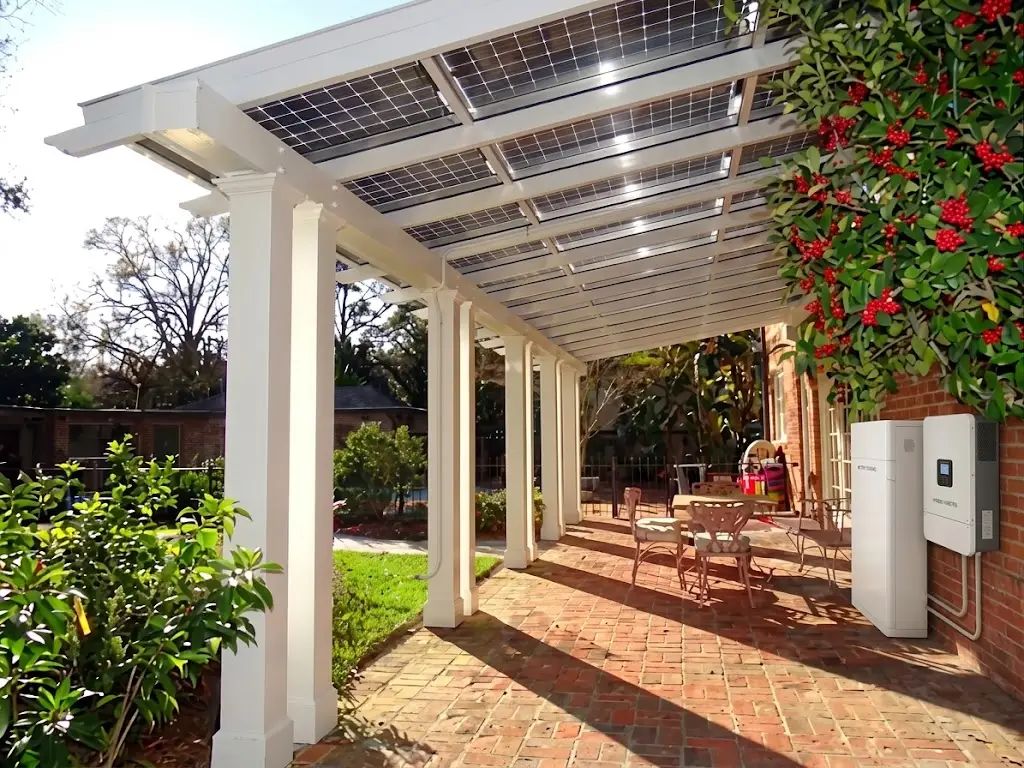
A solar patio cover can do more than create shade. With the right planning, it may also support solar energy storage, backup power options, EV readiness, and a smarter long-term home energy setup.
A solar patio cover gives your backyard a new purpose. It creates a covered outdoor living area below while supporting solar panels above. When battery backup is part of the conversation, the project becomes even more strategic.
Instead of treating shade, solar, and backup power as separate upgrades, a solar patio cover can bring them together in one coordinated design.
Battery backup is not one-size-fits-all. The right setup depends on the solar design, battery size, electrical system, selected circuits, energy usage, utility requirements, and project goals. For many Southern California homeowners, it is worth reviewing early.
Plan My Solar Patio Cover Call (310) 729-3013 Solar Patios By Design™ is operated by Team All Star Construction, CSLB #1009760. Direct AnswerCan A Solar Patio Cover Work With Battery Backup?
Yes. A solar patio cover may be planned with battery backup when the solar system, electrical design, battery equipment, and overall project scope are properly coordinated.
The solar panels installed on the patio cover can generate power during daylight hours. With a compatible battery system, some of that energy may be stored and used later, depending on how the system is configured. This may help homeowners make better use of their solar production and may support backup power for selected circuits during an outage.
The key word is planning.
A battery-backed solar patio cover is not just a patio cover with panels on top. It may involve structural design, solar layout, electrical review, battery placement, critical load planning, utility coordination, permits, inspections, and future energy goals.
That is why the project should be designed as one coordinated upgrade.
One contractor • One design • Coordinated permitting • One finished project
Get My Solar Patio Cover Estimate More About Solar Patio CoversBattery Backup Changes The Solar Conversation
Traditional solar is usually focused on producing power during the day.
Battery backup adds another layer: storage.
Instead of only using solar energy as it is produced, a battery system may allow some of that energy to be stored for later use. Depending on the design, that stored energy may help during evening hours, high-usage periods, or certain outage situations.
For homeowners, this can shift the question from:
How many panels can I fit?
to
How should my home use, store, and manage solar energy?
That is an important difference. A solar patio cover already solves two needs: shade and solar. Battery backup can add a third planning layer: energy resilience. It may help homeowners think about:
- How much energy the home typically uses
- Whether the goal is partial backup or broader backup
- Whether future EV charging should be considered
- Whether the solar patio cover should be designed for today’s needs or tomorrow’s energy goals
Battery backup is not automatically right for every project. But it is often worth reviewing before the design is finalized.
How A Solar Patio Cover With Battery Backup Works
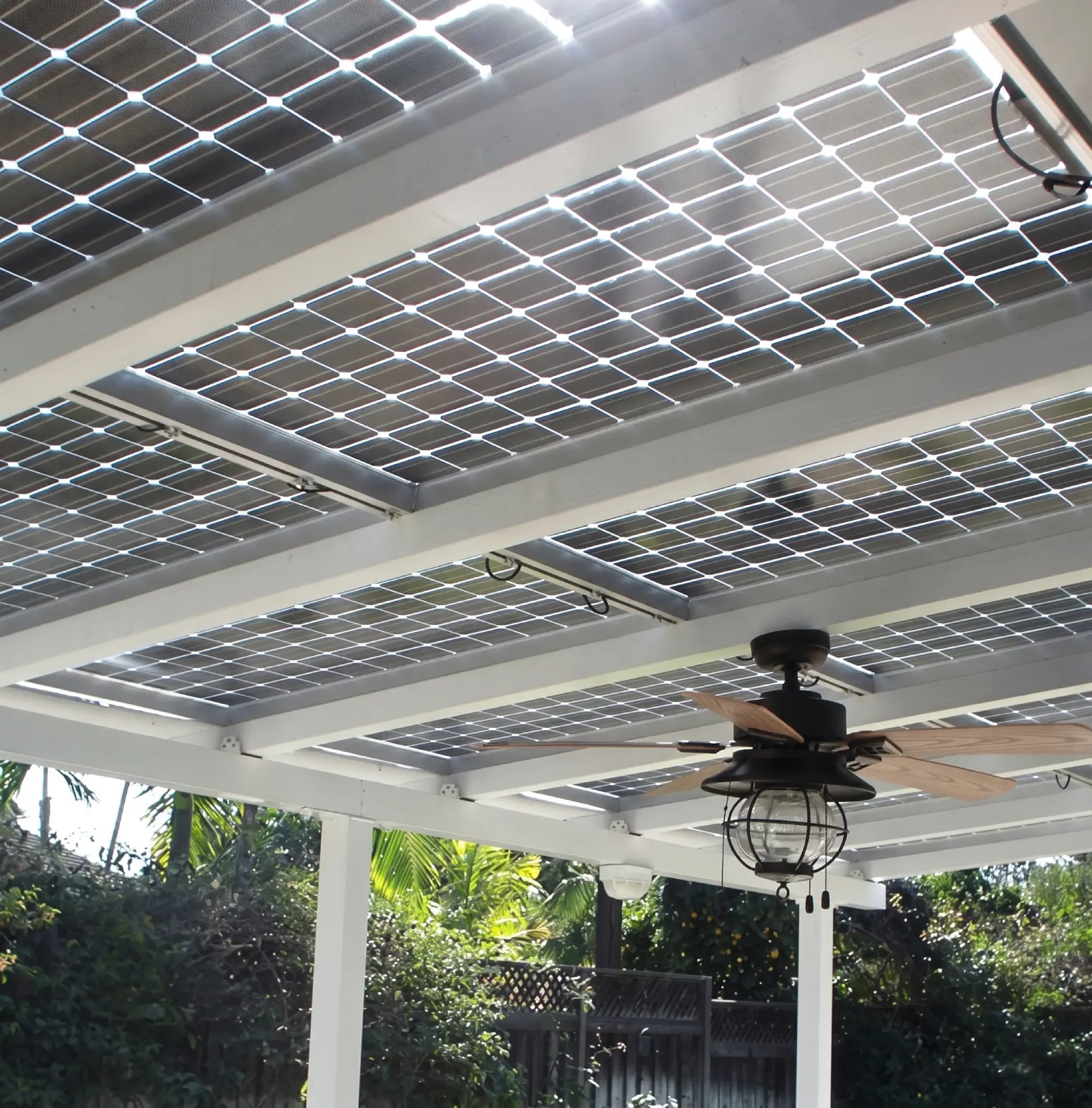
A solar patio cover with battery backup usually brings together three major systems: the patio cover structure, the solar system, and the battery system.
The Patio Cover Structure
01
The patio cover creates the physical shade structure. It may be attached to the home or detached elsewhere on the property, depending on the backyard layout, available space, design goals, setbacks, and project requirements.
This structure has to be planned properly. It is not just decorative. It may need to support solar equipment, meet engineering requirements, and satisfy local building expectations.
The Solar System
02
The solar panels are installed above the patio cover. Their layout depends on the structure size, orientation, tilt, shade exposure, panel type, electrical design, and the homeowner’s energy goals.
The solar design should be reviewed carefully because the patio cover becomes the platform for the system.
The Battery System
03
The battery stores energy based on the system design. It may be configured to support selected circuits, certain appliances, or a broader home backup strategy depending on the equipment, electrical panel, load requirements, and project scope.
Not every battery system backs up an entire home. Some are designed for essential loads only. Others may support more, depending on battery capacity, electrical configuration, load management, and installation requirements.
The best design begins by asking what the homeowner actually wants the battery to do.
Shade, Solar, And Stored Energy In One Coordinated Project
The strongest reason to consider battery backup with a solar patio cover is coordination. Many homeowners think about upgrades separately.
First, they consider a patio cover.
Later, they consider solar.
Then, maybe, they think about a battery.
After that, they may think about EV charging.
The problem is that each decision affects the next one. A solar patio cover gives homeowners the opportunity to plan these pieces together from the beginning.
The project can consider:
- How the patio will be used
- Where shade is needed
- Where solar exposure is strongest
- How much panel space is available
- Whether a battery may be part of the project
- Where battery equipment may be located
- Whether EV charging should be considered
- How the electrical system should be reviewed
- What permits or inspections may apply
- How the finished project should look and function
This is the difference between adding equipment and designing a system. A solar patio cover with battery backup planning should feel intentional, not patched together.
A Solar Patio Cover Is A Purpose-Built Solar Platform
Rooftop solar depends on the roof that already exists. A solar patio cover creates a new structure that can be reviewed around solar layout, shade, outdoor use, and energy planning.
That does not mean a solar patio cover is always better than roof solar. Roof solar can be a good fit when the roof is new, open, well-oriented, and ready for panels. But if the homeowner also wants shade and outdoor living space, a solar patio cover may create more value from the same overall project conversation.
A solar patio cover can be especially useful when:
- The roof is older or may need work in the future
- The roof has limited usable solar space
- The roof is shaded or visually sensitive
- The backyard has strong sun exposure
- The homeowner wants a patio cover anyway
- The homeowner wants panels off the main roofline
- Battery backup or EV readiness is part of the long-term plan
- The project needs a cleaner, more intentional design
Instead of forcing solar onto the roof, the property can be reviewed as a whole. Learn more why put solar on your patio instead of your roof.
Battery Backup Should Be Planned Around Real Expectations
Battery backup can be valuable, but it should be explained clearly. A battery system may help store solar energy for later use. It may also support backup power during certain outages, depending on how the system is designed. But battery backup does not automatically mean every part of the home will keep running as normal.
A realistic battery conversation should cover:
- Which circuits are backed up
- How long the battery may last under different loads
- Whether the system is partial-home or whole-home oriented
- Whether high-demand appliances are included
- Whether load management is needed
- How the home uses energy during the day and night
- Whether the battery can recharge from solar during an outage
- What the utility and local requirements allow
- What equipment is compatible with the solar design
This matters because backup power is not just about battery size. It is about how the home is wired, what loads are selected, how much energy those loads use, and how the system is configured. A well-planned battery system starts with priorities.
For some homeowners, the priority is keeping essentials running.
For others, it is storing more solar energy for evening use.
For others, it is preparing for EV charging, future electrification, or long-term energy independence.
The right plan depends on the home.
Not Every Battery Backup System Is Designed The Same Way
When homeowners hear “battery backup,” they often imagine the entire home running during an outage. In reality, backup systems can be designed in different ways.
Partial-Home Backup
Partial-home backup usually focuses on selected circuits or essential loads. This may include refrigeration, certain lights, internet equipment, garage access, medical equipment, or other priority areas depending on the home and system design.
This approach may be more practical for many homeowners because it focuses stored energy on what matters most.
Whole-Home Backup
Whole-home backup is a broader goal. It may require more battery capacity, more advanced electrical planning, load management, or other upgrades depending on the home’s energy use and equipment.
This can be possible in some cases, but it should be reviewed carefully. Large appliances, air conditioning, pool equipment, electric heating, and EV charging can use significant power.
Load Management
Load management helps control which circuits or appliances operate during backup conditions. This can help extend battery usefulness and avoid overloading the system.
For a solar patio cover project, these decisions should be made early because they can affect electrical design, battery sizing, equipment placement, and permit planning.
Why Southern California Homeowners Are Thinking Beyond Solar Alone
Southern California homeowners often want more than electricity savings. They want comfort, outdoor living, energy resilience, and a home that feels prepared for the future. Solar patio covers with battery backup planning can be relevant for homes in Ventura County, Los Angeles County, Orange County, Riverside County, and San Bernardino County because many properties share similar concerns:
- Strong sun exposure
- Warm patios and backyards
- High outdoor living demand
- Pool and entertainment areas
- Older roofs or complex rooflines
- Growing EV charging needs
- Interest in backup power
- Desire to keep solar off the main roof
- Need for better shade and usable outdoor space
A solar patio cover can help turn unused sun exposure into a more practical home upgrade.
The patio gets cooler.
The backyard becomes more usable.
The solar system gets a dedicated structure.
The battery conversation becomes part of the plan.
Solar Patio Covers Can Be Planned Around EV Charging Too
Battery backup and EV charging are different systems, but they are often part of the same long-term energy conversation. A homeowner may not need EV charging today. But if an electric vehicle is likely in the future, it may be wise to discuss electrical planning early.
A solar patio cover project can review:
- Solar panel capacity
- Electrical panel condition
- Battery storage goals
- EV charger location
- Conduit planning
- Load management
- Future electrical demand
- How the patio cover connects to the home’s energy plan
This does not mean every solar patio cover should include EV charging. It means the design should not ignore the possibility. When solar, battery backup, and EV readiness are reviewed together, the homeowner may avoid a more fragmented project later.
Attached Solar Patio Covers Can Connect Outdoor Living And Home Energy Planning
An attached solar patio cover connects to the home and creates a covered outdoor area near the main living space. This can work well for homeowners who want shade directly off the kitchen, living room, dining area, or sliding door. When battery backup is part of the planning conversation, the attached structure may also become part of a more connected home energy design.
An attached solar patio cover may be a good fit when:
- The patio is close to the home
- The homeowner wants a natural indoor-outdoor transition
- The backyard gets strong sun exposure
- The roof is not the preferred solar location
- Battery or EV planning should be reviewed with the home’s electrical system
- The design should feel like an extension of the house
The structure, attachment details, electrical routing, solar layout, and local requirements should all be reviewed before the project is finalized.
Detached Solar Patio Covers Can Create A Separate Solar And Shade Zone
A detached solar patio cover is built away from the main home. This can make sense when the best solar opportunity is in a different part of the property or when the homeowner wants a separate outdoor destination.
Detached solar patio covers may work well for:
- Poolside shade
- Outdoor kitchens
- Backyard lounges
- Larger lots
- Open sun exposure zones
- Detached entertainment areas
- Properties where the roof is not ideal for solar
- Homes where the backyard layout offers more flexibility
When battery backup is part of the project, detached designs may require additional electrical planning. Routing, equipment location, trenching, conduit, inspections, and local requirements should be reviewed carefully. A detached solar patio cover can feel less like an add-on and more like a purpose-built backyard energy structure.
Can Alumawood Patio Covers Be Part Of Solar Battery Planning?
Alumawood patio covers are popular because they offer the look of wood with lower maintenance than traditional wood patio structures. They can be used for many shade-focused patio cover projects.
When solar is involved, the conversation becomes more technical. Not every patio cover design is automatically appropriate for solar panels. A solar patio cover needs to be reviewed for structure, layout, engineering, attachment, footings, loads, permits, and electrical integration.
Battery backup adds another layer of planning. An Alumawood-style patio cover may be part of a solar patio cover plan when the design and project scope allow, but it should be evaluated as a solar-supporting structure rather than a basic shade cover.
Homeowners should avoid thinking of solar as something that can simply be added later without planning. The better approach is to discuss solar and battery goals before the patio cover design is finalized.
What Affects The Cost Of A Solar Patio Cover With Battery Backup?
A solar patio cover with battery backup can vary significantly in cost because it combines multiple project scopes. Cost factors may include:
- Patio cover size
- Attached or detached design
- Structure type and finish
- Footings and engineering requirements
- Solar system size
- Panel layout and electrical design
- Battery brand, capacity, and configuration
- Critical loads or whole-home backup goals
- Electrical panel condition
- Utility requirements
- EV charging readiness
- Permit and inspection requirements
- Site access
- Trenching or conduit needs
- Local city or county requirements
- Optional upgrades and design features
A roof-only solar project may involve a narrower construction scope because it uses the existing roof structure. A solar patio cover with battery backup may involve more components, but it can also combine shade, solar, and energy storage planning into one project. The best way to compare cost is not to look at solar alone.
The better question is: What would it cost to build the patio cover, add solar, and plan battery backup separately compared to designing them together from the beginning?
Explore Solar Patio Cover Cost Try the Solar Patio Cover Cost Guide Explore Solar Patio Cover FinancingCan Battery Backup Be Included In Solar Patio Cover Financing?
Battery backup may be included in the financing conversation depending on the project, lender, equipment, scope, and eligibility requirements. Because a solar patio cover with battery backup may include construction, solar, electrical work, and optional storage equipment, financing should be reviewed carefully. The exact structure can vary depending on the project and available financing options.
Homeowners should ask:
- Is the patio cover included?
- Is the solar system included?
- Is battery backup included?
- Are electrical upgrades included?
- Are permit-related costs included?
- Is EV charging readiness included?
- What is the total project scope?
- What happens if the battery is added later?
The goal is not just to find a monthly payment. The goal is to understand what the financing actually covers.
Start With The Home, Not The Battery
A strong project begins with the full home.
Review The Patio Goal
Step 01
What should the covered space do? Shade the outdoor dining area? Cover a poolside lounge? Create an outdoor kitchen zone? Extend the home’s living space?
The patio use affects the structure, size, orientation, and design.
Review Solar Exposure
Step 02
The solar patio cover should be evaluated for sun exposure, shade patterns, orientation, and usable panel area.
Not every patio location is equally strong for solar.
Review Energy Usage
Step 03
Battery backup planning should consider how the home uses electricity, when energy is used, and which loads matter most.
Step 4: Review Backup Priorities
Step 04
Does the homeowner want essential-load backup, broader home backup, or storage for evening use?
Each goal requires a different discussion.
Review Electrical Requirements
Step 05
The electrical panel, utility connection, wiring, battery placement, inverter location, and EV charging plans may all affect the project.
Review Permits And Inspections
Step 06
The patio cover, solar system, battery, and electrical scope may each affect local review requirements.
Build One Coordinated Plan
Step 07
The final design should bring structure, solar, battery, electrical planning, and outdoor living into one project.
See Our Full ProcessBattery Incentives Should Be Reviewed Carefully
Some solar and battery-related projects may qualify for tax credits, rebates, or incentive programs, but eligibility depends on the project, equipment, installation details, ownership structure, timing, tax situation, local rules, and program requirements.
Solar Patios By Design™ should not promise that a homeowner will qualify for any specific credit, rebate, or incentive.
A careful battery backup conversation should include this reminder:
Homeowners should confirm eligibility with a qualified tax professional, solar provider, utility, or local authority before making financial decisions based on incentives.
This is especially important because incentive programs and utility rules can change. A project should be designed to make sense on its own merits, with any available incentives treated as a possible benefit rather than a guaranteed outcome.
Related Incentive Guides
Solar Patio Covers With Batteries May Require More Coordination
A solar patio cover with battery backup can involve more than one type of review.
Depending on the project, planning may include:
- Patio cover design review
- Structural engineering
- Footing requirements
- Attachment or freestanding structure review
- Solar permit planning
- Battery equipment review
- Electrical scope review
- Utility coordination
- Fire or safety clearance considerations
- Inspection scheduling
- Final approval requirements
Permit requirements vary by city, county, structure type, electrical scope, property conditions, battery equipment, utility requirements, and local authority rules. For a deeper look at this part of the project, read our guide to solar patio cover permits in California.
This is where many projects become complicated.
A patio cover company may not handle solar and battery planning. A solar company may not build the patio structure. A battery installer may not coordinate the outdoor living design.
Solar patio covers with battery backup sit between construction, solar, electrical planning, and home energy design.
That is why coordination matters.
Plan The Project Properly
Battery Equipment Should Be Planned Into The Project Early
Battery backup is not just a line item. It affects the home’s electrical layout and equipment planning.
Battery placement may depend on:
- Equipment specifications
- Clearance requirements
- Electrical panel location
- Garage or exterior wall access
- Utility meter location
- Fire safety considerations
- Local code interpretation
- Manufacturer guidelines
- Service access
- Aesthetic preferences
Homeowners often focus on the patio cover itself, but the battery equipment also needs a place to live.
This is one reason early planning is valuable.
A solar patio cover project should consider not only where the panels go, but also where the battery, inverter, electrical equipment, conduit, and related components may be located.
The best finished projects feel clean because the less-visible details were planned early.
Battery Backup Is Different From A Traditional Generator
Some homeowners compare battery backup with a standby generator. They are different solutions.
A generator typically uses fuel to produce power during an outage. A battery stores electricity and may be charged by solar, depending on the system design. Each option has different costs, capabilities, limitations, maintenance needs, fuel considerations, and installation requirements.
A solar patio cover with battery backup may appeal to homeowners who want an energy storage solution tied into their solar system rather than a separate fuel-based backup system.
However, batteries have limits. They must be sized correctly, and the backed-up loads must be managed properly.
For some homes, a battery may be a strong fit. For others, a different backup strategy may be needed. The right answer depends on the property, expectations, budget, and energy needs.
Should The Battery Connect To Roof Solar Or Patio Cover Solar?
Battery backup can often be considered with either rooftop solar or solar panels on a patio cover, depending on the system design and equipment compatibility.
The better question is not only where the battery connects.
The better question is where the solar system should be located. For many homeowners, this starts with comparing a solar patio cover vs roof solar.
Roof solar may make sense when:
- The roof is newer
- The roof has strong sun exposure
- The roof has enough usable space
- The homeowner does not need a patio cover
- The roof is structurally and visually acceptable for panels
A solar patio cover may make sense when:
- The homeowner wants shade and solar
- The roof is not ideal
- The backyard has strong sun exposure
- The homeowner prefers panels off the main roof
- Outdoor living is a priority
- Battery backup or EV readiness should be reviewed with the larger property plan
Battery backup does not automatically make one option better. It makes early design review more important.
When Should You Consider Adding Battery Backup?
Battery backup may be worth reviewing if:
- You want stored solar energy for later use
- You experience power outages or grid interruptions
- You work from home
- You have medical, refrigeration, communication, or security needs
- You want to keep selected essentials running during an outage
- You are considering EV charging
- You want to reduce reliance on the grid during certain times
- You are already planning a solar patio cover
- You want a more complete long-term home energy plan
It may not be necessary for every project.
Some homeowners may prefer a solar patio cover without a battery at first. Others may want the system designed to be battery-ready, even if storage is added later.
The key is to avoid designing the patio cover in isolation.
If battery backup may matter in the future, it should be part of the early conversation.
What Does Battery-Ready Mean?
A battery-ready solar patio cover means the project is reviewed with future battery backup in mind, even if the battery is not installed immediately.
This may include discussing:
- Solar system compatibility
- Inverter options
- Electrical panel considerations
- Battery placement
- Conduit planning
- Load priorities
- EV charging readiness
- Future energy needs
- Permit implications
- Utility requirements
Battery-ready does not mean a battery can always be added later without additional work. It means the project is being planned with future storage in mind.
That kind of planning can be valuable for homeowners who want to phase their investment.
Phase one may be the patio cover and solar system. Phase two may be battery backup. Phase three may be EV charging or additional energy upgrades.
The earlier these goals are discussed, the cleaner the long-term project can be.
Most Contractors Only Handle One Piece Of The Project
Solar patio covers with battery backup sit in the space between several industries.
A patio cover company may understand shade structures, but not solar storage.
A solar company may understand panels, but not patio cover construction.
A battery installer may understand storage equipment, but not backyard design, footings, shade planning, or outdoor living flow.
That gap can create confusion for homeowners. It is also one reason solar patio covers are hard to find compared with basic patio covers or standard rooftop solar systems.
A properly planned solar patio cover with battery backup may involve:
- Patio cover design
- Structural planning
- Footings
- Engineering coordination
- Solar layout
- Battery planning
- Electrical integration
- Permit planning
- Inspections
- Outdoor living design
- Future EV readiness
Solar Patios By Design™ helps bridge that gap by treating the project as one coordinated upgrade.
One contractor. One design. Coordinated permitting. One finished project.
Related Solar Patio Cover Guides
- Why Solar Patio Covers Are Hard To Find
- Solar Company vs Solar Patio Cover Specialist
- Patio Cover Company vs Solar Patio Cover Specialist
Thinking About Solar, Shade, And Battery Backup?
Start with a solar patio cover review.
We can help you look at your roof, backyard, sun exposure, patio goals, electrical planning, battery backup options, and future EV needs so you can understand what kind of project makes sense for your home.
Solar Patios By Design™ is operated by Team All Star Construction, CSLB #1009760.
Solar Patio Covers With Battery Backup FAQs
Can a solar patio cover charge a battery?
Yes. Solar panels installed on a properly designed solar patio cover may be connected to a compatible battery system, depending on the solar design, inverter, battery equipment, electrical configuration, utility requirements, and project scope. The system should be reviewed before assuming compatibility.
Can a solar patio cover power my home during an outage?
A solar patio cover with battery backup may support selected parts of the home during an outage, depending on how the battery system is designed. Some systems focus on essential loads, while others may support a broader backup strategy. Battery size, electrical wiring, load management, and energy usage all affect performance.
Does battery backup mean my whole house will stay on?
Not always. Many battery systems are designed for partial-home backup or selected critical loads. Whole-home backup may require more battery capacity, load management, electrical upgrades, or a different system design. Homeowners should clarify their backup goals before choosing equipment.
Can I add a battery later to a solar patio cover?
In some cases, a battery may be added later if the solar system and electrical design are compatible. However, adding a battery later can require additional equipment, electrical work, permits, or upgrades. If future battery backup is important, the solar patio cover should be designed with battery readiness in mind from the beginning.
Is battery backup worth it with a solar patio cover?
Battery backup may be worth reviewing if you want stored solar energy, outage support, essential-load backup, EV readiness, or a more complete home energy plan. Whether it is worth it depends on your energy usage, budget, outage concerns, utility rates, solar production, and long-term goals.
Do solar patio covers with batteries need permits?
Permit requirements vary by city, county, project type, structure, electrical scope, battery equipment, utility rules, property conditions, and local authority requirements. A solar patio cover with battery backup may involve structural, solar, electrical, and battery-related review.