
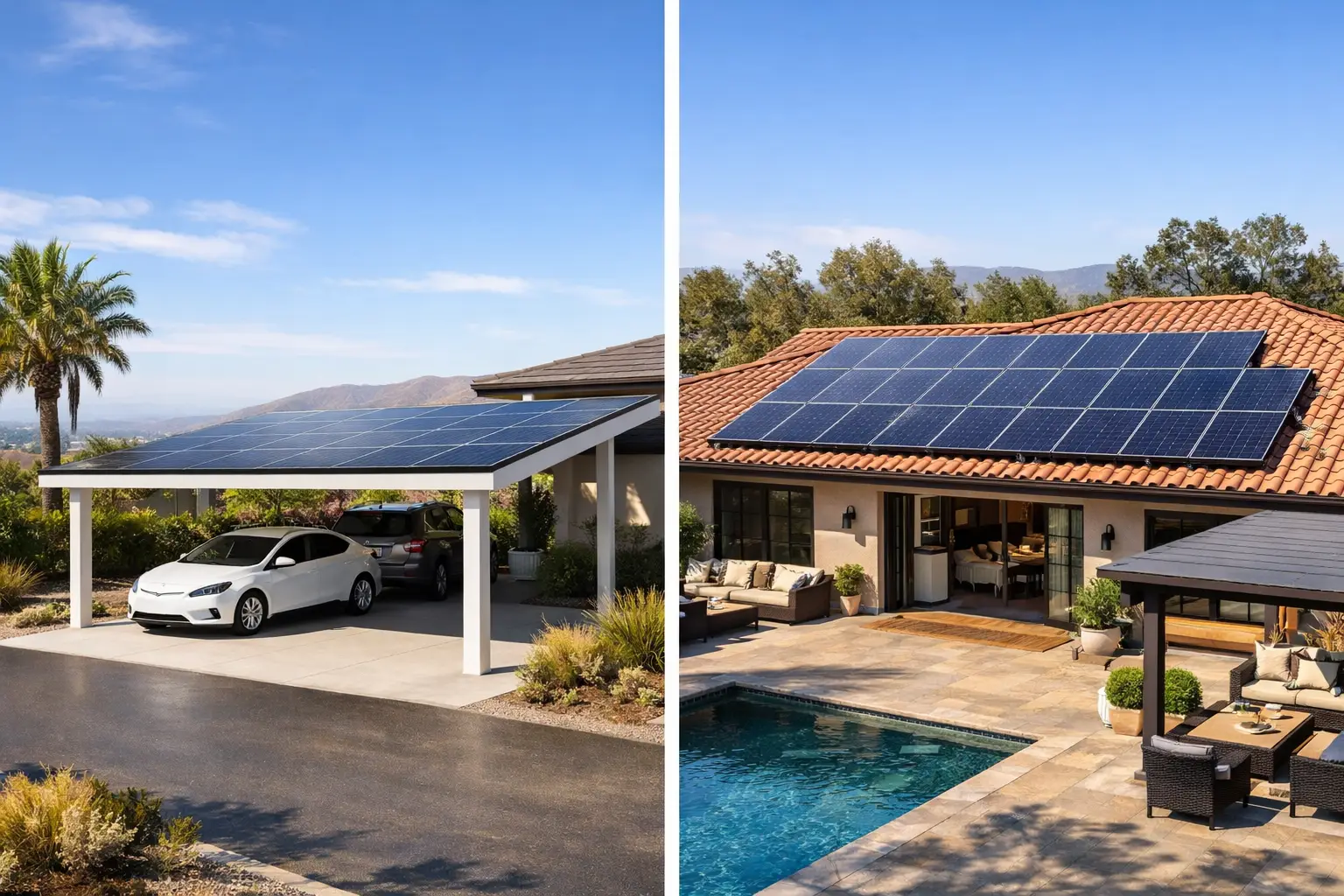
A solar decision can affect far more than your electric bill. For many Southern California homeowners, the choice between solar carport vs rooftop solar also determines whether the project adds usable shade, improves parking comfort, changes the look of the home, or requires work on an aging roof. Rooftop panels remain a practical option for many properties. But a solar carport can turn a driveway, detached parking area, or open side yard into an outdoor structure that produces electricity.
The better choice is not automatically the one with the lowest starting price. It is the one that makes the best use of your property, sun exposure, daily routines, and long-term plans.
The Short Answer: When Each Option Makes Sense
Rooftop solar often makes sense when a home has a newer roof, sufficient unshaded roof area, and a panel layout that can face productive directions without compromising the home’s appearance. It uses space that is already built, so it typically does not require a separate shade structure.
A solar carport may be the stronger fit when roof space is limited, the roof needs replacement soon, roof angles create shading challenges, or the homeowner wants covered parking as well as solar generation. It can also be an appealing option for homeowners who simply prefer not to place solar panels on the roof.
The distinction is simple: rooftop solar primarily uses an existing surface to generate power. A solar carport creates a new, useful surface – one that can provide shade for vehicles while supporting a carefully planned solar array.
Solar Carport vs Rooftop Solar: The Core Differences
Where the panels go
Rooftop solar is mounted on an existing roof. The roof’s shape, orientation, pitch, vents, skylights, chimneys, and nearby trees all influence how many panels can fit and how they perform.
A solar carport places panels above a dedicated parking structure. Because the structure is designed around the project, its footprint, height, orientation, and roof plane can often be planned with solar production and shade in mind. This creates more design flexibility, although the available driveway or parking area still sets practical limits.
What the project adds to your property
Rooftop solar adds energy production, but it does not create new living space or shade. A solar carport can add covered parking, a more comfortable place to enter and exit vehicles, and protection from direct sun. In inland areas such as Riverside, Rancho Cucamonga, and parts of the San Fernando Valley, that shade can make a noticeable difference during hot afternoons.
For homes with a detached garage, a wide driveway, or an underused side-yard parking area, a carport can make the property work harder. It is not only an energy project. It is an outdoor improvement with a solar function built into its design.
How each option affects the home’s appearance
Visual preference matters. Some homeowners appreciate the low-profile appearance of rooftop panels, particularly when the array sits neatly on a simple roof plane. Others dislike the idea of panels attached to the home or have architectural features they do not want to cover.
A well-designed solar carport makes the solar array part of an intentional outdoor structure. The result can feel more integrated with a modern driveway, detached garage, or backyard parking area. Design choices such as column placement, roofing style, finish color, and lighting can help the structure complement the home rather than feel added as an afterthought.
Roof Condition Is Often the Deciding Factor
A roof that is nearing the end of its useful life deserves careful consideration before rooftop solar is installed. If the roof will need replacement in the near future, panels may need to be removed and reinstalled for that work. That can add cost and coordination later.
This does not mean every older roof rules out rooftop solar. A qualified review should consider the roof material, age, condition, and expected remaining service life. Still, homeowners planning a roof replacement may prefer to complete that work first or consider a solar carport, pergola, or patio cover that places panels away from the home’s roof.
Roof layout also matters. Complex rooflines, small sections, heavy shading, and numerous obstructions can limit panel placement. A dedicated carport roof may offer a cleaner solar layout, particularly if it can be oriented to capture strong Southern California sun exposure.
Cost: Compare the Full Value, Not Just the Panels
A rooftop system and a solar carport are not identical projects, so a simple price comparison can be misleading. Rooftop solar generally avoids the expense of constructing a new support structure. When the existing roof is suitable, this can make it the more economical path for solar generation alone.
A solar carport includes the cost of a structural outdoor improvement as well as the solar equipment and electrical work. Foundations, posts, beams, engineered plans, drainage considerations, and local approvals can all affect the project budget. A larger structure or a site with difficult access may require additional work.
However, comparing only the solar portion misses the point for homeowners who already need covered parking. If you are considering a carport anyway, combining the structure and solar array can consolidate planning, design, permits, and construction into one project. The value comes from receiving shade, parking comfort, visual improvement, and electricity production from the same investment.
Energy savings are never guaranteed. Production and financial results depend on system size, sun exposure, shading, household electricity use, utility rates, equipment, and applicable utility rules. Incentive eligibility can also change, so homeowners should confirm current details with qualified tax and solar professionals.
Production Depends on Design, Not Just Location
Southern California has excellent solar potential, but every property has different constraints. A rooftop array may perform very well on a broad, unshaded south- or west-facing roof. In that situation, there may be little reason to add a new structure solely for panels.
A carport can be valuable when the roof is poorly oriented or partly shaded by neighboring homes, mature trees, chimneys, or taller roof sections. Since a carport is purpose-built, the panel roof can sometimes be positioned more favorably than the home’s existing roof.
That said, a carport is not automatically more productive. A structure placed under trees, too close to a tall home, or constrained by driveway orientation may still experience shading. A site-specific solar assessment should look at seasonal sun paths, not simply the amount of sunshine visible at noon.
Permits, HOAs, and Project Coordination
Both rooftop solar and solar carports typically involve permits and electrical review, but a carport adds structural considerations. Local requirements can vary by city, property conditions, structure size, electrical scope, and whether the carport is attached or detached.
In planned communities throughout Orange County and other parts of Southern California, HOA review may also be part of the process. Homeowners should check architectural rules early, especially for visible driveway structures, roof colors, setbacks, and exterior finishes. Approval is never automatic, but a clear design package can make it easier to evaluate the proposed improvement.
One advantage of working with a company experienced in both outdoor structures and solar is coordination. Solar Patios By Design™ approaches the carport as one integrated project rather than treating the shade structure and panel installation as separate jobs with separate design priorities.
Battery and EV Charging Readiness
Either option can be designed with future energy goals in mind. If battery backup or electric vehicle charging is part of your plan, the solar location is only one part of the conversation. Electrical capacity, equipment placement, panel size, household loads, and local code requirements also matter.
A solar carport can be especially convenient near a parking area where an EV charger may eventually be used. That does not mean the charger connects directly to the carport panels. It means the overall project can be planned around how and where you park, charge, and use electricity.
Which Homeowners Should Lean Toward a Solar Carport?
A solar carport deserves close consideration if you want covered parking, have an unsuitable or aging roof, lack usable roof area, or want solar without changing the appearance of your roof. It can also be a smart choice when a driveway or detached parking space receives strong sun and would benefit from shade.
Rooftop solar may remain the better fit if your roof is newer, open, unshaded, and well positioned for panels, especially if your primary goal is energy production without adding a separate outdoor structure.
The most useful starting point is to look beyond the panels. Consider where your family needs shade, how long you expect to stay in the home, whether your roof is ready, and how you want the property to function every day. The right solar project should support the way you live outside as thoughtfully as it supports the energy you use inside.