
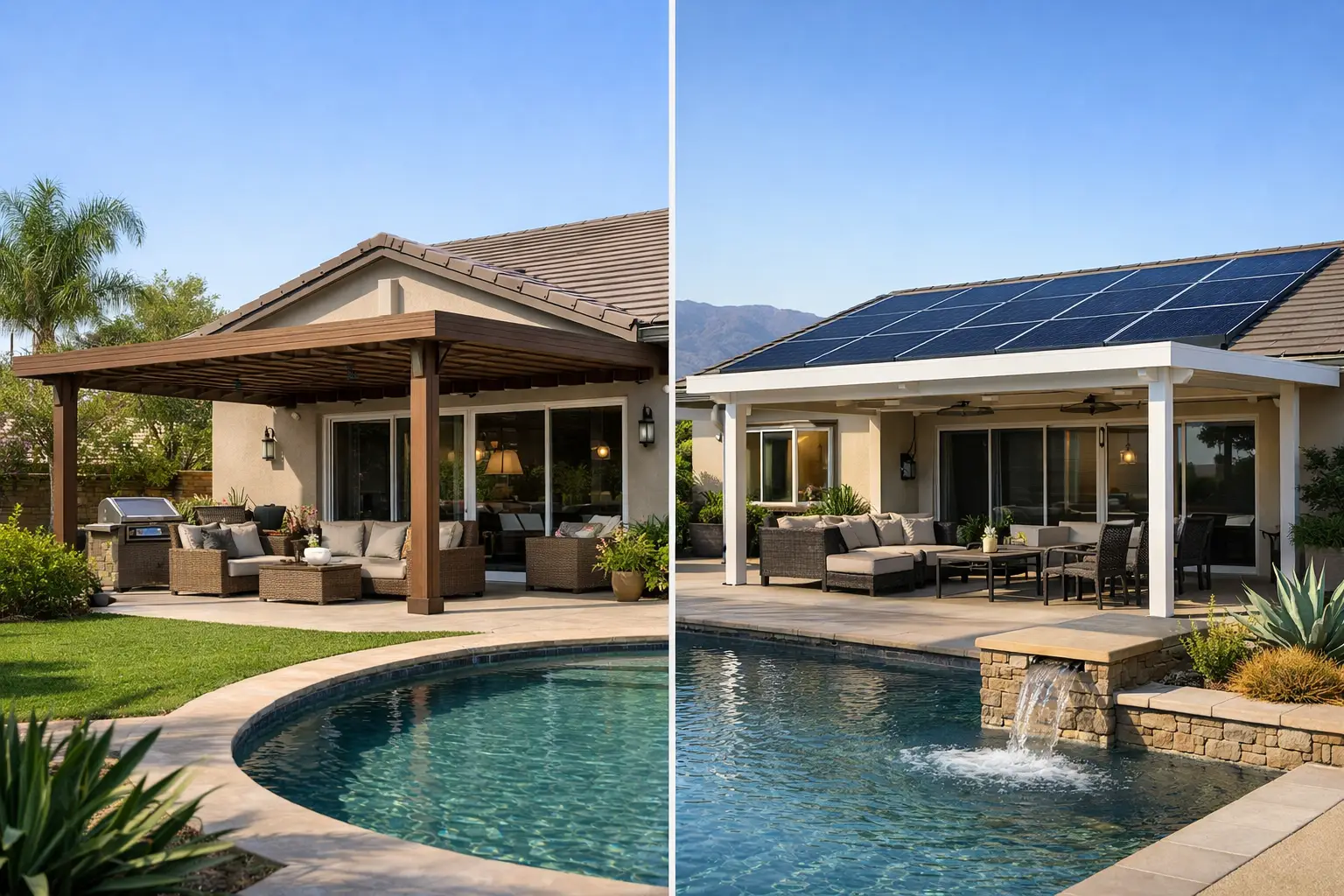
A patio cover can look similar from the yard while performing very differently at noon in August. For Southern California homeowners comparing Alumawood vs insulated patio covers, the real decision is not simply appearance. It is whether you want filtered or solid shade, how much heat control you need, how you use the space, and whether the structure may one day support solar panels.
Both options can create a durable, low-maintenance outdoor living area. The better choice depends on the conditions beneath the cover, the style of your home, your budget, and the long-term plan for the backyard.
The short answer
Alumawood is often the right fit when homeowners want the appearance of painted wood with less upkeep, flexible design options, and a lighter-looking patio structure. It is especially popular for lattice covers that provide attractive, partial shade.
An insulated patio cover is generally the stronger choice when the goal is solid shade and better protection from radiant heat. Its insulated roof panels can make a covered dining area, outdoor kitchen, or sitting space more comfortable during warm inland afternoons.
For a future solar patio cover, either approach requires a project-specific structural design. The cover must be engineered for the added panel weight, wind forces, attachment details, drainage, and electrical equipment. A standard patio cover should never be assumed to be solar-ready just because it has a solid roof.
What is an Alumawood patio cover?
Alumawood is a popular aluminum patio cover material designed to resemble painted wood. It commonly uses embossed aluminum components that create the visual character of traditional wood beams and rafters without the routine repainting, warping, splitting, or termite concerns associated with wood.
Homeowners often choose Alumawood for its design versatility. It can be used in lattice patio covers, solid covers, and combination designs that place a solid roof over one activity area and lattice shade over another. A white, desert sand, or custom-coordinated finish can complement many Southern California home styles, from traditional tract homes in Riverside County to contemporary coastal properties in Orange County.
The key distinction is the roof style. An Alumawood lattice cover allows daylight and some warmth through the openings. A solid Alumawood roof blocks direct sun more effectively, but it does not automatically provide the same thermal barrier as an insulated panel system.
Where Alumawood performs well
An Alumawood lattice cover works well when a homeowner wants shade without making the patio feel enclosed or dark. It can define a lounge area, frame a garden view, and add architectural interest while still allowing air and natural light to move through the space.
A solid Alumawood cover can be a practical option for homeowners who prioritize a clean, low-maintenance roofline and rain protection. It may be suitable for a patio used mainly in mornings, evenings, or milder coastal conditions where heat buildup is less of a concern.
What is an insulated patio cover?
An insulated patio cover uses roof panels with an insulating foam core between aluminum skins. That layered construction is designed to reduce the transfer of heat from the sun-exposed roof surface into the area below. The result is solid shade with a more comfortable feel under the cover, particularly when the sun is high and temperatures climb.
The visual style is usually cleaner and more contemporary than a faux-wood beam system. Insulated covers can still be designed with attractive posts, trim, lighting, fans, and finished details, but their primary advantage is performance rather than the look of individual rafters.
For homeowners in hot inland areas such as Riverside, Rancho Cucamonga, and parts of the San Fernando Valley, insulation can make a noticeable difference in how often the patio is used. It does not turn an outdoor area into an air-conditioned room, but it can reduce the heat radiating downward from the roof and improve comfort beneath it.
Where insulated covers perform well
Insulated panels are a strong match for covered outdoor kitchens, dining spaces, and seating areas used during midday. They are also worth considering when the patio faces south or west, receives intense afternoon exposure, or sits against large glass doors that already bring heat into the home.
Because the roof is solid, an insulated patio cover also provides more dependable rain protection. That matters less in Southern California than in wetter regions, but it can still help protect outdoor furniture, cabinetry, and finished entertainment areas.
Alumawood vs insulated patio covers: the differences that matter
The first difference is shade quality. A lattice Alumawood cover offers filtered shade, while a solid Alumawood cover and an insulated patio cover provide full overhead coverage. If direct afternoon sun makes the patio unusable, a lattice layout alone may not solve the problem.
The second difference is heat control. Solid shade blocks sunlight, but insulation addresses heat that builds on the roof and radiates below. An insulated cover generally has the advantage for hot, exposed patios. In a mild coastal neighborhood with regular afternoon breezes, that difference may be less significant than it is on an inland property with a west-facing backyard.
The third difference is visual character. Alumawood often appeals to homeowners who want a traditional beam-and-rafter look or a pergola-style design. Insulated panels tend to suit homeowners who value a clean, finished roof plane and a more contemporary outdoor room feeling. Neither is universally better. The right choice should relate to the home’s architecture and how enclosed or open you want the backyard to feel.
Cost also depends on more than the material. Size, post locations, roof attachment, electrical additions, lighting, fans, drainage, footing requirements, finish selections, and permitting all affect the final investment. An insulated system may cost more upfront than a basic lattice cover, while a detailed Alumawood design with custom features can also become a substantial project. Comparing proposals line by line is more useful than comparing a single starting price.
Which patio cover is better for solar panels?
A solar patio cover needs to be evaluated as a structure and an energy project at the same time. Panel layout, sun exposure, roof direction, shade from trees or neighboring homes, electrical routing, utility requirements, and local approvals all influence whether solar makes sense.
In many cases, a solid, purpose-designed patio roof provides the usable surface needed for solar panels. Insulated patio panels may be part of that solution, but they need an appropriate engineered support system and approved mounting approach. Alumawood can also be incorporated into a solar design, especially when it provides the finished architectural look around a purpose-built solar roof structure.
The most important point is that solar should be considered before construction, not added as an afterthought. A homeowner who builds a standard lattice cover today may later discover there is not enough solid, properly oriented area for a meaningful panel array. Planning early can help align the patio cover footprint with shade needs and solar production goals.
This is where a combined design process is valuable. Solar Patios By Design™ approaches the patio as both an outdoor living structure and a potential alternative to rooftop solar, coordinating the design considerations that are often divided between separate contractors.
Design questions to answer before choosing
Start with how you want to use the patio from late spring through early fall. A breakfast nook used mostly in the morning may benefit from an Alumawood lattice cover. A west-facing outdoor kitchen used for weekend dinners may call for full shade and insulation. A poolside lounge might need a combination design that keeps one area open and another comfortably shaded.
Next, look at the sun path rather than relying on a single visit to the backyard. Morning and late-afternoon sun can strike a patio at low angles, meaning an overhead roof alone may not block all glare. Optional side shading, cover depth, orientation, and post placement can matter as much as the roof material.
Finally, consider the project’s future. If battery backup readiness, EV charging readiness, or solar energy are part of the long-term plan, say so during the initial design stage. The structural and electrical decisions made early can preserve more options later.
Southern California approval and site considerations
Patio cover requirements vary by city, structure type, property conditions, and electrical scope. Many projects require plans and permits, and solar additions introduce further structural and electrical review. HOA guidelines may also affect roof color, cover location, height, and the appearance of visible panels.
Coastal exposure, high-wind areas, hillside conditions, and lot-line setbacks can also shape the design. A thoughtful evaluation accounts for these local details without assuming every home will follow the same path.
The best patio cover is the one that makes your backyard more usable now while supporting the way you may want to live and power your home later. Choose Alumawood for its architectural flexibility and low-maintenance wood look, choose insulated panels when heat comfort and full coverage lead the decision, and plan the structure around solar from the beginning if energy independence is part of the vision.