
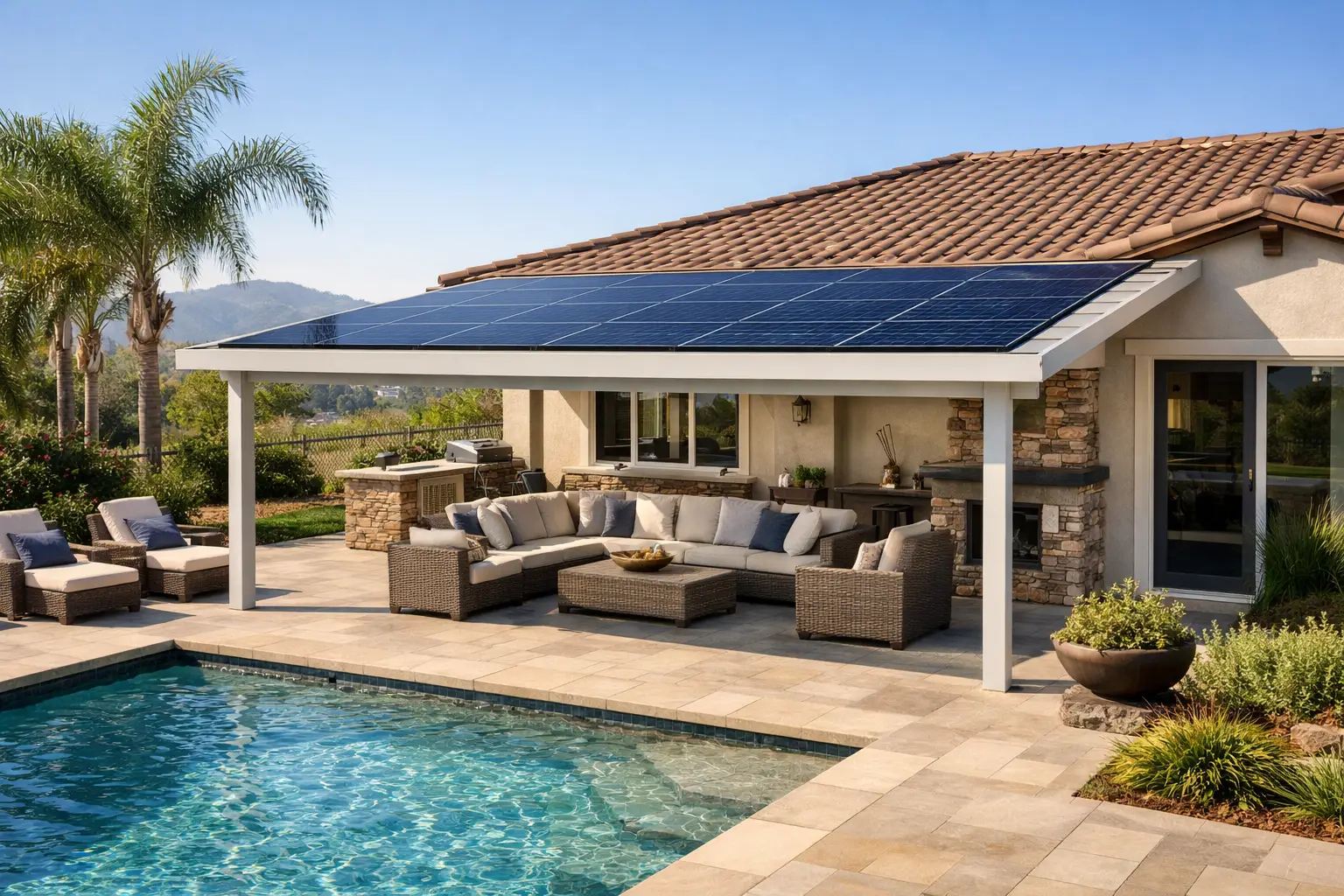
A patio cover usually sounds simple until you start comparing materials. Then the real question shows up fast: are aluminum patio covers good, or are they just the low-maintenance option people choose when they want to avoid wood upkeep?
For many Southern California homeowners, aluminum patio covers are a very good choice. They hold up well in sun and heat, resist rot and termites, and require far less maintenance than wood. But they are not automatically the right choice for every backyard, every design style, or every long-term goal. The better answer is that aluminum patio covers are good when you want durability, shade, clean lines, and lower upkeep – and they are even more compelling when you are thinking ahead about an integrated solar patio cover.
Are Aluminum Patio Covers Good? The Short Answer
Yes, aluminum patio covers are good for many homes, especially in climates where strong sun, dry heat, and year-round outdoor living matter. They offer a practical mix of durability, appearance, and maintenance savings that makes them popular for attached patio covers, detached shade structures, and modern backyard upgrades.
That said, good does not mean perfect. Some homeowners prefer the warmth and texture of real wood. Others want insulated roof panels for better heat control, or they want a structure designed specifically to support solar panels. The right patio cover depends on how you use your space, how much sun you get, and whether you want your patio cover to do more than provide shade.
Why Aluminum Works So Well in Southern California
Southern California is hard on outdoor materials. Constant UV exposure, dry summers, occasional wind, and coastal moisture in some areas can wear down the wrong structure quickly. Aluminum performs well here because it does not absorb moisture the way wood can, and it does not become a termite target.
That matters if you want a backyard improvement that still looks sharp years from now without regular sanding, staining, or repainting. In inland communities where summer heat is intense, homeowners often prioritize shade and durability over high-maintenance materials. In coastal areas, resistance to corrosion and weather exposure becomes part of the value equation too.
This is one reason aluminum and aluminum-look products such as Alumawood patio covers remain popular. They offer a cleaner ownership experience. You get shade and outdoor living space without taking on a second hobby called patio cover maintenance.
The Real Advantages of Aluminum Patio Covers
The biggest advantage is longevity with minimal upkeep. A well-built aluminum patio cover can maintain its appearance and structural performance for many years with basic cleaning and occasional inspections.
It also gives homeowners design flexibility. Aluminum patio covers can work with solid roof designs, lattice covers, insulated roof systems, and structures built for outdoor kitchens, seating areas, or poolside shade. Depending on the design, they can complement contemporary homes, Spanish-style homes, and many of the mixed architectural styles common across Southern California neighborhoods.
Another major benefit is predictability. Wood can warp, crack, split, or require ongoing refinishing. Aluminum is more consistent. If you are trying to make a smart long-term home improvement decision, that predictability has value.
For homeowners thinking beyond shade, aluminum also pairs well with future-focused planning. A patio cover can become more than a cover. It can become part of a broader outdoor living and energy strategy, especially when designed to support solar from the beginning.
Where Aluminum Patio Covers Have Trade-Offs
The biggest trade-off is aesthetic preference. Even high-quality aluminum products do not feel exactly like real wood, and some homeowners care deeply about that. If your top priority is a natural, handcrafted look, wood may still be the material you prefer.
Heat is another factor. Standard aluminum patio covers can get warm in direct sun. That does not always mean the space below becomes uncomfortable, but the roof style matters. An insulated aluminum patio cover generally performs better than a non-insulated option when the goal is a cooler, more comfortable patio.
There is also a quality difference from one system to another. Not all aluminum patio covers are built the same. The gauge of the material, the engineering, the finish, and the way the structure is attached all affect performance. A patio cover is only as good as its design and installation.
Aluminum vs Wood Patio Covers
If you are comparing materials, the decision usually comes down to maintenance, appearance, and long-term priorities.
Wood has undeniable character. It can create a rich, custom look that many homeowners love. But it usually demands more attention over time. In Southern California, that can mean repainting, resealing, and watching for weathering or pest issues.
Aluminum gives up some of that natural texture in exchange for convenience. It is often the better fit for homeowners who want a clean, finished appearance without recurring maintenance costs and labor. If your goal is a dependable shade structure that looks good and stays that way with less effort, aluminum usually has the edge.
Are Aluminum Patio Covers Good for Solar?
This is where the conversation gets more interesting. If you are asking whether aluminum patio covers are good, it is worth asking a second question: good for what?
If the goal is simple shade, aluminum can be an excellent answer. If the goal is shade plus energy production, the structure needs to be designed with solar in mind. That means load requirements, panel layout, electrical planning, orientation, and overall structural engineering need to be considered early.
A basic patio cover and a solar patio cover are not the same project. Many homeowners find that out too late, after installing a shade structure that was never intended to support panels efficiently. When solar is part of the plan, it often makes more sense to think of the project as one integrated outdoor living and energy improvement rather than two separate jobs.
That is where a company focused on both patio cover construction and solar design can bring real value. Instead of adding a standard cover now and trying to adapt it later, homeowners can explore a structure that provides shade, supports outdoor living, and may help generate electricity in one coordinated design.
Cost and Value Considerations
Aluminum patio covers are often appealing because they can deliver a strong balance of price and long-term value. Upfront cost depends on size, roof style, finish, attachment conditions, and whether the cover includes insulated panels, lighting, fans, or solar-ready features.
A lower-maintenance material can save money over time, even if the initial investment is higher than some basic alternatives. That is especially true for homeowners who plan to stay in their home and want improvements that support comfort, appearance, and convenience without constant upkeep.
The value side also goes beyond maintenance. A well-designed patio cover can make a backyard more usable through more of the year. In Southern California, where outdoor dining, entertaining, and relaxed daily use are a major part of how homeowners enjoy their property, that extra livable space can be meaningful.
If solar is part of the design, the value conversation expands further. The Patio Cover That Pays You Back™ is not just about shade. It is about combining outdoor living with energy potential in one project. Actual savings or financial benefits always depend on system size, electricity usage, utility rates, sun exposure, and project design, but the concept is compelling for homeowners who want solar without putting panels on the roof.
When Aluminum Patio Covers Make the Most Sense
Aluminum patio covers are often the right fit when homeowners want a structure that looks polished, handles the climate well, and asks very little in return. They make sense for busy households, second-home owners, and anyone who wants to improve their backyard without signing up for ongoing maintenance.
They are also a strong option when the patio cover needs to coordinate with larger plans. Maybe you are adding an outdoor kitchen. Maybe you want more afternoon shade near the back of the house. Maybe your roof is not ideal for solar, but you still want a path toward energy independence. In those cases, aluminum can be more than a material choice. It can be the foundation for a smarter project.
When Another Option May Be Better
If your home has a highly custom architectural style and natural wood is central to the look, aluminum may feel too manufactured. If your patio gets intense direct sun all day and comfort is the top concern, an insulated patio cover may be the better version of aluminum to consider rather than a standard flat-pan cover.
And if solar is a serious priority, the key is not simply choosing aluminum. It is choosing a structure intentionally designed for solar integration. That distinction matters. A patio cover should match both your aesthetic goals and your long-term functional goals.
A good patio cover should make your backyard easier to enjoy, not harder to maintain. For many homeowners, aluminum checks that box very well. The best results come when the structure is designed around how you actually want to live outside – and whether you want that shade structure to do more than just cast a shadow.