
A lot of homeowners start by asking what is alumawood when they see a patio cover that looks like painted wood but does not peel, warp, or attract termites the way real wood can. That question usually comes up at exactly the right time – when you are trying to create more shade, improve outdoor living, and choose a structure that still looks good years from now.
Alumawood is a brand of aluminum patio cover material designed to mimic the appearance of wood. It is commonly used for pergolas, lattice covers, solid patio covers, and attached or detached shade structures. From the ground, many people assume it is painted wood. The difference is that the structural components are made from aluminum, so the material is generally lower maintenance and better suited to long-term outdoor exposure.
For Southern California homeowners, that combination matters. Patio covers here deal with intense sun, seasonal rain, coastal moisture in some areas, and high heat inland. A material that offers the look of wood without as much upkeep is one reason Alumawood remains a popular choice.
What is Alumawood made of?
Alumawood is made from embossed aluminum panels and framing components that are textured and finished to resemble wood grain. The goal is visual warmth without the maintenance demands that come with traditional lumber.
That wood-like finish is a major part of the appeal. Many homeowners want a patio cover that feels integrated with the home rather than obviously metal. Alumawood is designed to bridge that gap. It keeps a cleaner, more architectural look than some vinyl systems while avoiding many of the issues associated with exposed wood.
Not every Alumawood patio cover is built the same way. Design options can include lattice roofs for filtered sunlight, solid covers for full shade, and insulated roof styles for a more finished overhead surface. The right configuration depends on how you use the space, how much sun the area gets, and whether you may want to add features like lighting, ceiling fans, or even solar panels.
Why homeowners choose Alumawood patio covers
The biggest reason is simple: it gives you the look of wood with less maintenance. Real wood can be beautiful, but it usually requires more attention over time. That may include repainting, resealing, replacing damaged boards, or addressing insect exposure. Alumawood helps reduce that burden.
It also performs well in climates where shade is not just decorative but practical. In many Southern California backyards, a patio cover is part comfort upgrade, part outdoor living investment. If you want to spend more time outside, cover an outdoor kitchen, shade a seating area, or make a backyard more usable during hot afternoons, the material choice matters.
Another reason homeowners consider Alumawood is consistency. Because the material is manufactured, finishes and profiles tend to stay more uniform than natural wood. That can be especially appealing on homes where clean lines and coordinated design are a priority.
What is Alumawood compared to real wood?
This is where expectations should be honest. Alumawood is not wood. It is aluminum made to look like wood. If you love the authenticity, depth, and natural variation of cedar or redwood, real wood still has qualities that manufactured materials cannot fully duplicate.
But wood asks more from you. It can crack, fade, twist, and require regular maintenance. In a high-sun region, those cycles can show up faster than many homeowners expect. Alumawood gives up some of the natural character of real lumber in exchange for easier ownership.
For many people, that is a worthwhile trade. They want the warmth of a wood-look patio cover without adding another ongoing maintenance project to the home.
Alumawood vs vinyl patio covers
Vinyl is another low-maintenance option, but it creates a different look and feel. Some homeowners find vinyl too glossy or too lightweight in appearance, especially on homes with more traditional or upscale architectural styles.
Alumawood tends to feel more substantial visually. Its wood-grain texture usually gives it a more finished appearance than plain vinyl. In hot, sunny regions, that aesthetic difference can matter because the patio cover becomes a major design feature, not just a functional add-on.
That said, the best material is not always the same for every project. Budget, span requirements, neighborhood style, HOA preferences, and the intended use of the patio all play a role.
Where Alumawood works best
Alumawood works well for homeowners who want reliable shade, a cleaner architectural look, and lower maintenance over time. It is especially common for attached patio covers over rear patios, detached seating areas, poolside shade structures, and pergola-style installations that define outdoor living space without making the yard feel enclosed.
It can also be a strong fit when a homeowner wants a patio cover now but may be thinking ahead about future upgrades. Depending on the design, structure type, engineering, and project goals, some aluminum patio cover systems may support a broader range of overhead options than a simple decorative pergola. That is one reason design should come before material selection, not after.
Can Alumawood be used with solar?
This is one of the most important questions for homeowners who want shade and energy production in one project. The short answer is that it depends on the type of cover.
A standard lattice Alumawood patio cover is usually built for filtered shade, not for mounting solar panels. Solar requires a structure engineered for panel loads, attachment methods, electrical planning, and local code requirements. A solid aluminum cover may be closer in concept, but not every patio cover is automatically suitable for solar.
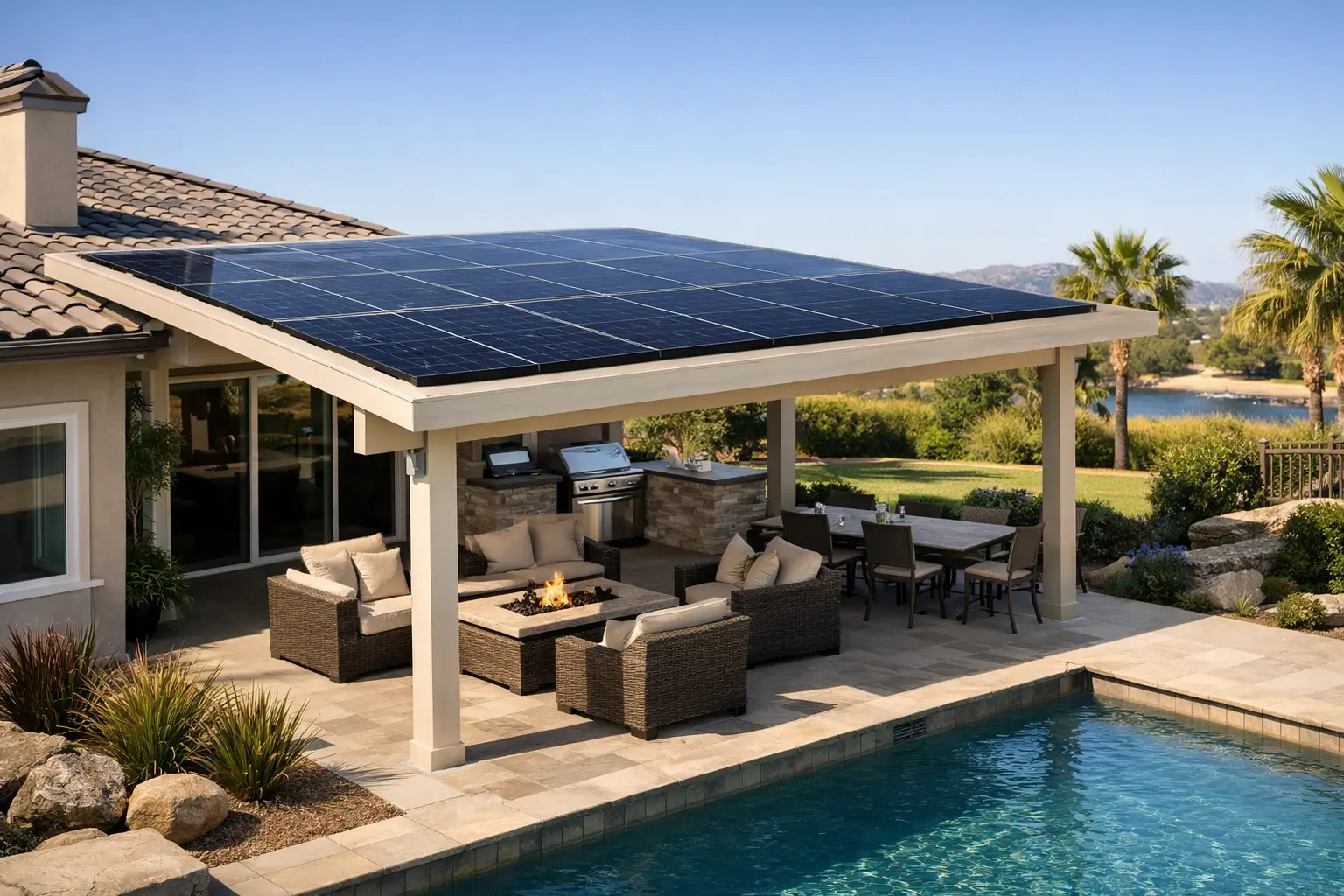
That is where many homeowners run into a gap in the market. Traditional patio cover companies may not design around solar from the start, and many solar companies are focused on rooftops rather than outdoor living structures. If your goal is The Patio Cover That Pays You Back, the structure needs to be designed with both shade and solar in mind from the beginning.
For homeowners who want solar but not on the roof, an aluminum-based patio cover can be part of the conversation, but the design and engineering approach matter far more than the material name alone.
What Alumawood does well – and where it has limits
Alumawood does several things very well. It offers a wood-inspired appearance, holds up well outdoors, and reduces the maintenance burden compared to traditional wood patio covers. It also works across a range of home styles, from more traditional suburban homes to cleaner contemporary backyards.
Its limits are mostly about expectations and project goals. If you want the exact look and texture of real timber, Alumawood may feel a little too uniform. If you want a patio cover that doubles as a fully integrated solar platform, not every off-the-shelf Alumawood design will be the right answer. And if your project includes larger spans, lighting, fans, outdoor kitchen coverage, or future electrical upgrades, the structure has to be planned accordingly.
In other words, Alumawood is a material choice, not the entire solution.
Is Alumawood a good choice in Southern California?
Often, yes. Southern California homes benefit from shade structures that can handle heavy sun exposure while supporting a comfortable outdoor lifestyle. A low-maintenance, wood-look aluminum cover makes sense for many backyards, especially when homeowners want something more refined than a basic cover but less demanding than real wood.
Local conditions still matter. Coastal areas may prioritize corrosion resistance and finish durability. Inland areas may focus more on heat and full-shade performance. HOA communities may have style requirements that affect color, profile, or roof type. And if solar is part of the long-term plan, that should be discussed before the structure is finalized.
This is why good patio cover design is never just about picking a material from a brochure. It is about how the structure will function on your property, how it will look attached to your home, and whether it supports your larger goals for comfort, outdoor living, and energy independence.
So, what is Alumawood really?
The simplest answer is this: Alumawood is a wood-look aluminum material used for patio covers and pergolas that offers the appearance of painted wood with less maintenance. For many homeowners, that makes it a smart and practical choice.
The better answer is that Alumawood is often a starting point, not the final decision. Once you understand the material, the next step is asking a more useful question: what do you want your patio cover to do? If the answer includes shade, design, comfort, and the possibility of solar without rooftop panels, the best solution may be a custom outdoor structure planned around all of those goals together.
That is usually when a patio cover stops being just a cover and starts becoming a real upgrade to how you live at home.