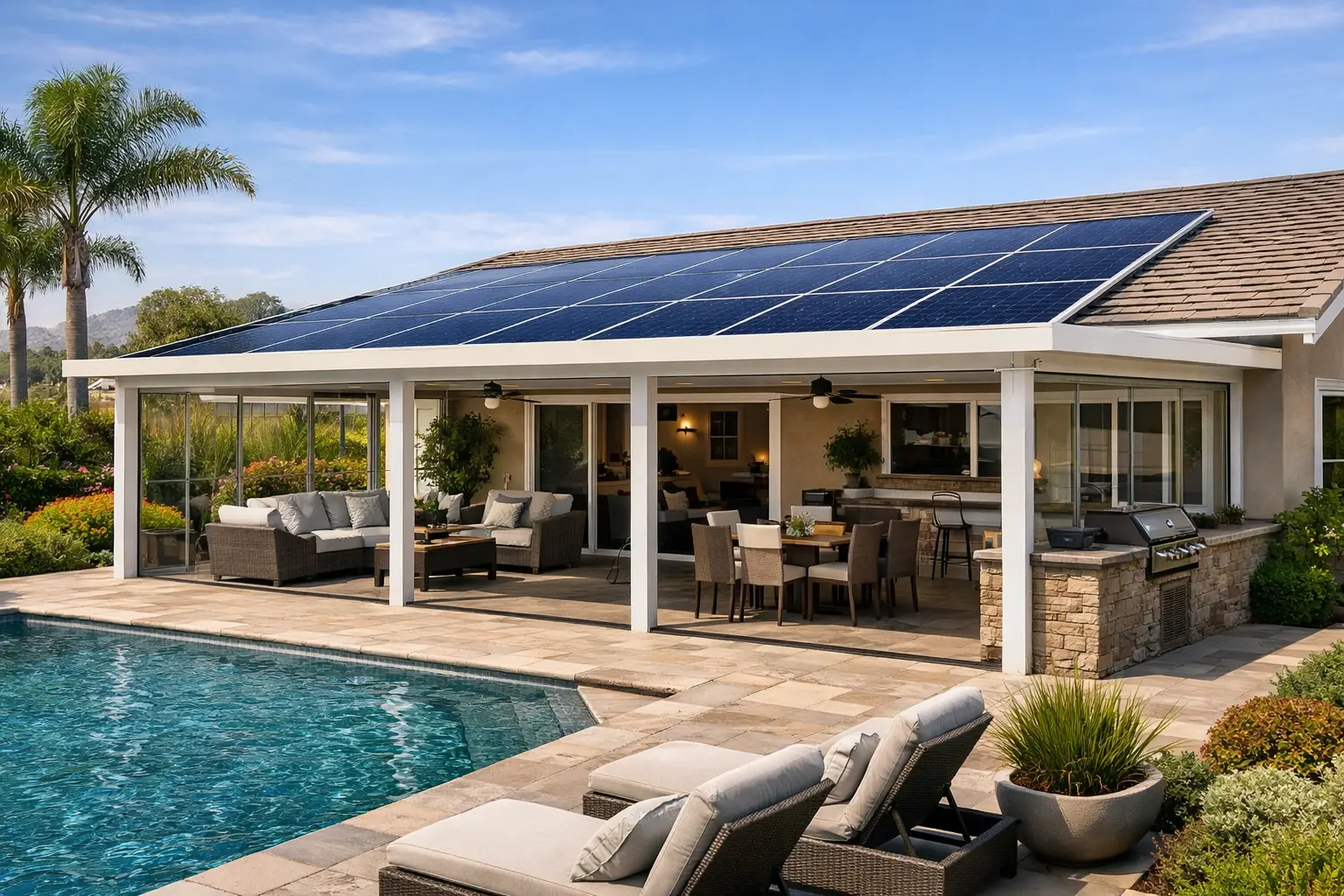
A backyard changes when the shade feels like a real room instead of a temporary escape. That is why enclosed patio covers appeal to so many Southern California homeowners. They do more than block sun. They create a more comfortable outdoor living area, offer better protection from wind and weather, and can turn an underused patio into space you actually enjoy throughout more of the year.
For some homes, an enclosed patio cover is the right answer exactly as it sounds – a covered structure with walls, screens, glass, or other enclosure elements that add privacy and protection. For others, the better move is to step back and ask a bigger question: do you want an enclosed room, a shaded outdoor room, or a patio cover that can also support solar power? That distinction matters because comfort, appearance, permitting, and long-term value can all change based on the type of enclosure you choose.
What enclosed patio covers really mean
Homeowners use the phrase enclosed patio covers in a few different ways. Sometimes they mean a standard patio cover with screen walls. Sometimes they mean a sunroom-style enclosure with glass. In other cases, they mean a solid patio cover that creates a more defined outdoor room without fully conditioning the space like a traditional addition.
That range is important because not every enclosed structure performs the same way. A screened enclosure helps with bugs and light debris, but it will not control temperature the way insulated roof panels and enclosed walls can. A glass enclosure may feel brighter and more finished, but it can also collect heat if the design is not carefully planned for Southern California sun exposure.
If your goal is year-round use, the roof style matters just as much as the walls. A thin cover may provide shade, but an insulated roof system usually creates a noticeably cooler and quieter experience underneath. That is often the difference between a patio that looks good in photos and one that gets used for dinner, work, and weekend gatherings.
Why homeowners choose enclosed patio covers
The biggest reason is comfort. In places like Riverside, San Bernardino County, and inland Orange County, heat can make open patios feel harsh for much of the afternoon. An enclosed or partially enclosed patio cover can soften direct sun, reduce glare, and create a more sheltered environment.
The second reason is usability. A patio that is too hot, too windy, or too exposed often becomes wasted square footage. Once covered and enclosed in a thoughtful way, that same area can support outdoor dining, a lounge space, a television wall, or an outdoor kitchen connection. Instead of having a patio you step across, you get a patio you stay in.
There is also the design factor. Many homeowners want the backyard to feel more complete and more integrated with the home. A well-designed enclosure can visually extend the living area, especially when it aligns with the architecture, rooflines, and material choices of the house.
Types of enclosed patio covers to consider
Screened enclosures
Screened patio enclosures are one of the lighter options. They keep the space open to airflow while adding a layer of separation from insects and blowing debris. In Southern California, where bugs are less of a concern than in other regions, homeowners often choose screens more for comfort and light filtering than for pest control.
The trade-off is that screens do not provide much insulation or weather sealing. If you want a patio that feels protected but still distinctly outdoors, this can be a practical middle ground.
Glass or window-style enclosures
Glass enclosures create a more finished room-like feel. They preserve views and natural light while offering stronger weather protection. For some properties, especially where wind exposure or cooler evenings are a factor, this approach can make the patio more useful during more months of the year.
But glass is not automatically better. On a west-facing patio in Southern California, too much glass can trap heat and make the space uncomfortable without careful planning. Roof insulation, ventilation, shading orientation, and window configuration all matter.
Solid roof patio covers with partial enclosure
This is often the sweet spot for homeowners who want comfort without turning the space into a full room addition. A solid insulated patio cover combined with privacy walls, open sides, sliding elements, or strategic screening can create a strong sense of enclosure while keeping the space connected to the outdoors.
This type of design also tends to work well for outdoor kitchens, lounge areas, and multipurpose backyard living spaces. It feels intentional without feeling closed off.
Enclosed patio covers vs. open patio covers
An open patio cover usually costs less, feels airier, and may involve fewer design complications. It is a strong choice when the main goal is shade. If your patio already gets a decent breeze and you mostly want protection from direct sun, an open design may be enough.
Enclosed patio covers make more sense when you want a stronger barrier between the patio and the elements. They can offer more privacy, more wind control, and a greater sense of separation. The downside is that they require more planning. Once walls, windows, or enclosure systems are added, structural requirements, permitting considerations, and overall project cost usually increase.
This is where homeowners often benefit from thinking beyond a simple shade structure. If you are already investing in a substantial patio cover, it may be worth considering whether the roof can do more than provide shelter.
Where solar fits into the conversation
For homeowners who want solar but do not want panels on the roof, enclosed patio covers can open a useful design conversation. A patio cover roof may be able to support an integrated solar layout, depending on orientation, structural design, sun exposure, and local requirements.
That is especially relevant in Southern California, where homeowners often want more backyard shade and lower electric bills at the same time. Instead of treating the patio cover and the solar project as two separate upgrades, some households prefer to evaluate whether one structure can serve both purposes.
This approach is not right for every yard. Tree coverage, lot layout, home orientation, and design preferences all affect whether a solar patio cover is practical. But when it works, it can be one of the more efficient ways to create outdoor living space while also adding energy-producing potential.
That is part of what makes The Patio Cover That Pays You Back™ such a compelling idea. You are not only adding comfort and design value. You may also be creating a structure that supports long-term energy goals.
Cost depends on more than size
Homeowners often ask for a simple price, but enclosed patio covers are not one-size-fits-all. Cost depends on square footage, roof material, enclosure type, foundation needs, electrical scope, and finish level. A basic screened enclosure is very different from an insulated cover with glass walls, lighting, fans, and solar-ready engineering.
In Southern California, permitting and code requirements can also affect budget. Cities vary, and project details matter. Attached versus detached designs, structural loads, property setbacks, and electrical planning can all change the scope.
This is why early design decisions are so important. If you think you may want solar later, battery backup readiness, or EV charging support, it is usually smarter to discuss that during the patio cover design phase instead of after the structure is already built.
Design details that matter more than homeowners expect
Orientation is one of the biggest. A south- or west-facing patio may need a different enclosure strategy than a north-facing one. Afternoon glare, seasonal sun angles, and airflow patterns all affect comfort.
Material choice matters too. An insulated aluminum patio cover can offer a clean, low-maintenance finish and a cooler feel than a lighter-duty roof system. Window and screen placement shape ventilation. Ceiling height changes how open or enclosed the area feels. Lighting and fan planning can make the space usable after sunset and during warmer months.
The best enclosed patio covers do not feel like an afterthought. They feel like they belong to the house and support the way the homeowner actually lives.
A smarter way to evaluate your options
If you are comparing enclosed patio covers, start with how you want to use the space, not just how you want it to look. Do you want full enclosure, filtered airflow, privacy, all-season comfort, or a patio cover that may also support solar? Those are different goals, and they lead to different designs.
For many homeowners, the smartest project is not the one with the most walls or the most glass. It is the one that balances shade, comfort, design, and future flexibility. Solar Patios By Design™ focuses on that bigger picture because outdoor living space can do more than provide cover. With the right design, it can support the way you live now and the way you want your home to work over time.
A good patio cover gives you shade. A well-planned enclosed patio cover gives you a place people actually want to be.