
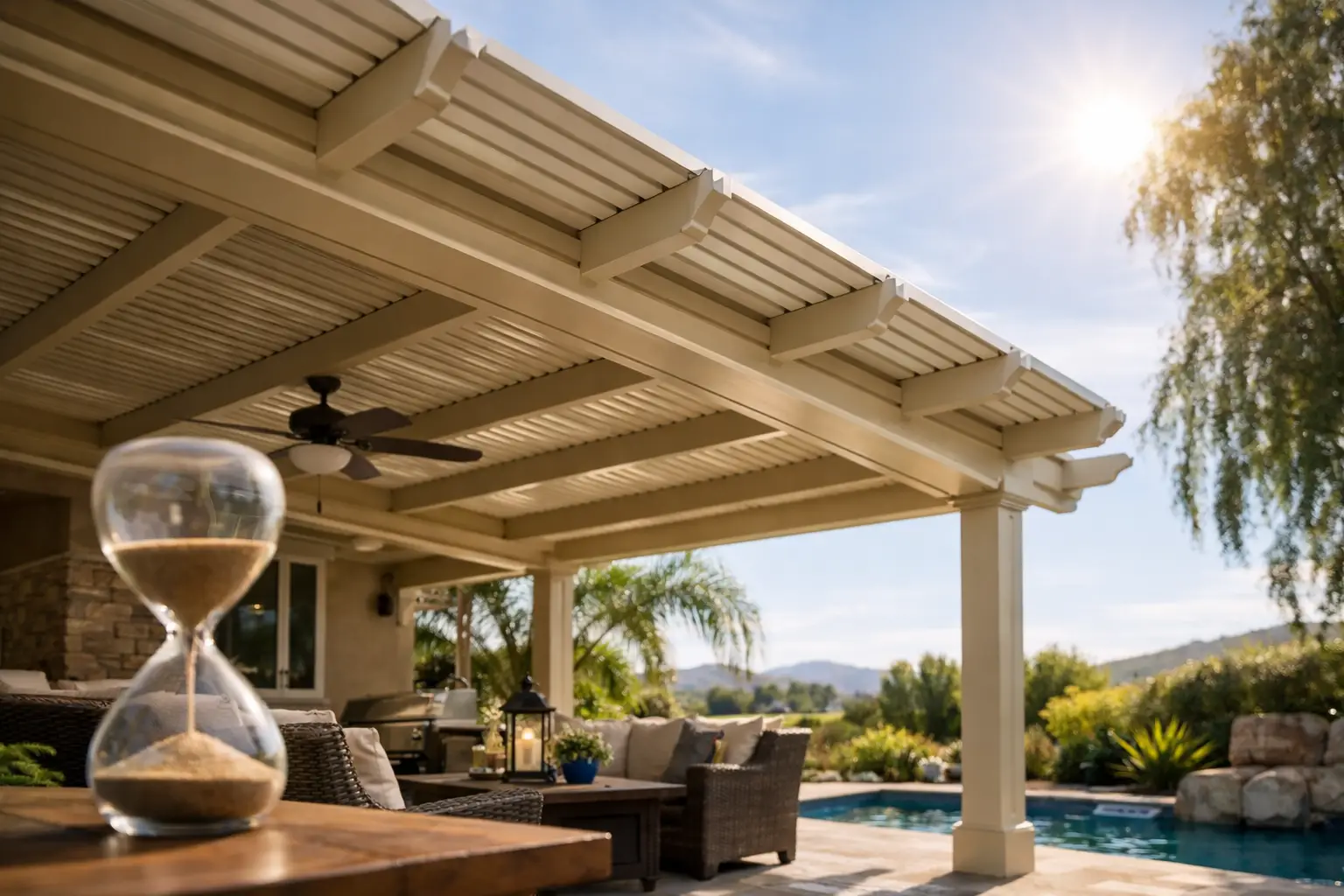
A patio cover usually starts showing its true value after the first summer heat wave. When your backyard becomes the place where family dinners, weekend lounging, and outdoor entertaining actually feel comfortable, longevity matters just as much as appearance. That is why homeowners often ask, how long do alumawood patio covers last, especially in Southern California where sun exposure is constant and outdoor living is part of daily life.
The short answer is that a well-made Alumawood patio cover can last 20 to 30 years or more. In many cases, the structure itself may remain functional beyond that range if it was properly installed and has not been exposed to unusual damage. The bigger question is not just the material’s lifespan on paper. It is how well the patio cover holds up to heat, UV exposure, wind, moisture, and long-term use in a real backyard.
How long do alumawood patio covers last in real conditions?
Alumawood is designed to give homeowners the look of wood with the durability of aluminum. Because it is aluminum with an embossed wood-grain finish, it does not face the same issues as traditional wood patio covers. It will not rot, warp, split, or become a food source for termites.
That makes a major difference over time. In a Southern California climate, where patio covers are exposed to intense sun for much of the year, a properly built Alumawood cover generally outlasts many lower-maintenance wood alternatives. It also tends to require far less upkeep than painted wood, which may need repeated sealing, repainting, or board replacement as the years go on.
Still, 20 to 30 years is not a universal guarantee. Some covers age better than others, and the difference usually comes down to design, installation quality, and environment.
What affects the lifespan of an Alumawood patio cover?
Material quality is only one part of the equation. Even a durable product can underperform if the structure is poorly engineered or installed.
Installation quality matters more than many homeowners realize
An Alumawood patio cover is only as strong as the way it is attached, supported, and finished. Post spacing, footings, beam sizing, attachment to the home, and roof design all affect long-term performance. If the structure was designed without accounting for local wind loads, drainage, or proper structural support, wear can show up earlier.
This is especially important for attached patio covers and for homeowners considering adding solar panels. A patio cover that looks good on day one still needs the right engineering to handle added weight and years of weather exposure.
Sun exposure and heat
Southern California is an ideal place for outdoor living, but constant UV exposure is demanding on exterior materials. One reason Alumawood remains popular is that it handles sun much better than many painted or stained wood systems. Its baked-on finish is made to resist fading, chalking, and peeling better than traditional finishes.
That said, no exterior product is completely immune to aging. Over decades, even durable finishes can show cosmetic wear, especially in areas with relentless afternoon sun.
Moisture and drainage
Alumawood itself does not rot, but water management still matters. If a patio cover is built with poor drainage, standing water, clogged gutters, or improper slope, connectors and adjacent materials can wear faster. Moisture may also affect surrounding fascia boards, stucco interfaces, or hardware if the installation was not detailed correctly.
Wind and structural stress
In parts of Riverside County, San Bernardino County, and Ventura County, wind exposure can be a real factor. A cover that is engineered for local conditions should hold up well, but undersized posts, weak attachment points, or poor anchoring can shorten the useful life of the system.
Maintenance habits
Alumawood is considered low maintenance, not no maintenance. Homeowners who occasionally wash the surface, clear debris, and inspect fasteners and drainage components tend to get better long-term performance. Neglect rarely destroys the material itself, but it can allow small issues to become larger ones.
Alumawood vs wood patio covers
If your main question is lifespan, Alumawood usually has a clear advantage over traditional wood in terms of durability and maintenance. A wood patio cover can also last for decades, but that lifespan often depends on consistent sealing, painting, repairs, and termite prevention.
That is the trade-off. Wood offers a natural look and can be appealing for certain architectural styles, but it typically asks for more attention over time. Alumawood is chosen by many homeowners because it offers a similar visual warmth with less upkeep and better resistance to common outdoor wear.
For homeowners who want shade without adding another recurring maintenance project, that difference is significant.
How long do alumawood patio covers last compared to insulated covers?
This depends on what you are comparing. An insulated aluminum patio cover may offer similar or even greater long-term durability, particularly when thermal performance and solid roof protection are priorities. It can also create a cooler, more finished feel underneath the structure.
Alumawood often appeals to homeowners who prefer a lattice or traditional patio cover look. Insulated covers often appeal to those who want stronger heat blocking and a more substantial roof system. Both can be long-lasting when designed and installed correctly.
The better choice depends on how you use the space. If you want filtered light and decorative appeal, Alumawood may be a strong fit. If you want maximum shade and a roof structure that can support a more integrated outdoor living setup, an insulated option may deserve a closer look.
What about Alumawood patio covers with solar panels?
This is where longevity needs a more careful conversation. Homeowners often assume any patio cover can simply have solar added later. Sometimes that works. Sometimes it does not.
If you are already thinking about solar, the smartest approach is to plan for it from the beginning. A patio cover intended to support solar panels should be engineered for that purpose, not treated as a standard shade structure with extra weight added later. Structural loading, attachment points, orientation, and electrical planning all matter.
For homeowners who want shade, outdoor living, and energy production in one project, the patio cover should be designed as part of a larger system. That is a very different mindset from building a cover first and hoping it can be adapted later.
A properly designed solar patio cover can provide long-term value beyond shade alone. It is one of the clearest examples of a smart home improvement doing more than one job at once.
Signs an Alumawood patio cover may need attention
Most Alumawood covers do not fail suddenly. More often, they show gradual signs that maintenance or repair is needed. Homeowners should pay attention to loose fasteners, sagging sections, drainage issues, corrosion at hardware, separation where the cover meets the home, or finish wear that appears abnormal for the age of the structure.
These issues do not always mean the entire patio cover is near the end of its life. In many cases, a targeted repair or structural upgrade can extend usability significantly. The key is catching problems early, especially if the cover is attached to the house or if future solar integration is being considered.
Local factors in Southern California
A patio cover in San Diego may face different conditions than one in the Inland Empire. Coastal moisture, desert heat, inland wind, HOA design rules, and city permitting standards can all shape what makes the most sense for your property.
That is one reason lifespan discussions should never be treated as one-size-fits-all. A cover that performs beautifully in a mild coastal neighborhood may need different structural considerations in a hotter, windier inland setting. Design should reflect local climate, not just product brochures.
For many Southern California homeowners, that also means thinking beyond shade alone. If you are already investing in a backyard improvement, it may be worth asking whether the structure could also support solar, battery readiness, or EV charging goals down the road.
So, are Alumawood patio covers a good long-term investment?
For many homeowners, yes. Alumawood patio covers tend to last long enough to make them a practical long-term improvement, especially for households that want durability, low maintenance, and a clean finished look. They are particularly attractive in climates where outdoor living is used year-round and where wood upkeep becomes tiresome over time.
But the best long-term investment is not just the material. It is the right design for the way you want to live. If your goals include shade, comfort, home value, and possibly solar without putting panels on your roof, the patio cover should be planned with that bigger picture in mind.
That is where an outdoor structure becomes more than a cover. It becomes part of how your home works for you, year after year.