
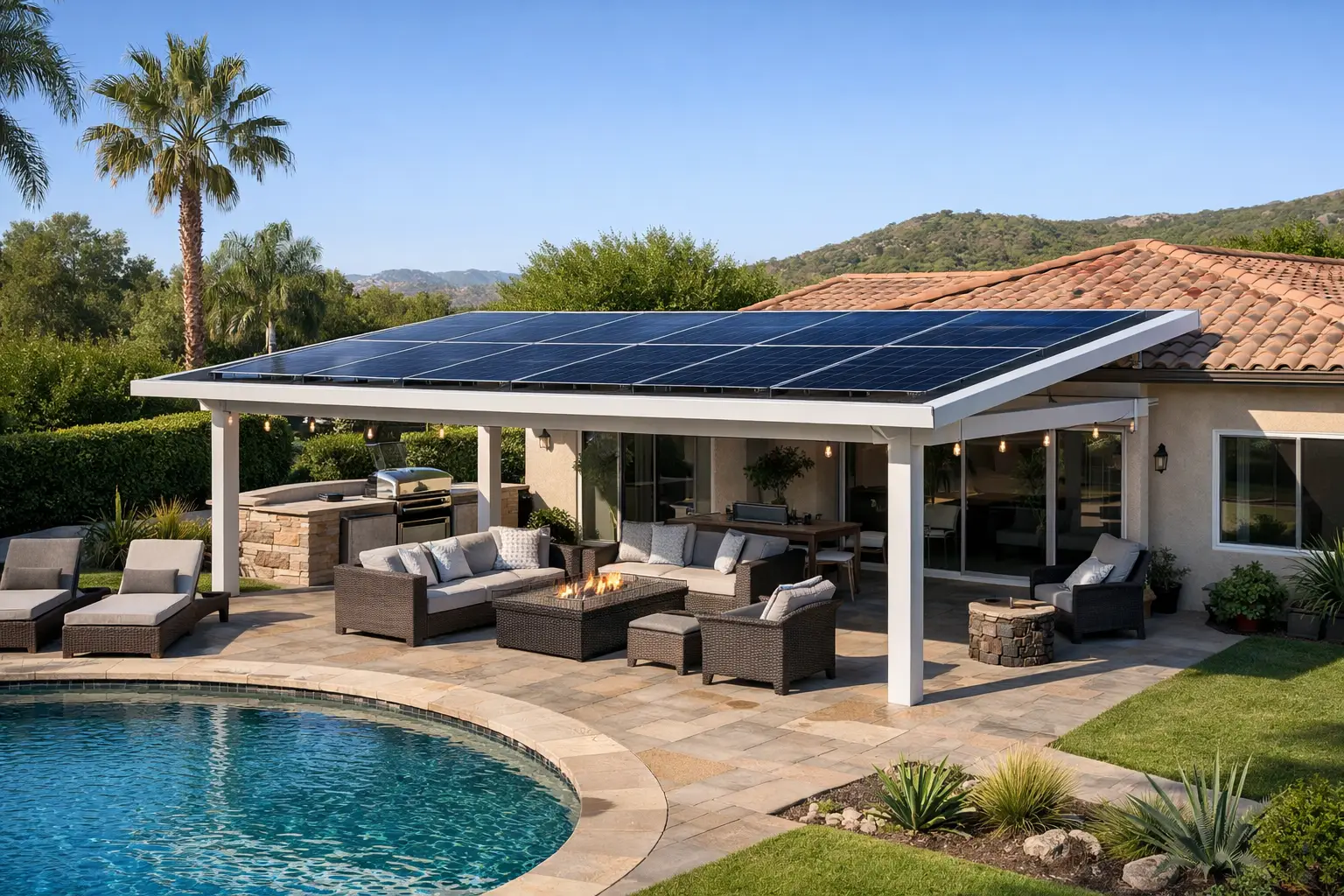
A lot of homeowners start with one simple goal – get better backyard shade. Then the project grows. If you’re researching how to add battery ready patio cover features, you’re usually thinking beyond comfort. You want an outdoor structure that looks good now, supports solar later or sooner, and leaves the door open for backup power, EV charging, and more energy independence.
That is a smart way to plan a patio cover in Southern California, where outdoor living matters year-round and utility costs often push homeowners to think long term.
What battery-ready really means
A battery-ready patio cover does not mean a battery is automatically included. It means the structure, electrical planning, and solar layout are designed so adding battery storage is practical later. In some cases, homeowners install the patio cover first, then solar, then battery storage. In other cases, they build the entire system at once.
The key is coordination from the beginning. A standard patio cover contractor may focus on shade and appearance. A standard solar company may focus on panel production. Battery readiness sits in the middle. It depends on structural design, conduit paths, electrical integration, equipment location, and permit strategy.
If that planning is missed early, adding a battery later can become more expensive and more complicated than it needs to be.
How to add battery ready patio cover planning from day one
The first step is to treat the patio cover as part of a larger energy plan, not as a standalone backyard feature. Even if you are not ready to buy a battery now, you should decide whether you want the option for future storage, partial home backup, or support for specific loads like refrigeration, lighting, internet equipment, or select circuits.
That early decision affects the design. It can influence the size and orientation of the patio cover roof, whether solar panels fit efficiently, how wiring is routed, and where electrical equipment may be placed.
For many homeowners, this is where the project becomes much more valuable. Instead of building shade first and reworking everything later, you create The Patio Cover That Pays You Back™ – a structure that supports outdoor living while also preparing your home for energy upgrades.
Start with the right structural design
Not every patio cover is a good solar platform. If battery readiness is part of the goal, the structure should also be evaluated for solar readiness. Roof pitch, span, beam sizing, attachment method, and panel layout all matter.
A lattice cover may provide partial shade, but it is usually not the right choice for a solar-and-battery strategy. A solid patio cover or insulated roof system is often a better fit because it can support both shade and integrated solar design. Detached and attached structures can both work, but site conditions matter.
In Southern California, sun exposure is a major factor. A patio cover placed in a heavily shaded side yard may still improve outdoor comfort, but it may not be ideal for solar production. A backyard structure with strong southern or western exposure may offer more opportunity, especially when the roof is designed around panel placement instead of treating solar as an afterthought.
Plan conduit and wiring before the finish work
One of the easiest ways to make a patio cover battery-ready is also one of the most overlooked – plan the conduit pathways before the structure is finished.
If conduit for solar circuits, communication lines, or future battery-related electrical work is included during construction, the project is cleaner and often less disruptive later. If not, homeowners may end up with exposed conduit, added labor, stucco patching, or redesign costs when the battery is installed.
Battery readiness is not just about where the battery will sit. It is about how power will move from the patio cover solar array to the inverter, to the electrical panel, and potentially to storage equipment. That route should be considered early.
Choose where the battery system could go
Batteries are not typically installed inside the patio cover itself. In most homes, the battery will be mounted on or near the house, garage, or another approved location based on local code, equipment clearance, and utility requirements.
That means a battery-ready patio cover should include a realistic plan for the future battery location. The patio cover and solar array need to work with the home’s broader electrical layout.
This is where many homeowners benefit from a combined design approach. The best location for backyard shade is not always the same as the easiest location for electrical equipment. A good design balances both.
Think about backup goals, not just battery ownership
Some homeowners say they want a battery, but what they really want is resilience. Those are not always the same thing.
If your goal is simple time-of-use savings, the system design may look different than if your goal is backup power during outages. If you want to keep a few essentials running, that requires one level of planning. If you want broader backup coverage, that may require more battery capacity, different electrical equipment, and more space.
So before you decide how to add battery ready patio cover features, ask a better question: what do you want the future battery to do?
That answer will help shape the right level of readiness now.
Solar sizing matters more than most homeowners expect
A battery-ready patio cover usually makes the most sense when paired with a solar-ready or solar-equipped design. Batteries store energy, but they work best when there is a reliable source generating power to charge them.
That does not mean every patio cover needs to carry a large solar array. Some backyards have limited space. Some homeowners want a design-focused structure first and a modest solar contribution second. Others want to maximize production because they have avoided rooftop solar and want the patio cover to carry more of the load.
Both approaches can work. The important part is honesty about trade-offs.
A smaller patio cover may deliver excellent shade and visual appeal but offer limited room for solar panels. A larger structure may support more production and stronger battery readiness, but it also changes project cost, footprint, and permitting scope. The right answer depends on your property, your goals, and how much of your energy strategy you want the patio cover to support.
Permits and local review are part of the process
In Southern California, adding a battery-ready patio cover is usually more involved than adding a basic shade structure. Once you combine structural work with solar planning and future battery considerations, permit coordination becomes more important.
Requirements vary by city, structure type, electrical scope, setbacks, and property conditions. HOA review may also come into play, especially in planned communities where patio cover appearance and equipment visibility matter.
This does not mean the project is difficult. It means it should be planned correctly.
A coordinated approach can reduce the common problem of dealing with separate contractors who each handle only one piece of the job. Homeowners often find that the biggest value is not just the finished structure. It is having one clear design that accounts for shade, solar, wiring, and future storage before construction starts.
Design still matters
Battery readiness should improve the project, not make it look overly technical. Your patio cover still needs to feel like part of your home and your backyard.
That is especially true in areas like Orange County coastal communities, inland parts of Riverside County, and family neighborhoods across Los Angeles and Ventura County, where homeowners want both function and curb appeal. A well-designed patio cover can support an outdoor kitchen, seating area, or entertaining space while also serving as a platform for solar.
The best projects do not force homeowners to choose between beauty and utility. They combine both.
When to add the battery now and when to wait
There is no single right timeline. Some homeowners should install the battery as part of the initial project, especially if they already know they want backup capability and want to avoid future construction. Others are better off making the patio cover solar-and-battery-ready now, then adding storage later when budget, utility changes, or household needs make more sense.
Waiting can be reasonable. But if you wait, the preparation should be intentional. That means thinking through panel sizing, inverter compatibility, electrical capacity, and equipment placement now instead of assuming it will all work itself out later.
That is the difference between a patio cover that simply shades a backyard and one that supports a smarter long-term investment.
Common mistakes to avoid
The biggest mistake is building a patio cover with no energy planning, then trying to retrofit solar and battery features afterward. The second is assuming any solar patio cover is automatically battery-ready. It is not.
Another common issue is underbuilding the structure or choosing a roof style that limits panel layout. Homeowners also run into trouble when they skip early electrical planning or do not think through where future equipment may go.
None of these problems are unusual. They just become expensive when they are discovered too late.
A better way to think about the project
If you are figuring out how to add battery ready patio cover features, the smartest approach is to stop thinking of it as only a patio project or only a solar project. It is both.
That is why this type of upgrade appeals to homeowners who want solar but not on their roof, need better shade, care about design, and want one project to do more than one job. When planned well, a battery-ready solar patio cover can support comfort today and flexibility tomorrow.
The best backyard upgrades are not always the flashiest ones. They are the ones that still make sense years later.