
If your Alumawood patio cover is starting to look chalky, dusty, or streaked after a windy week, you are not alone. In Southern California, sun, ash, pollen, hard water, and airborne grime can build up fast, which is why homeowners often search for how to clean alumawood patio covers without damaging the finish.
The good news is that Alumawood is relatively low maintenance. It is designed to give you the look of wood without the same level of upkeep, but low maintenance does not mean no maintenance. A gentle cleaning routine usually keeps it looking sharp and helps preserve the clean, finished appearance that makes an outdoor living space feel cared for.
How to clean alumawood patio covers without damaging them
For most homes, the right approach is simple: rinse off loose debris, wash with mild soap and water, use a soft cloth or sponge, and rinse thoroughly. Harsh chemicals, abrasive brushes, and high-pressure washing are where homeowners tend to get into trouble.
That matters because the finish on an Alumawood cover is durable, but it is not meant to be scrubbed like bare concrete. If you go too aggressive, you can dull the surface, leave swirl marks, or force water into areas where it does not belong. A patio cover should make your backyard more comfortable and attractive, so cleaning it should support that goal, not create a cosmetic problem.
What you need before you start
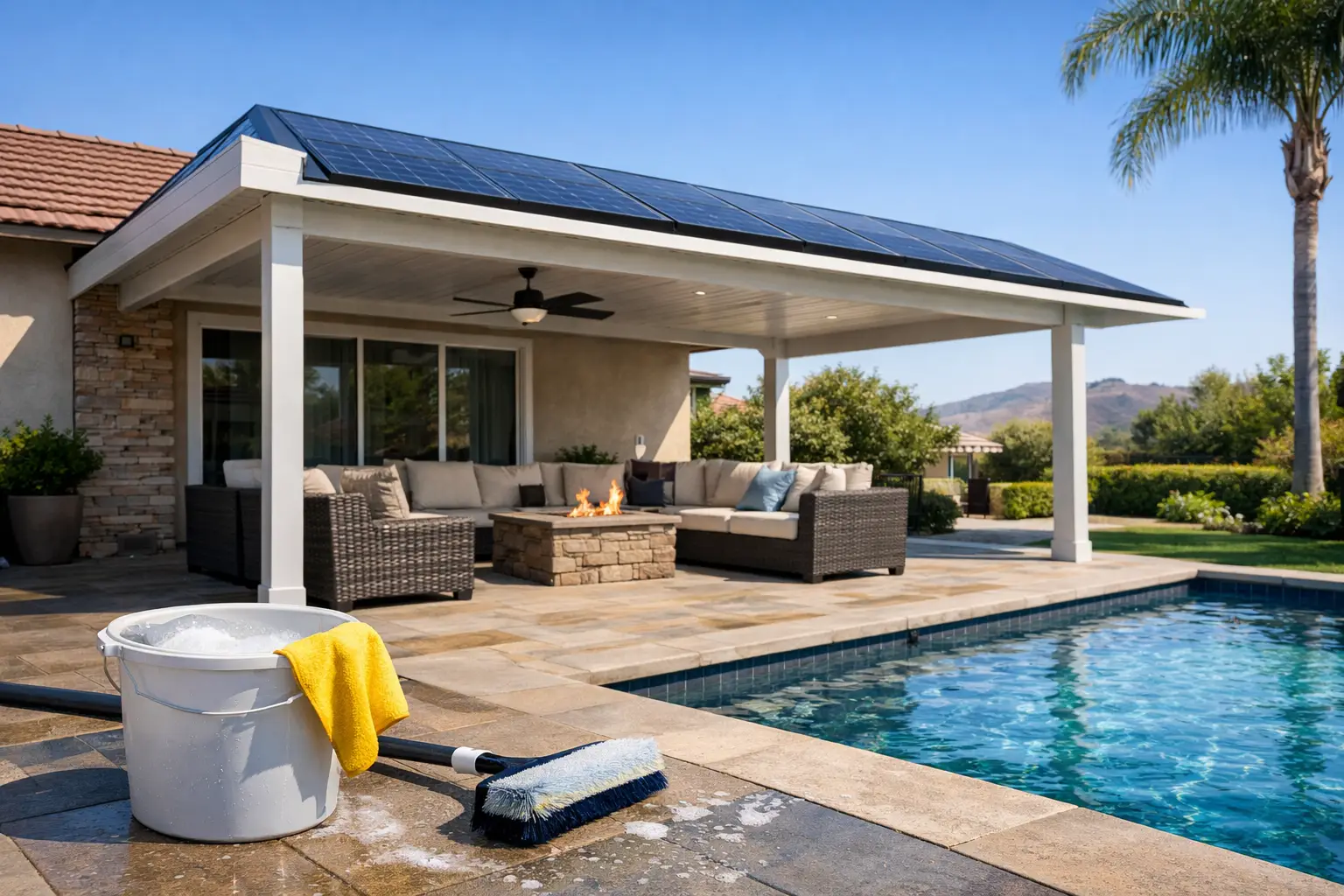
You do not need specialized equipment for this job. A garden hose, a bucket, mild dish soap, a soft microfiber cloth or non-abrasive sponge, and a step ladder are enough for most routine cleaning. If the cover is attached high over a patio or outdoor kitchen area, an extension pole with a soft brush can make the work easier and safer.
If you are dealing with bird droppings, sticky residue, or areas where grime has baked on in direct sun, let soapy water sit on the spot for a few minutes before wiping. Usually, time and gentle pressure work better than strong cleaners.
Avoid steel wool, stiff deck brushes, powdered cleansers, bleach-heavy mixtures, and pressure washers set too strong. Those shortcuts can create a bigger problem than the dirt you started with.
Step-by-step: how to clean alumawood patio covers
Start by clearing the area underneath. Move patio furniture, cushions, grills, or decor out of the way so you are not working around obstacles or splashing dirty water onto fabrics.
Next, rinse the cover from top to bottom with a standard garden hose. This removes loose dust, cobwebs, leaves, and surface grit. That rinse matters more than people think. If you skip it and go straight to scrubbing, you may grind fine debris into the finish.
Mix a small amount of mild dish soap into a bucket of warm water. You are not trying to create a heavy foam. A light soap solution is enough to break up normal dirt and environmental buildup.
Use a soft cloth, sponge, or soft-bristle extension brush to wash the surface in sections. Work with the shape of the cover rather than randomly scrubbing. On insulated Alumawood patio covers, pay extra attention to seams, edges, and any places where dust tends to collect. On lattice covers, the top edges and intersections often need a little more patience.
After washing each section, rinse it before the soap dries. This is especially important on warm days in inland areas like Riverside County or San Bernardino County, where direct heat can cause spotting if soap sits too long.
Once the full surface is rinsed, let it air dry or wipe visible areas with a clean microfiber cloth if you want to reduce water marks. If your home has hard water, drying by hand may leave a cleaner-looking result.
How often should you clean an Alumawood patio cover?
For many Southern California homeowners, a full cleaning two to four times a year is enough. The exact schedule depends on where you live and what your cover is exposed to.
A home near the coast may deal with salt air and moisture. A property near foothills or open land may collect more dust and pollen. Homes under trees often need more frequent attention because of sap, leaves, and bird activity. If you live in an area affected by wildfire ash or Santa Ana winds, you may want to rinse the cover more often between deeper cleanings.
A quick hose-down every month or so can keep buildup from becoming stubborn. That lighter routine often saves time over the long run.
Common stains and what to do about them
Not every dirty patio cover needs the same treatment. Dust and pollen usually come off easily with soap and water. Bird droppings should be softened first with a wet cloth or soapy sponge rather than scraped dry. Hard water spots can be more frustrating, especially if sprinklers regularly hit the posts or roof edge.
If mineral spotting is mild, gentle washing and drying may improve it enough. If the spots are severe, test any specialty cleaner on a small, hidden area first and make sure it is safe for painted aluminum surfaces. That small test is worth doing because products that work on one exterior material may not be appropriate for another.
Mildew can occasionally show up in shaded or damp areas, though it is less common in our climate than simple dust and grime. If you suspect mildew, use a cleaner approved for finished aluminum surfaces and follow the product directions carefully. More is not better here.
Mistakes homeowners make when cleaning patio covers
The biggest mistake is overcleaning with the wrong tools. A patio cover does not need to be attacked with a pressure washer at full force. That can damage the finish, strip caulking in some areas, and drive water where it should not go.
Another common issue is cleaning in the hottest part of the day. Soap and rinse water evaporate quickly on hot metal surfaces, which can leave residue and spotting. Morning or late afternoon is usually a better window.
Ladder safety also matters. If you cannot comfortably reach the cover without leaning or overextending, stop and reposition. For taller or more complex structures, especially attached covers integrated with lighting, fans, or solar components, professional help may be the smarter choice.
Cleaning around lights, fans, and solar patio features
Some homeowners have a basic Alumawood cover. Others have a more integrated outdoor living structure with recessed lights, ceiling fans, outlets, or solar panels. In those cases, the cleaning method needs a little more care.
Water and electricity obviously do not mix, so avoid soaking electrical components directly. Use a damp cloth around lights and fixtures rather than spraying them aggressively. If the structure includes solar equipment, cleaning the Alumawood frame is different from cleaning the solar panels themselves. The frame can usually be washed with mild soap and water, while the solar components may call for a more specific cleaning approach depending on the panel type, roof design, tilt, and debris level.
That is one reason integrated structures benefit from a more informed maintenance plan. When a patio cover is also part of your energy strategy, appearance is only one piece of the equation. Performance and longevity matter too.
Southern California conditions make maintenance a little different
This region is ideal for outdoor living, but the climate does create a few cleaning challenges. Dry dust settles quickly, sprinkler overspray leaves mineral residue, and UV exposure can make neglected buildup more obvious over time. In many neighborhoods across Los Angeles County, Orange County, Ventura County, and San Diego County, the patio cover is visible from the house all year long, so even light dirt can affect the way the backyard feels.
That is why regular care is less about heavy-duty maintenance and more about protecting the clean, finished look of the space. A well-kept patio cover supports the value of the whole outdoor area, whether it is covering a seating zone, an outdoor kitchen, or a future solar-ready structure.
When cleaning is a good time to inspect the structure
Routine washing also gives you a chance to spot small issues early. Look for loose fasteners, clogged gutters if your cover has them, separation at joints, or sealant that looks worn. You are not performing a full structural evaluation, but you are paying attention while everything is in view.
That is especially helpful if your patio cover is older or if you are thinking about upgrading the space. Many homeowners start with a standard shade structure and later explore a more advanced outdoor living design. If your long-term goal includes energy independence, battery backup readiness, or avoiding rooftop solar, a patio cover can become more than a shade element. It can become part of a smarter home improvement plan.
Solar Patios By Design™ works with homeowners who want that kind of long-term thinking built into the design from the start, especially when the goal is to combine comfort, appearance, and solar power in one project.
A clean Alumawood patio cover does more than improve curb appeal. It helps your backyard feel finished, cared for, and ready to use, which is exactly what a great outdoor living space should do.