
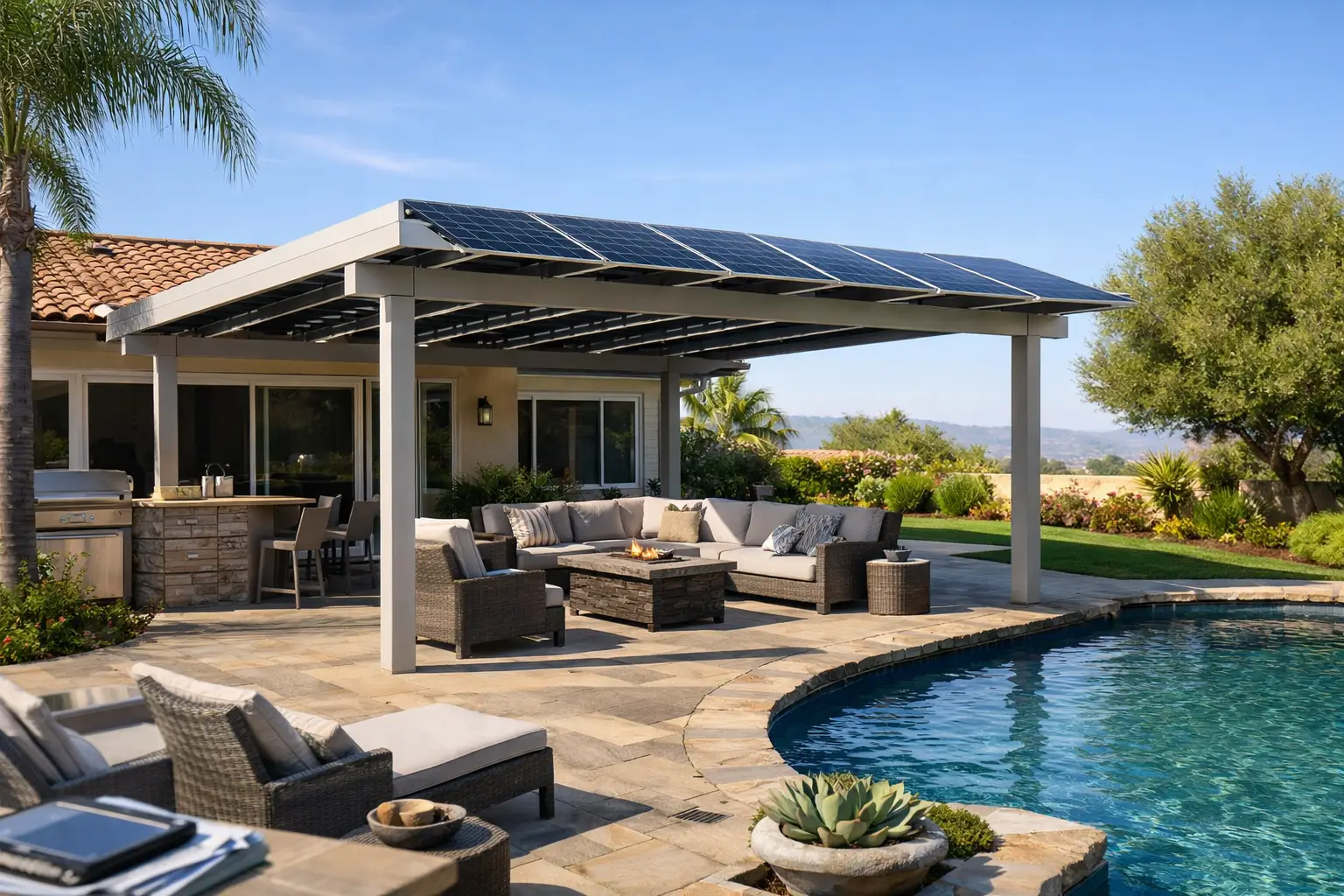
A solar pergola is not simply a solar purchase or a patio cover purchase. It is one coordinated investment in shade, outdoor living space, and on-site electricity generation. That is why learning how to finance solar pergola projects starts with separating the project into its real value: the structure, the solar equipment, the electrical work, and the long-term comfort it adds to your home.
For Southern California homeowners, that combination can be especially appealing. A well-designed solar patio cover may create a cooler place to gather during hot afternoons while putting productive sun exposure to work. The right financing approach should support the entire project without forcing you to compromise on structural quality, solar production, or the backyard design you actually want.
Start With a Complete Project Scope
Before comparing payment options, ask for a detailed project design and pricing breakdown. A solar pergola may include the patio structure itself, solar panels, mounting and electrical components, permitting, engineering, utility interconnection work, and optional provisions for a battery or EV charger.
This matters because not every financing product treats every portion of the project the same way. A lender that works well for solar equipment may have different requirements for the structural patio cover. Likewise, a home improvement loan may fund the full project but carry terms that differ from a solar-focused loan.
A complete scope also helps avoid a common budgeting mistake: comparing a basic pergola quote to a solar patio cover quote as though they deliver the same result. One creates shade. The other can create shade, usable outdoor living space, and electricity generation in one project – The Patio Cover That Pays You Back™.
How to Finance Solar Pergola Projects: Main Options
The best choice depends on your available cash, home equity, credit profile, desired monthly payment, and how long you expect to own the home. There is no single best option for every homeowner, but these are the most common paths.
Cash Payment
Paying in cash is the most straightforward approach. It eliminates interest charges and gives you the clearest view of the project’s full price. It can make sense for homeowners who have set aside funds for a backyard renovation, want to avoid new monthly payments, and value the long-term benefit of lower electricity purchases.
The trade-off is liquidity. A solar pergola can be a meaningful investment, particularly when it includes a larger patio cover, upgraded finishes, a battery-ready electrical design, or an outdoor kitchen cover. Paying cash may not be ideal if it would leave too little reserve for other household priorities.
Home Equity Loan or HELOC
A home equity loan provides a lump sum, usually with a fixed payment. A home equity line of credit, often called a HELOC, allows you to borrow up to an approved limit and draw funds as needed. Either may be useful when a solar pergola is part of a broader but related outdoor living plan, such as a detached shade structure designed around an existing entertaining area.
These products may offer competitive rates because they are secured by your home, but that security is also the main consideration. Your home serves as collateral, and terms, fees, rates, and approval requirements vary. A HELOC may have a variable rate, so the payment can change over time.
Unsecured Home Improvement Loan
An unsecured personal or home improvement loan does not use your house as collateral. Approval can be faster than an equity-based loan, and the fixed monthly payment can make budgeting simpler.
This option can be practical when you have strong credit, prefer not to use home equity, or want to finance the project as one improvement rather than separating the structure from the solar components. Rates may be higher than secured financing, however, especially for longer repayment terms. Compare the total amount repaid, not just the advertised monthly payment.
Solar-Specific Financing
Some financing programs are designed around solar energy systems. They may offer terms that fit the expected life of solar equipment and can be convenient when the structure and solar installation are delivered as one coordinated project.
Read the agreement closely. Ask whether the financing covers the solar pergola structure as well as the panels and electrical components, whether there are dealer or origination fees, and whether the rate is fixed. A low monthly payment can sometimes result from a longer loan term or upfront financing fees, which can raise the total cost over the life of the loan.
Property-Assessed Financing
Property-assessed financing may be available in some areas for qualifying energy-related improvements. It is repaid through a property tax assessment rather than a traditional monthly loan payment.
This approach deserves careful review. The assessment can affect future refinancing or a home sale, and payment obligations may not be as simple to transfer as a conventional loan. Homeowners should review the terms with a qualified financial professional and understand how the assessment would appear on their property tax bill before proceeding.
Consider Incentives Carefully
Federal, state, utility, and local incentives can change over time. Some solar-related portions of a project may qualify for incentives, but eligibility depends on the equipment, ownership structure, installation date, current program rules, and how the project is designed.
A key detail for solar patio covers is that the solar equipment and the shade structure are integrated but not automatically treated the same way for every incentive. Do not assume the full project cost qualifies simply because it includes solar panels. Confirm current eligibility with a qualified tax professional and verify utility requirements before building an incentive into your budget.
It is also wise to view incentives as a possible benefit rather than the reason a project works financially. The lasting value of a solar pergola comes from its combined function: it can improve backyard comfort, add a purposeful architectural feature, and produce electricity based on system size, sun exposure, household usage, and utility rates.
Match the Loan Term to the Project’s Value
A short repayment term usually reduces total interest, but the monthly payment will be higher. A longer term can make the project more manageable month to month, though it may increase the total financing cost.
Rather than choosing solely by payment, compare at least three figures: the project price, the monthly payment, and the total amount paid over the full term. Then consider what the project replaces or combines. If you already planned to build a patio cover and separately pursue solar, a combined project may reduce duplicated design, permit, scheduling, and construction steps.
For homeowners planning battery backup or EV charging later, it may be worth financing the electrical readiness during the original build. Adding capacity or conduit during construction can be more practical than opening completed work later. Still, do not pay for equipment you do not expect to use. Readiness should support a realistic plan, not inflate the project unnecessarily.
Build a Budget That Includes the Real Costs
Your financing amount should account for more than the visible pergola and panels. A professional proposal should clarify whether it includes structural engineering, permit preparation, plan review fees where applicable, electrical upgrades, utility coordination, and site-specific work.
Southern California properties can vary widely. A coastal backyard may require material choices suited to marine air, while inland homes in Riverside County or San Bernardino County may prioritize substantial shade for intense summer heat. Homes in planned communities may also need HOA review before work begins. These variables can affect timing, design, and cost.
Keep a modest contingency rather than financing to the exact dollar. Existing electrical conditions, access limitations, soil conditions, and local building department requirements can occasionally create legitimate scope changes. Clear planning reduces surprises, but it cannot eliminate every site-specific variable.
Questions to Ask Before You Sign
Before selecting financing, ask the lender and project team direct questions. Is the interest rate fixed or variable? Are there origination, dealer, prepayment, or processing fees? Does the financing cover both the patio cover and solar portions of the work? When are funds released, and what happens if permitting takes longer than expected?
Also ask whether the payment estimate assumes an incentive, a particular utility bill reduction, or a future electricity rate. Any energy estimate should be based on your actual site conditions and usage, not a blanket promise. Production can be affected by panel orientation, shading, system size, weather, and equipment performance.
Choose Financing That Protects the Design
The least expensive-looking option is not always the best value if it forces a smaller structure, inadequate shade, or a solar layout that does not fit the property. A well-planned solar pergola should feel like it belongs with the home, whether it is attached to the house, positioned beside a pool area, or designed as a freestanding outdoor destination.
Solar Patios By Design™ approaches these projects as one integrated decision, not a patio cover followed by an unrelated solar add-on. That perspective helps homeowners evaluate the full investment: a comfortable place to live outdoors, an alternative to rooftop solar, and an energy-producing structure designed for the way the home is used.
The most practical financing plan is the one that keeps the payment comfortable, makes the total cost clear, and leaves you with a solar pergola you will enjoy long after the loan documents are forgotten.