
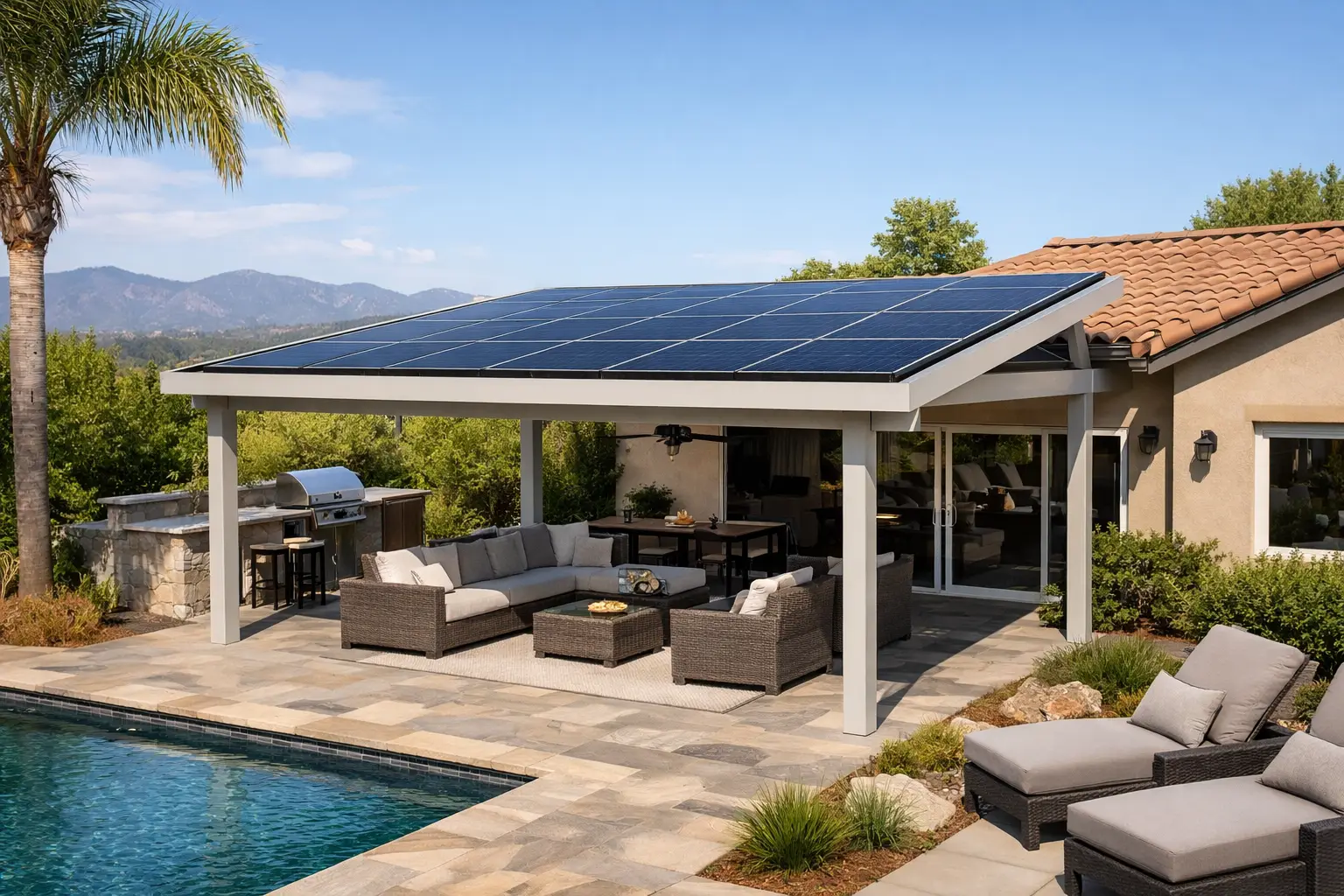
A backyard that becomes too hot to use by noon is a missed opportunity, especially in Southern California. For homeowners who want lower energy costs but dislike the look, limitations, or roof-related concerns of a traditional installation, the question is simple: why choose solar without rooftop panels? A solar patio cover, pergola, carport, or shade structure can create a comfortable place to gather while producing electricity from a purpose-built structure.
This approach is not automatically better than rooftop solar for every property. It is, however, a practical alternative when the roof is unsuitable, the backyard needs shade anyway, or the homeowner wants to combine outdoor living and solar power in one carefully planned project.
Why Choose Solar Without Rooftop Panels?
The strongest reason is that solar does not have to compete with your home’s architecture. A rooftop system uses existing roof space, which can be efficient when the roof has the right orientation, open sun exposure, and enough usable area. But many homes have rooflines that are complex, heavily shaded, visually prominent, aging, or simply not where the owner wants solar panels.
A solar patio cover places the panels on a new outdoor structure designed around both shade and energy production. Rather than adding equipment to the house, you are creating a functional destination in the yard. The structure may cover a dining area, seating space, outdoor kitchen, poolside lounge, driveway, or detached gathering area.
That is the difference between buying solar equipment alone and investing in an outdoor improvement that happens to generate power. Solar Patios By Design™ calls this concept The Patio Cover That Pays You Back™ because the project can deliver daily shade and outdoor-use value while supporting your household’s energy goals.
A Better Fit for Challenging Roofs
Not every roof is a good solar platform. A roof may face the wrong direction, have multiple small planes, receive shade from trees or nearby buildings, or lack enough open space after vents and other features are considered. A steep roof can also make installation and future access more complicated.
A detached or attached solar patio roof gives the design team another surface to work with. Its location, height, orientation, and panel layout can be planned around available sunlight and the way you use the yard. This can be especially helpful on Southern California properties where a sunny rear or side yard receives more consistent exposure than parts of the home’s roof.
There are limits. A patio cover must fit the property, comply with applicable building and electrical requirements, and be engineered for the structure and solar equipment it supports. Trees, neighboring buildings, lot setbacks, and local rules can still affect the design. A solar patio cover is an alternative, not a shortcut around thoughtful site planning.
Shade That Makes Outdoor Living More Useful
Homeowners often begin with a patio cover because their existing patio is uncomfortable during warmer months. In Riverside, San Bernardino County, and inland Orange County, afternoon heat can make an uncovered concrete patio difficult to enjoy. Coastal areas may have milder temperatures, but glare and direct sun can still limit how often an outdoor space is used.
A solar shade structure addresses that comfort problem directly. Solid-panel coverage can shade a seating area, protect an outdoor kitchen, and make daytime entertaining more practical. Depending on the design, it can also create a defined architectural feature that connects the home to the backyard.
The solar panels become part of the roof system rather than an afterthought. That is especially appealing to homeowners who want a clean, intentional look. A solar pergola may suit a more open, contemporary setting, while an attached patio cover can feel like a natural extension of the home. Solar carports can provide shade for vehicles while using driveway or side-yard space that would otherwise have little purpose.
One Project Instead of Separate Projects
Building a patio cover and installing solar separately can mean two designs, two contractor scopes, and a greater chance that each project overlooks the needs of the other. The patio cover contractor may not plan for panel layout, conduit routes, electrical equipment, or structural loading. A solar-only installer may not design the outdoor structure around comfort, drainage, finishes, and how the space will actually be used.
An integrated project brings those decisions together early. The size of the shade area affects the potential solar capacity. The panel layout influences the roof form. The desired location of an outdoor kitchen, lighting, fan, or future television can affect framing and electrical planning. Discussing these details as one project helps avoid compromises that can happen when the work is divided.
For homeowners, the practical advantage is coordination. One design process can account for the outdoor structure, solar array, permits, and installation sequence. Requirements vary by city, property conditions, and project scope, so approvals should never be assumed. Still, a coordinated plan generally provides more clarity than trying to make two unrelated projects fit together later.
Design Flexibility Without a Rooftop Look
Some homeowners are comfortable with panels on the roof but prefer not to see them from the street. Others have a distinctive tile roof or architecture they do not want to alter visually. A solar patio cover moves the array away from the main roofline and can place it where it supports the backyard design.
This does not mean the panels disappear. They remain visible from certain viewpoints, and their placement should be considered carefully. The benefit is choice. You can decide whether the solar structure is attached near the home, placed at the edge of the patio, positioned over a parking area, or designed as a detached focal point in the yard.
Material selection matters as well. An Alumawood patio cover may appeal to homeowners seeking a low-maintenance, finished appearance. Insulated patio covers may be appropriate where heat control and a solid roof feel are priorities. The right choice depends on the desired architecture, span, shade coverage, solar goals, and local engineering requirements.
Energy Independence and Future Readiness
Solar generated from a patio cover serves the same broad purpose as solar generated from a roof: it can contribute electricity to the home, subject to the system design, household usage, utility arrangement, weather, and available sun. It may help offset some electricity use, but production and savings should be evaluated for the specific property rather than estimated from a generic promise.
A well-planned project can also consider future needs. If electric vehicle charging or battery backup is part of the long-term plan, it is useful to discuss those goals during the initial design phase. That does not mean every solar patio project needs a battery or charger on day one. It means the electrical planning can account for the possibility, helping homeowners make decisions with fewer surprises later.
For households concerned about rising utility costs, this approach pairs an immediate lifestyle improvement with a long-term energy strategy. You are not choosing between a better backyard and solar power. In the right situation, the same structure can support both.
What Are the Trade-Offs?
A solar patio cover requires more than a standard shade structure. It must be designed to carry solar panels and related equipment while meeting applicable structural and electrical standards. That can make the project more involved than installing a basic patio cover or using an uncomplicated rooftop layout.
Available backyard space also matters. A smaller lot may not have a location that provides sufficient sun while preserving circulation, views, and usable yard area. In neighborhoods with homeowners associations, exterior design and placement may require review. Properties near the coast may call for special attention to materials and environmental exposure, while inland properties may place greater emphasis on broad shade coverage and heat management.
Cost depends on the structure type, dimensions, materials, solar capacity, site conditions, electrical work, finishes, and permit requirements. Because this is both a construction and solar project, comparing it only to the price of rooftop panels misses part of the value. The more useful comparison is between the cost of building a quality patio cover plus adding solar separately versus designing a single structure that addresses both goals.
Who Benefits Most From Solar Patio Covers?
This option is often a strong match for homeowners who already know they want a patio cover, pergola, carport, or outdoor kitchen cover. It can also suit homeowners with limited usable roof space, difficult roof angles, roof appearance concerns, or a desire to keep solar panels off the main house.
It is equally relevant for homeowners planning a backyard renovation. If the patio, furniture, lighting, cooking area, and shade structure are all being reconsidered, that is the right time to ask whether the cover can produce electricity as well. Waiting until after the structure is built may limit panel placement and create added work.
The best solution begins with an honest property review. Some homes are ideal for rooftop solar. Others are better candidates for a solar pergola, solar patio roof, or solar carport. Some may benefit from a combination. The right answer depends on sun exposure, layout, energy objectives, budget, architecture, and how the family wants to use the space.
A Smarter Way to Think About Solar
Solar without rooftop panels is not simply about avoiding the roof. It is about using available space more intentionally. When a shade structure is designed to produce power, the backyard can become more comfortable, more useful, and more aligned with long-term household goals.
For Southern California homeowners, that can be a compelling way to turn persistent sun into something that improves both the home and the way it is lived in.