
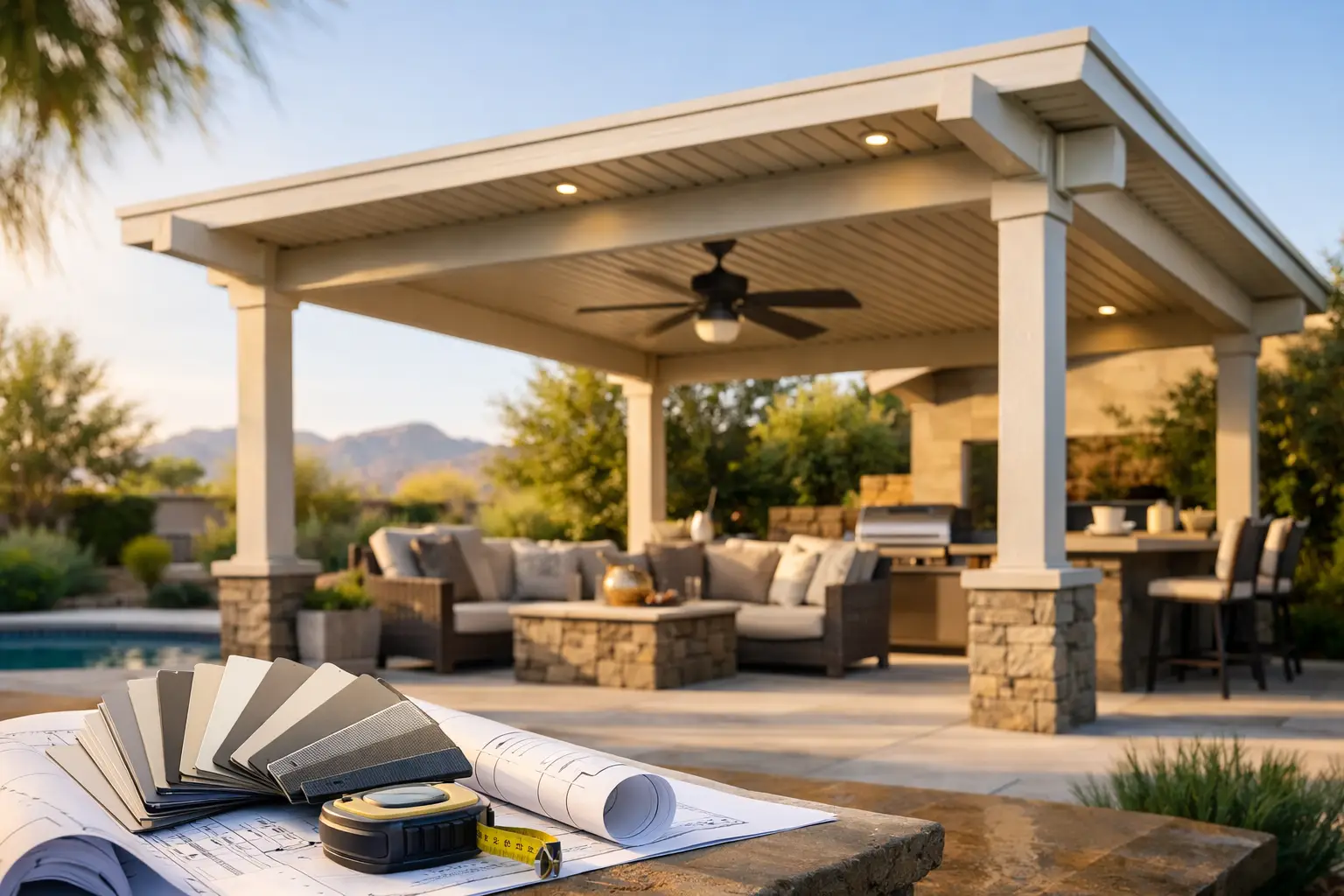
If you are pricing a backyard shade project in Southern California, one of the first questions is straightforward: how much are alumawood patio covers? For most homeowners, the short answer is that a standard Alumawood patio cover often falls somewhere between about $6,000 and $18,000+, with larger, more customized, or insulated designs going higher. That range is broad for a reason. Size, attachment style, engineering, lighting, fans, permits, and site conditions all move the price.
Alumawood has become popular because it offers the look of wood with much lower maintenance. It does not need the same level of sanding, staining, or repainting that a traditional wood patio cover usually requires. In a climate like Los Angeles, Orange County, Riverside, San Bernardino, Ventura, and San Diego, that low-maintenance appeal matters. Homeowners want shade and outdoor comfort without signing up for another ongoing weekend project.
How much are alumawood patio covers in real-world terms?
A simple lattice Alumawood patio cover for a smaller patio may start around the lower end of the range. A solid-roof version, especially one with insulated panels, typically costs more because it provides fuller shade, better heat control, and a more finished outdoor-room feel.
As a rough pricing guide, many homeowners see ranges like these:
- Small lattice patio cover: about $6,000 to $9,000
- Mid-size attached solid patio cover: about $9,000 to $14,000
- Larger custom Alumawood patio cover with upgrades: about $14,000 to $18,000+
- Insulated roof systems, premium finishes, electrical, and structural upgrades can push the investment beyond that
These are not one-size-fits-all prices, and they should not be treated like fixed bids. A 10-by-12 cover on a straightforward slab is very different from a large backyard entertaining space with ceiling fans, recessed lighting, and engineering for a complex installation.
What drives the cost of an Alumawood patio cover?
The biggest factor is size. A larger cover uses more material, more labor, and often more structural support. A cover that stretches across the width of the home and creates a true outdoor living area will naturally cost more than a compact shade structure over a small sitting area.
The style of roof also matters. Lattice covers are usually less expensive because they use less material and let some sunlight through. Solid covers create deeper shade and more weather protection. Insulated roof panels typically cost more than standard non-insulated options, but they can make the space noticeably more comfortable during hot inland summers.
Attachment type is another pricing variable. An attached patio cover that ties into the home can be efficient, but it may involve more integration with the existing structure. A detached cover may need additional posts, footings, and planning depending on the layout.
Then there are the upgrades that turn a shade structure into an outdoor living feature. Lighting, fans, heaters, built-in electrical, privacy walls, upgraded columns, decorative end cuts, and color choices all affect the final number. None of these are minor if your goal is to create a space you use regularly rather than just add overhead shade.
Southern California costs are often higher than national averages
This is where online price estimates can mislead homeowners. You may find national articles quoting very low numbers, but Southern California is its own market. Labor rates, permitting requirements, engineering standards, and local building expectations tend to be higher than in many other parts of the country.
That matters even more if you live in a city or community with HOA oversight, hillside conditions, wind considerations, or stricter plan review. A patio cover in Orange County may not involve the exact same approval path or structural detail as one in Riverside or San Diego County. The design may look similar, but the path to building it can be different.
For that reason, homeowners should treat low online price claims carefully. A realistic project budget should account for local codes, permits, site-specific structural needs, and finish selections.
Lattice vs solid vs insulated Alumawood
When homeowners ask how much are alumawood patio covers, they are often comparing very different products without realizing it. The price difference between a lattice cover and an insulated solid cover can be substantial because the experience under each one is different.
A lattice cover gives filtered shade and a more open-air feel. It works well if you want partial sun and a decorative look. It is often the most budget-friendly way to define a backyard seating area.
A solid Alumawood patio cover gives stronger sun protection and a more practical everyday benefit, especially for patios that get intense afternoon exposure. It creates a better environment for outdoor dining, lounging, or covering an outdoor kitchen.
An insulated roof system generally costs more, but it can be worth it in hotter parts of Southern California. If your backyard becomes difficult to use in summer, the comfort difference can justify the higher upfront investment.
The cost question homeowners should ask next
Price matters, but value matters more. A low-cost patio cover that only provides shade solves one problem. A better-designed structure can solve several at once by improving comfort, extending living space, and increasing how often you actually use the yard.
That is also where some homeowners start rethinking the project entirely. If you already need a patio cover and are also considering solar, it can make sense to ask whether a standard Alumawood cover is the final answer or just the first step.
A traditional patio cover gives you shade. A solar patio cover can give you shade, outdoor living space, and solar power in one project. For homeowners who want solar but do not want rooftop panels, that is a meaningful difference.
When a solar patio cover may make more sense
Not every Alumawood project should become a solar project. If your goal is simple shade over a small side patio, a standard Alumawood cover may be the right fit. But if you are building a larger structure and thinking long term, it is worth comparing the numbers.
A solar patio cover usually costs more upfront than a basic Alumawood cover because you are adding energy production, electrical integration, and a more specialized design process. But you are also getting more than a shade structure. You may be creating an asset that offsets utility bills, supports battery backup readiness, or helps prepare for EV charging.
For some households, that changes the investment equation. Instead of paying for a patio cover now and solar later, the homeowner combines both into one coordinated project. That can be especially appealing if the roof is shaded, aging, poorly oriented, or simply not where you want solar panels installed.
Solar Patios By Design™ focuses on that exact gap between patio cover construction and solar installation, which is why many Southern California homeowners compare standard patio cover pricing with a solar-ready alternative before making a final decision.
Other hidden costs to keep in mind
The base structure is only part of the budget. Demolition of an old patio cover, new concrete footings, drainage adjustments, electrical runs, city permit fees, HOA submittals, and paint or stucco touch-up at the house connection can all add cost.
There is also the issue of access. A backyard with narrow side-yard access, elevation changes, or limited staging space can require more labor. These are not glamorous line items, but they are real ones.
This is another reason estimates can vary so much from one property to another. Two homes in the same neighborhood can have very different project costs even if the finished patio covers are the same size.
How to budget smartly
A good budgeting approach starts with the way you plan to use the space. If you want occasional shade, a basic lattice cover may be enough. If you want a true outdoor room for dining, relaxing, or entertaining, a solid or insulated cover is usually more appropriate.
It also helps to think beyond the sticker price. Lower maintenance has value. Better comfort has value. A design that complements the home and feels integrated rather than tacked on has value too. And if energy savings are on your radar, it is worth comparing a standard cover against a structure that can generate electricity.
The best projects are usually the ones that solve more than one homeowner need at the same time. Shade, comfort, design, and long-term performance often matter just as much as the starting price.
So, how much are alumawood patio covers really?
For many Southern California homeowners, the practical answer is this: expect a professionally built Alumawood patio cover to land somewhere in the mid-thousands to upper-teens, with premium custom projects running higher. Small lattice covers sit at the more affordable end. Larger solid and insulated designs cost more, especially when electrical, permitting, and structural details are part of the plan.
That makes Alumawood a strong option for homeowners who want durability, lower maintenance, and a clean finished look. But if you are already investing in a major backyard improvement, it is smart to compare that option against a patio cover that can also produce power. Sometimes the better question is not just what a patio cover costs, but what you want it to do for your home over the next 10 to 20 years.