
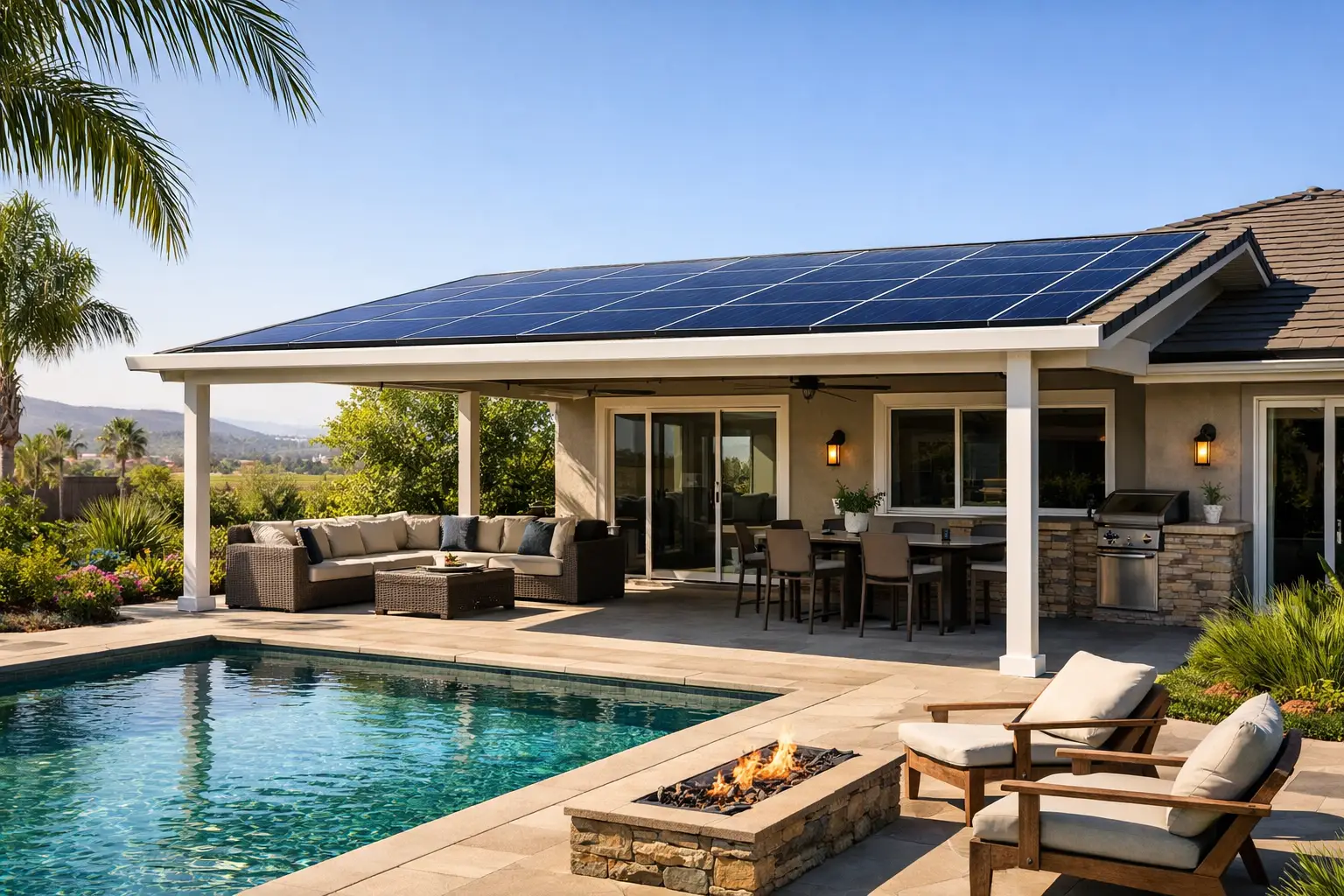
A patio cover usually starts as a shade project. Then it quickly becomes a design decision, a comfort upgrade, and for many Southern California homeowners, a chance to rethink how the backyard works every day. The best attached patio cover ideas do more than block sun – they create usable outdoor living space while fitting the home’s architecture, lot size, and long-term goals.
If you are planning a new cover, it helps to think beyond the basic question of style. An attached patio cover can support outdoor dining, protect an outdoor kitchen, improve afternoon comfort, and in some cases even serve as a smart alternative to rooftop solar. That is especially relevant in Southern California, where sun exposure, backyard use, and home value often all point in the same direction.
What makes an attached patio cover work well?
The strongest designs feel like part of the house, not an afterthought. Because the structure connects directly to the home, roofline, material selection, and proportion matter more than they do with a detached cover. A beautiful freestanding pergola can stand on its own. An attached cover has to look right against stucco, trim, windows, and roofing.
Function matters just as much. In coastal areas, filtered light and airflow may be the priority. In inland cities where summer heat is more intense, homeowners often want deeper shade and better heat control. Some want a bright, open patio that still gets some sun. Others want enough coverage to make a backyard usable for much longer stretches of the day.
Attached patio cover ideas that add real value
1. Solid roof attached patio cover for full shade
A solid roof is one of the most practical options when comfort comes first. It provides broad, dependable shade and gives the patio a more finished, room-like feel. This style works especially well over seating areas, dining spaces, and back doors that get strong afternoon sun.
The trade-off is light. A full solid cover darkens the area underneath more than lattice or pergola-style designs, so the right balance depends on window placement and the amount of natural light you want entering the home.
2. Insulated attached patio cover for heat reduction
For hotter inland parts of Southern California, insulated patio covers are often worth a close look. They are designed to help reduce heat transfer, which can make the space underneath feel noticeably more comfortable during peak sun hours.
They also create a cleaner finished ceiling appearance, which many homeowners prefer when adding recessed lighting, ceiling fans, or a more polished outdoor living setup. If the goal is to make the patio feel closer to an outdoor room, this style usually gets there faster than a simpler open-roof structure.
3. Lattice attached cover for filtered light
Not every backyard needs complete shade. A lattice attached patio cover allows light to pass through while still softening direct sun. It can be a good fit for homes that want a lighter visual profile or for patios used mostly in the morning and evening.
The main limitation is obvious – it does not block heat or rain the way a solid cover does. In a mild climate, that may be perfectly acceptable. In hotter exposures, homeowners sometimes love the look at first and then realize they wanted more coverage than they chose.
4. Modern aluminum cover with clean lines
Many newer homes look best with a patio cover that keeps details simple. A modern aluminum design offers straight lines, low visual clutter, and a crisp finish that pairs well with contemporary architecture.
This is often a strong option for homeowners who want durability with less maintenance than traditional painted wood. It can also work well when the backyard includes sleek hardscape, large glass doors, or a minimalist outdoor kitchen layout.
5. Alumawood attached patio cover for traditional appeal
Alumawood remains popular for a reason. It gives homeowners the visual warmth of wood grain with the lower-maintenance benefits of aluminum. For many Southern California neighborhoods, especially those with more traditional home styles, it offers a familiar look that blends in naturally.
It is not the only good material choice, but it does strike a useful middle ground between appearance, durability, and upkeep. If you like the idea of wood but not the maintenance cycle that comes with it, this is often the direction to explore.
6. Attached pergola for an open-air feel
An attached pergola is ideal when the goal is architectural definition more than full weather protection. It frames the patio beautifully and can make a plain rear elevation feel more intentional and inviting.
This style works best for homeowners who want partial shade and are comfortable with a more open structure. It can also be enhanced with canopy elements, climbing plants, or integrated lighting, depending on the look you want.
7. Patio cover with solar panels
One of the most forward-thinking attached patio cover ideas is using the structure itself as a solar opportunity. Instead of seeing the patio cover as a separate backyard upgrade, some homeowners use it to combine shade, outdoor living, and energy production in one project.
This approach can make particular sense for homeowners who want solar but do not want panels installed on the roof, or whose roof layout is not ideal because of orientation, size, age, or design concerns. It depends on sun exposure, structural design, electrical planning, and local requirements, but it is a smart concept that many homeowners have not seriously considered.
For the right property, this is where a patio cover starts to become more than a shade structure. It becomes part of a larger home improvement strategy – one that may support lower utility costs, EV charging readiness, battery planning, and stronger long-term use of the backyard.
How to choose the right attached patio cover design
Match the cover to how you actually use the space
This sounds simple, but it is where many design mistakes start. If you host dinner outside, full coverage over the dining area matters. If you mainly want a place for morning coffee, partial shade may be enough. If the patio will include a television, fans, lighting, or an outdoor kitchen, the cover should be planned around those uses from the beginning.
A beautiful structure that does not fit your daily habits will always feel less successful than a simpler one that does.
Consider sun direction, not just square footage
Two patios of the same size can need completely different solutions depending on orientation. A west-facing backyard in Riverside or San Bernardino County may need stronger heat protection than a more sheltered patio in a coastal neighborhood. Afternoon exposure is often what pushes homeowners from decorative shade to full-performance shade.
That is why attached patio cover design should respond to real conditions, not just style preferences.
Think about future upgrades now
Even if you are not adding lighting, fans, solar, battery readiness, or EV charging support immediately, it helps to think ahead. A cover that is designed with future plans in mind can save time, cost, and rework later.
This is especially true when homeowners are trying to avoid managing multiple contractors for structural and solar-related improvements. An integrated plan usually leads to a cleaner result.
Attached patio cover ideas for Southern California homes
Southern California is a unique place to design outdoor living spaces because the patio gets used so often. The weather encourages year-round backyard use, but local conditions still vary. Coastal homeowners may care more about brightness, breeze, and a light architectural touch. Inland homeowners often need stronger shade and heat control. HOA review, city permitting, lot shape, and the home’s existing roofline can also influence what makes sense.
That is one reason generic patio cover advice falls short here. The right design in Orange County may not be the right one in Rancho Cucamonga or Ventura County. Good planning accounts for climate, aesthetics, comfort, and the way the structure connects to the home.
Common mistakes to avoid
One common mistake is choosing a style based only on appearance without thinking through sun exposure. Another is undersizing the cover and leaving the most-used part of the patio exposed. Homeowners also sometimes treat solar as a completely separate conversation, when in reality an attached cover may be one of the most practical places to incorporate it.
It is also worth being careful with materials and details. A cover should complement the home, not compete with it. Posts that are too bulky, colors that do not match the house, or a roofline that feels disconnected can make a new structure look less custom than it should.
The best idea is usually the one that solves more than one problem
The most successful attached patio covers are rarely the flashiest. They are the ones that make the backyard more comfortable, fit the architecture, and support how the homeowner wants to live outdoors. Sometimes that means a simple insulated roof for better shade. Sometimes it means a pergola that keeps the patio light and open. And sometimes it means designing a patio cover with solar panels so the project delivers comfort and energy value at the same time.
For homeowners who want shade, outdoor living space, and an alternative to rooftop solar, that combination is worth serious attention. Solar Patios By Design™ has built its approach around that exact opportunity – helping homeowners think of a patio cover not just as an addition, but as a smarter investment in how the home works every day.
The right patio cover should feel good on a hot afternoon, look right with the house, and still make sense years from now.