What Is a Solar Pergola in Apple Valley?
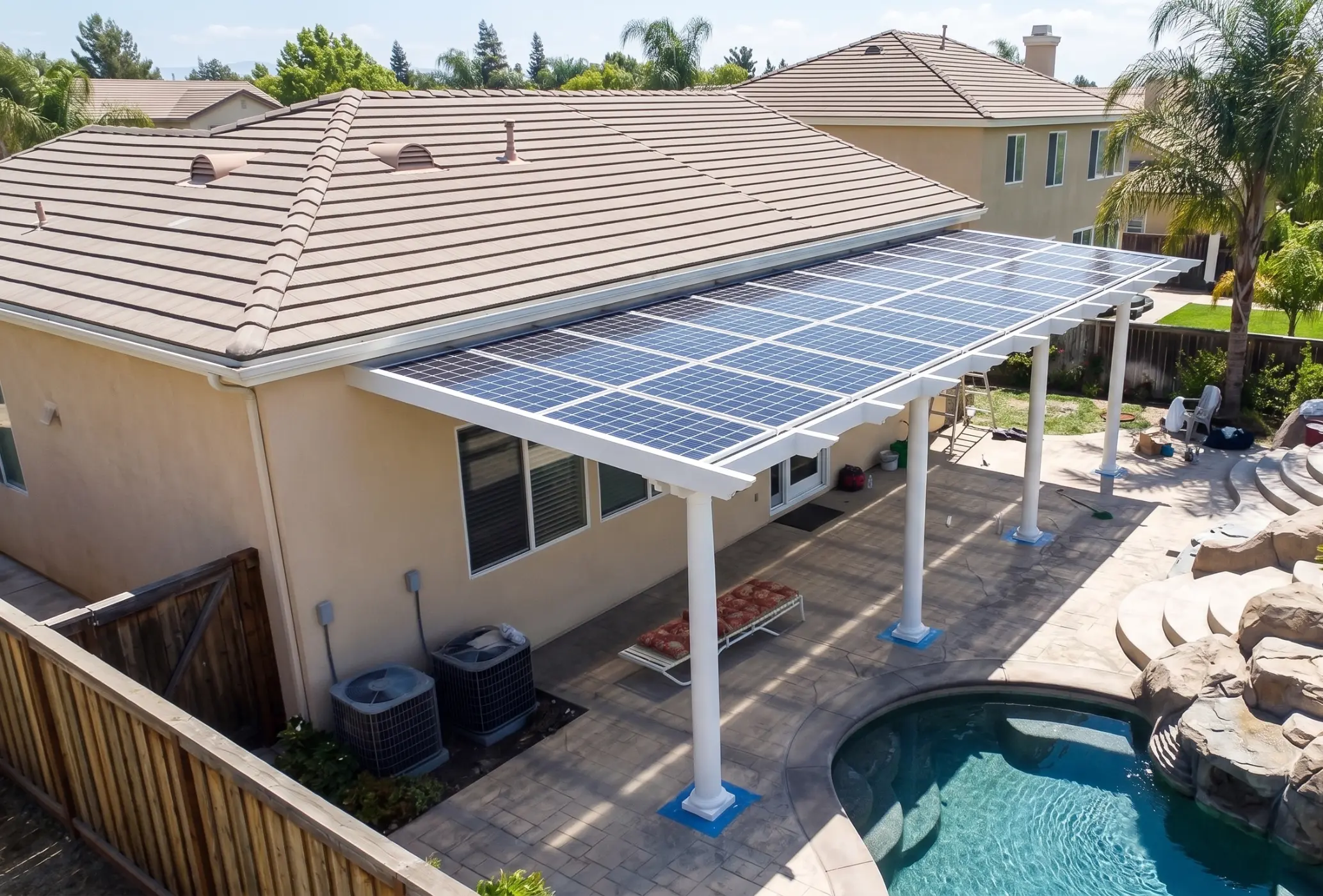
A solar pergola is a shade structure designed with solar panels built into the plan from the beginning. It’s different from a decorative pergola because it has to do more than just create shade or look nice. It needs to handle structure, panel placement, electrical routing, drainage, wind resistance, and hold up to long-term outdoor use.
For Apple Valley homeowners, solar pergolas often work well over:
- Backyard patios
- Outdoor dining areas
- Poolside lounges
- BBQ and grill stations
- Outdoor kitchens
- Side-yard seating areas
- Detached backyard retreats
- RV-adjacent outdoor areas
- Large open yards that get relentless sun exposure
- Homes where roof space for solar is limited
- Sunny outdoor areas that desperately need more shade
A regular pergola is mostly about shade and looks. A solar pergola brings shade, solid structure, and solar planning together in one package. Your posts, beams, spans, footings, panel layout, conduit path, drainage, and all the finish details need to work together as one coordinated project.
That’s why the planning stage is so critical. If you build the pergola first and treat solar as an afterthought, you might end up with a structure that doesn’t work well for the panels, electrical routing that’s awkward and expensive, and a permit process that’s way more complicated than it needs to be.
Want to dig deeper into how solar-supporting pergolas differ from basic shade structures? Our Solar Panel Pergolas page walks you through the details.
Apple Valley’s got an advantage here because many properties have serious solar exposure thanks to open yards, desert landscaping, and fewer urban obstructions blocking the sun. But that also means placement is critical. A good solar pergola design has to nail the balance between comfortable shade below, solid solar exposure above, realistic wind conditions, good yard access, and how the whole thing looks on your property.
Why Solar Pergolas Matter for Apple Valley Homes
High Desert climate means one thing: shade can literally be the difference between using your backyard or watching it sit empty. Early morning might be gorgeous, but by mid-afternoon, direct sun can make sitting outside, eating, relaxing, or entertaining feel impossible.
A solar pergola tackles two problems at once. It creates shade where you actually need it and gives your property another spot for solar panels to live.
Some homeowners still want rooftop solar as part of the picture. But plenty of others hit limits with their roof—maybe the tiles are in the way, vents are everywhere, the roof shape is awkward, there’s only so much usable roof plane, the roof is getting older, nearby trees throw shade, or you just don’t want panels visible on certain parts of your roof. A solar pergola gives you another option when your yard has good sun exposure and the structure is designed properly.
Solar pergolas start making sense when:
- Your patio gets uncomfortably hot in the afternoon
- Your backyard gets hammered by sun
- Your roof doesn’t have enough usable space for all the solar you want
- You want solar without putting everything on the roof
- Your pool area or outdoor kitchen really needs better shade
- Your large lot needs a defined outdoor living zone
- Your property has wind, drainage, grading, or access issues that need thinking through
- Battery backup or EV charging readiness should be part of the conversation early on
- Your HOA or architectural committee will need to review things before you start
- You need to figure out where an accessory structure can actually go before design gets locked in
This isn’t about cramming solar into every backyard. It’s about looking at your specific home and deciding whether a solar pergola actually improves your comfort, supports your energy plans, and fits cleanly on your property.
Weighing solar pergolas against other solar shade structure ideas? Our Solar Powered Pergolas page explains how solar pergolas fit into the bigger picture.
Solar Pergolas Apple Valley Homeowners Can Plan Around the Property
Apple Valley isn’t a tight little neighborhood. A home in Desert Knolls needs different thinking than one near Jess Ranch, Sycamore Rocks, Rio Vista, Mariana Ranchos, Yucca Loma, Apple Valley Village, or out on a rural property closer to open desert.
The whole thing starts with how you actually spend time in your yard.
We dive into questions like:
- Where does the sun hit hardest and longest?
- Which part of your yard needs shade the most?
- Are you building this for dining shade, poolside relaxation, outdoor cooking, or just a lounge area?
- Should it connect to the house or sit separate in the yard?
- Does your yard take a beating from desert winds?
- Is it going near a pool, RV parking, driveway, side yard, or a detached living space?
- Is the property flat, sloped, or dealing with drainage issues?
- Where can you actually put posts without blocking doors, walkways, gates, furniture, parking, or pool access?
- How much solar panel area actually makes sense here?
- Will panels be visible from inside the house, from the street, or from neighbors’ yards?
- What’s the best path for conduit and electrical work?
- How does water get away from the structure?
- Do you have HOA or architectural review rules to follow?
- Does your property have any rural-edge, open-space, easement, or fire-access issues that matter now?
- Does battery backup or EV charging readiness need to be in the plan?
The best solar pergola isn’t always the biggest one. Larger properties give you more layout options, but they also create challenges—electrical distance increases, trenching gets longer, access gets complicated, posts need to land in the right spots, wind exposure might be stronger, and the structure’s relationship to the main house shifts. The goal is a design that handles shade, structure, solar, outdoor living, and long-term looks all at once.
Still figuring out whether solar belongs on a backyard structure instead of just the main roof? Our Solar Patio Covers page shows how shade structures and solar planning work together more broadly.
Our Solar Pergola Service in Apple Valley
Solar Patios By Design™ works with Apple Valley homeowners to plan solar pergolas where the structure, shade, solar layout, and outdoor living all get coordinated right from the beginning.
That typically includes:
- Backyard and property layout review
- Shade planning
- Solar panel layout coordination
- Deciding on attached or detached design
- Structural design coordination
- Footing and post placement review
- High Desert wind, drainage, and exposure factors, when they matter
- Site access and larger-lot layout review
- Planning out the electrical path
- Battery backup readiness discussion
- EV charging readiness discussion
- HOA and architectural review planning
- Permit coordination
- Outdoor living design guidance
Some homes need a small shade structure over a patio, side yard, or dining area. Others need a bigger detached pergola over a pool lounge, outdoor kitchen, RV-adjacent area, or wide-open backyard living space. What actually works depends on your home, your lot, the sun, structure size, electrical scope, and what you’re trying to accomplish long-term.
This work sits between two worlds. Most patio cover companies don’t do solar. Most solar companies don’t build patio structures. Solar Patios By Design™ bridges that gap by treating the shade structure and solar integration as one unified project.
One Contractor. One Design. Coordinated Permitting. One Finished Project.
How Our Apple Valley Solar Pergola Process Works
A solar pergola should be planned through before the design gets locked down. Structure, solar layout, electrical routing, shade coverage, drainage, wind exposure, and permits all affect each other. You can’t really skip ahead.
1. Home and Property Review
We start by actually looking at your home, yard, sun pattern, what you want to do with the space, and where a solar pergola makes practical sense.
2. Shade and Use Planning
Next comes how you’ll actually use it. A pergola for pool shade gets planned differently than one for outdoor dining, grilling, a side-yard sitting spot, or a detached shade zone farther out.
3. Solar Layout Review
Panel placement gets looked at early. Direction, exposure, spacing, how visible they’ll be, production goals, and electrical routing all shape how the structure needs to work.
4. Structure and Footing Planning
A solar pergola needs a structure built for its actual job. Posts, beams, spans, loads, footings, and connections all need review before you move ahead.
5. HOA, Community, or Site Review
Some Apple Valley properties deal with HOA or architectural requirements. Others need closer attention because of large-lot layouts, easements, access situations, drainage issues, rural-edge conditions, or where detached accessory structures are allowed.
6. Permit and Electrical Coordination
Solar pergola projects might need structural review, electrical review, and solar permitting depending on the design. Requirements vary based on what you’re building, property conditions, structure type, and how much electrical work is involved.
Want to understand how solar shade structures get reviewed across California? Our Solar Patio Cover Permits California guide paints the bigger permitting picture.
7. Estimate and Next Steps
When the design direction is clear, we build out the estimate around your actual project. You’ll know what’s included, what might need additional review, and what can move the final cost before you commit.
Ready to look at your Apple Valley property? Call (310) 729-3013 or request your Apple Valley solar pergola estimate.
Common Apple Valley Solar Pergola Planning Scenarios
These aren’t case studies—they’re realistic situations we see when Apple Valley homeowners start thinking seriously about a solar pergola.
Desert Knolls Backyard Shade and View Planning
Desert Knolls homes often sit on bigger properties with mountain or valley views and relentless afternoon sun. A solar pergola can help create a defined shaded outdoor living area, but you need to think through visibility, wind exposure, drainage, and how it all sits on the lot.
Jess Ranch Outdoor Living Upgrade
Homes in the Jess Ranch area usually have patios, side yards, or outdoor seating that needs comfortable, attractive shade. The solar pergola should feel proportional to your home and fit with any community or architectural expectations.
Sycamore Rocks Larger-Lot Planning
Properties near Sycamore Rocks often have more open land, detached outdoor areas, RV parking, or desert-edge conditions. A solar pergola can work really well here, but electrical distance, post placement, grading, and access need careful planning.
Rio Vista Patio and Pool Shade
Rio Vista homeowners often want shade for a patio, pool deck, or outdoor dining spot. The pergola design needs to work around pool access, where furniture will go, water drainage, panel visibility, and electrical routing.
Mariana Ranchos and Rural-Edge Properties
Homes on larger lots or rural-edge areas need practical thinking about access, easements, utility routing, wind exposure, drainage, and how far the structure sits from the main electrical panel. A detached solar pergola can work, but start with the actual property layout.
Yucca Loma and Apple Valley Road Area Homes
Homes around Yucca Loma or Apple Valley Road often have established patios, desert landscaping, and backyard entertainment areas. A solar pergola can improve shade comfort while supporting solar work above the covered space.
Apple Valley Village and Established Neighborhood Patio Planning
In established neighborhoods near Apple Valley Village or State Route 18, a solar pergola can upgrade an existing patio while adding solar potential. The design should respect your home’s size, property lines, yard layout, and electrical access.
Pool, BBQ, RV, and Side-Yard Shade
Many Apple Valley homes have pool areas, grill stations, RV-adjacent spaces, or side yards getting blasted by direct sun. A solar pergola can help shade the area, but the design has to account for access, furniture placement, parking clearance, water drainage, and electrical routing.
Every scenario gets reviewed against the specific home, property lines, HOA rules, sun exposure, wind exposure, drainage, what the structure needs to do, and the permit path. Local knowledge helps, but the final design always comes down to your specific property.
Checking out High Desert and Inland Empire cities? Our San Bernardino County service area page gives a broader view of solar pergola and solar shade structure planning across the county.
Solar Pergolas Apple Valley Cost Factors
We don’t publish flat pricing for Apple Valley solar pergolas because every home is different. A compact pergola over a back patio isn’t the same project as a larger detached structure with more panels, structural engineering, longer electrical runs, trenching, battery readiness, EV charging planning, or extra review for wind and big-lot layout.
Generally speaking, solar pergola cost depends on structure, size, solar layout, electrical work, permits, site access, finish choices, and property conditions.
Want to understand cost before reaching out? Our Solar Pergola Cost guide breaks down the major cost drivers without pretending every property is the same.
Swipe sideways to see every column.
| Cost Factor | Why It Matters |
|---|---|
| Pergola size | Larger structures usually need more material, labor, structural review, and solar layout coordination. |
| Attached or detached design | Attached designs need connection and drainage review. Detached designs often need more footing and routing planning. |
| Solar panel layout | Panel quantity, orientation, spacing, visibility, and production goals shape the final design. |
| Structural requirements | Posts, beams, footings, spans, loads, and wind considerations need to match the actual structure and solar scope. |
| Electrical scope | Conduit routing, trenching, panel conditions, inverter placement, battery readiness, and EV charging readiness affect complexity. |
| High Desert wind and exposure | Open lots might need closer review for structure placement, footing design, and panel orientation. |
| Drainage and grading | Desert storms, lot slope, compacted areas, and drainage patterns affect placement and foundation planning. |
| Larger-lot layout | A detached structure far from the house can increase routing, trenching, access, and planning needs. |
| Accessory-structure review | Detached structures, setbacks, easements, and placement rules might affect design and approval. |
| HOA or design review | Community requirements can affect color, height, placement, visibility, and approval timing. |
| Permit review | Structural, electrical, and solar requirements depend on the exact design and property conditions. |
| Site access | Gates, long driveways, RV parking, walls, pools, desert landscaping, and limited staging areas affect labor and planning. |
| Finish options | Lighting, fans, gutters, color, trim details, and other upgrades change the scope. |
A solid estimate should explain what’s included, what assumptions you’re working with, and which items might need additional review before the final project scope is set.
Solar Pergola Permits and HOA Planning in Apple Valley
Solar pergola projects in Apple Valley need careful planning because they can involve structural work, solar photovoltaic work, electrical routing, drainage, setbacks, wind exposure, accessory-structure placement, and community review.
Permit requirements vary. A basic shade structure and a solar pergola with electrical work are completely different scopes. The right path depends on what you’re building, the solar layout, electrical details, property conditions, and local requirements.
Common review issues include:
- Where the pergola sits on the property
- How far it is from your property lines
- How tall it is
- Where posts and footings go
- How visible the solar panels will be
- Exterior color and finish
- How water drains
- Electrical routing or trenching
- Connection to roofline or walls, if attached
- Wind exposure, when relevant
- Where detached accessory structures are allowed
- Easements, driveways, gates, or access constraints
- HOA or architectural committee requirements
- Fire access or open-space rules, when relevant
- Special site conditions
If your property is in an HOA or managed community, you’ll likely need architectural approval before construction. That review is separate from town permits and can affect your final design.
Because Apple Valley has bigger lots, rural properties, established neighborhoods, desert landscaping, wide-open backyards, and homes dealing with different drainage and exposure issues, it’s smart to look at your specific property before assuming your project follows the same path as a standard patio cover or rooftop solar.
Solar Pergola Design Considerations for Apple Valley Homes
An Apple Valley solar pergola should be practical, comfortable, and visually balanced. It needs to create shade and support panels, but it also has to work with your home, your lot, and the desert landscape.
The key questions:
- Should it connect to the house or sit separate?
- How much afternoon shade do you actually need?
- Are you covering dining, lounging, cooking, poolside use, or RV-adjacent space?
- How visible will the solar panels be from inside the house, the street, or neighbors’ yards?
- Will the structure interfere with mountain views or backyard sightlines?
- Where can posts actually go without blocking doors, walkways, pool access, gates, driveways, or RV parking?
- Should lighting, fans, gutters, or future electrical upgrades be planned into it now?
- What finish makes sense with your home’s exterior and desert landscaping?
- How should water run off?
- Does your property deal with wind exposure, open-space adjacency, easements, or access complications?
- Will HOA or local review have guidelines around color, height, visibility, or placement?
A pergola that’s too small won’t give enough shade or solar area. One that’s too large can overwhelm the yard, create complicated footing problems, or raise structural and permit questions you don’t need. The best designs balance comfort, proportion, solar exposure, wind conditions, and how you actually want to use the space.
Want to see what different structures look like before you decide on direction? Our Gallery helps you think through structure style, shade coverage, and the outdoor feel you’re aiming for before jumping into design.
Why Choose Solar Patios By Design™ for Solar Pergolas in Apple Valley
Solar pergolas aren’t simple single-contractor projects. A patio cover builder understands shade structures but maybe not solar integration. A solar company knows panels but might not understand patio structure, footings, drainage, wind, larger-lot layouts, or outdoor living design.
That gap makes these projects harder than people expect. One company does the structure. Another does solar. Someone else talks electrical. Permits shift. The final result feels disconnected.
Solar Patios By Design™ brings it all into one coordinated process.
We help Apple Valley homeowners think through:
- Shade comfort
- Solar panel placement
- Structure and footing needs
- High Desert sun exposure
- Wind, drainage, and open-yard realities
- Larger-lot layout and access
- How you’ll actually use the space
- HOA or community review
- Electrical routing
- Battery backup readiness
- EV charging readiness
- Permit planning
- Long-term appearance
For a project like this, working with a team that understands both structure and solar planning makes a real difference. You want the pergola to look right, perform well, support the solar layout, and actually make your outdoor space more usable without fighting the property.
Solar Patios By Design™ is operated by Team All Star Construction, CSLB #1009760.
One Contractor. One Design. Coordinated Permitting. One Finished Project.
FAQs About Solar Pergolas in Apple Valley
What is a solar pergola?
A solar pergola is an outdoor shade structure designed to support solar panels. It creates shade below while giving you another spot for solar production above.
Are solar pergolas right for Apple Valley homes?
They can be—especially for homes with sunny patios, pools, outdoor kitchens, limited roof space, large open yards, RV-adjacent areas, or relentless afternoon sun. Whether it works depends on your property, sun exposure, structure needs, electrical scope, drainage, wind, HOA rules, and permits.
Do solar pergolas need permits in Apple Valley?
Permit requirements vary by structure, electrical scope, location, and property conditions. Solar pergola projects often need structural and electrical review, but you should confirm the actual path against your design.
Does my Apple Valley HOA need to approve a solar pergola?
Some Apple Valley communities have HOA or architectural review requirements. If your property’s governed by an HOA, check the CC&Rs and design guidelines before finalizing your design.
Can a solar pergola replace roof solar?
A solar pergola can provide another spot for panels, but whether it replaces or supplements roof solar depends on sun exposure, panel layout, system size, electrical conditions, roof conditions, and your energy goals.
How much does a solar pergola cost in Apple Valley?
Cost depends on size, attached or detached design, structural needs, solar panel layout, electrical scope, permits, site access, finish choices, wind or drainage conditions, and whether battery or EV charging readiness is included.
Can a solar pergola be attached to my home?
Sometimes, yes. Attached solar pergolas need careful planning of the wall connection, roofline relationship, drainage, structure, electrical routing, setbacks, and what the community expects.
Can a solar pergola be detached?
Definitely. Detached solar pergolas work well for pools, backyard lounges, outdoor kitchens, side-yard seating, RV-adjacent spaces, and larger lots where the best shade location is away from the main house.
Can battery backup or EV charging be planned with a solar pergola?
Usually, yes. Battery backup and EV charging readiness typically get reviewed during electrical planning. What makes sense depends on solar layout, your main electrical panel, equipment location, routing distance, and your energy goals.
What Apple Valley areas work well for solar pergolas?
Solar pergolas are possible in Desert Knolls, Jess Ranch, Sycamore Rocks, Rio Vista, Mariana Ranchos, Yucca Loma, Apple Valley Village, State Route 18-area homes, and rural parts of town. Your design always needs review against your specific property, sun exposure, structure needs, HOA rules, drainage, wind, and permits.