What Is a Solar Pergola in Chino Hills?
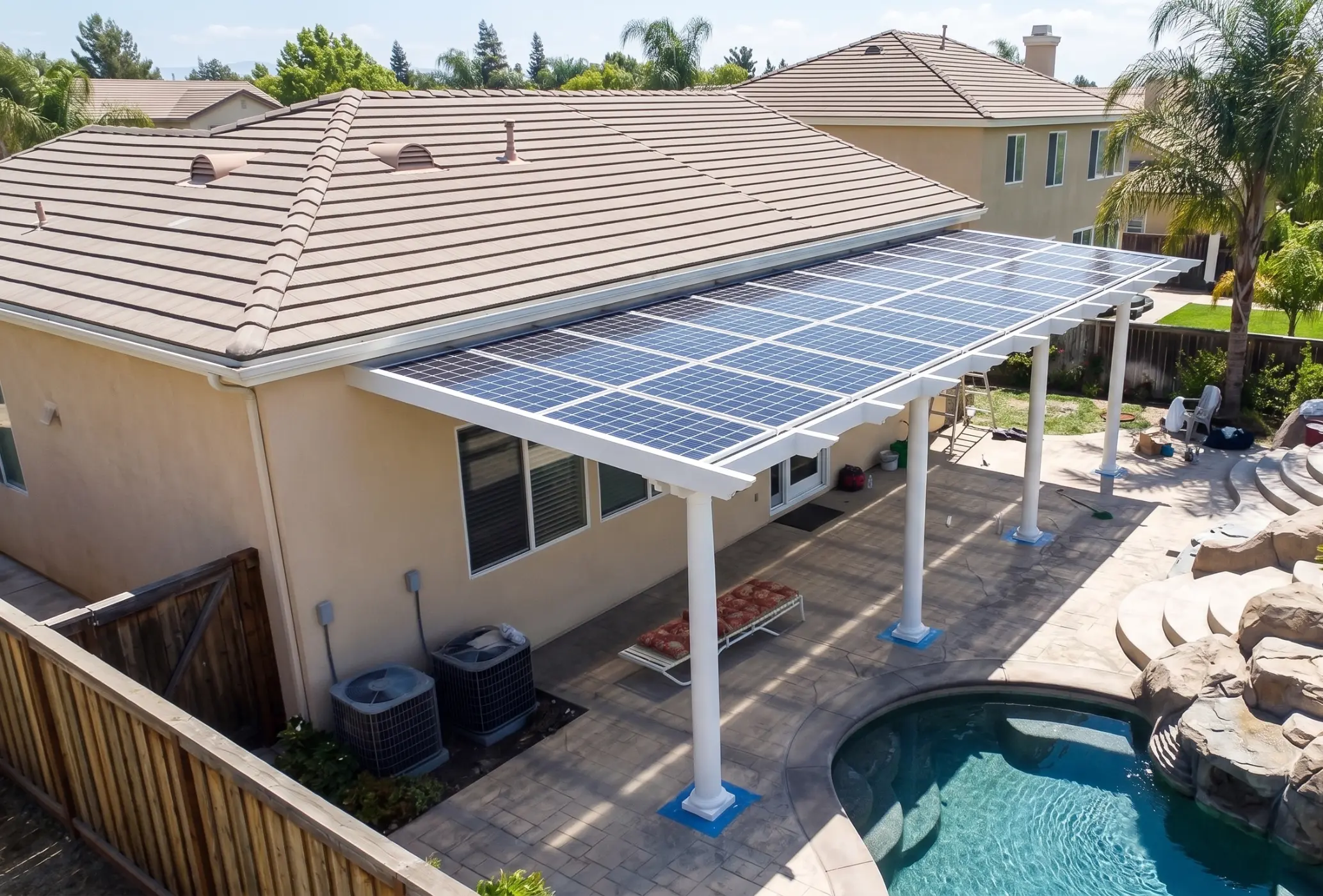
A solar pergola isn’t just a pergola with panels slapped on top. It’s a shade structure that’s planned from the ground up to actually support solar panels. That’s the key difference from a decorative pergola—it has real requirements beyond just looking good or creating shade. It needs to be engineered for structure, designed around panel placement, thought through for electrical routing, built to handle drainage, and made to last through real outdoor use.
In Chino Hills, solar pergolas often make sense over:
- Backyard patios
- Outdoor dining spaces
- Poolside lounges
- BBQ and grill areas
- Outdoor kitchens
- View-facing seating areas
- Side-yard shade spots
- Detached backyard retreats
- Homes where roof space is tight
- Hillside properties where roof solar isn’t your only option
A regular pergola? It’s mostly about shade and aesthetics. A solar pergola has to juggle shade, structure, and solar planning all together. The posts, beams, span distances, panel layout, where your conduit goes, drainage, and all the finish details have to work as one system.
This is why planning upfront matters so much. If you build the pergola first and add solar later, you might end up with a structure that doesn’t line up with your panel layout, electrical runs that feel awkward, or a permit headache you didn’t expect.
For a deeper dive into how solar pergolas differ from basic shade structures, check out our Solar Panel Pergolas page.
In Chino Hills, you’ve got decent sun, but finding the right spot for a solar pergola isn’t always obvious. The best design accounts for slope, water drainage, the views you care about, how you move through the yard, whether panels will feel intrusive from inside, and how the whole thing will look from your house.
Why Solar Pergolas Matter for Chino Hills Homes
Chino Hills has the climate and terrain where shade isn’t just nice—it’s necessary. That inviting patio or pool deck in the morning can become basically unusable by mid-afternoon when the sun hits hard.
A solar pergola tackles two problems at once. You get shade where you actually need it, and you open up another spot to put solar panels.
Maybe roof solar is still part of your plan. Maybe it’s not—some roofs just don’t work well for panels. Whether it’s tile that’s complicated to work with, vents in the way, a roof shape that doesn’t cooperate, limited usable planes, your hillside orientation, shade from trees or terrain, or you just prefer panels somewhere else, a solar pergola can be the answer when your backyard gets good sun and the structure is designed right.
A solar pergola starts to make real sense when:
- Your patio gets uncomfortably hot in the afternoon
- Your backyard gets strong sun exposure
- Your roof has limited good spots for solar
- You want solar flexibility beyond just the roof
- A pool area or outdoor kitchen needs better shade
- Your backyard has views you want to protect
- Your lot has slope or drainage challenges that need smart planning
- You’re thinking about battery backup or EV charging down the road
- Your HOA or architectural committee has requirements you need to navigate
This isn’t about forcing solar into every corner of your backyard. It’s about looking at your specific home and figuring out whether a solar pergola genuinely improves how you use the space, helps with your energy goals, and fits cleanly with the property.
Trying to figure out how solar pergolas fit into the bigger picture of solar shade structures? Our Solar Powered Pergolas page explains how solar pergolas connect to the wider category of solar shade options.
Solar Pergolas Chino Hills Homeowners Can Plan Around the Backyard
Chino Hills isn’t one-size-fits-all. A home in Vellano faces totally different planning than one in Los Serranos, Butterfield Ranch, Rolling Ridge, Payne Ranch, Carbon Canyon, or near Chino Hills State Park.
The best solar pergola design starts with how you actually live in your outdoor space.
When we’re planning, we’re asking:
- Where does the sun hit hardest during the day?
- Which part of your backyard needs shade most?
- Are you looking for shade over a dining area, poolside, cooking space, or lounge zone?
- Should the pergola be connected to the house or stand alone?
- Will the structure block any views you care about from inside?
- Is your yard sloped or hemmed in by retaining walls?
- Where can we put posts without disrupting doors, paths, furniture, or pool access?
- How much solar panel area actually makes sense for your structure?
- Will panels be visible from inside your home, from the street, or from neighbors?
- Where should electrical lines and conduit run?
- How does water drain off the structure?
- Does your HOA or architectural review board have a say?
- Is your property near open space, hillside areas, or special review zones?
- Should you build in battery backup or EV charging readiness from the start?
The best solar pergola isn’t always the biggest one. Too small and you won’t get enough shade or panel area. Too big and it can crowd your yard, wreck sightlines, make post placement a nightmare, or trigger extra review issues you didn’t need.
The goal is creating something that actually works—for shade, for structure, for solar layout, for how you use the space, and for how it looks over time.
Still weighing whether solar belongs on a backyard shade structure instead of your roof? Our Solar Patio Covers page walks through how shade and solar planning work together more broadly.
Our Solar Pergola Service in Chino Hills
Solar Patios By Design™ helps Chino Hills homeowners plan solar pergolas with everything—structure, shade, solar layout, and outdoor living goals—working together from the start.
This typically includes:
- Reviewing your backyard layout and property
- Planning for shade in the spots that need it
- Mapping out where solar panels actually work
- Deciding on attached or detached design
- Coordinating structural design
- Planning footings and post placement
- Dealing with hillside, slope, or drainage issues if they apply
- Figuring out electrical routing
- Discussing battery backup readiness
- Thinking through EV charging readiness
- Navigating HOA and architectural review
- Planning for permits
- Guiding outdoor living design choices
Some homes need a compact shade structure over a patio or dining area. Others benefit from a larger solar pergola over a pool lounging zone, outdoor kitchen, or view-facing living space. What’s right really depends on your home, lot, sun exposure, how big the structure should be, electrical scope, and what you’re trying to accomplish long-term.
This work sits between two worlds. Most patio cover companies don’t do solar. Most solar companies don’t build structures. Solar Patios By Design™ fills that gap by treating the shade structure and solar integration as one coordinated project.
One Contractor. One Design. Coordinated Permitting. One Finished Project.
How Our Chino Hills Solar Pergola Process Works
A solar pergola should be planned before you lock anything in. Structure, solar layout, electrical routing, shade coverage, drainage, views, and permitting all affect each other, so they need to be thought through together.
1. Home and Backyard Review
We start by understanding your home, yard, how much sun you actually get, what you want from your outdoor space, and where a solar pergola might genuinely make sense.
2. Shade and Use Planning
Next, we dig into how you want to use the space. Poolside shade is completely different from dining shade, which is different from a grill area, side-yard sitting space, or a hillside-view lounge.
3. Solar Layout Review
We look at panel placement early—direction, sun exposure, spacing, how visible they’ll be, production goals, and how the electrical work flows. All of this shapes the structure.
4. Structure and Footing Planning
A solar pergola needs a structure built for what it’s actually doing. Posts, beams, how far they span, the loads they carry, footings, and connections all get reviewed before you move forward.
5. HOA and Design Review
Many Chino Hills neighborhoods and planned communities have HOA or architectural rules. Color, height, finishes, where it sits, how visible it is, and view impact need thought before the project gets rolling.
6. Permit and Electrical Coordination
Depending on your design, property conditions, structure type, and electrical scope, you might need structural review, electrical review, and solar permitting. We figure out what actually applies.
For more detail on how solar shade structures get permitting in California, check out our Solar Patio Cover Permits California guide.
7. Estimate and Next Steps
Once the design direction is clear, we build your estimate around what the project actually includes. You’ll know what’s covered, what might need extra review, and what could affect the final cost before you say yes.
Ready to look at your backyard? Call (310) 729-3013 or request your Chino Hills solar pergola estimate.
Common Chino Hills Solar Pergola Planning Scenarios
These aren’t formal case studies—just realistic situations that come up regularly when Chino Hills homeowners start thinking about a solar pergola.
Vellano View-Oriented Backyard Planning
If you’re in Vellano and want shade over a poolside lounge, dining terrace, or outdoor kitchen, keeping the visual quality of your backyard is key. The structure needs to feel refined, properly scaled, and thoughtfully placed.
Los Serranos Outdoor Living Upgrade
Los Serranos properties have all kinds of lot shapes, slopes, and backyard layouts. A solar pergola can work great, but post placement, drainage, setbacks, and electrical routing all need careful consideration.
Butterfield Ranch Family Patio Shade
You might want shade near the back of your home where the family already gathers to eat, relax, and entertain. An attached or near-home pergola could be perfect, but the connection detail, drainage, and solar layout need review.
Rolling Ridge Poolside Shade
Rolling Ridge homes often have intense sun around pool decks and backyard lounging areas. A solar pergola can make the space actually comfortable while giving you another place to put solar panels.
Payne Ranch or Custom Home Design Sensitivity
Higher-end custom homes need a more restrained, architectural approach. The solar pergola should shade and produce power without feeling like utility infrastructure dropped into a luxury outdoor space.
Carbon Canyon and Open-Space Edge Properties
If you’re near Carbon Canyon or open-space areas, you’ll want to think through access, slope, drainage, wind, visibility, fire access, and other site-specific conditions. The design needs to actually work with your property, not against it.
Every situation deserves a look at your specific home, property lines, HOA rules, sun exposure, slope, drainage, structural needs, and permit requirements. Local knowledge helps, but the real design comes from understanding your property.
Curious how nearby Inland Empire areas approach this? Our San Bernardino County service area page covers broader solar pergola and shade structure planning across the county.
Solar Pergolas Chino Hills Cost Factors
We don’t publish one-size-fits-all pricing because the scope really varies from house to house. A compact pergola over a small patio is a completely different project than a larger structure with hillside views, more panels, structural engineering, drainage work, longer electrical runs, battery readiness, or EV charging considerations.
Generally, your cost depends on the structure itself, how big it is, solar panel layout, electrical work, what permits require, site access, finish choices, and what conditions your property presents.
If you want to understand the major cost drivers before requesting an estimate, our Solar Pergola Cost guide breaks it down without pretending every property costs the same.
Swipe sideways to see every column.
| Cost Factor | Why It Matters |
|---|---|
| Pergola size | Bigger structures mean more material, more labor, likely structural review, and more complex solar planning. |
| Attached or detached design | Attached means reviewing the wall connection and drainage. Detached means more footing and routing planning. |
| Solar panel layout | How many panels, which direction they face, spacing, visibility, and production targets all shape the final design. |
| Structural requirements | Posts, beams, how far things span, load capacity, footings, and connections need to match your actual structure and solar. |
| Electrical scope | Conduit routing, panel connections, where the inverter goes, battery readiness, and EV charging all add complexity. |
| Hillside or slope conditions | Sloped yards, retaining walls, drainage challenges, and access issues affect structure planning and labor costs. |
| HOA or design review | Community rules can dictate color, height, placement, visibility, and approval timelines. |
| Permit review | Structural, electrical, and solar review needs vary based on your exact design and property conditions. |
| Site access | Tight side yards, slopes, pools, walls, landscaping, or limited space for equipment can affect labor and logistics. |
| Finish options | Lighting, fans, gutters, color, trim details, and other upgrades change what the final project includes. |
A solid estimate should spell out what’s included, what assumptions went into it, and which items might need extra review before the final scope gets locked in.
Solar Pergola Permits and HOA Planning in Chino Hills
Solar pergola projects in Chino Hills involve multiple layers because they can include structural work, solar photovoltaic systems, electrical routing, drainage, setbacks, hillside conditions, and community oversight.
Permit requirements depend on the project. A basic shade structure and a solar pergola with electrical work are two completely different scopes. The right path depends on your structure design, solar layout, electrical details, property conditions, and what the city requires.
Common things that get reviewed:
- Where the pergola actually sits
- Setback distances from property lines
- How tall it is
- Post and footing placement
- Whether solar panels are visible
- What color and finish you choose
- How water drains away
- Electrical routing
- If it’s attached, how it connects to the roofline or wall
- Slope or hillside issues, if they apply
- HOA or architectural committee sign-off
- Open-space proximity or fire access, if relevant
- View sensitivity
- Access or unusual site conditions
If you’re in an HOA or managed community, you’ll probably need architectural approval before breaking ground. That’s separate from city permits and can affect your final design.
Chino Hills has hillside properties, view-sensitive lots, established neighborhoods, planned communities, and homes adjacent to open space, so it’s smart to look at your actual property before assuming the process will match a standard patio cover or roof solar project.
Solar Pergola Design Considerations for Chino Hills Homes
Your Chino Hills solar pergola should be practical, comfortable, and visually balanced. It needs to shade and hold panels, but it also needs to fit your home, work with your grade, and respect views.
Key design questions:
- Connected to the house or standing alone in the yard?
- How much shade during the hottest time of day?
- Shading a dining area, lounge space, cooking zone, or poolside?
- How visible are the solar panels from inside, from the street, or from neighbors?
- Will it impact hillside views or backyard sightlines?
- Where can posts go without blocking doors, pathways, furniture, pools, or walls?
- Should you plan for lighting, fans, gutters, or future electrical upgrades now?
- What finish fits your home’s exterior?
- How should water drain off?
- Does your property have slope, wind, open-space, or access challenges?
- What does your HOA or local review process require around color, height, visibility, or placement?
Too small a pergola and you won’t get adequate shade or solar space. Too large and it dominates your yard, blocks views, makes post placement problematic, or opens up complicated structural and permit issues. The best designs balance comfort, proportion, solar exposure, and how you actually spend time in your backyard.
Want to see examples before you commit to a direction? Our Gallery shows different structure styles, shade patterns, and backyard feels to help you think through what works for you.
Why Choose Solar Patios By Design™ for Solar Pergolas in Chino Hills
These projects don’t fit neatly into one trade. A patio cover contractor understands shade structures but maybe not solar integration. A solar company knows panels but not structure engineering, footings, drainage, hillside conditions, or outdoor living design. That gap makes projects way harder than homeowners expect.
One company builds the structure. Another handles solar. A third talks electrical. Permits change course. The finished project feels like multiple things duct-taped together rather than one cohesive design.
Solar Patios By Design™ brings it all under one process.
We help Chino Hills homeowners think through:
- Actual shade comfort
- Where solar panels work best
- Structure and footing engineering
- Hillside and slope challenges
- Drainage and yard flow
- How you’ll actually use the space
- HOA and community rules
- Electrical system layout
- Battery backup options
- EV charging readiness
- Permit strategy
- How it all looks long-term
For a project like this, you want a team that speaks both languages—structure and solar. You need the pergola to look right, function properly, support your solar layout, and genuinely improve how you use your backyard without fighting against your property.
Solar Patios By Design™ is operated by Team All Star Construction, CSLB #1009760.
One Contractor. One Design. Coordinated Permitting. One Finished Project.
FAQs About Solar Pergolas in Chino Hills
What is a solar pergola?
A shade structure built from the ground up to support solar panels above the covered area. You get shade underneath and another spot to generate solar power.
Are solar pergolas a good fit for Chino Hills homes?
They can be—especially for homes with sunny patios, pool areas, outdoor kitchens, tight roof space, hillside yards, or intense afternoon sun. Whether it’s right depends on your property, sun exposure, structure needs, electrical work, HOA rules, slope, drainage, and permit situation.
Do solar pergolas need permits in Chino Hills?
Yes, most do. Structural and electrical review is common, but the specific requirement depends on your design and property conditions. We figure out what the city actually requires.
Does my Chino Hills HOA need to approve a solar pergola?
Probably. Many Chino Hills communities have HOA or architectural review requirements. Check your CC&Rs and design guidelines before finalizing the pergola plan.
Can a solar pergola replace roof solar?
A solar pergola can provide another location for panels, but whether it can replace roof solar depends on your sun exposure, panel layout, system size, electrical setup, and energy goals.
How much does a solar pergola cost in Chino Hills?
It depends—size, attached or detached, structural needs, solar layout, electrical scope, permits, site access, finishes, slope conditions, and whether battery or EV charging readiness is included all affect price.
Can a solar pergola attach to my home?
Sometimes. Attached pergolas need careful review of the wall connection, roof relationship, drainage, structure, electrical routing, setbacks, and what your HOA expects.
Can a solar pergola stand alone?
Absolutely. Detached pergolas work well for pools, backyard lounges, outdoor kitchens, side-yard seating, and view-facing yards where the best shade spot is away from the house.
Can battery backup or EV charging be planned with a solar pergola?
Often yes. Battery and EV charging readiness usually get discussed during electrical planning. What makes sense depends on your solar layout, main electrical panel, equipment location, and long-term energy vision.
What Chino Hills areas are good for solar pergolas?
Solar pergolas can work in Vellano, Los Serranos, Butterfield Ranch, Rolling Ridge, Payne Ranch, Carbon Canyon, Summit Ranch, Fairfield Ranch, and other parts of Chino Hills. The design always needs to reflect your specific property, HOA rules, sun exposure, slope, drainage, structure needs, and permit requirements.