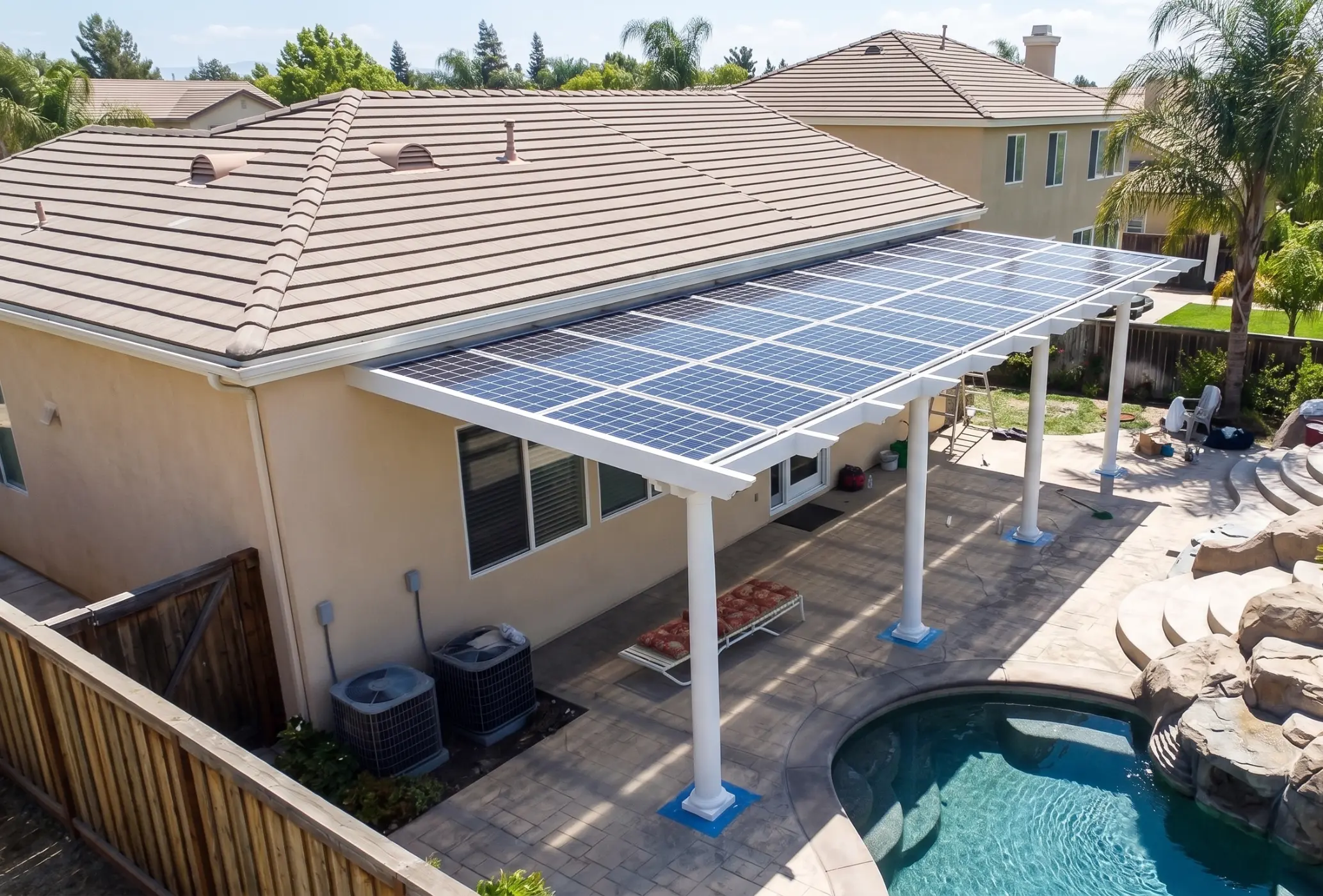
What Is a Solar Pergola in Seal Beach?
A solar pergola does double duty: it creates shade and supports solar panels. That second part is key. A regular pergola mainly needs to look good and block the sun. A solar pergola has to handle panel placement, extra weight, post locations, beam strength, proper footings, water drainage, and electrical lines—all while looking right from your home, yard, street, and neighbors’ windows.
In Seal Beach, homeowners typically consider solar pergolas for:
- Backyard patios
- Small beach-area yards
- Courtyards
- Side yards that get strong sun
- Outdoor dining spaces
- Poolside lounging areas
- Detached backyard seating
- Leisure World patios (where allowed)
- Homes with limited roof space for solar
- Homes where roof-mounted panels are too visible
- Properties planning for future battery backup or EV charging
- Homeowners who want shade and solar planned together from the start
The smartest move is to design the pergola as a solar structure from day one. Building a regular pergola first and trying to add solar later usually creates headaches—structural issues, wiring complications, drainage problems, panel layout compromises, and permit delays.
For the technical details on panel-supporting structures, our Solar Panel Pergolas page breaks down how the structure and solar layout need to work together.
Why Solar Pergolas Matter for Seal Beach Homes
Seal Beach homes center around compact outdoor spaces—beach patios, rear yards, courtyards, and everyday living areas. Even with ocean breezes, the afternoon sun can still make a patio unusable during peak heat.
A solar pergola solves two problems at once. It adds shade where you need it most and creates another spot for solar panels when your roof isn’t ideal for the whole system.
Your roof might not be a clean canvas for solar. Vents, hip lines, skylights, chimneys, small roof sections, architectural details, shade from trees, or neighboring structures can all get in the way. Plus, many homeowners care about whether panels show from the street, alley, or neighbors’ homes.
A solar pergola makes sense when:
- Your patio gets strong afternoon sun
- A courtyard or side yard is too exposed to use comfortably
- Your roof has limited usable space for panels
- You want shade and solar handled together from the start
- You have a detached seating or dining area that needs coverage
- Your home is subject to HOA or community review
- How visible the panels are matters to you
- Coastal exposure, drainage, and material durability are concerns
- Battery backup or EV charging might be part of your future energy plan
Seal Beach homes are incredibly varied. An Old Town beach cottage needs a totally different approach than a College Park East home. A Bridgeport property has different water and visibility concerns than something further inland. Leisure World has its own community rules you’d need to check first.
Compare this option with others on our Solar Patio Covers page, which covers how to think about solar shade structures more broadly.
Solar Pergolas Seal Beach Homeowners Can Plan Around the Property
The best solar pergola designs start with how you actually use your outdoor space.
Some Seal Beach homeowners want shade right off the back of the house. Others need a compact pergola tucked into a courtyard, side yard, small patio, pool area, or separate seating zone. If you’re in a beach-adjacent neighborhood, you’ll want to think about salt air, tight access, water drainage, whether the panels show, how neighbors see it, and how the structure reads from the street or alley.
During planning, we dig into practical questions like:
- Where does the sun hit hardest during the day you’d be outside?
- How do you actually use the patio, courtyard, or yard now?
- Where would shade make the biggest difference?
- Should it attach to the house or stand alone?
- How visible will the solar panels be from your home, the street, alley, or neighbors’ windows?
- Does your roof have enough usable solar area?
- Where can posts go without blocking doors, furniture, walkways, side-yard access, or pool equipment?
- How should water drain off the structure?
- Where can electrical conduit and equipment be hidden?
- Does your electrical panel location affect the design?
- Should ocean air exposure influence material choices?
- Do you want to plan for battery backup or EV charging now?
- Will HOA, community, or Coastal Zone rules affect what you can build?
The goal isn’t dropping a solar frame into your yard and calling it done. It’s designing a structure that gives you real shade, handles solar responsibly, and looks like it belongs.
Our Solar Powered Pergolas page gives a good overview if you’re still in the early stages of deciding.
Our Solar Pergola Service in Seal Beach
Solar Patios By Design™ helps Seal Beach homeowners plan solar pergolas where structure, solar layout, and outdoor living design are coordinated from the beginning.
That includes:
- Backyard and property layout review
- Shade planning
- Solar panel layout coordination
- Attached or detached pergola planning
- Structural design coordination
- Footing and post layout review
- Electrical path planning
- Battery backup readiness discussion
- EV charging readiness discussion
- HOA or community planning support when applicable
- Permit planning coordination
- Coastal planning awareness when relevant
- Outdoor living design guidance
Every property is different. A small attached pergola over a patio isn’t the same as a detached solar structure in a larger backyard, a courtyard cover near Old Town, or a community-controlled patio where design rules are stricter.
This matters because solar pergolas sit between two different worlds.
Patio cover companies typically don’t install solar. Solar companies typically don’t build patio structures. A solar pergola needs both sides handled together: the structure and footings, the solar layout, electrical routing, permits, and inspections.
That’s exactly what Solar Patios By Design™ does.
One Contractor. One Design. Coordinated Permitting. One Finished Project.
How Our Seal Beach Solar Pergola Process Works
A solar pergola has to work as shade, as a solar structure, and as part of your outdoor living. We organize the process so everything gets reviewed carefully before we break ground.
1. Home and Property Review
We start by looking at your home, backyard, sun exposure, roof conditions, patio layout, access, and how you want to use the space. This tells us whether a solar pergola makes sense and where it should go.
2. Shade and Use Planning
A pergola for outdoor dining needs a different design than one for a side yard, courtyard, pool area, small patio, or detached seating. We plan around actual use, not just measurements.
3. Solar Layout Review
We look at panel placement early. Direction, spacing, shade patterns, electrical routing, visibility, and how much power you want to generate all shape the final design.
4. Structure and Footing Planning
The structure gets designed around what it’s actually going to do. Posts, beams, spans, footings, water drainage, coastal exposure, and weight load all get reviewed before we finalize the layout.
5. HOA, Community, or Coastal Review
Some Seal Beach homes fall under HOA rules, community architectural guidelines, or Coastal Zone regulations. Color, height, visibility, setbacks, drainage, material finish, and overall look may need approval before work starts.
6. Permit and Electrical Coordination
Solar pergolas typically involve structural and electrical review. The right permit path depends on your specific design, electrical scope, structure type, site conditions, and local requirements.
Seal Beach has online permit resources for solar projects, but a solar pergola shouldn’t be treated like standard rooftop solar. The structure, footings, drainage, electrical routing, and shade design all need to be reviewed together.
For a statewide breakdown of solar shade structure permits, check out our Solar Patio Cover Permits California guide.
7. Estimate and Next Steps
Once we’re clear on the design direction, we build an estimate around the actual scope. You’ll know what’s included, what still needs confirmation, and what factors could affect the final price before you commit.
Ready to discuss your backyard? Call (310) 729-3013 or request your estimate online.
Common Seal Beach Solar Pergola Planning Scenarios
These aren’t case studies—they’re real situations that come up when Seal Beach homeowners start thinking about solar pergolas.
Old Town Patio or Courtyard Shade
Old Town homes usually have tight patios, courtyards, or rear yards where shade matters but space is limited. The design needs careful post placement, attention to panel visibility, water drainage, alley access, and how the structure fits the home’s character.
The Hill Backyard Shade
Homes in The Hill tend to have more traditional rear yards, patios, and outdoor gathering spots. A solar pergola here works with shade depth, roof limitations, electrical routing, drainage, and how neighbors see it.
Bridgeport Waterfront or Water-Adjacent Planning
Bridgeport homes often need extra thought for water-adjacent conditions, views, drainage, material durability, and how the structure appears from surrounding homes. Panel layout and height deserve careful attention.
Surfside Colony or Beach-Adjacent Property
Beach properties bring their own challenges: tight access, salt air, view concerns, and community design expectations. A solar pergola needs to feel understated, durable, and appropriate for a beach setting.
Leisure World Patio Planning
If you live in Leisure World, check community rules and approval processes before assuming you can add a solar pergola. If it’s allowed, focus on comfort, right scale, visibility, and low-maintenance use.
College Park East or College Park West Backyard Upgrade
These neighborhoods typically have more suburban backyards. A solar pergola works well over dining areas, poolside spaces, barbecue zones, or side-yard patios where shade would transform daily use.
Homes With Limited Roof Solar Space
Some Seal Beach homes have rooflines that just aren’t ideal for panels everywhere. A solar pergola creates another option while improving shade below. The design still needs review for sun exposure, structure, electrical routing, visibility, and permits.
Every project gets reviewed against the actual home, property lines, HOA or community rules, sun exposure, electrical scope, drainage, coastal conditions, and your outdoor living goals.
For context on the broader area, our Orange County service area page covers solar pergola and solar shade planning across the county.
Solar Pergolas Seal Beach Cost Factors
We don’t publish flat pricing because the scope changes from one property to the next. A small attached pergola over an Old Town patio is completely different from a detached backyard solar pergola, a Bridgeport water-adjacent structure, a Leisure World community project, or a larger College Park outdoor living upgrade with extensive electrical planning.
Cost depends on your actual design.
Swipe sideways to see every column.
| Cost Factor | Why It Matters |
|---|---|
| Pergola size | Larger structures need more material, more labor, more structural planning, and a more complex solar layout review. |
| Attached or detached design | Detached pergolas often require more footing work, post planning, and electrical routing than attached options. |
| Solar panel count | More panels affect structure, spacing, wiring, production goals, and electrical complexity. |
| Structural requirements | Posts, beams, spans, footings, and loads need review for your actual design. |
| Electrical scope | Conduit routing, panel conditions, equipment location, battery readiness, and EV planning all add to complexity. |
| HOA or community review | Some communities require approval or design changes before work starts. |
| Coastal Zone considerations | Certain properties may need extra planning depending on location and project scope. |
| Permit review | Structural and electrical review depends on your project scope and site conditions. |
| Site access | Tight lots, alley access, narrow side yards, or limited staging space can complicate installation. |
| Drainage and coastal exposure | Water management, ocean air, and material durability may need extra attention. |
| Finish choices | Color, lighting, fans, gutters, salt-resistant materials, and other upgrades change the final scope. |
A solid estimate explains what’s included, what still needs confirmation, and what could change the price.
For a deeper breakdown of pricing, read our Solar Pergola Cost guide. It covers the main cost drivers without pretending every home costs the same.
Solar Pergola Permits, Coastal Review, and HOA Planning in Seal Beach
Solar pergola projects in Seal Beach need careful planning because they involve structure, solar layout, electrical work, drainage, setbacks, inspections, and potentially Coastal Zone considerations.
Permit requirements vary based on structure type, electrical scope, project design, property location, and site conditions. A simple non-solar shade structure and a solar-supporting pergola aren’t always reviewed the same way. Figure out the right path before you start building.
Seal Beach also has coastal areas and community-controlled neighborhoods where design and location matter. Homes in or near the Coastal Zone, beach-adjacent neighborhoods, water-adjacent areas, Surfside, Bridgeport, Old Town, and HOA or community-managed properties need extra attention to exterior appearance, visibility, finish, structure height, drainage, and how the project fits the property.
Things that typically need review:
- Pergola location
- Property line setbacks
- Structure height
- Post placement
- Footing requirements
- Water drainage
- Solar panel visibility
- Exterior color and finish
- Electrical routing
- Equipment location
- View impacts
- Neighbor visibility
- Coastal Zone or Coastal Development Permit considerations if applicable
- Salt air and material finish planning
- Fire access or special site conditions
- HOA or community architectural standards
If your home is in an HOA, co-op, managed community, or design-controlled neighborhood, check the CC&Rs and architectural guidelines early. Waiting until the design is mostly done creates delays and could force changes.
For a statewide overview of solar shade structure permits, visit our Solar Patio Cover Permits California guide.
Solar Pergola Design Considerations for Seal Beach Homes
Your solar pergola needs to work both visually and practically. In Seal Beach, that means balancing shade, solar production, coastal exposure, compact lot constraints, neighbor visibility, and how the structure fits a beach-city setting.
Key design questions to ask yourself:
- Should it attach to the house or stand alone?
- Will it cover a dining area, lounge space, cooking zone, poolside seating, a side yard, or small patio?
- How much afternoon shade do you actually need?
- Will you see the panels from inside your home?
- Will neighbors, community reviewers, or street views see the panel layout?
- Does the structure affect privacy, views, or how you move through the yard?
- How should water drain?
- Where can posts go without blocking doors, furniture, walkways, side-yard access, or pool equipment?
- Is your electrical panel conveniently located for the solar layout?
- Should you plan lighting, fans, or gutters now?
- Do you want battery backup or EV charging readiness built in?
- Does the finish need to match a beach cottage, coastal modern, traditional, or suburban home style?
- Should materials handle ocean air better?
A pergola that’s too small won’t give you enough shade or solar area. One that’s too large overpowers a compact Seal Beach yard. The best designs usually strike the right balance: enough coverage for real comfort, enough structure to handle the solar, and enough restraint that it feels right with your home.
Check out the Gallery for design inspiration, then use it as a starting point to talk about structure style, shade coverage, and the overall feel you want.
Why Choose Solar Patios By Design™ for Solar Pergolas in Seal Beach
Solar pergolas aren’t a single-trade job. They exist in the space between patio construction and solar installation.
Typical patio companies don’t install solar. Typical solar companies don’t build patio structures. That puts homeowners in the position of coordinating structure, solar layout, electrical routing, design review, permits, and inspections across multiple contractors.
Solar Patios By Design™ brings it all under one roof.
For Seal Beach homeowners, that means we can help you think through:
- Shade comfort
- Solar panel placement
- Structure and footing design
- How you’ll use the outdoor space
- HOA, community, or design-review expectations if they apply
- Coastal planning considerations when relevant
- Electrical routing
- Battery backup readiness
- EV charging readiness
- Permits
- Long-term appearance
We’re not pushing solar pergolas onto everyone. We’re reviewing your home, sun exposure, structure, electrical setup, and goals so the recommendation actually makes sense for you.
When comparing contractors, look at licensing, local experience, customer reviews, how they plan projects, permit knowledge, and whether they understand both the structural and solar sides.
Solar Patios By Design™ is operated by Team All Star Construction, CSLB #1009760.
One Contractor. One Design. Coordinated Permitting. One Finished Project.
FAQs About Solar Pergolas in Seal Beach
What is a solar pergola?
A solar pergola is an outdoor shade structure designed to support solar panels. It creates shade underneath while giving you another location for solar panels on top.
Are solar pergolas a good fit for Seal Beach homes?
They can be great for many Seal Beach homes, especially those with sunny patios, courtyards, side yards, pool areas, outdoor dining spaces, or limited roof space for solar. The right fit depends on your home, sun exposure, structure, coastal exposure, electrical routing, community rules, and permit requirements.
Do solar pergolas need permits in Seal Beach?
Yes, permit requirements vary based on project design, structure type, electrical scope, property location, and site conditions. Solar pergolas typically need both structural and electrical review, so confirm the right process before you start.
Is a solar pergola treated the same as standard rooftop solar?
Not really. Seal Beach has online permit resources that include solar, but a solar pergola includes a structure, footings, drainage, and patio cover planning. The permit path should be based on your actual project scope.
Does a Seal Beach solar pergola need Coastal Development Permit review?
It depends on your property location and project scope. Some properties in or near Coastal Zone areas may need additional review or a Coastal Development Permit. Check with the city about your specific situation.
Does my Seal Beach HOA or community need to approve a solar pergola?
It’s possible. Some Seal Beach properties have HOA or community architectural guidelines. This is especially important in managed communities or design-controlled neighborhoods. Community approval is separate from city permits.
How much does a solar pergola cost in Seal Beach?
It depends on size, attached or detached design, structural requirements, solar panel layout, electrical scope, permits, community review if applicable, site access, drainage, coastal exposure, finish options, and whether you’re including battery or EV charging readiness.
Can a solar pergola help if my roof has limited solar space?
Absolutely. A solar pergola creates another spot for panels while improving backyard shade. The structure still needs review for sun exposure, panel layout, electrical routing, structural needs, visibility, and permits.
Can a solar pergola be attached to my home?
Yes, in many cases. Attached solar pergolas need careful review of the wall connection, roofline, drainage, structure, setbacks, electrical routing, coastal exposure, and design expectations.
Can a solar pergola be detached?
Yes. Detached solar pergolas work well near pools, courtyards, outdoor dining areas, side yards, lounge spaces, and backyards where the best shade location isn’t against the house.
Can battery backup or EV charging be planned with a solar pergola?
Often, yes. Battery backup and EV charging readiness can be discussed during electrical planning. What works depends on your solar layout, electrical panel, equipment location, and energy goals.
What Seal Beach areas are good for solar pergolas?
Solar pergolas can work throughout Seal Beach—Old Town, The Hill, Bridgeport, Surfside, Leisure World, College Park East, College Park West, and residential areas near Los Alamitos and Rossmoor. The final design gets reviewed against your specific home, lot, community rules, sun exposure, coastal conditions, electrical scope, drainage, and permit path.