What Is a Solar Pergola in Thousand Oaks?
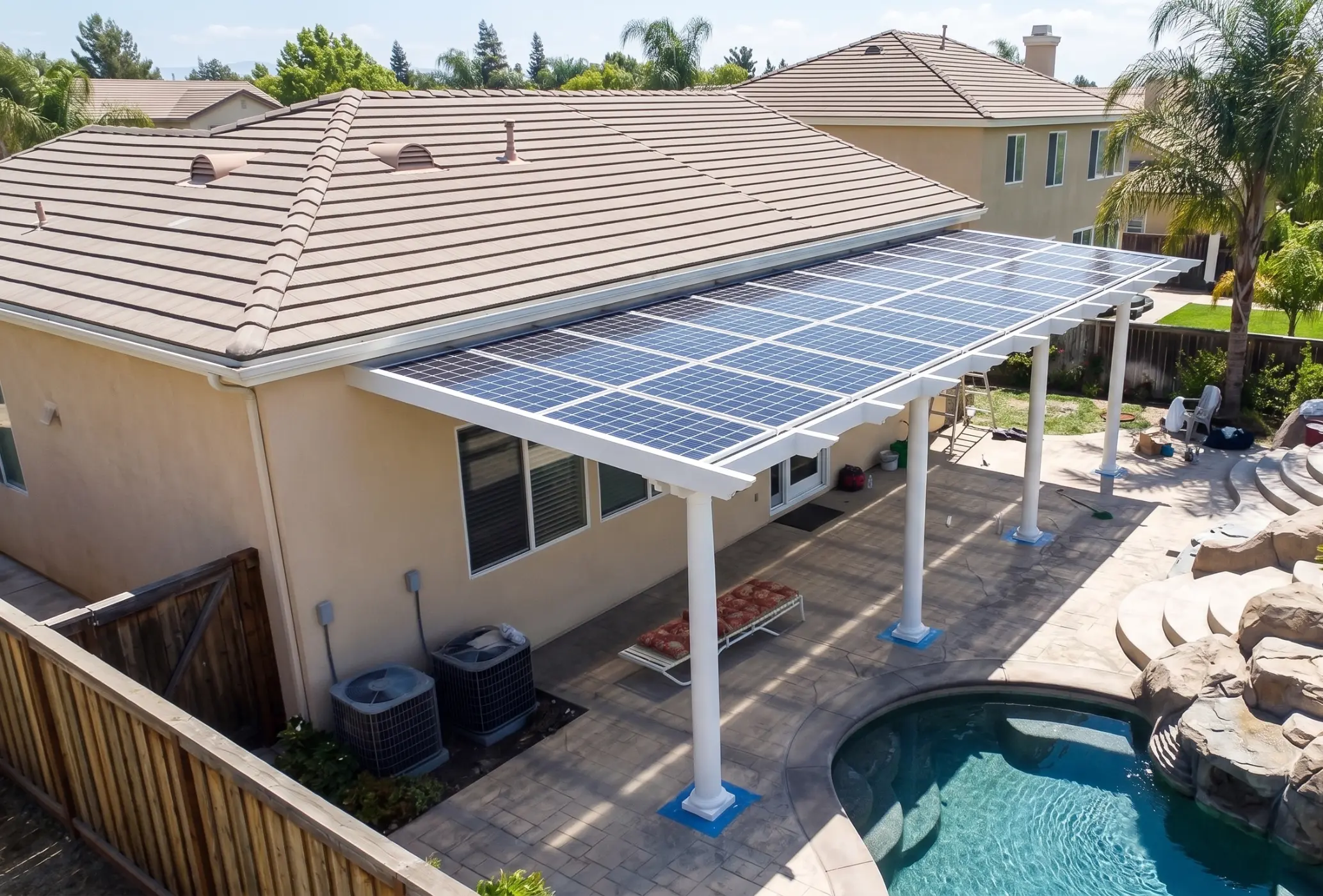
A solar pergola is a shade structure with solar panels mounted on top. It makes your patio, dining space, pool area, or outdoor kitchen more comfortable while creating another location for solar production.
For Thousand Oaks homeowners, this can be really practical. Many properties get strong sun exposure, have spacious backyards, pool areas, or rooflines that aren’t ideal for traditional solar installations. A solar pergola gives you another option: shade where you need it, solar where the sun hits best.
A basic pergola just needs to look good and block some sun. A solar pergola has to do more. The posts, beams, footings, panel layout, electrical work, and drainage all need to work together before you break ground. The goal is to design the pergola as a solar structure from the start—not hope solar fits later.
Want to dig deeper into how these structures differ from standard shade covers? Head over to our Solar Panel Pergolas page.
Done right, a solar pergola transforms a sunny backyard into a real outdoor living space while opening up another solar option. The final design really depends on your specific home, lot, sun exposure, roof situation, what kind of structure makes sense, how much electrical work is involved, and what you want to accomplish long-term.
Why Solar Pergolas Matter for Thousand Oaks Homes
Thousand Oaks is built around outdoor living in a way that feels different from more densely packed parts of Southern California. A lot of properties have pools, patios, hillside views, open-space surroundings, gardens, and backyards that get regular use. The catch? Direct sun can make those spaces pretty uncomfortable during peak afternoon hours.
A solar pergola tackles two problems at once: it creates shade where you need it and gives you another solar option.
That’s worth considering when:
- Your roof doesn’t have much usable solar space
- The main roofline is in a visible, sensitive spot
- Your backyard gets blasted with afternoon sun
- A pool deck or outdoor dining area needs shade
- A detached structure makes more sense than something attached to the house
- Mature trees are making roof solar complicated
- You want shade without the structure eating up the whole yard
- You’re thinking about battery backup or EV charging down the road
- You want to plan shade and solar as one project instead of two
Neighborhoods across Thousand Oaks are different from each other. A hillside home near Wildwood needs different planning than a pool-focused backyard in Newbury Park, an established yard near Conejo Oaks, or a bigger property near Lynn Ranch. The design should fit your property, not just your zip code.
Still weighing where solar makes most sense—roof, backyard structure, or somewhere else? Our Solar Patio Covers page walks through how shade structures and solar can work together in more detail.
Solar Pergolas Thousand Oaks Homeowners Can Plan Around Their Backyard
A really good solar pergola design starts with how you’ll actually use that outdoor space. Some homeowners want shade right off the back of the house. Others need it farther out near the pool, outdoor kitchen, garden patio, hillside view area, or a side-yard seating spot.
Before design starts in earnest, it helps to look at your home and yard as one complete picture.
Here are the key questions to ask:
- Where does the sun hit hardest and when?
- Do you need shade close to the house, by the pool, or somewhere else in the yard?
- Should the structure attach to the house or stand on its own?
- How would it affect your hillside views, open-space sightlines, or how the backyard feels?
- Will anyone see those solar panels from the street, from neighbors’ yards, or from inside your home?
- Where can posts go without blocking doors, windows, walkways, furniture, or pool access?
- Are there mature trees, oak trees, slopes, or drainage issues that affect where you can build?
- How can electrical work be routed cleanly?
- Should you plan for battery backup or EV charging readiness early on?
- Are there any HOA, architectural review, hillside restrictions, or permit issues you need to know about?
Thousand Oaks properties often give homeowners more design freedom than tighter coastal lots, but more space doesn’t mean go oversized. The structure should still feel proportional to your home, your yard, and how your family actually lives outside.
Comparing different solar shade options? Our Solar Powered Pergolas page covers how to plan these structures around real backyard conditions.
Our Solar Pergola Service in Thousand Oaks
Solar Patios By Design™ helps Thousand Oaks homeowners plan, design, and coordinate solar pergolas—handling everything from initial layout to structural review to solar integration.
Here’s what that can include:
- Backyard layout review
- Shade planning
- Attached or detached structure planning
- Solar panel layout coordination
- Structural design coordination
- Footing and post layout review
- Electrical path planning
- Hillside and exposure considerations
- Drainage planning
- Battery backup readiness discussion
- EV charging readiness discussion
- Permit planning coordination
- Outdoor living design guidance
Every project is different. A small patio shade near your back door isn’t the same project as a detached poolside pergola, a structure on a hillside, a larger backyard lounge, or a solar-ready outdoor kitchen. The right recommendation depends on your home, lot, sun exposure, roof conditions, trees, structure type, electrical scope, finish preferences, and permit situation.
Here’s the real issue: this kind of work falls between two industries. Most patio cover companies don’t touch solar. Most solar companies don’t build structures. A solar pergola needs both sides planned together—the shade structure and the solar integration working as one.
That’s what Solar Patios By Design™ does. We bridge that gap for homeowners who want one coordinated project instead of trying to juggle separate contractors who might not even be designing toward the same end goal.
One Contractor. One Design. Coordinated Permitting. One Finished Project.
How Our Thousand Oaks Solar Pergola Process Works
A solar pergola needs to be planned in the right order. Structure, solar layout, electrical routing, shade coverage, and outdoor comfort all affect each other, so they have to be thought through together.
1. Home and Yard Review
We start by looking at everything: your home, backyard layout, patio and pool areas, sun exposure, roof conditions, slope, drainage, trees, and how you use your outdoor space now. For Thousand Oaks properties, this also means understanding hillside views, open-space adjacency, mature landscaping, and visibility from neighboring properties.
2. Shade and Use Planning
Next, we figure out what the pergola actually needs to do. A structure over a dining area has a different layout than one over a pool lounge, garden patio, side-yard seating spot, or outdoor kitchen.
3. Solar Layout Review
We look at solar placement early—direction, spacing, visibility, production goals, how trees might shade the panels, and how electrical work fits in. All of this shapes where the final design lands.
4. Structure and Footing Planning
A solar pergola’s structure has to be built for its job. Posts, beams, spans, footings, wind exposure, panel loads, slope conditions, and site access all get reviewed before we finalize anything.
5. Permit and Code Planning
Solar pergolas often need both structural and electrical review. The right permit path depends on your design, structure type, electrical scope, property conditions, and local requirements.
Need more detail on how solar shade structures are reviewed? Check out our Solar Patio Cover Permits California guide.
6. Estimate and Next Steps
Once we have a clear design direction, we put together an estimate that reflects the real project: size, structure, solar layout, electrical work, permit coordination, finishes, and any battery or EV charging readiness planning.
Ready to talk about your backyard? Call (310) 729-3013 or request your Thousand Oaks solar pergola estimate.
Common Thousand Oaks Solar Pergola Planning Scenarios
These aren’t case studies—they’re common situations Thousand Oaks homeowners run into when thinking through a solar pergola.
Newbury Park Poolside Shade
Lots of Newbury Park homes have practical family backyards with pools and patios that get hammered by afternoon sun. A solar pergola can create a much more comfortable outdoor space while giving you another solar location. Usually the conversation comes down to how much shade you need, pool access, where posts go, drainage, electrical routing, and how it looks from the back of your house.
Lang Ranch or Sunset Hills View-Aware Design
Homes near Lang Ranch or Sunset Hills need a more thoughtful design approach because views and hillside conditions really matter. A solar pergola should provide shade and solar support without sacrificing the best part of your property. You need to think about slope, visibility, wind exposure, drainage, and panel orientation early on.
Wildwood or Open-Space Edge Backyard
Homes near Wildwood or open-space areas often have natural views, mature landscaping, and outdoor spaces that work best with a quieter, more thoughtful structure. A solar pergola can do great here when it’s placed carefully and scaled right. The design needs to respect views, fire-access considerations where relevant, drainage, and how the structure sits near natural edges.
Conejo Oaks or Older Thousand Oaks Homes
Established neighborhoods have older homes, bigger lots, mature trees, existing patios, and unique rooflines. A solar pergola can be a smart alternative when roof solar space is limited or shaded. But the design has to work around tree canopy, electrical panel location, existing concrete, drainage, and the home’s architecture.
Lynn Ranch or Larger-Lot Planning
Bigger properties might have room for a detached solar pergola near a pool, outdoor kitchen, garden lounge, guest area, or even equestrian space. Detached structures are excellent for shade and solar, but they need more careful planning for footings, electrical routing, trenching, site access, and placement.
These are just starting points. Your project always needs to be evaluated against your actual home, property lines, sun exposure, slope, trees, electrical setup, structure type, and permit requirements.
Thinking about how Thousand Oaks compares to nearby areas? Eventually, our Ventura County service area page will help you compare solar pergola and patio cover planning across the whole county.
Solar Pergolas Thousand Oaks Cost Factors
We don’t publish one-size-fits-all pricing for solar pergolas in Thousand Oaks because the cost really depends on your specific property and project scope. A compact pergola attached to your house is a completely different project than a detached, solar-ready structure on a hillside property, larger backyard, or poolside outdoor living area.
Cost usually comes down to size, structure type, engineering, footing requirements, solar panel layout, electrical scope, permit review, site access, finish choices, hillside conditions, and whether battery backup or EV charging readiness is part of the plan.
Want to understand pricing better? Head to our Solar Pergola Cost guide for a broader breakdown.
Swipe sideways to see every column.
| Cost Factor | Why It Matters |
|---|---|
| Pergola size | Larger structures usually require more material, labor, structural planning, and solar layout coordination. |
| Attached or detached design | Detached pergolas may require more footing work, longer electrical routing, and different placement decisions. |
| Solar panel count | More panels can affect structure, wiring, production goals, and overall system design. |
| Structural requirements | Posts, beams, spans, wind exposure, footings, and panel loads need to be reviewed for the actual structure. |
| Hillside or slope conditions | Sloped lots can affect placement, access, footings, drainage, and structural planning. |
| Tree shading | Mature trees can change panel placement, production potential, and shade planning. |
| Electrical scope | Conduit routing, existing panel conditions, battery readiness, and EV planning can change the scope. |
| Permit review | Requirements vary by project design, structure type, electrical work, location, and property conditions. |
| Site access | Backyard access, slopes, walls, landscaping, pools, and staging space can affect labor. |
| Finish choices | Color, lighting, fans, gutters, and related upgrades can change the final project cost. |
A good estimate should walk you through what’s included, what still needs review, and what might change your scope before the project kicks off.
Solar Pergola Permits and Planning in Thousand Oaks
Solar pergola permitting in Thousand Oaks deserves careful attention because these projects typically involve both structural and electrical work. A standard patio cover and a solar-ready pergola aren’t always reviewed the same way, especially when you’re adding panels, wiring, footings, and electrical equipment.
Permit requirements vary based on your design, structure type, electrical scope, property conditions, and how your local jurisdiction reviews things. Some solar projects might qualify for solar-specific permit paths, but a solar pergola is different from a typical rooftop solar retrofit—the structure itself is part of what needs approval.
Common items that typically come up include:
- Pergola location
- Property line setbacks
- Post placement
- Structure height
- Footings
- Wind and structural load considerations
- Solar panel layout
- Electrical routing
- Drainage
- Existing electrical panel conditions
- Slope, hillside, or open-space-edge considerations where applicable
- Battery backup or EV charging readiness
- Inspection access
- HOA or architectural review where applicable
The smartest approach is to review your design before assuming the permit path. Solar Patios By Design™ helps you think through the structure, solar layout, and electrical scope together—so it’s never treated like a simple shade cover on one hand and a separate solar job on the other.
Solar Pergola Design Considerations for Thousand Oaks Homes
A solar pergola should look like it belongs on your property. In Thousand Oaks, that means balancing comfort, solar function, landscape sensitivity, and how your home is actually designed.
Design details worth thinking through:
- Attached or detached—which makes more sense for your space?
- How much shade do you actually need during the hottest part of the day?
- How does the pergola relate to your home’s roofline and rear elevation?
- Will the panels affect your hillside, open-space, or backyard views?
- How visible will the panels be from the street or neighbors’ properties?
- How might wind exposure or slope affect the structure and footings?
- Where can you put posts without blocking how you move through the yard?
- What’s the pergola covering—dining, lounging, cooking, poolside seating, a garden area?
- How do mature trees affect shade, solar placement, and where you can build?
- How can electrical work be routed without being obvious?
- Should you plan for lighting, fans, gutters, or future upgrades now?
- How will the finish color work with your home’s exterior and landscaping?
A pergola that’s too small won’t give you enough shade or solar area. One that’s too large can dominate your yard or compete with your home’s architecture. The best design balances comfort, structure, solar layout, views, and how you actually use the space.
Looking for visual inspiration? Check out our Gallery to see different structure styles, shade coverage, and outdoor living approaches.
Why Choose Solar Patios By Design™ for Solar Pergolas in Thousand Oaks
Solar pergolas are tricky to coordinate because they don’t fit neatly into one category. A typical patio contractor understands shade structures but not solar layout or electrical integration. A solar company knows panels but not how to design and build the structure underneath them.
That gap is exactly what Solar Patios By Design™ was created to fill.
A solar pergola can involve:
- Outdoor living design
- Structural planning
- Footing layout
- Solar panel placement
- Electrical routing
- Permit coordination
- Inspection planning
- Battery backup readiness
- EV charging readiness
- Finish and appearance decisions
When these things are planned separately, details slip through the cracks. When they’re planned together, you get a clear path from design to completion.
Solar Patios By Design™ helps Thousand Oaks homeowners review the structure, shade needs, solar opportunity, hillside or open-space conditions, electrical planning, and permits as one coordinated project.
When you’re comparing contractors, look for proper licensing, local construction experience, the ability to coordinate solar, clear project scoping, and a process that handles both the structure and the solar system as one thing. You don’t want a patio-only company guessing at the solar side or a solar-only company treating the structure as secondary.
Solar Patios By Design™ is operated by Team All Star Construction, CSLB #1009760.
One Contractor. One Design. Coordinated Permitting. One Finished Project.
FAQs About Solar Pergolas in Thousand Oaks
What is a solar pergola?
A solar pergola is a shade structure designed to support solar panels on top. It creates shade below while providing another location for solar production.
Are solar pergolas a good fit for Thousand Oaks homes?
They can be, especially if you have strong sun exposure, a pool area, outdoor kitchen, hillside property, open-space views, or limited roof space for solar. The right fit depends on your property, structure, solar layout, electrical routing, slope, trees, and permit situation.
Do solar pergolas need permits in Thousand Oaks?
Permit requirements vary based on your design, structure type, electrical scope, property conditions, and local review requirements. Since solar pergolas usually involve both structural and electrical work, it’s important to figure out the permit path before you start.
Does my Thousand Oaks HOA need to approve a solar pergola?
Some Thousand Oaks properties have HOA, community, or architectural review requirements. If your home is part of an HOA or managed community, review the CC&Rs and design rules before you finalize your pergola plan.
How much does a solar pergola cost in Thousand Oaks?
Cost depends on size, attached or detached design, structural requirements, footing conditions, hillside or slope conditions, solar panel layout, electrical scope, permit review, site access, finish choices, and whether battery backup or EV charging readiness is included.
Can a solar pergola help if my roof has limited solar space?
Yes. A solar pergola gives you another location for panels while improving backyard shade. You’ll still need to review the site for sun exposure, tree shading, structure, panel layout, electrical routing, and permits.
Can a solar pergola be attached to my home?
In some cases, yes. Attached solar pergolas need careful review of the wall connection, roofline, drainage, structural loads, setbacks, electrical routing, and overall design.
Can a solar pergola be detached?
Yes. Detached solar pergolas work great for pool areas, outdoor kitchens, garden lounges, hillside yards, larger lots, and situations where the best shade location is away from the house.
Can battery backup or EV charging be planned with a solar pergola?
Often, yes. Battery backup and EV charging readiness can be discussed during electrical planning. What makes sense depends on your solar layout, electrical panel, where equipment can go, and what you want to achieve long-term.
What Thousand Oaks areas are good for solar pergolas?
Solar pergolas can work in homes throughout Newbury Park, Lang Ranch, Wildwood, Conejo Oaks, Lynn Ranch, Sunset Hills, Old Meadows, Dos Vientos, and other Thousand Oaks neighborhoods. The design always needs to be evaluated against your specific property, sun exposure, trees, slope, structure, electrical scope, and permit requirements.