What Is a Solar Patio Cover in Fountain Valley?
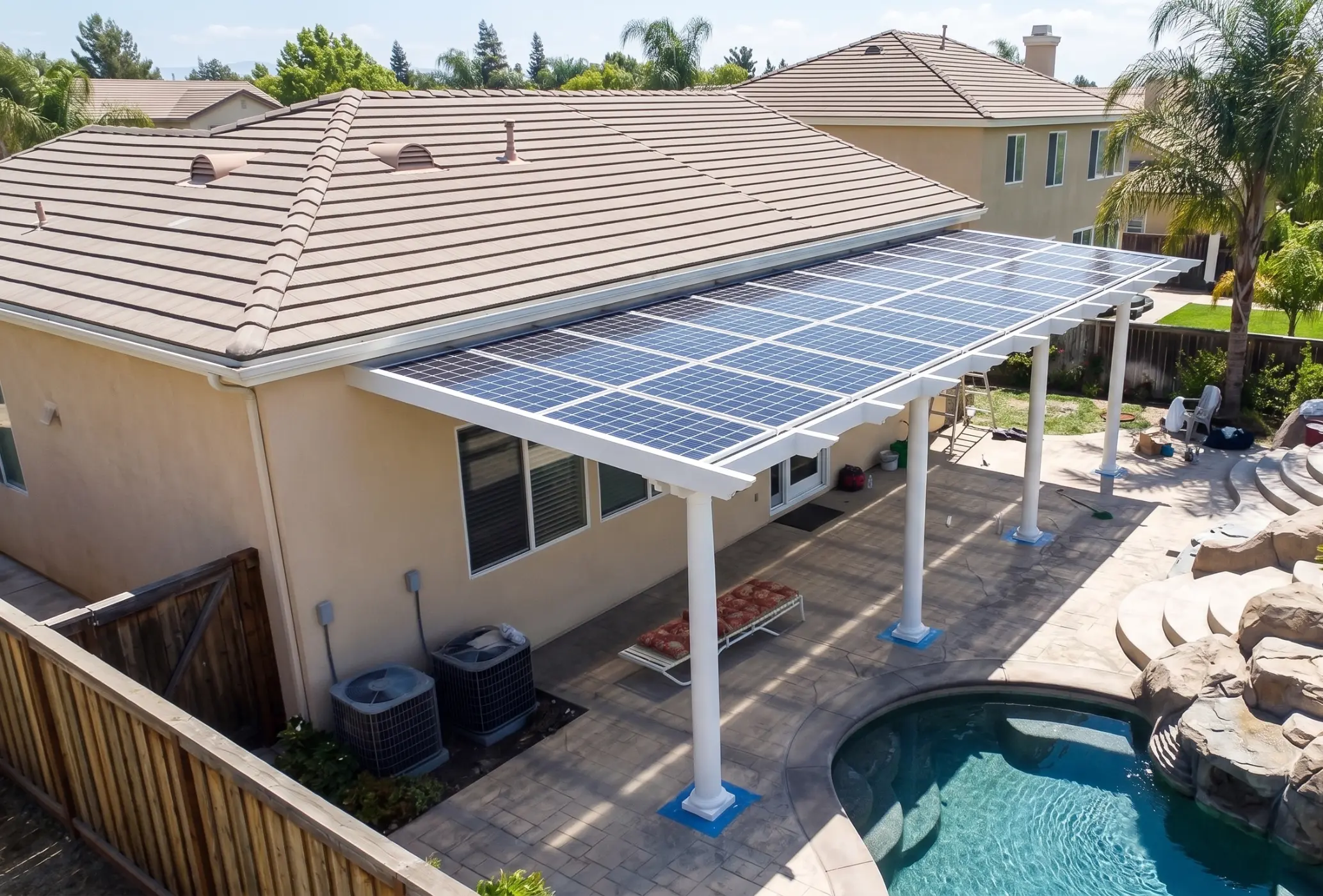
A solar patio cover is a patio roof built from the ground up to handle both the structure’s loads and the weight and wind loads of solar panels. It’s different from a standard shade cover because the engineering is solar-ready from the start—the spans, connections, and footings are all sized accordingly. You get a solid outdoor living space—perfect for dining, lounging, or hanging with friends—and the overhead real estate works for solar.
The trick is planning the solar layout and patio design in tandem. Beam sizing, post placement, panel spacing, and roof pitch all influence how well the system performs and how the space actually feels. Electrical routing deserves attention early too, so conduit runs are clean, tucked away where possible, and code-compliant.
Don’t overlook drainage, guttering, and how the cover connects to your home—especially around sliding doors, windows, and existing eaves. Since this is really a hybrid structure-and-solar project, you’ll want to tackle permits, inspections, and HOA expectations all at once. For a comprehensive overview of different project types and what you might gain, check out Solar Patios By Design’s full rundown on Solar Patio Covers.
Why Solar Patio Covers Matter for Fountain Valley Homes
Fountain Valley bakes in the sun most of the year. Patios can become unbearably hot in the afternoon, especially if they face southwest or back onto a pool deck. A solar patio cover solves that: you get the shade you need for comfortable outdoor dining, poolside lounging, and grilling, while the overhead surface puts your panels to work. It’s often a smarter move than roof-mounted solar if your roof is small, lacks good south-facing slopes, or you simply want to keep the roofline clean.
Maybe you just had a new roof installed and prefer not to puncture it. Or your roof is older and not ideal for solar installation. Either way, moving solar to a dedicated patio structure lets you hit your energy goals without touching the main roof. Plus, you get an inviting outdoor room that stays cooler and more comfortable during peak sun—the kind of space that naturally draws people outside.
Many Fountain Valley homeowners love the creative freedom: you can size the cover, adjust the height, position the posts, and arrange the solar panels however makes sense for your entertaining style and sun exposure. The result is a defined outdoor living area with consistent shade and thoughtfully placed panels with clean wiring routes. Still deciding between rooftop solar and a dedicated patio cover? Our side-by-side comparison should help: Patio Covers With Solar Panels.
Solar Patio Cover Options in Fountain Valley
Every backyard has its own personality, so we match the structure and solar plan to fit your unique space and what you want to accomplish.
Attached Solar Patio Covers
Attached covers connect to your home and extend shade over dining patios and seating areas near sliding or French doors. They can line up with your existing roofline or soffit, so flashing and drainage integrate seamlessly and the whole thing feels like a natural extension of the house. Good planning accounts for how it ties into the wall, beam spans, solar panel placement above, and any HOA concerns about appearance. Want to dig deeper? Head over to Attached Solar Patio Covers.
Detached Solar Patio Covers
Detached structures shine when they’re positioned near pools, outdoor kitchens, garden seating areas, or lounging zones away from the house. A detached layout gives us flexibility with footings, posts, and beams—we can place everything to fit your yard’s layout and orient the solar array for best performance. Setbacks, height, drainage, and routing power back to your electrical panel all factor in. Curious about layout ideas? Explore Detached Solar Patio Covers.
Alumawood Solar Patio Cover Options
Alumawood-style covers offer a sleek, low-maintenance look that appeals to homeowners wanting a finished appearance and durability. Not every Alumawood-style frame is ready for solar, though, so we need to review spans, footings, beam capacity, and panel layout together to make sure it all works. We’ll verify what the structure can safely handle and detail the solar mounting and drainage properly. Curious about finishes and what’s available? Check out Alumawood Patio Covers.
Our Solar Patio Cover Service in Fountain Valley
Solar Patios By Design™ treats patio cover construction and solar integration as one unified project from start to finish. We start by understanding your backyard layout, what kind of shade you need, and how you actually use the space. Then we match the structure type—attached or detached—to the solar design above. From there, we fine-tune post placement, beam sizing, and roof profile so the panels have a solid base and the covered area below feels open and inviting.
Here’s the reality: most patio cover companies skip the solar. Most solar companies don’t build structures. We fill that gap by handling solar panel layout coordination, structural planning, footings, post layouts, and thoughtful electrical routing that can support battery backup or future EV charging if that’s on your radar. We also prepare drawings ready for permit review and shepherd HOA approvals when needed.
We’ll also walk you through materials and finishes—Alumawood options, color choices, gutters, lighting, fans—to make sure the space works morning to night. Permit planning covers both the structure and solar scope together, and we coordinate required inspections. If spreading costs over time helps your budget, ask us about Solar Patio Cover Financing.
Our design process includes outdoor living guidance: we think about furniture placement, how people move through the space, and shade coverage so the patio actually works for daily life—while the solar above is secure, code-compliant, and ready for what’s next.
One Contractor. One Design. Coordinated Permitting. One Finished Project.
Solar Patio Cover Cost Factors in Fountain Valley
Every property is unique, so pricing shifts based on design, size, whether it’s attached or detached, and the solar system above. The scope of electrical work, where equipment sits, and whether you’re planning for battery backup or EV charging readiness can all affect timelines and costs. City and HOA reviews may also require design tweaks depending on what they ask for.
Want a deeper dive into what drives pricing and planning? Visit our full breakdown at Solar Patio Cover Cost.
Swipe sideways to see every column.
| Cost Factor | Why It Matters |
|---|---|
| Patio cover size | Larger structures usually require more material, labor, structural planning, and solar layout coordination. |
| Attached or detached design | Detached structures may require more footing work, post planning, and electrical routing. |
| Solar panel layout | Panel count, spacing, direction, and exposure affect both the solar design and the structure below it. |
| Structural requirements | Posts, beams, spans, footings, and loads need to match the actual project design. |
| Electrical scope | Conduit routing, panel conditions, equipment location, battery readiness, and EV charging readiness can affect complexity. |
| Material and finish options | Alumawood style, color, roof profile, lighting, fans, gutters, and other upgrades can change the scope. |
| HOA review | Some communities may require design changes before approval. |
| Permit review | Requirements vary by city, county, structure type, electrical scope, and property conditions. |
| Site access | Backyard access, hardscape, slope, landscaping, and staging space can affect labor planning. |
| Battery or EV planning | Future energy goals may influence equipment layout and electrical planning. |
Real pricing comes from looking at your actual home, yard, and goals—not some generic per-square-foot formula. We’ll evaluate your site and design a patio cover and solar layout that makes sense.
Solar Patio Cover Permits and HOA Planning in Fountain Valley
A combined patio cover and solar project typically involves a structural review, electrical review, and a solar layout review during the permitting process. Many projects also have inspections for posts and footings, the finished structure, and final electrical work. Permit requirements vary depending on your city, county, project type, structure design, electrical scope, and property conditions.
If you’re in a community with an HOA or design review board, that approval is usually separate from city permits. Most associations care about exterior style, color coordination, and how visible the solar panels are. Planning the structure and solar together makes submittals clearer and keeps things coordinated.
During the review process, you might encounter questions about any of these:
- Patio cover location
- Property line setbacks
- Structure height
- Post placement
- Roof plane and drainage
- Solar panel visibility
- Exterior color and finish
- Electrical routing
- Footing requirements
- Fire access or special property conditions
- Whether the cover is attached or detached
For broader permit context and helpful tips across California, see Solar Patio Cover Permits California.
Solar Patio Cover Design Considerations for Fountain Valley Homes
Designing a solar patio cover goes beyond just mounting panels overhead—it’s about creating an outdoor room that’s both comfortable and engineered to support the solar system. Shade coverage, post placement, and drainage should work with how you’d actually arrange furniture and move through the space. The connection point at your home, guttering, and downspouts need to be sorted early to avoid headaches down the road.
We also think about how visible the solar panels are and how the whole structure reads from your yard and the street—especially important if HOA guidelines apply. Electrical routing is planned to keep conduit tucked away, position equipment smartly, and set up for battery backup or EV charging down the line if that interests you. Color and finish selections can echo your home’s style so the cover feels like it naturally belongs on your property.
Lighting, fans, and switches can be built in to keep the patio comfortable after sunset and on those sweltering days. For visual inspiration and examples of projects we’ve built across Southern California, browse our Gallery.
Solar Patio Cover vs Solar Pergola in Fountain Valley
A solar patio cover typically functions like a traditional patio roof—delivering solid, consistent shade with integrated drainage. It’s ideal for dining areas, poolside seating, and spaces tight against the home. You get a defined roof plane that’s great for solar and dependable covered area below.
A solar pergola, by contrast, feels lighter and more open, often with dappled light filtering through. It might suit a standalone garden nook or work as a design accent in a larger yard. The right choice comes down to your home’s style, how much shade you actually need, the solar panel layout, HOA expectations, and whether you prefer an attached or freestanding structure.
Thinking pergola? Take a look at our overview of Solar Pergolas and our comparison guide, Solar Patio Cover vs Pergola, to figure out which direction suits your property best.
Local Planning Notes for Fountain Valley Homeowners
Fountain Valley living often means juggling weeknight dinners outside, weekend entertaining, and plenty of pool time—all while fighting the heat. Many backyards work perfectly with an attached cover off the main patio, while others benefit more from a detached shade structure near a pool or outdoor kitchen. A thoughtfully designed solar patio cover can make those spaces actually usable during hot afternoons while getting solar production in the mix.
In planned neighborhoods, a cohesive look with matching colors and smart panel placement matters. Homes with tight roof space, complicated rooflines, or specific design goals often prefer a dedicated structure for panels rather than going with the main roof. It’s also common to think ahead about energy plans—battery backup or EV charging capability—and plan equipment locations accordingly.
If you’re elsewhere in central or coastal Orange County, similar questions tend to come up about sun exposure, property setbacks, HOA expectations, and how you use your outdoor space daily. For a broader look at our local coverage, see our Orange County Service Area.
Why Choose Solar Patios By Design™ for Solar Patio Covers in Fountain Valley
Getting a patio cover and solar system right demands understanding both the structure below and the solar array above. We handle patio cover construction, structural planning, footings, and post layout with the same attention we give to solar panel arrangement, electrical routing, and equipment planning. That unified approach can mean smoother permits, predictable inspections, and a finished space that genuinely works for how you live.
We also help navigate HOA approval when it’s needed, making sure appearance, color, and panel visibility align with community standards. If battery backup readiness or EV charging is in your future—now or eventually—we plan conduit routes and equipment placements upfront so you won’t be limited later. Our process brings outdoor living design into the conversation: we consider shade coverage, furniture layout, lighting, and fans to keep the space comfortable year-round.
You deserve clear licensing, experience in your local market, and a project scope that ties structure and solar together from day one. Solar Patios By Design™ is backed by Team All Star Construction, CSLB #1009760.
Ready to talk through your options and timeline? Start the conversation on our Get My Design & Estimate page and we’ll help you design a project that fits your property and your goals.
FAQs About Solar Patio Covers in Fountain Valley
What is a solar patio cover?
A solar patio cover is a patio roof engineered to shade the space below while carrying solar panels above. It’s built with coordinated structural details, drainage, and electrical routing that all work together to handle solar loads and wind conditions.
Are solar patio covers a good fit for Fountain Valley homes?
They can be perfect if your patio gets scorching, if roof space is tight or visually sensitive, or if you want solar without relying solely on the main roof. A dedicated cover often delivers better outdoor comfort while giving you an ideal location for a well-oriented solar array.
Do solar patio covers need permits in Fountain Valley?
Permit requirements depend on your city, county, project type, structure design, electrical scope, and property conditions. Many combined structure-and-solar projects do go through plan review and inspections, but your specific path depends on what you’re building and where.
Does my HOA need to approve a solar patio cover?
In many planned communities, HOA or architectural review is a separate process from city permits. Appearance, color, and how visible the solar panels are tend to be the main topics—your CC&Rs and HOA guidelines will spell out what applies to you.
How much does a solar patio cover cost in Fountain Valley?
Cost depends on cover size, attached versus detached design, solar panel layout, electrical scope, permits, finishes, and site accessibility. A real estimate comes from seeing your property and understanding your energy goals.
Can I plan battery backup or EV charging with a solar patio cover?
Absolutely. Many homeowners think through conduit routes, equipment locations, and panel capacity with future goals in mind. Whether you add batteries or an EV charger now or years from now, planning ahead keeps installations clean and minimizes future changes.
What areas near Fountain Valley do you serve?
We work with homeowners throughout Orange County and surrounding communities. For a full picture of where we operate, check our Orange County Service Area.
Can you add solar to my existing patio cover?
Maybe. It depends on what the structure’s made of, how the beams are sized, the condition of the footings, and overall structural condition. We’ll assess whether it can safely support solar or if a new or reinforced structure is the smarter path.
How long does a project typically take?
Timelines vary based on design complexity, permits, HOA review, material choices, and site conditions. We’ll map out a realistic schedule after the initial design review and as approvals come through.
What maintenance is required?
Patio cover upkeep is pretty minimal, and solar panels just need occasional cleaning depending on dust and debris in your area. We’ll walk you through care recommendations based on your specific materials and site.