
How to think about paying for a solar pergola, patio cover, patio roof, Alumawood structure, solar carport, battery backup, or EV-ready upgrade.
Solar Patios By Design™ projects run the gamut — from a simple shade structure to a full solar-integrated outdoor living overhaul. Some homeowners just want a comfortable Alumawood patio cover. Others are after a solar pergola, solar patio cover, solar patio roof, solar carport, or patio cover with panels. And some are already thinking ahead to battery backup, EV charging, or future electrical upgrades.
Because these projects can touch construction, materials, solar equipment, electrical work, permits, and optional energy features all at once, most homeowners want to understand their financing options before the design conversation goes too far.
We help Southern California homeowners walk through project scope, cost factors, and financing paths that may be available through third-party providers. Worth saying upfront: financing availability, approval odds, rates, terms, and repayment structures all vary — there’s no one-size-fits-all answer here.
Flexible project planning for Southern California homes.
Flexible Project Planning For Southern California Homes Request a Design & Estimate Explore Our ServicesSolar Patios By Design™ is operated by Team All Star Construction, CSLB #1009760.
Can You Actually Finance These Projects?
Yes — financing is generally available for solar pergolas, solar patio covers, patio roofs, traditional patio covers, Alumawood structures, solar carports, battery backup, EV charging prep, and related outdoor living work.
But approval isn’t a given. It comes down to the lender, your eligibility, credit, the property itself, the project scope, and whatever program you’re applying through. Before signing anything, look closely at the total amount financed, the payment schedule, the interest rate, fees, and any lien or property assessment details tied to repayment.
What Kinds of Projects Typically Qualify
Depending on the lender and the final scope, financing might cover:
- Solar Pergolas
- Solar Patio Covers
- Solar Patio Roofs
- Solar Panel Pergolas
- Solar Powered Pergolas
- Patio Covers With Solar Panels
- Solar Carports
- Residential Solar Carports
- Commercial Solar Carports
- Commercial Solar Patio Covers
- Patio Covers
- Alumawood Patio Covers
- Attached Patio Covers
- Detached Patio Covers
- Insulated Patio Covers
- Lattice Patio Covers
- Outdoor Kitchen Patio Covers
- Battery backup options
- EV charging readiness
- Electrical integration
- Permit-related project costs, when eligible
Here’s the catch: not every lender treats every piece of the project the same way. The patio structure, the solar panels, the footings, the battery, the EV charger — each one might get evaluated separately depending on who’s financing it.
Which is exactly why you want a clear scope locked in before you finalize any financing.
A Bigger Project Needs a Real Payment Plan, Not a Guess
A basic shade structure and a fully solar-integrated outdoor living project are not the same financial commitment — not even close.
A traditional patio cover is mostly about shade, comfort, and material choice. A solar pergola, solar patio cover, solar patio roof, or solar carport adds solar layout, electrical routing, equipment selection, engineering, and permitting on top of all that.
What actually drives the final cost:
- Overall project size
- Attached vs. detached design
- Structure type — patio cover, pergola, patio roof, or carport
- Alumawood or other materials
- Insulated or lattice options
- Solar panel layout and equipment
- Battery backup
- EV charging readiness
- Electrical panel or wiring scope
- Engineering and footing requirements
- Permits and inspections
- HOA rules
- Site access
- City or county requirements
- Finish details and outdoor living extras
With that many moving parts, financing decisions should be based on a real, written estimate — not a rough guess pulled from a website.
View Solar Patio Cover Cost Factors View Solar Pergola Cost Factors Use the Solar Patio Cover Cost GuideWho's Actually Behind the Financing Conversation
Solar Patios By Design™ is the solar patio service and resource section of TeamAllStarConstruction.com, operated by Team All Star Construction.
Team All Star Construction, CSLB #1009760, is the licensed entity actually doing the construction work.
Because the brand is operated by Team All Star Construction, financing gets discussed as part of the overall project planning — but any financing option still needs to tie back to the actual written estimate, eligibility requirements, and the third-party provider’s terms.
To be clear: we don’t guarantee financing approval, rates, payment amounts, tax credits, rebates, energy savings, or program availability. That’s between you and the lender.
View CSLB License Information Learn About Solar Patios By Design™What Financing Options Are Out There?
The right path really depends on you, your property, the project, and the lender you’re working with. Homeowners commonly compare:
- Third-party home improvement loans
- PACE-style financing, where it’s available
- Third-party home improvement financing
- Clean energy or solar-specific loans
- Battery or EV equipment financing
- Home equity loans or HELOCs
- Personal loans
- Straight cash
- A mix of the above
Each comes with its own tradeoffs. Some people like the predictability of a flat monthly payment. Others lean on home equity. Some look into property-assessed clean energy programs. And plenty of homeowners pay cash for part of it and finance the rest.
Whatever you choose, read the full written terms before you sign anything.
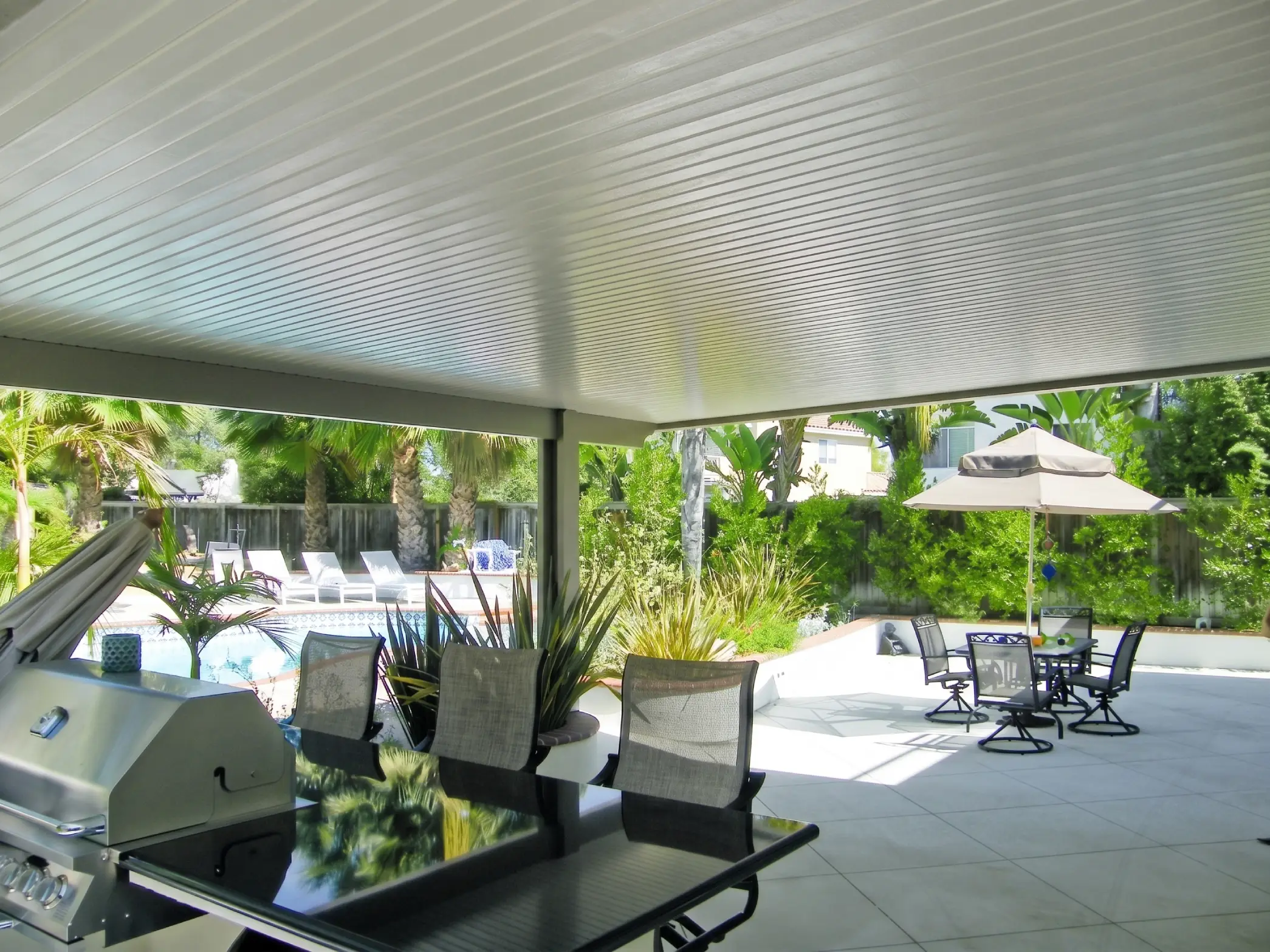
Financing a Solar Pergola
A solar pergola blends outdoor construction with solar planning, so financing can get a little more layered.
Depending on the design, you might be financing posts, beams, footings, solar panels, electrical routing, inverters, monitoring gear, and maybe a battery or EV charger on top of that. Whether all of it gets covered depends entirely on the lender and the scope you’ve agreed to.
Before signing, confirm whether financing actually covers:
- The pergola structure itself
- Solar panels
- Footings and engineering
- Electrical work
- Permit costs
- Battery backup, if it’s part of the plan
- EV charging equipment, if included
- Finish materials and outdoor living touches
Even though the pergola gets designed as one coordinated project, the lender might still slice it into separate categories for financing purposes.
Explore Solar Pergolas View Solar Pergola Cost FactorsFinancing Solar Patio Covers and Solar Patio Roofs
These tend to be more finished, built-out structures — shade below, solar above, all working as one system.
Financing may cover the patio cover structure, roofing system, structural components, solar panels, inverters, electrical work, permits, and optional battery or EV charging readiness. But the real question is whether the financing program treats it as one combined project, or splits out the solar components separately.
Worth asking directly:
- Does this cover the patio cover structure itself?
- Does it cover the solar equipment?
- What about electrical routing?
- Permits and inspections?
- Batteries or EV chargers?
- Any non-solar outdoor living features?
Financing a Patio Cover Without Solar
Plenty of homeowners aren’t ready for solar yet, and that’s completely fine.
Maybe you want a traditional patio cover, an Alumawood structure, something attached or detached, insulated, lattice, or built around an outdoor kitchen. Financing is generally available for these too, depending on the lender, you as the applicant, your property, and the scope of work.
If solar might come into the picture down the road, bring it up early. A basic shade structure isn’t automatically built to support solar panels later — structure type, span, footings, engineering, and electrical routing might all need a second look if future solar is on your radar.
Explore Patio Covers Explore Alumawood Patio CoversFinancing Alumawood Patio Covers
Alumawood is a go-to choice for Southern California homeowners who want shade, low maintenance, and a finished look without a huge investment.
Financing may be available depending on the lender, scope, your eligibility, and the property itself — covering things like:
- Attached Alumawood covers
- Detached Alumawood covers
- Insulated Alumawood covers
- Lattice Alumawood covers
- Outdoor kitchen patio covers
- Solar-ready Alumawood planning, when it makes sense
If solar’s a possibility later, talk about it before the structure gets finalized. Building solar-ready from the start can change the scope, engineering, electrical path, and cost — sometimes significantly.
Explore Alumawood Patio CoversFinancing Solar Carports
Solar carports work well for driveways, parking areas, and commercial sites where the main roof or backyard patio just isn’t the right spot for solar.
Financing may cover the carport structure, solar panels, electrical work, permitting, lighting, and EV charging readiness — though residential and commercial projects often get evaluated quite differently by lenders. Commercial work tends to come with extra requirements, bigger scopes, and more documentation overall.
Financing Battery Backup and EV-Ready Upgrades
Battery backup and EV charging readiness usually come up as part of a bigger conversation about home energy.
Financing may cover batteries, EV charging equipment, electrical work, panel upgrades, and related wiring — but again, eligibility depends entirely on the specific lender and project details.
If either of these matters to you, say so during the estimate stage. They can shift system design, electrical planning, space needs, permitting, and cost more than people expect.
Explore Battery Backup Options Explore EV Charging ReadinessWhat Exactly Is PACE Financing?
PACE stands for Property Assessed Clean Energy.
Where it’s offered, PACE financing lets eligible homeowners pay for qualifying energy, water-saving, or renewable upgrades through an assessment added to their property tax bill.
It’s not free money — important to be clear about that.
It’s a repayment structure, and it can affect your property taxes, your ability to sell or refinance, your mortgage payoff, and the total cost of the project over time. Review the full financed amount, interest rate, assessment term, fees, disclosures, and lien details carefully before moving forward.
PACE availability and eligibility shift by location, so confirm current program rules directly with the provider, your lender, the local authority, or a qualified financial advisor.
What Is Third-party home improvement financing?
Third-party home improvement financing is a third-party home improvement loan path that may be available to qualified applicants.
Unlike PACE, it’s structured more like a standard consumer loan rather than a property tax assessment. The actual terms — rate, approved amount, fees — depend on the lender, your credit, and the project scope.
Read the loan agreement closely. Pay attention to:
- The approved loan amount
- Interest rate
- Any promotional terms
- Deferred interest terms, if applicable
- Payment schedule
- Fees
- Prepayment terms
- When interest actually starts accruing
- The total cost over the full life of the loan
Don’t make decisions based on the monthly payment headline alone — the written agreement is what actually governs the terms.
Other Financing Routes Worth Comparing
Homeowners also commonly look at HELOCs, home equity loans, credit union loans, solar-specific financing, battery financing, personal loans, or just paying cash.
These can work well when a project mixes structural and energy components — say, a patio cover plus solar plus a battery. But each program defines “eligible improvements” a little differently. A lender might treat the solar panels one way and the patio structure another. Batteries might have separate requirements from footings. EV equipment might get reviewed entirely on its own.
Confirm exactly what’s covered before you commit to anything
Financing Depends on More Than Just Your Vision for the Project
You might have a crystal-clear picture of what you want — but approval ultimately comes down to the lender’s own requirements, not your vision.
Lenders typically look at:
- Credit profile
- Income and ability to repay
- Property ownership
- Property type
- Mortgage and tax status
- Project type and eligible improvements
- Approved contractor requirements
- Permit requirements
- Local program availability
- Total project cost
- Loan or assessment limits
Because solar pergolas, patio covers, carports, and solar-ready structures blend construction with energy components, the underwriting review tends to be more involved than it would be for a basic shade structure alone.
All the more reason to nail down your project scope early.
Read the Fine Print Before You Sign Anything
Financing can make a big project feel manageable — but only if you actually understand what you’re signing up for.
Before committing, review:
- Total amount financed
- Interest rate
- Payment amount and schedule
- Fees
- Loan term
- Prepayment terms
- Deferred interest rules, if any
- Lien or assessment details
- Contractor payment schedule
- What happens if you sell or refinance
- Which parts of the project are actually eligible
- Whether tax credits or rebates are being assumed (they shouldn’t be, until confirmed)
We can walk you through the project scope and estimate, but the financing terms themselves should be reviewed directly with the lender. For anything tax, legal, or financial, talk to a qualified professional — accountant, attorney, financial advisor, or the program administrator.
Financing Isn't the Same Thing as a Tax Credit or Rebate
Financing is just how you pay for the project over time.
A tax credit or rebate is a separate incentive that might lower the net cost of certain equipment or improvements — but it’s not guaranteed, and it’s not the same conversation.
These programs change. Eligibility depends on the equipment, ownership structure, install date, program rules, your utility, your tax situation, and how “eligible costs” get defined that particular year.
The patio structure, solar panels, battery, EV charger, and electrical work might not all qualify the same way under a given incentive program. Confirm eligibility with a tax professional, your solar provider, utility, lender, or the relevant program administrator before counting on anything.
The Written Agreement Still Matters Most
In California, the signed contract is what actually protects you — financing or not.
You should expect clear project documents, written payment terms, and a detailed scope of work. Financing doesn’t replace your need to fully understand the construction agreement, the contractor’s payment schedule, the materials and equipment included, and who’s responsible for permits.
Before moving forward, make sure you understand:
- Who’s actually doing the work
- The contractor’s license information
- The full project scope
- Materials and equipment included
- The payment schedule
- The financing terms
- Permit and inspection responsibilities
- Warranty categories
- Any cancellation rights or required disclosures
Solar Patios By Design™ is operated by Team All Star Construction, CSLB #1009760.
View CSLB License Information Learn About Warranty CoverageFinancing Should Match Your Home, Your Climate, and Your Project
Southern California isn’t one uniform market — every county brings its own quirks.
A Riverside County project might be driven by heat and big outdoor living spaces. Orange County tends to lean on architecture, pool areas, and HOA rules. Los Angeles County deals with older homes, tight roof space, hillside lots, and limited access. Ventura County contends with coastal air and outdoor comfort. San Bernardino County often needs serious shade to handle strong inland sun.
All of that shapes structure, solar layout, electrical scope, permits, and ultimately, cost.
Financing should be reviewed with your actual property and project in mind — not a generic average.
We serve homeowners across:
- Los Angeles County
Orange County
Riverside County
San Bernardino County
Ventura County
Frequently Asked Questions
FAQsCan I finance a solar pergola?
Possibly — it depends on the structure, solar equipment, electrical scope, lender requirements, and your own eligibility. Get the project scope nailed down before assuming anything about financing.
Can I finance a solar patio cover?
Generally yes, for qualified homeowners — though approval, loan amount, rate, and terms all depend on the provider, your eligibility, the property, and program availability. None of that is guaranteed.
Can I finance a patio cover without solar?
Usually, yes. Traditional patio covers, Alumawood structures, insulated or lattice covers, attached or detached designs, outdoor kitchen covers — all of these may be eligible depending on the lender, applicant, and scope.
Can financing cover both the shade structure and the solar system together?
Sometimes, but it depends on the lender and loan product. Confirm whether the structure, footings, permits, solar panels, electrical work, batteries, and EV equipment are all included — don’t assume.
Can Alumawood patio covers be financed?
Often, yes, depending on the provider and your eligibility. If solar might be added later, review that with the structure plan before finalizing anything.
Can solar carports be financed?
Yes, typically — though residential and commercial projects tend to be evaluated differently, and the specifics depend on structure type, equipment, electrical scope, and your eligibility.
Is PACE financing free?
No — not even close. It’s repaid through a property tax assessment and can affect your taxes, your ability to sell or refinance, and your total repayment cost. Read every written term and disclosure carefully.
What is Third-party home improvement financing?
A third-party home improvement loan path for qualified applicants, structured more like a standard consumer loan. Terms, rates, promotional periods, and approval all depend on the lender and the written agreement.
Does Solar Patios By Design™ guarantee financing approval?
No. We don’t guarantee approval, loan amounts, rates, payment terms, tax credits, rebates, energy savings, or program availability. All of that is subject to the third-party provider’s own review and written terms.
Is financing the same as a tax credit or rebate?
No — financing is how you pay over time; tax credits and rebates are separate incentives that may or may not apply to specific parts of your project. Confirm eligibility with a tax professional, utility, lender, or program administrator before relying on either.
Should I look into financing before or after getting an estimate?
Start with the project scope, then move to financing. Structure type, size, solar layout, electrical scope, batteries, EV readiness, permits, and materials all affect both the final cost and what you’ll actually qualify for.
Start With the Project, Not the Loan
The best financing conversations happen after the project direction is already clear.
Before you apply for anything or sign on the dotted line, you should understand what’s actually being built, what’s included, and which choices might shift the final cost.