
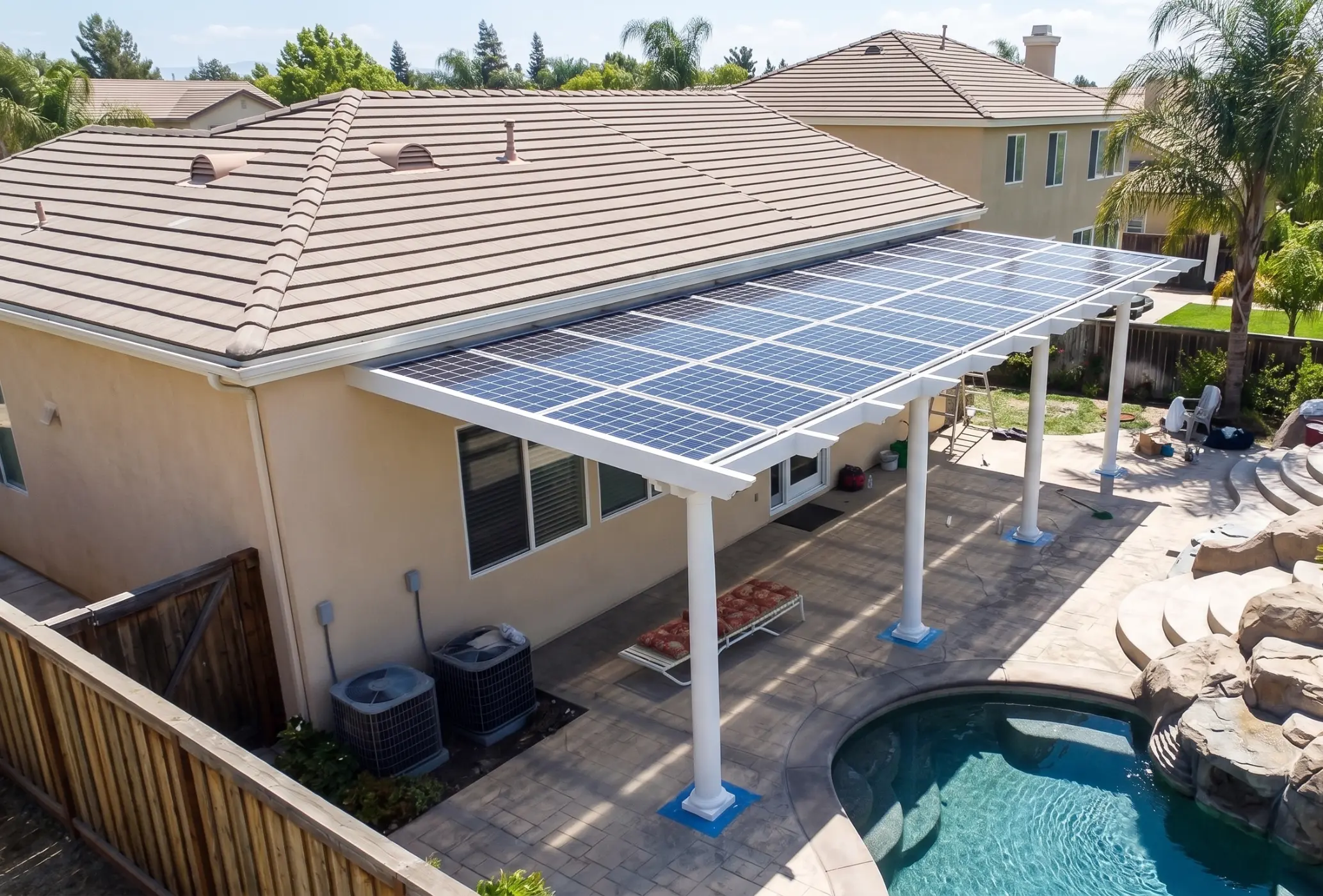
What Is a Solar Pergola in Bellflower?
A solar pergola is basically a shade structure with solar panels mounted on top. It’s doing double duty: keeping things comfortable underneath and generating power above.
That second job is where things get more complex. A regular pergola mostly needs to give you shade and look good. A solar pergola has to do more. It needs to support the weight of panels, position them correctly, handle electrical work, manage water runoff, and look good doing it—all while fitting your backyard and neighborhood.
In Bellflower, people tend to consider solar pergolas for:
- Backyard patios
- Pool lounging areas
- Outdoor eating spaces
- Covered seating zones
- Side yards that get blasted with afternoon sun
- Detached backyard hangout spots
- Homes with detached garages or rear-yard structures
- Properties where rooftop solar just isn’t practical
- Houses where how it looks from the street matters
- Yards with mature trees and tricky shade patterns
- Future battery backup or EV charging plans
- Homeowners who want shade and solar figured out together
The smart move is planning the pergola as a solar structure from the start. Trying to build a regular pergola first and then squeeze solar in later usually creates headaches—structural problems, wiring complications, drainage issues, panel placement that doesn’t work, and permit hassles.
Want more detail on how structure and solar actually work together? Our Solar Panel Pergolas page breaks that down.
Why Solar Pergolas Matter for Bellflower Homes
Bellflower’s all about practical outdoor living. Most homes have usable backyards, patios, side yards, detached garages, and family spaces that could be so much better with proper shade. When it gets warm, that direct afternoon sun can make these spots downright unusable.
A solar pergola tackles two problems at once: it shades the areas where your family actually spends time, and it gives you another spot for solar panels when your roof isn’t the perfect canvas.
Here’s the reality—not every roof is ideal for solar. You might have vents, roof valleys, skylights, chimneys, tree shade, or a roof angle that just doesn’t cooperate. Some Bellflower homes have older roofs, complicated additions, detached garages, or roof planes that make complete solar coverage impossible.
A solar pergola makes sense if:
- Your backyard gets serious afternoon heat
- You’ve got a pool or dining area you can’t enjoy because of sun and glare
- Your roof doesn’t have enough good space for all your panels
- You want shade and solar handled as one project
- You’ve got a detached seating area that needs coverage
- How the panels look from inside, your yard, or the street matters to you
- Mature trees, drainage, or access create complications
- You’ve got an aging patio cover that needs replacing
- You’re thinking ahead about battery storage or EV charging
Not all Bellflower properties are the same. A home near Downtown will have different considerations than one near Somerset Acres or the Lakewood border. A backyard on a major corridor like Artesia or Alondra has different privacy needs than a quiet residential street. The right conversation starts with your actual property, sun, roof, electrical setup, and how you live.
Comparing other options? Our Solar Patio Covers page looks at shade-and-solar planning more broadly.
Solar Pergolas Bellflower Homeowners Can Actually Plan Around
The best design starts with how you actually use your outdoor space.
Some homeowners want shade right off the back of the house. Others need a standalone structure near the pool, grill, garden, or back seating area. Maybe your lot’s tight and every post location matters. Or you’ve got a rear-yard layout, detached garage, or existing patio cover that affects where everything can go.
We dig into the real-world stuff:
- Where the sun beats down hardest
- How you actually use the patio, pool, side yard, or backyard
- Where shade would make the biggest difference in your daily life
- Whether attached or detached makes more sense
- How visible those solar panels will be from your windows, yard, or neighbors’ view
- Whether your roof has room for solar or if that’s why we’re doing this
- Where posts can live without blocking doors, furniture flow, pool access, garage access, or yard movement
- How water drains off the structure
- Whether mature trees help or hurt your shade and solar situation
- How to run electrical conduit without creating a mess
- Whether your electrical panel’s location affects everything
- Whether you’re replacing an old patio cover or building fresh
- Whether you’re thinking ahead to battery backup or EV charging
- What style fits your home—ranch, traditional, mid-century, or something more modern
The goal isn’t to drop a prefab solar frame in your yard. It’s to design something that actually shades you where you need it, supports solar responsibly, and looks like it belongs.
Still in the early stages? Our Solar Powered Pergolas page gives a good overview of how this all works together.
Our Solar Pergola Service in Bellflower
We help Bellflower homeowners design solar pergolas where the structure, solar layout, and outdoor living work as one coordinated plan.
That includes:
- Backyard and property layout review
- Shade planning
- Solar panel layout coordination
- Choosing between attached or detached
- Structural design coordination
- Footing and post layout
- Drainage planning
- Mature tree and shade-pattern review
- Electrical path planning
- Battery backup readiness discussion
- EV charging readiness discussion
- Permit planning coordination
- Existing patio cover review if needed
- Outdoor living design guidance
Every property’s different. A small attached pergola over a rear patio is a totally different animal than a detached solar pergola by the pool, a side-yard shade project, or a larger backyard structure with longer electrical runs.
Here’s why this coordination matters: solar pergolas fall between two trades that don’t usually talk.
Most patio companies don’t do solar. Most solar companies don’t build structures. A solar pergola needs both: structure, footings, solar layout, electrical routing, permits, and inspections all working together.
That’s what we do.
One Contractor. One Design. Coordinated Permitting. One Finished Project.
How Our Bellflower Solar Pergola Process Works
A solar pergola has to work as shade, as a solar support, and as part of your outdoor living. We organize the process to make sure everything’s thought through before we break ground.
1. Home and Property Review
We start by looking at your home, backyard, sun exposure, roof setup, patio layout, garage location, access, trees, and how you actually want to use your outdoor space. This helps us figure out if a solar pergola makes sense and where it should go.
2. Shade and Use Planning
A pergola for dining is designed differently than one for lounging by the pool, shading a side yard, covering a grill area, or creating a detached hangout spot at the back of the property. We design around how you’ll actually use it, not just square footage.
3. Solar Layout Review
We look at panel placement early. Direction, spacing, shade patterns, how to run the electrical, visibility, and your production goals all affect the design.
4. Structure, Footing, and Drainage Planning
The structure gets designed for its actual job. Posts, beams, spans, footings, water management, and weight load all need careful thought before we finalize anything.
5. Site and Design Review
Some Bellflower properties need extra attention to setbacks, property lines, structure height, drainage, lot coverage, mature trees, old patio covers, garage access, or how it looks to neighbors. Color, finish, panel visibility, and overall appearance need to work before construction starts.
6. Permit and Electrical Coordination
Solar pergolas can involve structural and electrical permits. The right path depends on your design, electrical needs, structure type, property specifics, and what Bellflower requires.
Bellflower’s Building & Safety has permit info and residential patio cover guidelines. But a solar pergola isn’t just another rooftop solar project or basic shade cover. The structure, footings, drainage, electrical path, solar layout, and inspection requirements need to come together.
For the bigger California picture on solar shade structure permits, check out our Solar Patio Cover Permits California guide.
7. Estimate and Next Steps
Once we’ve got a solid design direction, we build the estimate around what you’re actually getting. You should know what’s included, what still needs confirmation, and what could shift the final price before you commit.
Ready to talk about your backyard? Call (310) 729-3013 or request your estimate.
Common Bellflower Solar Pergola Planning Scenarios
These aren’t case studies. They’re real-world situations we see when Bellflower homeowners start thinking about solar pergolas.
Downtown Bellflower Patio Shade
Homes near Downtown tend to have practical rear patios, smaller backyards, and maybe an older patio cover that needs work. A solar pergola here focuses on right-sized structure, smart post placement, good drainage, roof space reality check, and clean electrical routing.
Somerset Acres Backyard Planning
Somerset Acres and nearby neighborhoods often have usable backyards, side yards with mature trees, and outdoor spaces that bake in afternoon sun. A solar pergola works well when it’s scaled right and planned around access, shade patterns, and how to run the electrical.
Woodruff Avenue Area Outdoor Living
Homes near Woodruff might have tighter yards where shade and solar need to be efficient. Post placement, setbacks, electrical routing, and drainage need thought upfront so the structure doesn’t get in your way.
Bellflower Boulevard Residential Properties
Properties on or near Bellflower Boulevard might have visibility, access, and privacy concerns. A solar pergola needs review for how visible the panels are, structure height, electrical routing, drainage, and whether it looks right for your home.
Artesia Boulevard or Alondra Boulevard Area Homes
Homes near major corridors often benefit from backyard shade that makes outdoor areas feel more private and comfortable. Design usually focuses on good shade depth, smart post placement, realistic roof space, water management, and simple electrical routing.
Poolside Shade for Bellflower Backyards
A poolside solar pergola makes the lounge area actually usable while using that sun-exposed space for panels. The design accounts for pool access, water concerns, furniture layout, shade coverage, panel visibility, and equipment routing.
Homes With Limited Roof Solar Space
Some Bellflower homes have rooflines that just don’t work for all your panels. Mature trees, roof angles, chimneys, vents, additions, detached garages, and how the house faces all affect what’s possible. A solar pergola creates another option while improving your backyard shade.
Every project needs assessment based on your actual home, property lines, sun patterns, electrical needs, drainage, mature trees, existing patio setup, and what you want from your outdoor space.
For more context, check out our Los Angeles County service area page—it covers solar pergola and solar shade planning across the whole county.
Solar Pergolas Bellflower Cost Factors
We don’t publish one-size-fits-all pricing because the scope varies wildly from property to property. A small pergola attached to your rear patio is completely different from a detached structure by the pool, a side-yard shade project, or a bigger backyard upgrade with more electrical and drainage work.
Cost depends on what you’re actually building.
Here’s what affects price:
Swipe sideways to see every column.
| Cost Factor | Why It Matters |
|---|---|
| Pergola size | Bigger structures need more material, more labor, more structural planning, and more solar layout work. |
| Attached or detached design | Detached pergolas usually need more footing work, post planning, and electrical routing than attached versions. |
| Solar panel count | More panels affect structure, spacing, wiring, production goals, and electrical complexity. |
| Structural requirements | Posts, beams, spans, footings, and load-bearing capacity need review for your specific design. |
| Electrical scope | Conduit routing, panel setup, equipment location, battery readiness, and EV plans all add complexity. |
| Mature trees and shade | Trees can improve comfort but may reduce solar exposure and affect panel placement. |
| Detached garage or rear-yard layout | Garage location, driveway, and yard circulation affect where everything can go and how to route electrical. |
| Existing patio conditions | Replacing, removing, or working around an old patio cover changes the project scope. |
| Permit and plan review | How much structural and electrical review is needed depends on your design and property. |
| Site access | Tight side yards, garage placement, pool access, limited workspace, or small lots complicate installation. |
| Drainage | Even flat lots need proper water management, especially with a new covered structure. |
| Finish choices | Color, lighting, fans, gutters, material finish, and other upgrades change the final cost. |
A good estimate explains what’s included, what still needs confirmation, and which factors might change the final number.
For a deeper pricing breakdown, read our Solar Pergola Cost guide. It explains the main cost drivers without pretending every home costs the same.
Solar Pergola Permits, Patio Cover Review, and Planning in Bellflower
Solar pergolas in Bellflower need careful planning because they involve structure, solar layout, electrical work, drainage, setbacks, and inspections.
Permit requirements vary based on structure type, electrical work, project design, and your property. A simple shade structure and a solar-supporting pergola don’t always get reviewed the same way. The right approach should be confirmed before construction starts.
Bellflower’s Building & Safety has permit info and residential patio cover documents. That doesn’t automatically mean your solar pergola follows the same path as a basic patio cover. A solar pergola brings footings, spans, drainage, post placement, structural review, electrical routing, panel layout, and exterior appearance into the mix.
Items that might need review:
- Pergola location
- Property line setbacks
- Structure height
- Post placement
- Footing requirements
- Drainage
- Solar panel visibility
- Exterior color and finish
- Electrical routing
- Equipment location
- Your existing electrical panel
- Old patio cover removal or replacement
- Mature tree or shade conflicts
- Detached garage access or rear-yard movement
- Neighborhood design considerations
If your property has mature trees, tight access, a small backyard, older patio structures, garage constraints, or a complicated roof, those details should get flagged early. Waiting until the design is mostly done can cause delays or force redesigns.
For the statewide overview of solar shade structure permits, visit our Solar Patio Cover Permits California guide.
Solar Pergola Design Considerations for Bellflower Homes
A solar pergola has to work visually and practically. In Bellflower, that means balancing shade, solar production, summer heat, mature trees, how you move through your yard, electrical routing, water management, and how the structure fits your home.
Key design questions to think about:
- Attached or detached—which makes sense?
- What’s the pergola covering—dining, lounging, grilling, pool lounge, garden, side yard, or patio?
- How much afternoon shade do you actually need?
- Will you see the panels from inside the house?
- Will neighbors or street views notice the panels?
- Does the structure affect privacy, light, landscaping, garage access, or yard movement?
- How should water drain?
- Where can posts go without blocking doors, furniture, pool circulation, side-yard access, or traffic flow?
- Do mature trees help with shade but hurt solar exposure?
- Is your electrical panel location convenient for solar?
- Should you replace or remove an old patio cover?
- Should you plan for lighting, fans, or gutters now?
- Is future battery backup or EV charging something to discuss now?
- What style fits your home—ranch, traditional, mid-century, modern?
A pergola that’s too small won’t give you enough shade or enough solar space. One that’s too big can overwhelm a small yard or get in your way. The sweet spot is usually in the middle: enough coverage to make the space comfortable, enough structure to support the solar, and enough restraint to feel like it belongs.
Looking for design inspiration? Browse our Gallery and use it as a jumping-off point for talking about style, shade coverage, and the feeling you want to create.
Why Choose Solar Patios By Design™ for Solar Pergolas in Bellflower
Solar pergolas aren’t a simple, single-trade job. They live in that gray area between patio construction and solar installation.
Most patio companies don’t do solar. Most solar companies don’t build structures. That usually means homeowners have to piece everything together themselves—structure, solar layout, electrical routing, design, permits, and inspections through different contractors.
We bring all those pieces into one unified planning process.
For Bellflower homeowners, that means we can help you think through:
- Shade comfort and coverage
- Solar panel placement and visibility
- Structure and footing needs
- Drainage planning
- How you’ll actually use the space
- Mature tree and roof limitation review
- Existing patio cover assessment
- Detached garage and rear-yard logistics
- Electrical routing
- Battery backup readiness
- EV charging readiness
- Permit planning
- Long-term appearance
We’re not here to push solar pergolas on everyone. We’re here to look at your home, sun exposure, structure, electrical needs, drainage, mature trees, existing patio, and goals—then give you an honest recommendation.
When you’re comparing contractors, pay attention to licensing, local experience, reviews, how they approach planning, whether they understand permits, and whether they really know both the structural side and the solar side.
Solar Patios By Design™ is operated by Team All Star Construction, CSLB #1009760.
One Contractor. One Design. Coordinated Permitting. One Finished Project.
FAQs About Solar Pergolas in Bellflower
What is a solar pergola?
A solar pergola is a shade structure designed to support solar panels on top. It creates shade where you’re sitting while generating power above.
Are solar pergolas a good fit for Bellflower homes?
They can be. Many Bellflower homes have sunny patios, pools, dining areas, side yards, detached garages, or limited roof space where a solar pergola makes sense. The right design depends on your specific home, sun exposure, structure, drainage, electrical setup, city requirements, and permit path.
Do solar pergolas need permits in Bellflower?
Yes, requirements vary based on design, structure type, electrical scope, and property conditions. Solar pergolas often need structural and electrical review, so confirm the right permit path before starting construction.
Is a solar pergola treated the same as a regular patio cover?
Not necessarily. Bellflower has patio cover documentation, but a solar pergola is built specifically to support panels, with electrical routing and solar layout as core parts of the design. The permit path should be confirmed based on your actual project.
How do mature trees affect a solar pergola in Bellflower?
Mature trees make your backyard more comfortable but can also shade the solar panels. Check shade patterns before assuming a location will work for both shade and solar production.
How much does a solar pergola cost in Bellflower?
Cost depends on size, attached vs. detached, structural needs, solar panel layout, electrical work, permits, drainage, site access, existing patio conditions, garage layout, mature trees, finish options, and whether battery or EV charging readiness is included.
Can a solar pergola help if my roof has limited solar space?
Absolutely. A solar pergola creates another location for panels while improving backyard shade. The design still needs review for sun exposure, panel layout, electrical routing, structure, visibility, and permits.
Can a solar pergola be attached to my home?
Sometimes, yes. Attached pergolas need careful planning around the wall connection, roofline, drainage, structure, setbacks, electrical routing, and what you expect it to look like.
Can a solar pergola be detached?
Yes. Detached pergolas work great near pools, dining areas, lounging spots, gardens, side yards, and backyards where the best shade is away from the house.
Can battery backup or EV charging be planned with a solar pergola?
Often, yes. Battery backup and EV charging readiness can be discussed during electrical planning. What makes sense depends on your solar layout, electrical panel, equipment location, and energy goals.
What Bellflower areas are good for solar pergolas?
Solar pergolas can work throughout Bellflower—near Downtown, Somerset Acres, Bellflower Boulevard, Woodruff Avenue, Artesia Boulevard, Alondra Boulevard, Rosecrans Avenue, the various parks, and neighborhoods near the 91 and 605 corridors. The right design always considers your specific home, lot, sun patterns, electrical setup, drainage, mature trees, existing patio, and permit path.