What Is a Solar Pergola in Long Beach?
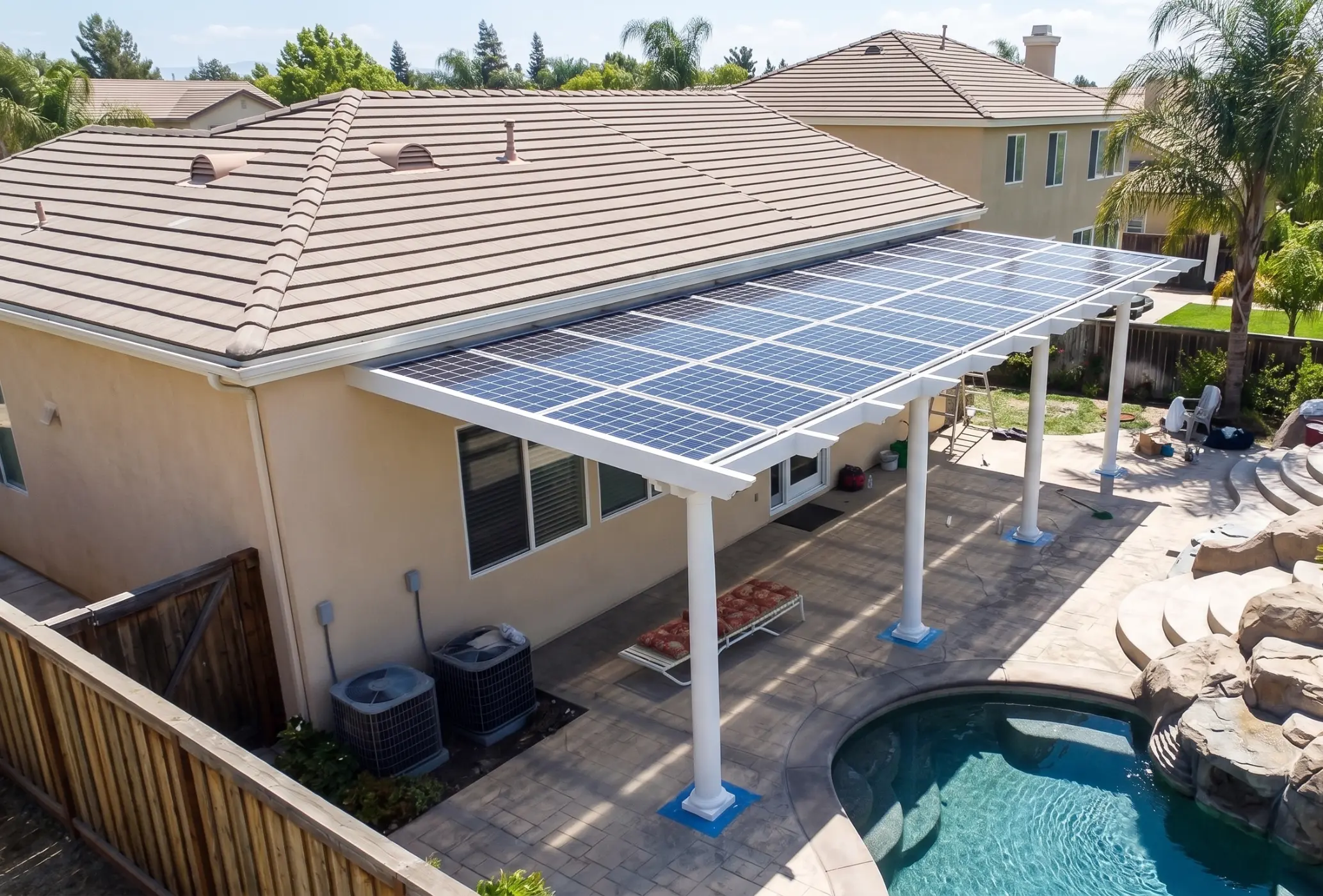
A solar pergola is a shade structure with solar panels built into the top. The area below becomes more comfortable, and the top becomes another spot where you can produce solar energy.
For Long Beach homeowners, this can solve a real problem. Maybe your roof isn’t the best place for every solar panel. Older rooflines, vents, chimneys, skylights—these things eat up usable roof space. Some homes have shade from big mature trees, or maybe you don’t want panels facing the street. If your backyard already needs better shade anyway, why not combine that need with solar planning? You get one project instead of two.
A regular pergola is mostly about shade and looks. A solar pergola has to do more. It needs to handle solar panels, structure, post placement, beams, footings, drainage, how you’ll run the electrical, finishes that won’t corrode, utility requirements, access, and how it looks from your house, yard, street, alley, or your neighbor’s side of the fence.
The structure needs to be solar-ready from day one.
Want more details on how pergolas designed for solar differ from standard backyard structures? Our Solar Panel Pergolas page goes deeper.
Why Solar Pergolas Matter for Long Beach Homes
Long Beach is actually a good fit for solar pergolas because outdoor living is already part of how people live here. A lot of homes have back patios, courtyards, pool areas, side yards, detached garages, outdoor dining zones, or small backyard spaces that would be way more usable with real shade.
The trick is balance.
Yes, Long Beach gets coastal influence, but that doesn’t mean your backyard stays comfortable year-round. South- and west-facing patios still get blasted by afternoon sun. Homes farther inland—East Long Beach, Bixby Knolls, Los Altos, El Dorado Park Estates—often feel warmer and more exposed than homes near the water. Coastal neighborhoods like Belmont Shore, Naples, Bluff Park, and Alamitos Heights face different constraints: salt air, visibility from the street, architecture that matters, and tighter lots.
A solar pergola can help you hit two goals at the same time:
- Make your backyard actually comfortable on sunny days
- Add a solar location beyond your main roof
That’s especially valuable if you already want shade and your roof is limited, shaded, older, historically sensitive, or just not ideal for every panel.
Solar pergolas might make sense for you if you want:
- Shade over your outdoor dining area
- Poolside shade
- A covered lounge or seating area
- A solar-ready courtyard
- A detached pergola near the garage or alley
- Shade for a small patio or side yard
- An alternative to putting everything on the roof
- A structure ready for battery backup or EV charging down the road
- One project that handles both shade and energy
In Long Beach, the best solar pergola isn’t just about how many watts it produces. It needs to feel right for your place. A pergola for a historic Belmont Heights home should feel completely different from one for a mid-century place in Los Altos, a bigger lot near Virginia Country Club, or a tight beach backyard.
Still deciding between pergola-style and more roof-like solar shade? Our Solar Patio Covers page explains the full range.
Solar Pergolas Long Beach Homeowners Can Plan Around Their Property
Long Beach properties are all over the map. Small backyards with detached garages. Pool areas and courtyards. Mature trees. Historic facades. Coastal exposure. Alley access. Some properties are more suburban with bigger lots farther inland.
A good solar pergola plan starts with the space you actually have.
Where do you really need shade? Is this for a dining patio, pool lounge, courtyard, side yard, outdoor kitchen, detached garage area, or rear-yard hangout? Should it connect to your house, or would a freestanding structure work better in a sunnier corner of the yard?
Those questions shape everything before we even think about the solar layout.
When we’re planning, we look at things like:
- Where the sun hits hardest during the day
- How you’re using the backyard right now
- Where shade would make the biggest difference
- Whether you want the pergola attached or standing alone
- Whether your lot is compact, coastal, historic, alley-accessed, or more spread out
- How other homes, garages, trees, walls, or fences affect sun exposure
- How the structure fits with your home’s style
- Whether you’re in or near a historic district
- Whether you’re close enough to the coast to worry about salt air
- Where you can put posts without blocking furniture, pool access, walkways, driveways, or views
- How visible the panels will be from your house, yard, street, alley, or neighbors’ place
- How water drains from the structure
- Where electrical work makes sense
- Whether battery backup or EV charging should be part of the conversation early
- Whether Southern California Edison interconnection might be involved
- What permits—building, electrical, historic, coastal—might come into play
The goal isn’t to force a cookie-cutter structure into your Long Beach backyard. It’s to design a solar pergola around your property first, then fit the solar into that plan in a way that actually works.
Comparing pergola, patio cover, or roof solar options? Our Patio Covers With Solar Panels guide helps you think it through.
Our Solar Pergola Service in Long Beach
Solar Patios By Design™ helps Long Beach homeowners plan custom solar pergolas that weave together shade, outdoor living design, structural planning, and solar layout.
We typically handle:
- Your backyard and property layout
- Shade planning and coverage
- Solar panel positioning
- Whether it should be attached or freestanding
- Structural design and coordination
- Posts, beams, and footings
- Where the electrical will go
- Battery backup readiness (if you’re thinking long-term)
- EV charging readiness (same deal)
- Getting permits sorted
- Outdoor living design help
- Coastal, historic, and design-sensitive planning when it matters
The right design really depends on your property. Some Long Beach homes need a small pergola over a rear dining area. Others might need a detached structure near a pool, courtyard, alley garage, outdoor kitchen, or sunny side yard.
That’s where coordination matters. A lot.
Solar pergolas sit between two worlds. Most patio cover companies don’t install solar. Most solar companies don’t build structures. A solar pergola needs both sides working together: structure, solar layout, electrical routing, permits, inspections, how it looks, and whether you’ll actually enjoy it long-term.
That’s what we do.
One Contractor. One Design. Coordinated Permitting. One Finished Project.
How Our Long Beach Solar Pergola Process Works
Solar pergolas work best when the structure, shade plan, and solar design are figured out together early on. In Long Beach, this is especially important because coastal exposure, historic districts, older homes, tight lots, utility interconnection, and construction constraints can all change the final design.
1. Home and Backyard Review
We start by looking at your home, backyard, how the sun hits it, roof conditions, what you actually want to do outside, and how your property is laid out. This tells us whether a solar pergola should go near the house, deeper into the yard, by the pool, over a courtyard, next to a detached garage, or somewhere else with strong sun.
2. Shade and Outdoor Use Planning
Next, we think about how you’ll actually use the space. A pergola for outdoor dining needs a different layout than one for lounging by the pool, a courtyard seating area, a small side yard, an outdoor kitchen, or a detached backyard retreat.
3. Solar Layout Review
We look at where solar panels would go early on. Direction, how much sun it gets, spacing, whether they’ll be visible, how many panels, where the wiring goes, what your energy goals are—all of that shapes the design.
4. Structure and Footing Planning
Solar panels add real requirements. The pergola has to account for posts, beams, how far they can span, load capacity, footings, drainage, and site conditions. Existing patios, pool decks, tight side yards, alley access, older homes, and limited room for equipment can all affect what the final project looks like.
5. Long Beach Property Review
Some Long Beach properties are straightforward. Others might involve historic district rules, coastal exposure, older structures, big trees, utility coordination, or tight access for construction. These things need to be understood before you get too far down one design path.
6. Permit and Electrical Coordination
Solar pergolas often need structural and electrical review. The exact process depends on your design, site conditions, how much solar you’re adding, electrical work scope, and local requirements. Since a lot of Long Beach homes are served by Southern California Edison, SCE interconnection and permission-to-operate might be part of the solar planning too.
For more on solar shade structure permitting across California, read our Solar Patio Cover Permits California guide before assuming this project follows the same path as a decorative pergola or standard roof solar.
7. Estimate and Next Steps
Once we’re clear on the design direction, we can build an estimate that actually reflects your project. A good estimate explains what’s included, what still needs review, and which factors could shift things later.
Ready to talk about your backyard? Call (310) 729-3013 or request your estimate.
Common Long Beach Solar Pergola Planning Scenarios
These aren’t case studies. They’re real situations we see often when Long Beach homeowners start thinking about solar pergolas.
Belmont Shore or Naples Coastal Patio Shade
Homes near the water often need pergola planning that handles marine air, tight lots, visibility, and outdoor spaces you use constantly but don’t have much room for. The design should feel clean, durable, and right-sized rather than heavy or overdone.
Belmont Heights or Bluff Heights Historic-Home Planning
Historic neighborhoods need extra thought. A solar pergola in these areas should respect the home’s style, how it looks from the street, color, scale, and how it relates to the property. If historic review applies, plan for that before you start building.
Bixby Knolls Backyard Dining Shade
Bixby Knolls homes often have mature backyards, big trees, and outdoor dining spots that would benefit from solid shade. The design should balance solar exposure with tree shade, where you’ll put furniture, and your home’s existing character.
Los Altos or East Long Beach Poolside Solar Pergola
Bigger suburban-style lots in Los Altos, El Dorado Park Estates, and parts of East Long Beach can be good spots for poolside pergolas, backyard lounges, and outdoor kitchen shade. Balance shade coverage, solar layout, drainage, and how people move through the space.
Alamitos Heights or Park Estates Design Sensitivity
Some neighborhoods call for a more refined approach. Think about proportion, finish quality, visibility, how it sits with the landscape, and how it’ll look years from now.
Wrigley or California Heights Older-Home Backyard Upgrade
Older homes need closer attention to style, electrical setup, roofline, mature landscaping, and how you’ll access the space during construction. A solar pergola should feel like it belongs with the home, not like you dropped equipment in the yard.
Compact Backyard With Alley or Detached Garage Access
A lot of Long Beach properties have detached garages, alleys, and smaller rear yards. A tight solar pergola can create useful shade and solar space, but post placement, setbacks, drainage, electrical routing, and construction access need careful planning.
Long Beach Home With Limited Roof Solar Options
Some homes have complex rooflines, shade patterns, older roof materials, or visible roof areas that make roof solar feel less ideal as your only option. A solar pergola can create another solar location and improve the backyard at the same time.
These are planning scenarios. Your actual design needs to account for your home, lot, sun exposure, electrical setup, property limits, historic requirements, and any local permits.
Want to see how Long Beach compares with nearby areas? Our Los Angeles County service area page shows how solar pergola and solar shade planning work across the county.
Solar Pergolas Long Beach Cost Factors
We don’t publish set pricing for Long Beach solar pergolas because the scope changes too much from one property to the next.
A small detached pergola over a compact seating area is nothing like a poolside solar pergola, a coastal-exposed structure, a historic-district project, an attached patio pergola, or a larger outdoor kitchen cover with long electrical runs, premium finishes, battery readiness, or EV planning.
Cost really comes down to the structure itself, site conditions, solar layout, electrical work, permits, finish choices, and what you want from the space.
If you want to understand pricing before requesting an estimate, our Solar Pergola Cost guide walks through the main cost drivers without pretending every property fits one mold.
Swipe sideways to see every column.
| Cost Factor | Why It Matters |
|---|---|
| Pergola size | Bigger structures mean more material, labor, structural planning, and solar coordination. |
| Attached or detached design | Attached means connection details, drainage, and roofline review; detached means more footing and routing planning. |
| Solar panel count | More panels can increase layout complexity, wiring, structural needs, and production planning. |
| Structural requirements | Posts, beams, footings, spans, loads, and site conditions need to match your actual design. |
| Coastal exposure | Homes closer to the ocean need more thoughtful finish and material planning because of salt air. |
| Mature trees and shade | Trees can make it more comfortable below but might reduce solar exposure above if they shade the panel area. |
| Electrical routing | How far to equipment, panel placement, conduit path, battery readiness, and EV charging all affect the project. |
| Utility interconnection | Solar projects may need utility review, interconnection steps, and permission to operate before you can flip it on. |
| Permit review | Building, electrical, historic, coastal, or planning review can affect paperwork, timeline, and scope. |
| Historic district considerations | Some properties need extra review for exterior changes before work starts. |
| Site access | Tight side yards, alleys, detached garages, pool decks, landscaping, and limited staging space affect labor and how you get stuff done. |
| Finish options | Color, lighting, fans, gutters, heaters, privacy screens, and other upgrades change the final price. |
A solid estimate should be specific to your property. It explains what’s included, what still needs review, and which assumptions might change after design, utility, historic, or permit review.
Solar Pergola Permits and Property Review in Long Beach
Solar pergola projects in Long Beach need careful planning because they involve both structural and electrical work. Depending on your design, the project might need building review, electrical review, plan check, inspections, utility interconnection, and possibly historic, coastal, setback, height, or zoning review.
What’s required depends on your property and project scope.
Common things that might come up:
- Where the pergola sits on your lot
- How far it has to be from property lines
- How tall it can be
- Whether it’s attached or detached
- Post and footing layout
- Beam spans and structural capacity
- Solar panel placement
- Electrical routing
- How water drains
- Whether it’s visible from your house, street, alley, or neighbors
- Historic district review, if that applies
- Coastal exposure or coastal-zone considerations, if they apply
- Big trees or landscape constraints
- Utility interconnection and permission to operate
- What inspections are needed
That’s why it’s risky to assume a Long Beach solar pergola follows the same path as a small decorative pergola, a standard patio cover, or roof-mounted solar. This combines structure and solar, so it needs to be reviewed as one coordinated design.
HOA, Historic, Coastal, and Design Considerations in Long Beach
Not every Long Beach property is in an HOA, historic district, or coastal review zone. But design review can matter more here than people realize.
Long Beach has Craftsman homes, Spanish colonial homes, bungalows, beach cottages, mid-century modern homes, traditional suburban houses, and bigger custom properties. Some neighborhoods have historic protections. Coastal areas have tight lots, high visibility, and homes exposed to salt air. Other neighborhoods have established streetscapes where a bulky backyard structure would stick out.
Design and property review might focus on:
- Color and finish
- How tall the structure is
- How visible it is from the street or alley
- How visible it is from neighbors’ properties
- How it relates to your home’s style
- Whether it matches your roofline
- Whether the panels are visible
- Where posts go
- Whether there’s exterior lighting
- How it holds up to coastal conditions
- Historic character, if that matters
- How it sits with your landscape and hardscape
- Whether it fits neighborhood design standards
This matters because Long Beach isn’t one home type. A solar pergola for a Naples patio should feel completely different from one for a California Heights home, a Park Estates backyard, or a Los Altos pool area.
It shouldn’t feel like a generic product plopped in the yard. It should feel designed for your home.
Solar Pergola Design Considerations for Long Beach Homes
A solar pergola has to do more than hold panels. It needs to make the outdoor space below better.
For Long Beach homes, that usually means juggling shade, proportion, solar exposure, coastal conditions, visibility, site limits, and how it fits with your home’s style. Too small and you won’t get enough shade or solar capacity. Too big and it overpowers the yard. A layout that’s perfect for solar might not match how you actually want to use the patio.
Key design questions:
- Should it attach to the house or stand alone?
- Is it for dining, lounging, cooking, a courtyard, a side yard, or poolside?
- How much afternoon shade do you actually need?
- Will trees, garages, or neighbors’ homes shade the panels?
- Will the panels be visible from inside the house?
- How does it relate to your roofline and home’s style?
- Do you need to keep yard space or sightlines clear?
- Where can posts go so the space still feels open?
- How will water drain?
- Should you add lighting, fans, gutters, heaters, or privacy features now?
- Are battery backup or EV charging part of your long-term plan?
- Do you need to satisfy historic, coastal, utility, or permit requirements?
The best solar pergolas don’t feel like solar equipment. They feel like part of your outdoor living plan, with the energy piece built right in.
Want visual inspiration? Check our Gallery to see shade coverage, structure styles, and the finished looks that might work for your place.
Solar Pergola vs Roof Solar in Long Beach
A solar pergola doesn’t automatically replace roof solar. For some homes, the roof still makes sense. For others, a backyard structure can be another useful solar spot.
Long Beach homeowners often compare solar pergolas with roof solar when:
- The roof has limited usable area
- Trees or other buildings shade the roof
- The roof has weird angles, vents, chimneys, or obstructions
- They want to keep panels off the street-facing side
- The roof might need replacement soon
- The backyard gets strong sun
- They already want a shade structure
- Outdoor living is part of the project goal
- There’s a sunny patio, pool area, courtyard, or rear yard that could work
The right answer depends on your home, electrical system, sun exposure, electricity usage, panel layout, roof condition, and budget. A solar pergola might create shade while adding solar production, but actual output and savings depend on system design, sun exposure, utility rates, and how much electricity you use.
Want a deeper comparison? Read our Solar Patio Cover vs Roof Solar guide.
Can a Solar Pergola Power a Home in Long Beach?
A solar pergola can contribute to your home’s solar production, but whether it powers all or part of your home depends on the setup.
It comes down to:
- Pergola size
- How many solar panels
- Which way they face
- How much sun they get
- Shade from trees, garages, or other buildings
- Long Beach’s marine layer and weather
- How much electricity your home uses
- Your utility rates
- Whether you want battery backup
- Your electrical panel condition
- What Southern California Edison requires
- Whether roof solar is also in the plan
Some solar pergolas are designed to handle a real chunk of your energy needs. Others are smaller and work better as a shade structure that also produces solar energy. Be honest about what to expect before assuming big energy savings.
Solar Patios By Design™ doesn’t guarantee energy savings. Solar performance depends on system size, sun exposure, electricity usage, utility rates, equipment, and how the project is designed.
Battery Backup and EV Charging Readiness
A solar pergola can often fit into a bigger energy plan, especially if you’re thinking about battery backup or future EV charging.
That doesn’t mean every solar pergola needs a battery or EV charger right now. It means these questions should come up early enough that your structure and electrical work don’t create headaches later.
Planning might include:
- Where solar equipment could sit
- Whether your main electrical panel needs a closer look
- How you’d run conduit
- Whether battery backup is something you want now or later
- Whether EV charging readiness matters
- How the pergola fits with existing or future roof solar
- Whether the design should leave room for future add-ons
- How utility interconnection might affect the solar plan
For some homes, a simple solar pergola is the best choice. For others, thinking through backyard structure, solar layout, battery readiness, and EV charging together from the start makes more sense.
Why Choose Solar Patios By Design™ for Solar Pergolas in Long Beach
Solar pergolas are tough because they don’t fit neatly into one trade.
A patio cover company understands shade structures, posts, beams, finishes, and outdoor living. A solar company understands panels, inverters, electrical work, and output. But a solar pergola needs those decisions coordinated from day one.
That’s what makes us different.
We help Long Beach homeowners think through:
- How comfortable the shade will be
- Where the solar panels go
- What the structure needs
- How to run the electrical
- How you’ll use the outdoor space
- Whether it matches your home’s style
- Coastal planning
- Historic or design-sensitive concerns
- Getting utility interconnection sorted
- Battery backup options
- EV charging readiness
- Permits
- How it looks long-term
The goal is to skip the handoff problem. Instead of hiring one company for the structure and another to figure out solar later, the entire project is reviewed as one coordinated design.
One Contractor. One Design. Coordinated Permitting. One Finished Project.
Solar Patios By Design™ is operated by Team All Star Construction, CSLB #1009760.
FAQs About Solar Pergolas in Long Beach
What is a solar pergola?
A solar pergola is a shade structure built to hold solar panels on top while you enjoy shade underneath. It creates a comfortable area below and another spot to produce solar energy above.
Are solar pergolas a good fit for Long Beach homes?
Yes, many Long Beach homes make good candidates because outdoor living is common, the sun is strong, and some roof setups aren’t ideal for every solar panel. The right design still depends on your specific property, backyard layout, structure, electrical path, shade patterns, coastal exposure, and sun exposure.
Do solar pergolas need permits in Long Beach?
It varies by project. A solar pergola might need structural and electrical review, especially when solar panels, footings, wiring, or attached construction are involved. Get the design reviewed before assuming which permits apply.
Does Southern California Edison review solar projects in Long Beach?
A lot of Long Beach homes are served by Southern California Edison, so solar projects often need SCE interconnection review and permission-to-operate steps. What’s required depends on the system and your utility account.
Is a solar pergola different from a solar patio cover?
Yes. A solar pergola is usually pergola-style shade with solar panels on top. A solar patio cover might be more roof-like and could give fuller shade or weather protection, depending on how it’s built. Both can support solar planning, but the structure and what you want might differ.
How much does a solar pergola cost in Long Beach?
Cost depends on size, whether it’s attached or detached, what the structure needs, solar layout, electrical routing, permits, utility interconnection, coastal exposure, historic review, site access, finishes, and whether battery or EV readiness is part of it. The real number comes after we review the property and design.
Can a solar pergola be attached to my Long Beach home?
It can be. Attached solar pergolas need careful review of the wall connection, roofline, drainage, structure, electrical routing, setbacks, and what permits apply.
Can a solar pergola be detached?
Absolutely. Detached solar pergolas work well for pools, outdoor kitchens, garden seating, courtyards, side yards, and backyards where the best solar and shade location isn’t right against the house.
Can a solar pergola work in a coastal area?
It might, but homes near the coast need more careful attention to finish, materials, visibility, and permits. Salt air, lot size, and coastal requirements can all change the final design.
Can a solar pergola work on a historic Long Beach property?
It can, but historic properties or homes in historic districts might need extra review before exterior work starts. Plan the structure carefully around visibility, scale, color, materials, and how it relates to your home’s character.
Can a solar pergola help if my roof isn’t ideal for solar?
Yes, it creates another potential solar location while improving backyard shade. You still need to review sun exposure, panel layout, structure, electrical routing, shade patterns, utility requirements, and permitting.
Can I add battery backup or EV charging with a solar pergola?
Usually, those options can be discussed during electrical planning. Whether they make sense depends on your electrical panel, equipment location, solar layout, budget, utility requirements, and long-term energy goals.
What Long Beach neighborhoods do you serve?
We can plan solar pergolas for homes throughout Long Beach—Belmont Shore, Naples, Belmont Heights, Bluff Park, Bluff Heights, Alamitos Heights, Bixby Knolls, California Heights, Wrigley, Los Altos, El Dorado Park Estates, Park Estates, Virginia Country Club, East Long Beach, and beyond. Every design needs review against your specific property.